Enterprise API & Intermediate Sourcing Dossier

Buy CAS 118-42-3 Manufacturer & Suppliers

Global Industrial Supply Intelligence, cGMP Monograph Compliance (USP / EP / BP / ChP), Advanced Process Chemistry, and Strategic Value-Chain Integration for Hydroxychloroquine Base

High-Purity Bioactive Molecules & Strategic Synthetics

Accelerating global research and commercial active ingredient pipelines with verified analytical documentation and direct manufacturing traceability.
≥99.5%
HPLC Chromatographic Purity
<0.10%
Individual Specified Impurity
50+ MT
Annual Scalable Capacity
100%
Batch Traceability & DMF Ready

Executive Procurement White Paper: Hydroxychloroquine (CAS 118-42-3)

A rigorous industrial perspective on purchasing CAS 118-42-3 from verified global chemical synthesis manufacturers, navigating regulatory dossiers, purity assays, and supply-chain continuity.

Critical Distinction: Hydroxychloroquine Base (CAS 118-42-3) vs. Sulfate Salt (CAS 747-36-4)

In B2B active pharmaceutical ingredient (API) procurement, precision in chemical nomenclature is paramount. CAS 118-42-3 represents 2-[{4-[(7-chloroquinolin-4-yl)amino]pentyl}(ethyl)amino]ethanol in its free base molecular form (C18H26ClN3O, MW: 335.87 g/mol). While commercial solid oral dosage formulations (tablets) predominantly formulate the sulfate salt (CAS 747-36-4), primary chemical synthesizers, contract manufacturing organizations (CMOs), and advanced research laboratories acquire CAS 118-42-3 as the pristine base for targeted salt engineering, crystal habit modification, and complex intermediate synthesis.

Analytical Parameter Pharmacopeial Specification (USP / Ph. Eur.) Manufacturer In-House Release Standards Analytical Methodology
Chemical Identification Conforms to Reference Standard Positive Concordance via IR & MS FTIR / LC-MS Verification
Assay (Titration / HPLC) 98.0% – 102.0% (anhydrous basis) 99.2% – 100.8% (ultra-pure lot release) Reversed-Phase HPLC / Potentiometry
Impurity A (Chloroquine Analog) ≤ 0.2% ≤ 0.05% (Controlled threshold) RP-HPLC (UV detection at 254 nm)
Any Individual Unspecified Impurity ≤ 0.10% ≤ 0.05% High-Resolution UPLC-PDA
Total Related Substances ≤ 0.5% ≤ 0.25% Gradient HPLC Impurity Profiling
Loss on Drying / Moisture ≤ 2.0% ≤ 0.50% Karl Fischer Coulometric Titration
Residual Solvents (ICH Q3C) Meets ICH Class 2 & 3 Thresholds Ethanol < 500 ppm, Toluene < 50 ppm Headspace Gas Chromatography (GC-FID)
Elemental Impurities (ICH Q3D) Cadmium, Lead, Arsenic, Mercury within PDE Class 1 metals < 0.5 ppm each ICP-MS Inductively Coupled Plasma

Macro-Industry Dynamics & Global Procurement Demands

Evaluating vendor stability, raw material key starting materials (KSMs), and multinational regulatory alignment for large-scale CAS 118-42-3 sourcing.

Clinical & Therapeutic Demand Drivers

CAS 118-42-3 remains a pillar therapeutic molecule worldwide. Beyond its traditional anti-malarial classification, it is irreplaceable in long-term immunomodulatory therapy regimens for:

  • Systemic Lupus Erythematosus (SLE): Foundational disease-modifying treatment preventing irreversible organ damage and reducing severe disease flares.
  • Rheumatoid Arthritis (RA): Effective secondary DMARD combined with methotrexate to achieve clinical remission.
  • Sjögren’s Syndrome & Dermatological Conditions: Expanding off-label clinical trials for refractory cutaneous lesions and autoimmune fatigue.

Supply Chain Bottlenecks & KSM Risks

Procuring CAS 118-42-3 requires strict auditing of upstream precursor chemicals. Global price volatility and supply shortfalls stem almost exclusively from two Key Starting Materials:

  • 4,7-Dichloroquinoline (CAS 86-98-6): Highly sensitive to chlorination capacity and environmental regulation in primary manufacturing hubs.
  • 5-(N-Ethyl-N-2-hydroxyethylamino)-2-aminopentane: Specialized aliphatic diamine requiring sophisticated reductive amination pathways.
  • Multisource Security: Leading enterprise buyers prioritize manufacturers with captive, backward-integrated synthesis plants to avoid force majeure stoppages.

Tier-1 Qualification Standards

Pharmaceutical enterprise buyers cannot treat CAS 118-42-3 as a commodity chemical. Vendor qualification mandates a four-step compliance review:

  • Full Dossier Transparency: Provision of open-part Drug Master Files (DMF), ASMF submissions, or Certificates of Suitability (CEP).
  • cGMP On-Site Audits: Complete alignment with ICH Q7 guidelines, validated water purification systems, and zero Critical 483 observations.
  • Cross-Contamination Controls: Dedicated synthesis loops preventing contamination with potent steroids, highly active beta-lactams, or genotoxins.

Advanced Process Chemistry & Industrial Manufacturing Roadmap

From batch vessel nucleophilic substitution to continuous flow microreactors: How next-generation manufacturers drive out impurities and lower the carbon footprint of CAS 118-42-3.

Nucleophilic Aromatic Substitution

Classical synthesis utilizes direct condensation between 4,7-dichloroquinoline and the side-chain amino alcohol at elevated temperatures (120°C – 140°C). Advanced facilities deploy catalytic phase-transfer agents to suppress thermal decomposition products and reduce reaction time from 18 hours to under 4 hours.

Continuous Flow Microchemistry

Leading manufacturers are transitioning from 5,000L glass-lined stirred tanks to continuous tubular reactors. Flow chemistry maintains precise residence time distribution, eliminates hot spots, controls exotherms, and restricts bis-quinoline byproduct formation to below 0.03%.

Nitrosamine Risk Assessments (ICH M7)

Given stringent FDA and EMA directives on NDMA/NDEA mutagenic impurities, secondary amine precursors are verified under tight controls. Synthetic loops maintain acidic, nitrite-free aqueous washing protocols to guarantee undetectable nitrosamine levels (<1 ppb).

Green Solvent & E-Factor Reduction

Legacy methods relied heavily on chlorinated solvents (DCM, chloroform) for crystallization. Upgraded synthesis programs utilize green solvent matrices (2-MeTHF, ethyl acetate, bio-derived alcohols), slashing process E-factor from 45 down to 12 kg waste per kg pure product.

Global Logistics Execution, Export Compliance & Assurance

Seamless international trade architectures ensuring rapid customs clearance, regulatory dossier defense, and cold-chain integrity from plant to receiving dock.

Standard Regulatory Documentation

Every commercial order of CAS 118-42-3 is backed by a complete analytical package, ready for import clearance and health authority inspection:

  • Batch-Specific Certificate of Analysis (COA): Dual-signoff from QC and QA department heads with explicit numerical values.
  • Spectroscopic Raw Data: High-resolution HPLC chromatograms, overlay spectra, Mass Spectrometry (MS) fragmentation, and 1H/13C NMR traces.
  • Safety & Compliance Statements: GHS-compliant 16-section SDS, TSE/BSE Freedom Certificate, Non-Animal Origin statement, and Residual Solvent declaration.

Export Logistics & Incoterms 2020

Navigating global chemical transport requires tailored logistics solutions for air cargo, sea freight, and dedicated door-to-door chemical courier networks:

  • Customs Cleared Shipping: DDP, CIF, and FOB terms supported with full HS Code alignment (Harmonized System Chapter 2933.49).
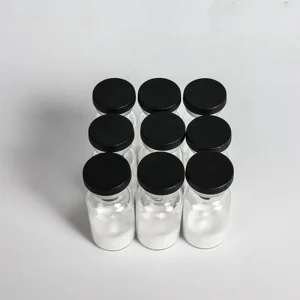
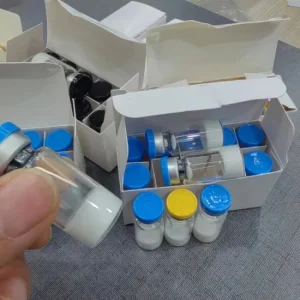
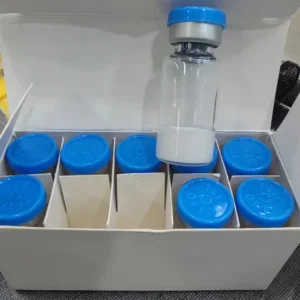
  • Protected Pharmaceutical Packaging: Double antistatic polyethylene liners enclosed inside tamper-evident, UN-certified fiber drums (25 kg standard).
  • Environmental Monitoring: Datalogger integration tracking temperature, relative humidity, and shock impacts across transit lines.

Localized Customer Advocacy & Audit

Eliminating time-zone frictions through dedicated international technical sales representatives and scientific audit support:

  • Rapid Inquiry Turnaround: Technical quotations, specification sheets, and quote proformas issued within 24 business hours.
  • Audit Readiness: Support for remote desktop audits or on-site inspections conducted by international procurement audit teams.
  • Commercial Retention Samples: All lots maintain representative archive samples stored under ICH stability conditions for 5 years.

Frequently Asked Technical & Sourcing Questions

Direct answers for sourcing managers, formulation scientists, regulatory specialists, and quality control directors.

What is the standard purity specification for industrial CAS 118-42-3?
Our manufacturing release standard mandates minimum chromatographic purity of ≥99.0% by HPLC, with typical industrial production batches achieving 99.4% to 99.8%. Individual unspecified impurities are tightly restricted to ≤0.10%, and known related substance Impurity A (chloroquine analog) is controlled below 0.05%, exceeding standard United States Pharmacopeia (USP) and European Pharmacopoeia (Ph. Eur.) monographs.
What are the minimum order quantities (MOQ) and lead times for bulk commercial supply?
For evaluation, formulation R&D, and analytical validation, sample packs are available starting from 100g, 500g, and 1 kg. For commercial pharmaceutical production, standard drum packaging is 25 kg net weight per drum. Pilot orders up to 100 kg generally dispatch within 3–5 working days from qualified inventory. Large-scale multi-ton campaign deliveries have typical production lead times of 3 to 4 weeks.
How does the manufacturer control nitrosamine and genotoxic risks?
In complete compliance with ICH M7(R1) and US FDA / EMA nitrosamine mitigation guidelines, our synthesis facility performs a comprehensive risk assessment of all raw materials, water sources, reagents, and recovery solvents. Potential secondary and tertiary amines are processed in validated nitrite-free systems. Routine lot testing using high-sensitivity LC-MS/MS confirms absence of NDMA, NDEA, or related volatile dialkyl nitrosamines well below established acceptable intake thresholds.
Can you provide custom packaging, blinding, or micronization services?
Yes. We offer toll jet-milling and air-classifier micronization under cGMP conditions, adjusting Particle Size Distribution (PSD) down to customized specifications (such as D90 < 20 μm, D50 < 8 μm) to satisfy specific oral tablet bioavailability and dissolution profiles. Packaging options include food/pharma-grade aluminum barrier bags, nitrogen-purged hermetic liners, and customized outer labeling with buyer-assigned inventory lot codes.
What regulatory filing support is available for pharmaceutical registration?
We provide comprehensive regulatory assistance, including the Open Part of the Drug Master File (DMF / ASMF) conforming to CTD Module 3 formatting (Quality). In addition, customers receive full process validation summaries, stability data under ICH Q1A(R2) conditions (accelerated and long-term), elemental impurity risk calculations (ICH Q3D), and validated analytical test methods with precision, accuracy, and LOD/LOQ validation reports.

Complementary Research Molecules & Fine Chemicals

Explore our extended synthetic portfolio featuring clinical-grade neuropeptides, endocrine modulators, and small-molecule active raw powders.
Request Batch-Specific Analytical Documentation & Quotation

Connect directly with our chemical manufacturing division for Hydroxychloroquine (CAS 118-42-3). Receive a comprehensive dossier package including commercial pricing scales, complete Certificate of Analysis (COA), method validation summaries, and Drug Master File (DMF) open-part documentation within 24 hours.

Submit Commercial RFP Download Product Catalog