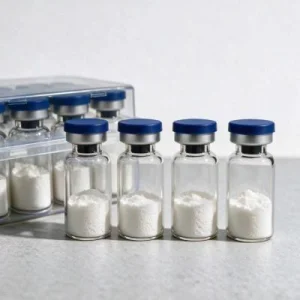
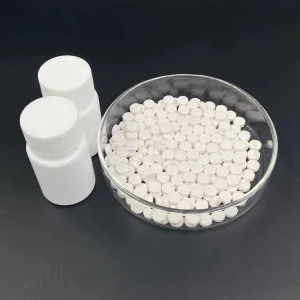
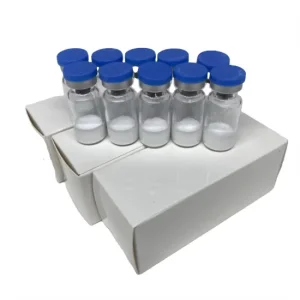
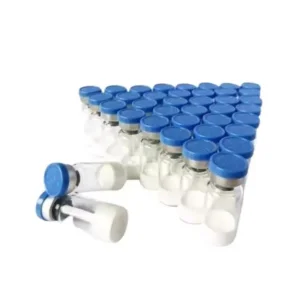
Pre-inspected laboratory inventory manufactured under strict crystallization controls, featuring batch-specific chromatographic release data and verified chain-of-custody documentation.

From exploratory non-steroidal androgen receptor modulators to targeted biomedical reference materials: A decade of technological, regulatory, and synthetic evolution.
The global ecosystem for Selective Androgen Receptor Modulators (SARMs) has undergone a fundamental technological transition over the past decade. Originally designed in the late 1990s as therapeutic vectors for cachexia, osteoporosis, and sarcopenia, early synthetic methodologies suffered from broad impurity profiles, variable enantiomeric excess, and residual chemical precursors. In contemporary laboratory and preclinical ecosystems, procurement protocols no longer tolerate traditional "grey-market" commercial purity. Modern contract research organizations (CROs), university institutes, and industrial analytical labs demand ultra-purified raw SARMs powder characterized by state-of-the-art analytical instrumentation.
Structural stability, polymorphic configuration, and trace metal chelation have become primary quality determinants. As commercial synthesis facilities adapted, standard solid-phase batch reactors gave way to continuous-flow systems that mitigate localized exotherms during sensitive cyano- and trifluoromethylation steps. This transformation has allowed top-tier facilities like Miaoou to maintain rigorous batch-to-batch reproducibility, safeguarding downstream research reliability across multi-year development projects.
Early-stage synthesis pathways frequently produced racemic mixtures, diluting androgen receptor binding affinity. Current factory standards implement stereospecific asymmetric catalysis, achieving chiral enantiomeric ratios exceeding 99.5:0.5.
Strict limitation of Class II and Class III organic volatile impurities (e.g., dichloromethane, hexane, acetonitrile) via multi-stage wiped-film molecular evaporators and nitrogen-purged crystallization chambers.
Microcrystalline raw powder exhibits variable dissolution kinetics based on particle morphology. Modern micronization and controlled crystallization ensure predictable biological assay formulation.
Comprehensive methodology matrix utilized by qualified pharmaceutical laboratories to confirm molecular identity, isomeric purity, and absence of adulterants.
| Analytical Modality | Target Parameter | Instrumentation Standard | Factory Release Acceptance Criterion |
|---|---|---|---|
| Reversed-Phase UHPLC | Chemical Purity & Impurity Index | Agilent 1290 / Waters Acquity (C18 Column) | ≥ 99.0% (Single Max Impurity < 0.5%) |
| Proton & 13C NMR | Molecular Framework Confirmation | Bruker Avance III HD 500 MHz | Spectra match structural chemical shift references exactly |
| High-Resolution LC-MS | Accurate Monoisotopic Mass | Thermo Scientific Q-Exactive Orbitrap | Observed m/z error ≤ 2.0 ppm of calculated mass |
| Headspace GC-MS | Residual Organic Volatiles | Shimadzu GCMS-QP2020 NX | Compliant with ICH Q3C Class 2 (<388 ppm) & Class 3 |
| ICP-MS Trace Element | Heavy Metals Residue (As, Cd, Pb, Hg) | PerkinElmer NexION 2000 | Heavy metals total ≤ 10 ppm; Individual toxic metals ≤ 1 ppm |
| Karl Fischer Titration | Residual Hydration / Moisture Content | Metrohm 899 Coulometer | Total moisture content ≤ 0.50% w/w |
Enterprise procurement departments commonly face discrepancies when sourcing fine chemicals through intermediary brokers. The primary risk lies in "COA mirroring" – a deceptive practice where authentic chromatographic scans from licensed manufacturers are copied onto unverified distributor letterheads. Hebei Miaoou Technology mitigates this vulnerability by instituting direct-from-reactor cryptographic lot numbers. Every shipped package correlates with an original raw data packet, including full-spectrum UV chromatograms, integration baselines, and raw FID/MS files, allowing our clients' QC specialists to re-integrate analytical peaks independently.
Engineered logistics, validated packaging systems, and risk mitigation protocols designed for multi-kilo chemical delivery.
Raw SARMs powders containing labile aniline, nitrile, or hydroxyl groups are susceptible to atmospheric moisture and oxidation. We utilize triple-layer nitrogen-flushed Mylar sealing coupled with medical-grade desiccant cartridges to preserve crystal lattice integrity.
Global supply disruptions often halt academic and commercial assay schedules. Miaoou maintains strategically allocated buffer reserves of core reference powders across our regional warehousing hubs, insulating clients against raw material shortages.
For thermally sensitive peptides and complex modulators, our supply chain incorporates temperature-monitored cold packs and thermal insulation liners, maintaining core internal temperatures between 2°C and 8°C throughout international air transit.
Every commercial invoice, declaration manifest, and batch label is digitally reconciled. Barcoded tracking systems ensure that raw materials sampled during synthesis validation correspond unequivocally with the delivered chemical units.
Navigating cross-border chemical commerce with full compliance across major regulatory jurisdictions including North America, the European Union, and Asia-Pacific.
Proper tariff categorization is critical to preventing customs impoundment. Our export compliance specialists assign exact 6-to-10-digit HS codes (such as Chapter 29 fine chemicals: 2924, 2926, 2933) tailored to destination-country chemical inventory requirements.
Every compound is paired with a GHS-compliant 16-section Safety Data Sheet detailing toxicological endpoints, personal protection levels (PPE), environmental considerations, accidental release measures, and safe disposal protocols.
We coordinate specialized DDP (Delivered Duty Paid) frameworks across major corporate accounts, absorbing logistical complexities, managing customs broker clearance, and guaranteeing point-to-point delivery without regulatory delay.
Anticipating the technological horizon in precision organic synthesis, biocatalytic pathways, and automated release verification.
The manufacturing architecture for small molecules and receptor-modulating ligands is approaching an inflection point. Conventional batch reactor production — long constrained by thermal gradients, long residence times, and substantial organic solvent waste — is transitioning toward scalable continuous-flow microreactor synthesis. By confining reactive intermediate transformations within micro-channels under high-pressure, precision-temperature controls, synthetic chemists at Hebei Miaoou achieve unprecedented selectivity in challenging chemical couplings.
Implementation of continuous flow tubular reactors enables sub-second residence control over reactive exothermic stages. This technology suppresses over-reaction byproduct formation, yielding raw powder purity above 99.5% directly out of crude crystallization.
Replacing toxic heavy-metal organocatalysts with engineered immobilized enzymes (transaminases, ketoreductases) lowers Process Mass Intensity (PMI) by 45%, eliminating trace metal contaminants in downstream finished powders.
Integrating in-line Fourier-transform infrared spectroscopy (FTIR) and focused beam reflectance measurement (FBRM) within crystallization tanks guarantees consistent crystal habit and polymorphic uniformity in every kilogram produced.
Authoritative answers compiled by our analytical laboratory directors and international trade compliance officers.
True research-grade raw powder is validated using orthogonal analytical techniques. Purity must be documented by reversed-phase UHPLC using gradient elution on a C18 stationary phase, not merely isocratic UV detection. Additionally, identity must be confirmed through Proton (1H) and Carbon (13C) NMR spectrometry and high-resolution MS verifying exact molecular weight, with residual solvents documented under ICH Q3C limits.
Crystallization is controlled using temperature-programmed cooling and anti-solvent addition rates overseen by process analytical technology (PAT). This prevents the formation of unstable amorphous states or unwanted polymorphs, ensuring that powder lots dissolve predictably in standard laboratory vehicles such as PEG-400, ethanol, or DMSO.
Yes. We support pre-shipment sampling protocols. We routinely supply retain samples directly to our clients' chosen accredited testing laboratories (such as Janoshik, MZ Biolabs, or university analytical cores) for HPLC/MS blind validation prior to releasing the commercial balance.
Our team handles all export documentation in compliance with international chemical transport regulations. We supply complete 16-section GHS Safety Data Sheets (SDS), exact Harmonized Tariff Schedule (HTS) codes, certificates of origin, and non-regulated chemical declarations to prevent cross-border transit delays.
Under optimal storage conditions (sealed under inert nitrogen, protected from light, at -20°C in a low-humidity desiccator), raw powders maintain documented chromatographic stability for 24 to 36 months. Retest dates and re-assay guidelines are detailed on every Certificate of Analysis.
We offer flexible packaging from 10g analytical sample bottles up to 25kg UN-rated fiber drums with food-grade double polyethylene inner liners. Lot labeling is customized with client-designated batch identifiers, barcode serialization, and explicit storage warning symbols matching client QC system standards.
Comprehensive bulk formulations, specialized receptor peptides, and reference APIs supplied with full batch genealogy and certificates of origin.