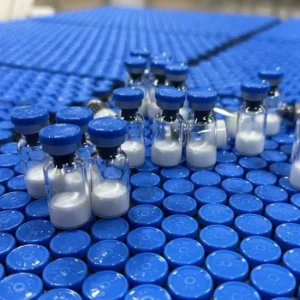
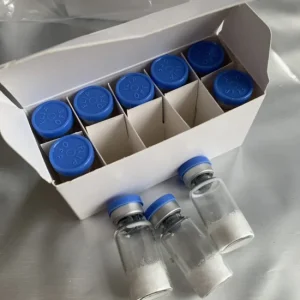
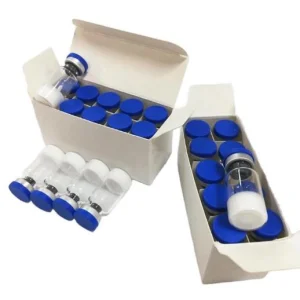
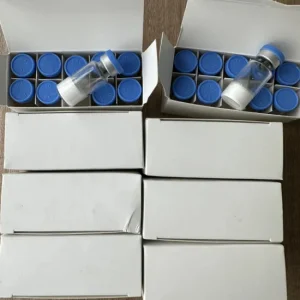
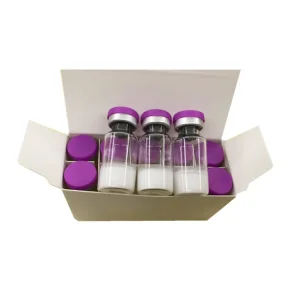
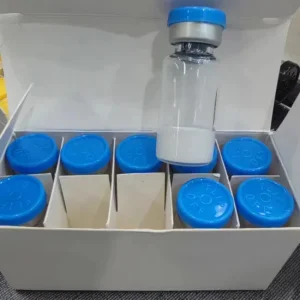
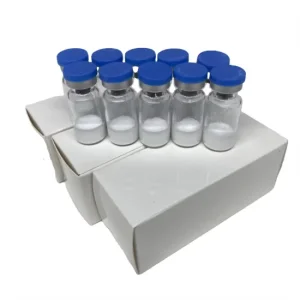
Lyophilized biological research reagents manufactured under strict environmental conditions, accompanied by batch-specific certificates of analysis (COA) with minimum purity targets of 99%.


How upstream chemical integration, automated SPPS synthesizer clusters, and rigorous E-E-A-T operational standards ensure price resilience and uninterrupted global supply.
Unlike regional suppliers relying on outsourced intermediates, China’s industrial ecosystem centralizes the production of Fmoc-protected amino acids, specialized coupling reagents (HBTU, HATU, PyBOP), and CTC/Wang resins within domestic chemical parks. This vertical supply integration lowers procurement friction by over 40% and shields buyers from catastrophic intermediate price volatility.
Our facility operates modern multi-channel microwave-assisted SPPS peptide reactors paired with preparative dynamic axial compression (DAC) HPLC systems. This infrastructure allows smooth transitions between small-batch customized synthesis (such as 2mg/5mg screening vials) and ton-level commercial intermediate bulk manufacturing without degradation in purity or peptide integrity.
Every synthetic lot undergoes automated analytical chromatography to detect deletion sequences, truncation variants, and epimerization. With state-of-the-art Liquid Chromatography-Electrospray Ionization Mass Spectrometry (LC-ESI-MS), molecular weight accuracy is verified within ±0.5 Da, guaranteeing compliant batch-to-batch repeatability for global clinical research.
International B2B peptide procurement entails intricate hurdles spanning customs declaration codes, cold-chain temperature degradation, and strict lab regulatory scrutiny.
Navigating HS Codes (Harmonized System 2937.19 and 2934.99) requires rigorous documentation to prevent port delays. We provide export compliance dossiers, including Material Safety Data Sheets (MSDS), Certificates of Origin, and technical datasheets calibrated to regional frameworks across North America (FDA DMF readiness), the European Union (EMA bioanalytical guidelines), and APAC bio-clusters. Custom invoice descriptions and declared purities ensure transparent, trouble-free customs clearance.
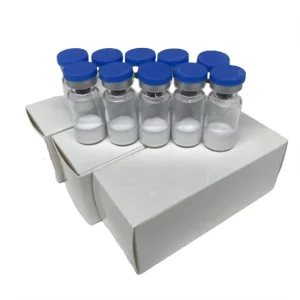
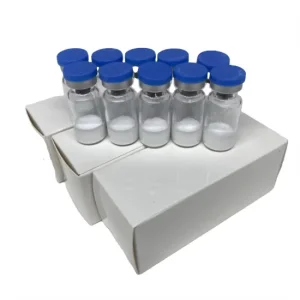
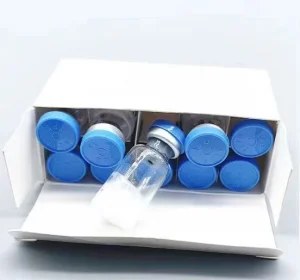
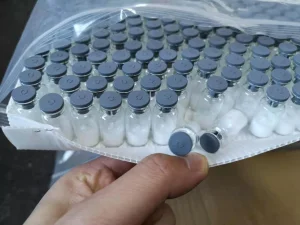
Peptide active structures and secondary folding conformations are vulnerable to thermal denaturation during intercontinental transit. Our export logistic matrix utilizes specialized lyophilization cycles resulting in residual moisture levels below 3%, paired with vacuum-sealed borosilicate glass vials. Overseas dispatch integrates VIP insulated containers, phase-change dry ice inserts, and calibrated data-logging temperature monitors (-20°C continuous trace) to safeguard structural integrity on arrival.
All peptide sequences, small molecules, and chemical intermediates manufactured and supplied by our facility are dedicated strictly for qualified in-vitro scientific research, laboratory assay development, and downstream industrial synthesis. Products are not packaged, labeled, or intended for human or veterinary therapeutic administration.
The peptide API industry is transitioning into multi-receptor agonism, novel delivery modalities, and sustainable green chemistry frameworks.
While mono-agonists like Semaglutide reshaped metabolic pathways, synthesis demand has pivoted toward dual and triple agonists (e.g., Tirzepatide GIP/GLP-1 and Retatrutide GIP/GLP-1/Glucagon). These complex long-chain peptides demand advanced orthogonal protection strategies to avert premature cleavage and branched mis-couplings, pushing synthesis yields from traditional 50% benchmarks to over 85%.
Traditional SPPS generates substantial organic solvent waste (DMF, NMP, DCM). The manufacturing industry is rapidly adopting chemo-enzymatic peptide synthesis (CEPS). By using engineered ligases and subtiligase variants, scientists couple synthetic peptide fragments in water-based buffers, substantially cutting solvent footprint while eliminating toxic racemization in long peptides exceeding 40 residues.
Overcoming the enzymatic degradation of orally administered peptides represents the sector's holy grail. Contract development is expanding rapidly around permeation enhancers (such as SNAC), lipidic nanoparticles (LNPs), and inhaled dry-powder microspheres, creating heightened global demand for customized peptide bulk with micro-controlled particle sizing and specialized salt choices (Acetate vs. TFA salts).
From pre-clinical discovery pipelines to cosmetic formulation science and analytical validation benchmarks.
Supplying contract screening labs with calibrated purity peptides (Tirzepatide, Retatrutide, Cagrilintide) for in-vitro cAMP accumulation assays, receptor binding affinity quantification, and pharmacokinetic cellular profiling.
Delivering high-stability signalling factors (MOTS-c, Humanin, Epithalon) to research institutes exploring mitochondrial gene expression, telomere maintenance, and metabolic longevity pathways.
Supplying cell biology teams with tissue repair benchmarks, including TB500 (Thymosin Beta-4 fragments) and GHK-Cu complexes, for actin filament modulation and collagen synthesis assessment models.
Serving university chemistry departments and contract testing organizations (CROs) with ultra-pure peptide analytical markers to validate novel HPLC columns, ion mobility MS protocols, and stability models.
Every commercial batch executes through an immutable five-stage quality checkpoint to eliminate contamination and guarantee molecular integrity.
Incoming amino acid derivatives undergo optical rotation checks, HPLC purity confirmation (≥99.0%), and moisture titration before integration into synthesis cycles.
Automated peptide synthesizers execute stepwise deprotection and coupling, monitored via real-time UV spectrophotometric tracking of Fmoc adduct deprotection.
Crude peptide cleaved from resins undergoes multi-stage gradient purification on C18 reverse-phase silica matrices to isolate and extract desired molecular fractions.
Controlled freeze-drying produces uniform, moisture-depleted cakes. Final QC conducts analytical HPLC, MS, endotoxin, and acetate counter-ion determination.
Essential guidance addressing purity metrics, counter-ions, batch release times, and supply chain logistics.
Pure grade reference reagents supplied for cellular pathway investigations, analytical development, and pharmaceutical precursor supply chains.