Direct supply line from fully verified synthesis reactors. Rigorous chromatography testing guarantees minimal solvent entrapment and strictly defined stereoisomeric purity for institutional laboratories.
The global steroidal active pharmaceutical ingredient (API) manufacturing ecosystem is experiencing structural transformation, shifting from legacy multistep synthesis toward high-yield microbial biotransformation and continuous-flow crystallization.
Historical dependence on wild diosgenin extracted from Mexican yams has been systematically superseded by industrial microbial oxidation of plant phytosterols (soy and pine derived sitosterol and campesterol). This foundational shift has reduced cyclic raw material volatility and drastically lowered the generation of ecotoxic heavy metal residues.
Global regulatory bodies including the US FDA, EDQM, and PMDA have unified chromatographic resolution standards under ICH Q3A/B guidelines. Steroid API suppliers can no longer validate lots purely via volumetric titration or raw UV detection. Today, rigorous HPLC-DAD/MS validation is the benchmark.
Beyond traditional hospital intravenous and oral prescriptions, international demand has expanded exponentially through specialized 503A/503B compounding formulations, hormone replacement therapies (HRT), anti-catabolic post-operative recovery solutions, and specialized veterinary metabolic therapies.
Procuring raw steroid compounds is exposed to substantial chemical, regulatory, and supply volatility. High-caliber B2B buyers require deterministic control across synthesis reproducibility, residual toxicology, and international border velocity.
Uncontrolled solvent crystallization leads to erratic crystal habits (Form I vs Form II polymorphs). This results in irregular bulk tapped density, erratic dissolution kinetics in carrier excipients, and unpredictable bio-potency inside finished suspensions or pressed solids.
The market is flooded with synthetic brokers who reuse static analytical PDFs or publish purely calculated HPLC area-normalization tables without absolute reference standards, disguising structural degradation products and residual heavy catalysts.
Sub-standard post-reaction drying cycles frequently leave residual dichloromethane, pyridine, or hexane in excess of ICH limits. In injectable oil reconstitution, these solvents cause acute localized tissue inflammation and crystallization breakdown.
Cross-border distribution without harmonized HS classifications, valid end-use declarations, or validated anti-tamper sealing triggers destructive customs quarantines, inventory losses, and severe supply disruptions for manufacturing pipelines.
Reliable steroid manufacturing requires an uncompromising combination of stereoselective chemical synthesis, ultra-pure catalytic conversion, and rigorous multi-stage crystallization technology.
The industrial conversion of 17-keto intermediates into target anabolic-androgenic hormones involves precision stereoselective reduction. Ester linkages (cypionate, enanthate, propionate, decanoate) are introduced via acylation using acid anhydrides or acyl chlorides under dry inert nitrogen blankets.
By closely controlling reaction temperature (±0.5°C) and utilizing modern non-nucleophilic organic bases, our production plants eliminate beta-isomer inversion at the carbon-17 chiral hub, securing absolute biological affinity.
Post-synthesis crude cakes undergo fractional multi-solvent recrystallization utilizing tailored ethanol/water or ethyl acetate/heptane systems. For complex molecules featuring near-identical degradation profiles, automated Simulated Moving Bed (SMB) chromatography is leveraged.
This automated physical separation ensures unreacted starting precursors and trace catalyst ligands are sequestered down to sub-ppm levels, far outperforming standard single-pass industrial washes.
Dissolution kinetics and bio-suspension stability rely heavily on crystal geometry. Our facilities feature fluid energy air-jet mills lined with high-density ceramic chambers, allowing targeted micronization without thermal degradation.
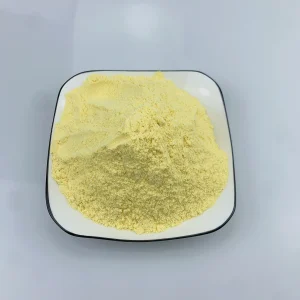
We deliver powders with customizable D50/D90 particle size distributions (typically D90 < 15μm), preventing micro-needle formation, improving powder flow in dry blend capsules, and ensuring stability in liquid vehicles.
In modern chemical supply chains, trust is founded exclusively on transparent, verifiable analytical data. Every commercial lot leaves our manufacturing line backed by a comprehensive regulatory testing portfolio.
Lot purity is confirmed via reverse-phase gradient HPLC coupled with diode array detectors (HPLC-DAD) at 210nm and 240nm. Purity is validated using authentic primary reference standards, with total assay values reported by absolute mass balance rather than simple area normalization.
To eliminate structural ambiguity, every production run is subjected to Proton and Carbon-13 Nuclear Magnetic Resonance (1H/13C-NMR) alongside High-Resolution Mass Spectrometry (HR-MS) to verify exact molecular formula weight, spin couplings, and regio-chemical integrity.
For applications demanding sterile manufacturing compatibility, powders are screened for bacterial endotoxins via Turbidimetric/Chromogenic Limulus Amebocyte Lysate (LAL) assays (<0.12 EU/mg) and Inductively Coupled Plasma Mass Spectrometry (ICP-MS) for elemental heavy metal impurities.
The next decade of industrial steroid manufacturing belongs to automated flow reactors, decarbonized chemical workflows, and artificial-intelligence-monitored process analytical technologies.
Traditional large-scale stirred tank reactors suffer from localized heating and thermal gradients that generate oxidative side-products. We are actively migrating high-hazard oxidation and gas-liquid hydrogenations into microfluidic continuous-flow tubular systems.
This achieves sub-second reaction quenching, reduces solvent volumes by over 45%, and prevents thermal degradation during sensitive steroid core rearrangements.
By implementing in-line Process Analytical Technology (PAT)—combining real-time Focused Beam Reflectance Measurement (FBRM) and in-situ Fourier-Transform Infrared (FTIR) spectroscopy—our plants track nucleation kinetics and crystal growth in real time.
Neural networks trained on over 10,000 hours of crystallization data modulate cooling rates dynamically, ensuring single-crystal polymorphism without manual intervention.
In accordance with global environmental sustainability protocols, our production infrastructure integrates vacuum thermal desorption condensators that recover over 98.5% of organic processing solvents (such as ethanol, acetone, and ethyl acetate).
This closed-loop chemical engineering framework drastically mitigates volatile organic carbon (VOC) emissions while shielding commercial buyers from regulatory plant shutdowns.
Essential technical, regulatory, and logistics intelligence for institutional procurement directors, compliance officers, and pharmaceutical formulation engineers.
Unlike brokers who solely calculate relative UV peak area percentages—which systematically overlook non-absorbing residues such as salts, heavy metals, and residual solvents—our QC release protocol relies on absolute mass balance determination. Mass Balance (%) = [100% - Total Impurities (%)] × [100% - Water Content (%) - Residual Solvents (%) - Inorganic Residue/Ash (%)]. This methodology ensures the Certificate of Analysis reflects the exact active pharmaceutical ingredient (API) substance available for formulation.
Every shipment is issued with a lot-specific Certificate of Analysis (COA) containing detailed HPLC chromatograms, 1H/13C-NMR verification spectra, and mass spectrometry profiles. In addition, we supply comprehensive 16-section Safety Data Sheets (GHS compliant), BSE/TSE-free declarations, Residual Solvent Statements conforming to ICH Q3C, and standard Non-Animal Origin confirmations for institutional audits.
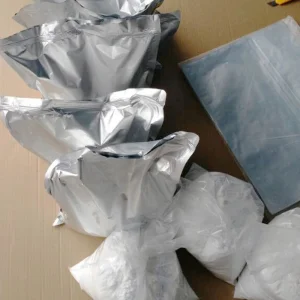
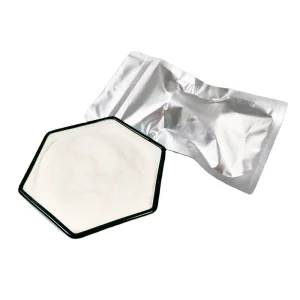
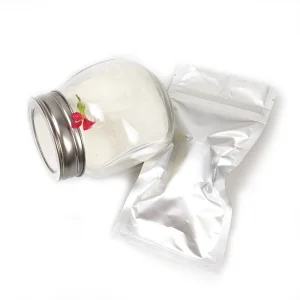
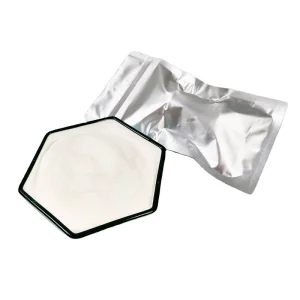
Steroid raw powders, especially esterified compounds like enanthate or cypionate with lower melting points (36°C to 102°C), are vulnerable to agglomeration and hydrolytic ester cleavage. We package material inside multi-layer, heat-sealed, medical-grade aluminum barrier bags containing food-grade desiccant packets, encased inside puncture-resistant HDPE outer drums. For sensitive shipments through high-temperature climatic zones, temperature-monitored refrigerated freight or thermal insulation wraps are utilized.
Yes. Through our specialized fluid energy air-jet milling infrastructure, we can tailor the physical crystal envelope to meet your exact formulation specifications. Whether your process requires coarse non-dusting granules for direct compression tablet manufacturing or ultrafine micronized powder (D90 < 10μm) for stable microcrystalline aqueous or oily suspensions, our engineering team can calibrate feed pressure and classifier wheel speeds to match your targeted PSD parameters.
All chemical export programs operate under full alignment with international customs declarations and harmonized tariff schedules (HS Code Chapter 29). We conduct rigorous due diligence on end-user certificates (EUC) and support licensed research organizations, accredited universities, and certified CDMOs. Shipments are managed with clear regulatory documentation to ensure compliant border transit without supply chain disruption.
Complete secondary catalog covering verified hormonal bases, high-concentration reference solutions, and ancillary therapeutic raw compounds for institutional applications.