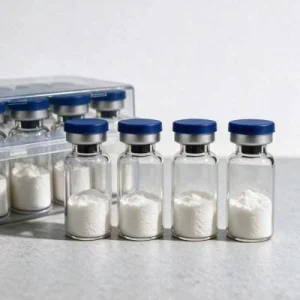
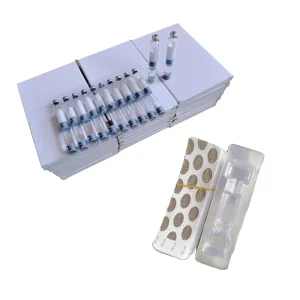
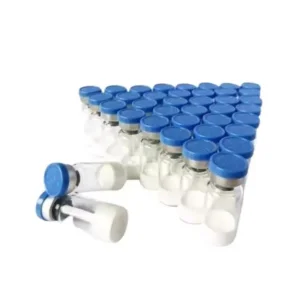
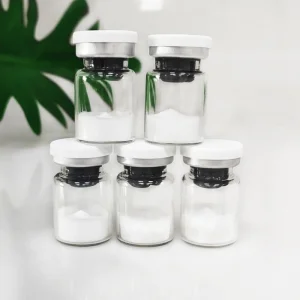
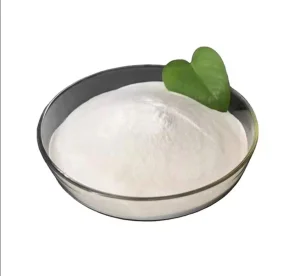
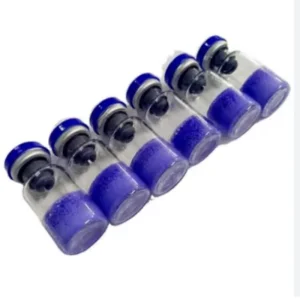
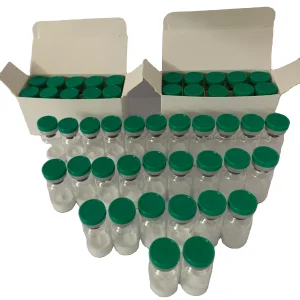
Verified with HPLC and Mass Spectrometry validation protocols. Direct dispatch to licensed B2B analytical research facilities.
An exhaustive analysis of clinical transitions, high-throughput manufacturing, and regulatory governance across non-steroidal selective ligands.
Selective Androgen Receptor Modulators (SARMs) represent a pivotal structural leap in endocrine pharmacology. Engineered to dissociate tissue-building anabolic activity from virilizing androgenic liabilities, non-steroidal structures such as Enobosarm (Ostarine), Ligandrol (LGD-4033), and Testolone (RAD-140) bind stereospecifically to cytosolic androgen receptors.
Unlike traditional 17α-alkylated anabolic steroids, SARMs do not undergo 5α-reduction to dihydrotestosterone (DHT) or CYP19A1-mediated aromatization into estrogenic metabolites. This precise mechanism has catalyzed widespread academic interest across age-related sarcopenia, cachexia secondary to oncology interventions, and neuromuscular atrophy models.
The transition from discovery biology to pre-clinical pharmacokinetic assay requires multi-gram to multi-kilogram active pharmaceutical ingredient (API) reference consistency. Universities, biotechnology startups, and CROs face rigorous documentation hurdles when sourcing ligand compounds.
Global demand mandates complete provenance mapping: baseline NMR confirmation, enantiomeric resolution via chiral chromatography, and trace residual solvent limits conforming to ICH Q3C guidelines. Raw powders must display strict structural identity free from regioisomeric cross-contamination.
Commercial acquisition of SARMs requires navigate-friendly compliance protocols. Sourced strictly under the designation of “For Research and Laboratory Use Only”, global buyers demand vendors who understand international trade classification (HS Codes: 2933, 2937), custom tariff compliance, and strict supply chain integrity without false declarations.
Legitimate B2B transactions hinge on complete safety data transparency (GHS-compliant SDS), anti-counterfeit batch serialization, and third-party laboratory verification before material release.
Leveraging comprehensive chemical clusters to deliver unrivaled purity, production agility, and supply security.
China hosts the world's most concentrated chemical infrastructure for custom fine-organic syntheses. Chinese manufacturers benefit from direct, pipeline-level access to key aromatic building blocks, fluorinated precursor cores, chiral synthons, and specialized coupling reagents like HBTU, HATU, and PyBOP.
By controlling the entire process internally—from simple starting petrochemical materials to intermediate bromo-anilide precursors—production avoids the 30% to 50% supply margin markups common in Western outsourcing. This vertical model preserves stability during unexpected raw material crunches.
Modern production facilities deployed in Shijiazhuang, Hebei, and adjacent manufacturing hubs utilize multi-meter industrial preparative HPLC columns packed with spherical silica sub-10 micron phases. This industrial setup isolates the target molecule from synthetic side-products and diastereomeric impurities with exceptional yield efficiency.
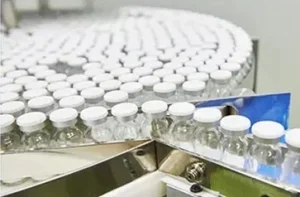
For peptide formulations, class-10,000 cleanroom environments host industrial freeze-dryers (lyophilizers) utilizing programmable sublimation shelves. This preserves bioactivity, maximizes shelf-stability, and controls crystalline habit for instantaneous reconstitutive clarity.
How North American, European, and Asia-Pacific research entities source, formulate, and test selective androgen modulators.
Global research centers focus on the selective recruitment of coregulatory proteins (coactivators vs. corepressors) induced by different SARMs. Sourcing requirements center on high-potency chemical reference standards free of endotoxins and heavy metals (As, Cd, Pb, Hg < 0.1 ppm).
These studies evaluate osteoblast proliferation, bone mineral density retention, and lipolysis kinetics in cellular platforms without inducing prostatic hyperplasia.
Contract formulation labs require fine-mesh raw powders (typically >90% passing through 100 mesh) that dissolve evenly in solvent systems such as PEG-400, Ethanol, and DMSO. Granulation characteristics, bulk tapped density, and uniform dispersion profiles are critical to avoid dosage settlement in non-aqueous suspensions.
Manufacturers who supply comprehensive solubility profiles save research chemists significant pre-formulation bench time.
World Anti-Doping Agency (WADA) compliant testing organizations routinely purchase ultrapure SARMs for metabolite profiling and mass spectral library calibration. These buyers require extensive analytical packets including 1H-NMR, 13C-NMR, FT-IR, HPLC chromatograms, and high-resolution Electrospray Ionization Mass Spectrometry (ESI-MS).
Suppliers must deliver unquestioned isotopic and chemical purity to serve as unambiguous forensic reference standards.
Essential guidance on analytical validation, international customs routing, stability, and commercial packaging.
Available directly from stock. Fully characterized materials with documented analytical traceability.