Explore our core commercial lineup supported by rigorous HPLC-MS validation, verified purity protocols, and rapid B2B clearance pipelines.


A definitive industry guide covering molecular kinetics, factory-direct scalability, quality control criteria, and global supply chain risk management for high-demand pharmaceutical intermediates.
In contemporary medicinal chemistry and active pharmaceutical ingredient (API) synthesis, CAS 19099-93-5, chemically identified as tert-Butyl 4-oxopiperidine-1-carboxylate or 1-Boc-4-piperidone, represents an indispensable building block. As a protected cyclic ketone intermediate, it possesses unique steric and electronic characteristics that enable highly selective nucleophilic additions, reductive aminations, and functional group conversions across the piperidine nucleus.
The strategically integrated tert-butoxycarbonyl (Boc) protecting group provides crucial chemical stability under rigorous oxidation and basic manipulation conditions, preventing undesirable oligomerization while preserving the secondary amine for selective, high-yield deprotection under mild acidic protocols (e.g., anhydrous TFA/DCM or concentrated HCl in organic dioxane/ethyl acetate). For global pharmaceutical corporations, CMOs, and chemical research conglomerates, securing uninterrupted factory supply of CAS 19099-93-5 with validated analytical profiling is essential for sustaining commercial-scale syntheses of central nervous system (CNS) agents, antihistamines, targeted kinase inhibitors, and complex heterocyclic peptidomimetics.
| Analytical Parameter | Certified Chemical Specification | Standard Testing Methodology | Commercial Significance |
|---|---|---|---|
| Chemical Nomenclature | 1-Boc-4-piperidone / tert-Butyl 4-oxopiperidine-1-carboxylate | IUPAC Standard Naming | Accurate customs filing & CAS registry |
| CAS Registry Number | 19099-93-5 | CAS Verification / SciFinder | Unambiguous global procurement identification |
| Empirical Formula & MW | C10H17NO3 | 199.25 g/mol | Theoretical Molecular Calculation | Stoichiometric precision for industrial batches |
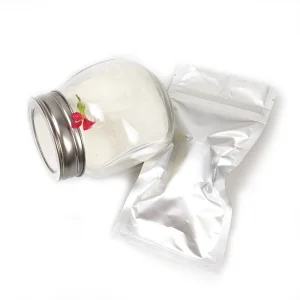
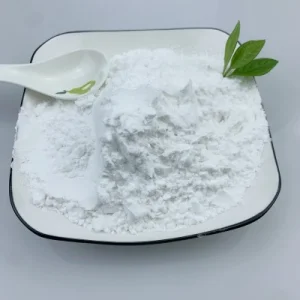
| Visual Appearance | White to faint off-white crystalline solid or mass | Visual Inspection (USP / EP Guidelines) | Primary indicator of low organic oxidation |
| Melting Range | 73.0 °C to 77.0 °C | Automated Melting Point Apparatus | Confirms lattice purity and absence of polymers |
| Assay Purity (GC-FID) | ≥99.0% (Pharma Grade options up to 99.8%) | Gas Chromatography with Flame Ionization | Ensures high-yield downstream transformation |
| Moisture Content (LOD/KF) | ≤0.30% (Karl Fischer Titration) | Coulometric Karl Fischer Titration | Prevents hydrolysis of active organometallics |
| Residual Solvents | Meets ICH Q3C Guidelines (Methanol, Toluene <300ppm) | Headspace Gas Chromatography (GC-HS) | Mandatory for downstream API GMP release |
| Heavy Metal Residues | Lead, Arsenic, Cadmium, Mercury < 10 ppm total | ICP-MS Inductively Coupled Plasma | Compliance with global pharmacopeia safety margins |
Why Tier-1 Chinese chemical manufacturing centers provide unmatched economies of scale, synthesis stability, and direct supply-chain resilience for CAS 19099-93-5.
Direct plant synthesis avoids middle-tier brokerage markup. Starting from basic commodity feedstocks such as piperidone hydrochloride, di-tert-butyl dicarbonate (Boc anhydride), and standard acylating agents, manufacturing facilities maintain unbroken raw material security regardless of raw material market shifts.
Whether servicing analytical laboratories requiring 100g sample qualification or commercial CMO production facilities demanding multiple 200kg drums per shipping container, modular batch and continuous flow crystallization processes are tuned to prevent bottlenecking.
Modern Chinese fine chemical parks operate under stringent national environmental and safety supervision. Upgraded wastewater treatment plants, volatile organic compound (VOC) recovery systems, and fully certified ISO 14001/ISO 9001 frameworks guarantee uninterrupted operations without sudden regulatory shutdowns.
Navigating international customs, regulatory safety dossiers, and import-export governance for smooth clearance across North America, Europe, and Asia-Pacific.
Importing fine chemicals requires comprehensive, audit-ready regulatory documentation. Manufacturers provide complete safety data according to UN GHS standards, alongside active chemical registration files.
Chemical logistics require verified cold-chain or climate-controlled transport to prevent physical degradation or moisture uptake. Experienced exporters offer streamlined shipping modalities.
Because piperidine derivatives can fall under sensitive monitoring classifications in certain jurisdictions, reliable factories execute strict vetting to maintain international compliance.
From crude reaction mass monitoring to final batch release, our testing matrix ensures absolute chemical conformity before export dispatch.
4-Piperidone precursors and Boc-anhydride are screened by GC and titration for baseline purity.
Real-time TLC and GC monitoring tracks condensation kinetics to avoid unreacted starting material.
Controlled temperature gradient cooling ensures high crystal density and purge of volatile solvents.
1H-NMR, GC-FID, Karl Fischer, and residue testing must clear established internal specifications.
Double vacuum polyethylene lining, aluminum moisture barrier, and batch-stamped tracking COA.
Strategic deployment of 1-Boc-4-piperidone across pharmaceutical synthesis pipelines and evolving international market dynamics.
CAS 19099-93-5 serves as the central scaffold for piperidine-containing pharmacophores. It is widely utilized in the manufacturing of:
With the rapid expansion of Proteolysis Targeting Chimeras (PROTACs) and targeted protein degradation, functionalized piperidine rings provide rigid spatial linkers.
The global fine chemical supply chain has experienced shifts toward dual-sourcing models. Forward-thinking procurement departments mitigate geographical risks by:
Authoritative technical, commercial, and operational insights addressing critical buyer criteria for CAS 19099-93-5.
Our standard manufacturing grade delivers ≥99.0% purity determined by Gas Chromatography (GC-FID). For demanding pharmaceutical and clinical-stage synthesis, we routinely produce high-spec lots testing at ≥99.5% or ≥99.8%. Each dispatched consignment includes an official Certificate of Analysis (COA) supported by complete GC chromatograms, 1H-NMR structural spectrum confirmation, Karl Fischer moisture content (typically <0.3%), and loss on drying data.
Under UN and standard ICAO/IATA/IMDG transport regulations, tert-Butyl 4-oxopiperidine-1-carboxylate (CAS 19099-93-5) is classified as a non-dangerous, non-hazardous chemical for transportation purposes. It does not carry hazardous UN numbers. We supply formal Chemical Safety Declarations, standard 16-section Safety Data Sheets (SDS), and Non-DG Transport Assessment Certificates from accredited testing bodies to guarantee swift customs passage via courier, air cargo, or ocean freight.
Packaging configurations are engineered to prevent atmospheric moisture absorption and preserve product integrity over prolonged ocean or air transit. Standard options include: 1 kg / 5 kg aluminum foil vacuum bags with inner food-grade PE bags; 25 kg fiber drums with double sealed polythene liners; and custom palletized bulk lots up to 500 kg – 10 MT. Custom labeling compliant with GHS, barcoding, and internal warehouse SKU identifiers is available upon buyer request.
1-Boc-4-piperidone exhibits a melting range between 73°C and 77°C. It must be stored in tightly sealed, airtight containers in a cool, well-ventilated dry area (recommended temperature range: 2°C to 8°C for long-term storage, or sealed below 25°C for immediate processing). Exposure to atmospheric moisture and strong acidic environments can induce premature cleaving of the Boc protecting group or moisture uptake.
Yes. We support quality control evaluation by providing representative sample batches (typically 50g, 100g, or 500g) directly from current commercial inventory. Every sample is drawn in accordance with ISO 9001 sampling plans, equipped with the exact corresponding lot Certificate of Analysis, allowing in-house QC laboratories to cross-verify analytical specifications and downstream reaction kinetics prior to contract issuance.
We maintain end-to-end export compliance. For EU clients, shipments are processed with relevant REACH compliance frameworks and accompanied by full HS Code declarations (typically HS 2933399090 or appropriate regional sub-headings). For US buyers, proper TSCA certification and non-precursor documentation are attached to all commercial invoices and bills of lading. Dedicated DDP freight forwarders manage customs clearance, eliminating border delays.
Explore additional verified compounds formulated for pharmaceutical development, reference assay standards, and specialized manufacturing applications.
Connect directly with our export engineering and regulatory support team in Shijiazhuang, Hebei. We provide binding price tiers, comprehensive analytical packages, and rapid DDP shipping assessments within 24 hours.

