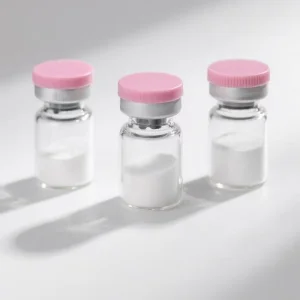
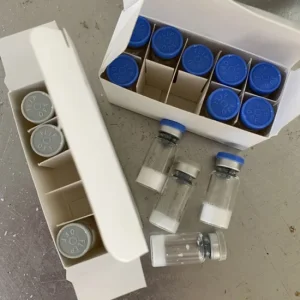
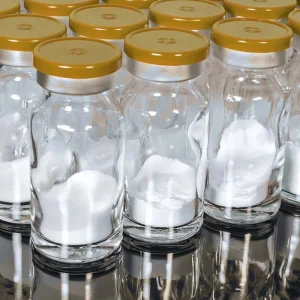
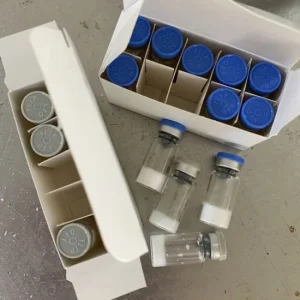
Immediate availability for high-purity laboratory standards, bio-active peptides, and custom synthetic precursors verified through comprehensive HPLC-MS analytics.
Evaluating distillation methodologies, chemical purity specifications, anhydrous dehydration technologies, and supply continuity from China's advanced manufacturing hubs.
In the contemporary bio-pharmaceutical and specialty fine-chemical industry, high-purity ethanol (Ethyl alcohol, CAS No. 64-17-5) serves not merely as a generic solvent, but as an indispensable reaction medium, extraction vehicle, precipitation agent, and precursor for high-yield peptide synthesis, active pharmaceutical ingredient (API) crystallization, and cleanroom sterilization. Sourcing ethanol from an established manufacturer requires rigorous adherence to international pharmacopeia standards, including United States Pharmacopeia (USP), European Pharmacopoeia (EP), British Pharmacopoeia (BP), and Japanese Pharmacopoeia (JP). For B2B procurement managers, chemical plant directors, and academic laboratory heads, understanding the precise chemical classification—ranging from 95% denatured industrial blends to 99.9% extra-dry absolute anhydrous ethanol—is paramount to ensuring reaction kinetics, minimizing impurity profiles, and complying with stringent cross-border regulatory frameworks.
Technical Specification Metric: Anhydrous pharmaceutical-grade ethanol requires Karl Fischer water titration below 0.05% w/w, benzene residue beneath 2.0 ppm, UV-absorbance verification across 240–340 nm wavelengths, and non-volatile residue below 10 ppm to protect sensitive biomolecules and peptide sequences during solid-phase synthesis.
China has solidified its position as the premier global powerhouse in ethanol production, combining vast agricultural biomass feedstock access with cutting-edge petrochemical synthetic hydration infrastructure. Modern Chinese chemical plants incorporate automated continuous multiple-effect distillation columns and molecular sieve dehydration towers, ensuring extraordinary economies of scale, strict carbon-neutral compliance, and uncompromised batch homogeneity.
Utilizing high-selectivity zeolite 3A adsorption beds operating under pressure swing adsorption (PSA) cycles. This physical separation prevents trace azeotropic entrainers (such as cyclohexane or benzene) from contaminating the absolute alcohol, ensuring total purity exceeding 99.9% for analytical and peptide synthesis protocols.
Advanced five-column cascade thermal integration guarantees the fractional removal of fusel oils, methanol, aldehydes, and volatile organic impurities (VOCs). The resulting alcohol consistently exceeds USP and EP monograph specifications, verified through flame ionization detection gas chromatography (GC-FID).
Direct supply contracts backed by dedicated ISO tank containers, UN-approved 200-liter HDPE steel drums, and IBC totes. All international consignments undergo certified Dangerous Goods (DG Class 3, UN 1170) packaging with IMDG, ICAO, and ADR compliance, backed by pre-shipment customs pre-clearance.
Precision engineering of ethanol solutions matched to rigorous chemical synthesis, solvent recovery systems, and sterile medical manufacturing.
Applied extensively during solid-phase peptide synthesis (SPPS) workups, peptide precipitation, washing cycles, and resin cleavage protocols. Ensures no side-chain degradation or unwanted ethyl esterification in synthesized chains like Semaglutide, Tirzepatide, and TB-500.
The premium solvent for cryogenic supercritical extraction of natural flavonoids, alkaloids, ginsenosides (such as Ginsenoside Rk3), and herbal derivatives. Leaves zero toxic residual entrainers compared to petroleum ethers or chlorinated hydrocarbons.
Formulated at 70% v/v with sterile WFI (Water for Injection) and 0.22 μm membrane filtered for cleanroom grade-A/B disinfectant protocols. Completely vaporizes without residue, destroying microbial cell walls, lipid-enveloped viruses, and bacterial vegetations.
Electronic-grade ultra-pure ethanol (SEMI Standard Grade 1 to 4) designed for high-density semiconductor wafer rinsing, printed circuit board (PCB) flux removal, and battery cathode binder processing with metal cation levels <1 ppb.
| Grade Designation | Ethanol Assay (v/v) | Water Content (Karl Fischer) | Benzene & Hydrocarbons | Primary Industry Application | Quality Compliance |
|---|---|---|---|---|---|
| Absolute Ethanol (Anhydrous 200 Proof) | ≥ 99.9% | ≤ 0.05% w/w | ≤ 2.0 ppm | Solid Phase Peptide Synthesis, Spectroscopy, HPLC Mobile Phase | USP / EP / ACS Certified |
| Pharmaceutical Ethanol (96% Undenatured) | 95.1% – 96.9% | Approx. 4.5% | ≤ 2.0 ppm | Tinctures, API Crystallization, Liquid Oral Formulations | BP / ChP / EP Monograph |
| Special Industrial Denatured (SDA 3A / 3C) | ≥ 95.0% | ≤ 0.5% | Non-detectable | Surface Coatings, Polymers, Fine Chemical Intermediates | ISO 9001 / REACH |
| Electronic SEMI Grade 3 | ≥ 99.8% | ≤ 0.1% | Trace Metals < 10 ppb | Wafer Surface Cleaning, Photolithography Drying Agent | SEMI Standard C1 |
The international fine-chemical market is experiencing a profound paradigm shift driven by strict ESG (Environmental, Social, and Governance) targets, carbon-neutral mandates, and circular economy principles. Forward-thinking procurement organizations are actively decoupling from fossil-fuel-derived synthetic ethylene hydration processes, transitioning toward sustainable bio-ethanol produced from non-food lignocellulosic biomass, agricultural stover, and continuous fermentation utilizing genetically optimized Saccharomyces cerevisiae strains.
As international supply chain vulnerabilities have demonstrated over recent trade cycles, enterprise procurement officers must scrutinize suppliers not merely on raw unit cost, but on holistic supply chain resiliency. China’s integrated industrial parks provide distinct geopolitical and logistical advantages: state-of-the-art port terminals in Tianjin, Qingdao, and Shanghai enable direct pipeline transfer into chemical parcel tankers, eliminating double-handling hazards and reducing container transit times to North American and European logistics corridors.
Furthermore, our integrated quality assurance framework incorporates advanced digital Certificates of Analysis (COAs) embedded with cryptographically secure batch validation, high-resolution gas chromatography spectrum overlays, and third-party laboratory oversight from internationally recognized testing authorities such as SGS, Bureau Veritas, and Eurofins. This level of transparency provides procurement teams with the unassailable information gain required by corporate audit boards and environmental ministries.
Direct answers to the most critical technical, operational, and regulatory questions submitted by international chemical and bio-pharma procurement specialists.
Standard 95% ethanol forms an azeotrope with water containing roughly 5% moisture. In sensitive peptide synthesis, residual water triggers premature ester hydrolysis of resin linkers, interferes with carbodiimide coupling reagents (like DIC/EDC), and precipitates peptides in amorphous states. Anhydrous 99.9% absolute ethanol has been molecularly dehydrated to keep water below 0.05%, preserving pure peptide integrity and protecting side-chain protecting groups.
Historically, benzene was utilized in ternary azeotropic distillation to strip water from ethanol, often leaving carcinogen residues of 10 to 100 ppm. Our modern China manufacturing facilities deploy physical zeolite 3A molecular sieve adsorption beds operating under vacuum thermal cycles without adding any third-party chemical entrainers. Every batch is tested via headspace gas chromatography (HS-GC-MS) to guarantee benzene residue is beneath 2.0 ppm, meeting strict USP <467> Class 1 limits.
As Ethanol is classified under UN 1170, Class 3 Flammable Liquid (Packing Group II or III), we provide comprehensive DG documentation including UN-certified packaging certificates, IMO-compliant Dangerous Goods Declarations (DGD), compliant 16-section Safety Data Sheets (GHS-SDS in multiple languages), and pre-shipment maritime container inspections. Packaging ranges from 1-liter laboratory amber glass bottles to 200L steel drums and 24,000-liter stainless steel ISO tanks.
Yes. To help international buyers eliminate or significantly reduce beverage excise duties in target destination ports, we supply fully certified Specially Denatured Alcohol (SDA) formulas compliant with United States TTB regulations, European Union Commission Regulation (EC) 3199/93, and customs formulas worldwide. Denaturants include Methanol (SDA 3A), Isopropanol, tert-Butyl alcohol, and Bitrex (Denatonium Benzoate).
Each manufacturing run undergoes strict lot release testing in an ISO 17025 accredited analytical facility. Testing protocols include Karl Fischer coulometry for water determination, gas chromatography flame ionization detection (GC-FID) for organic volatiles, UV-Vis spectrophotometry for optical clarity, and inductively coupled plasma mass spectrometry (ICP-MS) for heavy metal trace analysis. Batch samples are retained in climate-controlled archives for 36 months.
Standard inventory for palletized drum orders (800 kg to 3.2 MT) is dispatched within 5 to 7 business days from our central bonded warehouses in Hebei and Shanghai. Bulk ISO tank shipments generally require 10 to 14 days for tank sterilization, nitrogen blanketing, customs pre-clearance, and hazardous freight vessel booking. MOQs start at one pallet (four 200L drums) for specialized grades and 18 MT for ISO tanks.
Refined chemical entities, metabolic modulators, and therapeutic peptides manufactured under strict batch-testing and quality release documentation.