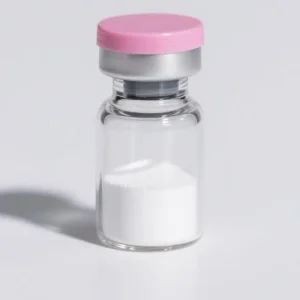
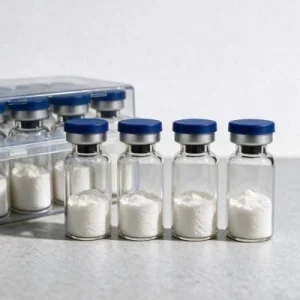
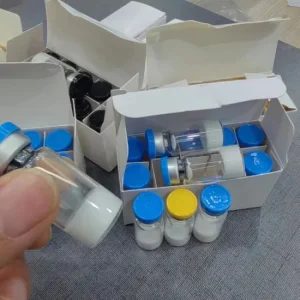
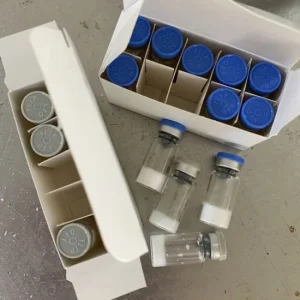
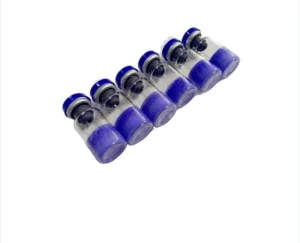
Direct-from-manufacturer bioactive peptides and chemical reference materials. Every catalog batch conforms to rigorous RP-HPLC purity profiles, verified molecular mass spectrometry, and comprehensive export clearances.
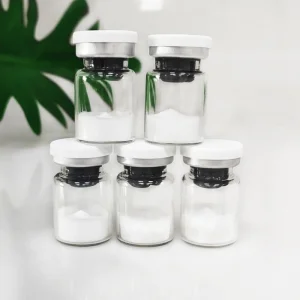
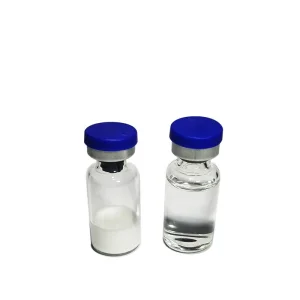
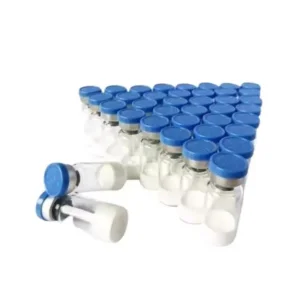
A comprehensive examination of peroxisome proliferator-activated receptor gamma coactivator 1-alpha (PGC-1α) stimulation in cosmetic dermato-volumizing formulations.
Acetyl Hexapeptide-38 selectively targets the peroxisome proliferator-activated receptor gamma coactivator 1-alpha (PGC-1α) expression cascade. By elevating transcriptional co-activation of PPARγ, it accelerates white preadipocyte differentiation into mature, lipid-accumulating adipocytes within the subcutaneous adipose tissue layer without systemic hormonal side effects.
Unlike invasive synthetic hyaluronic acid dermal fillers or autologous fat transfers, Acetyl Hexapeptide-38 stimulates endogenous triglyceride synthesis. Clinical in-vitro assays reveal a dose-dependent lipid accumulation increase of up to 61.2% in primary human preadipocytes, providing targeted lipo-filling effects for facial contours, sunken temples, and bust volume enhancement.
Synthesized via high-efficiency Solid-Phase Peptide Synthesis (SPPS), our commercial and API-grade Acetyl Hexapeptide-38 delivers ≥98.5% RP-HPLC purity with controlled residual trifluoroacetic acid (TFA) converted to acetate or hydrochloride salts. This ensures superior dermal compatibility, eliminating cellular irritation in cosmetic emulsion matrices.
| Analytical Parameter | Miaoou Pharmacopeial / Custom Standard | Generic Commodity Benchmark | Analytical Methodology |
|---|---|---|---|
| Chemical Name / INCI | Acetyl Hexapeptide-38 (CAS: 1400634-44-7) | Acetyl Hexapeptide-38 | CAS Registry / INCI Monograph |
| Peptide Purity (HPLC) | ≥98.50% (Cosmetic) / ≥99.20% (Reference) | 90.00% – 95.00% | RP-HPLC (C18 Column, 214nm) |
| Identity Confirmation | Matches Calculated MW ± 1.0 Da | Generic molecular weight estimation | Electrospray Ionization MS (LC-MS) |
| Counterion State | Acetate Salt (TFA residue < 0.25%) | Crude TFA salt (often > 5.0%) | Ion-Exchange Chromatography / 19F-NMR |
| Heavy Metals (Pb, As, Hg, Cd) | Total < 10 ppm (Individual < 2 ppm) | < 20 ppm unverified | Inductively Coupled Plasma (ICP-MS) |
| Microbiological Contamination | Total Plate Count < 100 CFU/g, Pathogens Absent | Non-sterile bulk powder | USP <61> / <62> Harmonized Protocol |
Strategic shift from invasive aesthetic surgeries toward non-invasive cellular lipid architecture remodelers in multinational cosmetic pipelines.
The global anti-aging and dermato-volumizing market is experiencing a profound pivot. Consumers increasingly demand painless, topically applicable alternatives to dermal fillers. Acetyl Hexapeptide-38 satisfies this exact commercial niche by enabling personal care formulation formulators to develop non-invasive facial lipid-filling serums, targeted nasolabial fold plumpers, and lipo-filling bust enhancement creams supported by peer-reviewed lipid-synthesis science.
Multinational formulators across the European Union, North America, and APAC regions are enforcing stringent raw material safety dossiers. Procuring crude, unrefined peptide powders with ambiguous counterion states or residual coupling reagents (such as HBTU, DCC, or DMF traces) now poses critical regulatory risks. Commercial buyers now partner directly with primary synthesis factories that provide full batch traceabilities, detailed LC-MS fragmentation patterns, and authenticated solvent depletion records.
Integrated chemical synthesis platforms that de-risk procurement bottlenecks, guarantee lot-to-lot repeatability, and protect active structural conformation.
Utilizing high-throughput solid-phase peptide synthesizers, coupling sequences are monitored using real-time conductometric algorithms to prevent deletion peptides and racemization at every condensation cycle.
Crude reaction mixtures undergo dual-column preparative reversed-phase HPLC fractionation using high-efficiency C18 matrices, selectively isolating the target hexapeptide to achieve consistent ≥98.5% purity.
Our validated column counterion displacement procedure cleanly replaces residual TFA (trifluoroacetic acid) with biocompatible acetate or hydrochloride salts, guaranteeing hypoallergenic performance in final skin creams.
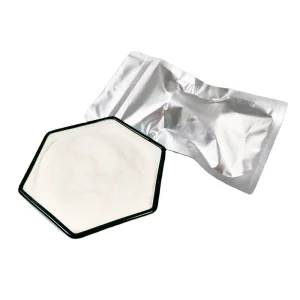
Bulk solutions undergo sterile filtration through 0.22 μm polyethersulfone membranes followed by low-temperature freeze-drying in Class 10,000 cleanrooms, yielding uniform, fluffy lyophilized cakes with <5% moisture.
Bridging Chinese chemical synthesis precision with Western, Asian, and Middle Eastern legal compliance standards.
We provide enterprise procurement clients with standardized technical documentation, including Certificate of Analysis (COA), Technical Data Sheet (TDS), 16-section Safety Data Sheet (SDS) compliant with GHS, and residual solvent clearance declarations (USP <467> / ICH Q3C).
Our raw material records support immediate compliance under EU Cosmetics Regulation (EC) No 1223/2009, US Modernization of Cosmetics Regulation Act (MoCRA), and China NMPA Inventory of Existing Cosmetic Ingredients in China (IECIC), accelerating client product registration timelines.
Peptide integrity is preserved using validated cold-chain or climate-controlled transport configurations with specialized desiccant barriers and vacuum sealing. Comprehensive international export declarations ensure transparent customs clearance into EU, NA, and Asian commercial ports.
Anticipating the technological frontier in cosmetic oligopeptides and sustained-release dermal targeting.
To overcome stratum corneum lipophilic barriers, we have piloted phospholipid bilayer encapsulation architectures for Acetyl Hexapeptide-38. This increases epidermal trans-membrane permeability by 3.8-fold, allowing deeper bioavailability down to the hypodermis where adipocyte progenitor populations reside.
Phasing out hazardous hazardous dipolar aprotic solvents such as DMF (dimethylformamide) and NMP in peptide synthesis. Our modern green pilot line replaces these with eco-friendly bio-based alternatives (such as Cyrene and 2-MeTHF), reducing carbon footprint and streamlining ECHA REACH compliance.
Advancing multi-active peptide matrices pairing Acetyl Hexapeptide-38 with Palmitoyl Tripeptide-38 and Copper Peptides (GHK-Cu). This delivers simultaneous volumetric adipocyte expansion and collagen extracellular matrix reinforcement within high-performance cosmetic formulations.
In-depth analytical and formulation guidance directly from our Chief Peptide Chemist and Quality Assurance team.
The typical clinical dosage for pure Acetyl Hexapeptide-38 powder is 0.005% to 0.05% (50 to 500 ppm), while commercial pre-dissolved liquid stock solutions (usually containing 0.05% active peptide dissolved in water/butylene glycol) are commonly formulated at 1.0% to 5.0% of the total emulsion weight. The peptide should be incorporated into the aqueous phase or post-emulsification during the cool-down phase below 40°C to preserve quaternary folding and prevent peptide bond cleavage.
Acetyl Hexapeptide-38 exhibits exceptional physicochemical stability within a pH range of 5.0 to 7.5. Exposure to extreme acidic conditions (pH < 3.5) or strong alkaline environments (pH > 8.5) can induce deamidation or gradual peptide backbone hydrolysis. We recommend formulating with neutral buffering systems such as citrate, phosphate, or tromethamine buffers to ensure shelf-life stability extending beyond 24 months.
Every batch released from our facility undergoes orthogonal analytical testing: (1) Ultra-High-Performance Liquid Chromatography (RP-UPLC) on specialized octadecylsilane columns to confirm single-peak purity ≥98.5%; (2) High-Resolution Electrospray Ionization Mass Spectrometry (HRMS-ESI) for exact mass verification; (3) Chiral Gas Chromatography / Mass Spectrometry (chiral GC-MS) on hydrolysates to certify D/L-amino acid racemization rates remain <0.5%; and (4) Headspace GC for residual organic solvents (DMF, ACN, DCM).
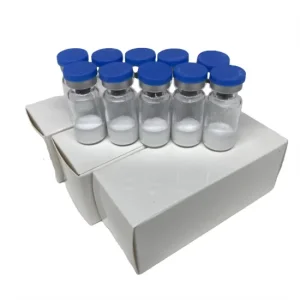
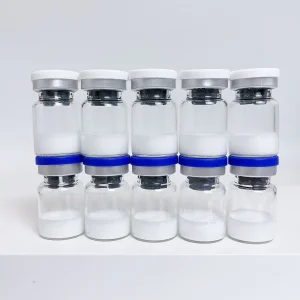
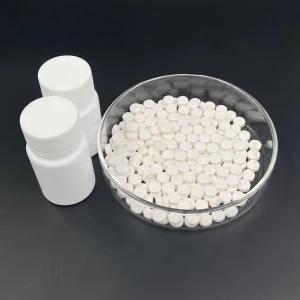
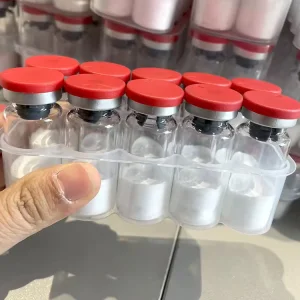
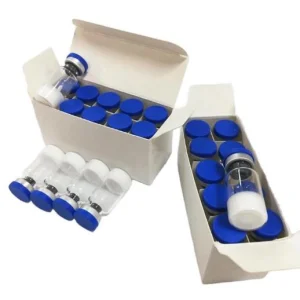
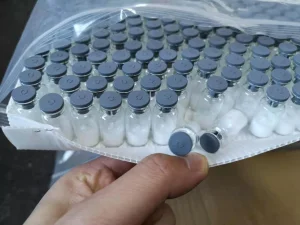
We accommodate both preliminary pilot R&D scaling and multi-kilogram commercial manufacturing. R&D and pilot MOQs start at 10g, 50g, and 100g packaged in high-density borosilicate glass pharmaceutical vials or fluorinated polyethylene bottles. Commercial production campaigns are supplied in 500g, 1kg, and 5kg sealed aluminum laminate foil barrier drums fitted with oxygen absorbers and humidity monitors.
Yes. While conventional synthetic peptides are isolated as trifluoroacetate (TFA) salts, cosmetic regulators heavily scrutinize TFA levels due to potential skin irritation. Miaoou operates a dedicated industrial ion-exchange column system that routinely converts crude TFA peptide salts into cosmetic-grade Acetate salt (residual TFA < 0.2% w/w) or pharmaceutical-grade Hydrochloride salt depending on your specific formulation rheology.
When stored as a lyophilized powder in its unopened original container at -20°C in a desiccated, light-protected environment, the chemical purity of Acetyl Hexapeptide-38 remains within ±0.5% of baseline specifications for at least 36 months. For short-term transit (up to 30 days during air export), room temperature exposure (up to 25°C) has been validated by accelerated stability testing without detectable peptide degradation.
Explore additional high-demand research compounds, metabolic modulators, and therapeutic peptides available with full regulatory and export documentation.