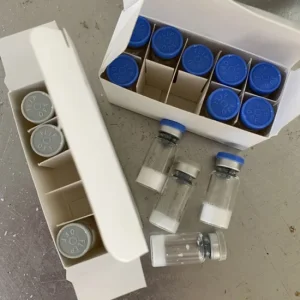
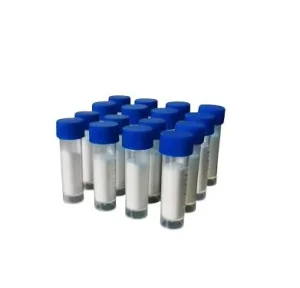
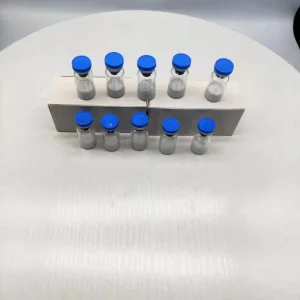
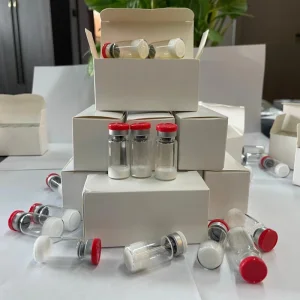
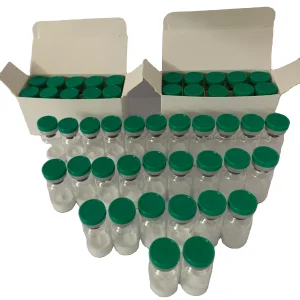
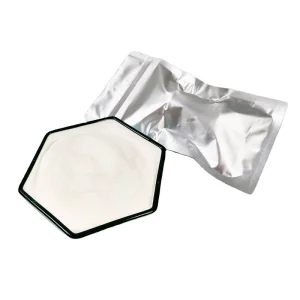
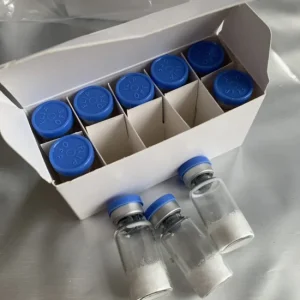
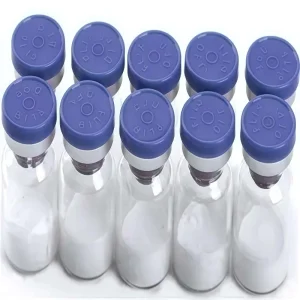
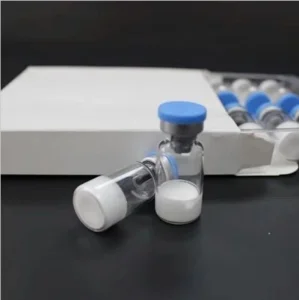
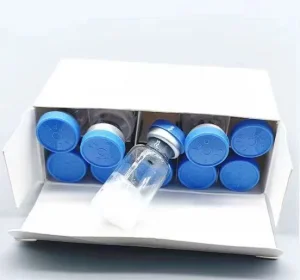
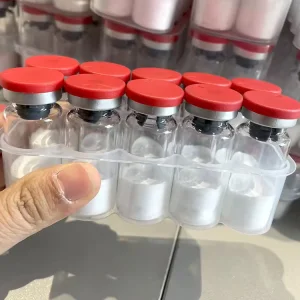
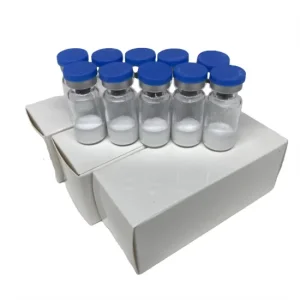
Alongside prime steroid APIs like Methenolone Acetate, our advanced production units synthesize pharmaceutical-grade peptide hormones, growth factor secretagogues, and biochemical reference standards.
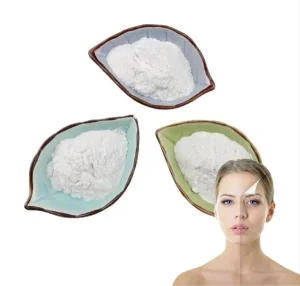
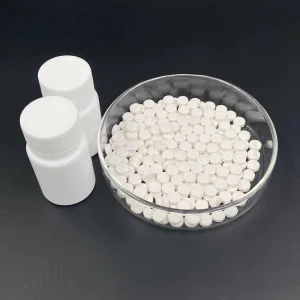
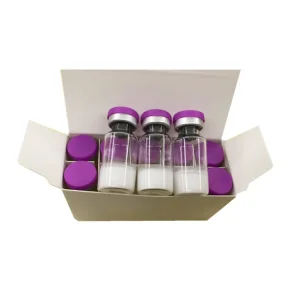
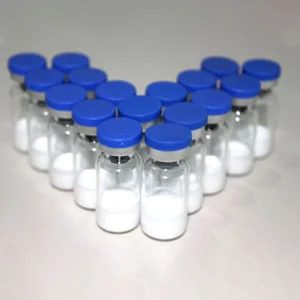
An authoritative analysis of chemical specification, stereochemical purity controls, and manufacturing standards for downstream pharmaceutical, biochemical, and clinical research institutions worldwide.
Methenolone Acetate (17β-acetyloxy-1-methyl-5α-androst-1-en-3-one) features a unique structural configuration that prevents enzymatic aromatization. Our proprietary catalytic route ensures precise stereospecific methylation at the C1 position, yielding raw crystals devoid of beta-isomer degradation or unreacted dehydro-intermediates.
Acetylation of the 17β-hydroxyl moiety is performed under rigorous stoichiometry using purified acetic anhydride and solid-acid heterogeneous catalysts. This prevents dark by-product polymerizations, guaranteeing a clear optical rotation ([α]D20 = +39° to +43°) and sharp crystalline melting points (138°C – 142°C).
Unlike 17α-alkylated steroid molecules that produce toxic hepatic stress during clinical evaluations, Methenolone relies on its 1-en double bond and 17β-acetate group for chemical bioavailability. Our high-resolution LC-MS/MS testing screens every lot to verify zero cross-contamination with methyltestosterone derivatives.
| Analytical Parameter | USP / In-House Reference Specification | Typical Batch Assay (HPLC-UV @ 242nm) | Analytical Instrument / Methodology |
|---|---|---|---|
| Chemical Name | 1-methyl-17β-hydroxy-5α-androst-1-en-3-one acetate | Conforms to Structure | 1H-NMR (600 MHz) & 13C-NMR |
| CAS Number | 434-05-9 | Identified | High-Resolution MS (ESI-TOF) |
| Assay Purity (Dried Basis) | 98.0% – 102.0% | 99.45% – 99.82% | Reverse-Phase HPLC (C18, 5µm, 250×4.6mm) |
| Melting Range | 138.0°C – 142.5°C | 139.8°C – 141.2°C | Automated Capillary Melt Station (USP <741>) |
| Loss on Drying | ≤ 0.5% | 0.18% | Vacuum Oven Desiccation (105°C, 3 hrs) |
| Residual Solvents | Meets ICH Q3C Option 1 (Ethanol < 5000ppm, Hexane < 290ppm) | ND / Well Below ICH Guidelines | Headspace GC-FID / GC-MS |
| Heavy Metals (Pb, As, Cd, Hg) | ≤ 10 ppm total | < 2 ppm | Inductively Coupled Plasma Mass Spec (ICP-MS) |
Analyzing the shifting landscape of active pharmaceutical ingredient (API) supply chains, compliance audits, and specialized synthesis benchmarks across North America, Europe, and the Asia-Pacific.
Modern institutional procurement departments have transitioned away from generic "Certificate of Analysis" forms toward raw chromatographic data sets. International buyers require baseline resolution between Methenolone Acetate and related anabolic impurities like 1-androstenedione and methenolone enanthate.
Regulatory tightening regarding hazardous chromium and heavy metal oxidizers has driven our production lines toward biocatalytic and heterogeneous catalytic dehydrogenation. This reduces environmental effluent loads while producing crystalline powders with minimal elemental impurities.
Geopolitical uncertainties have made inventory visibility the single greatest differentiator for contract purchasing. Pharmaceutical formulators look for manufacturers that maintain dual-source raw precursor pipelines (such as phytosterol-derived 4-AD) to ensure uninterrupted supply during geopolitical disruptions.
How continuous-flow reactors, automated Distributed Control Systems (DCS), and upstream chemical integration create an uncompromised competitive advantage for international buyers.
Replacing outdated glass-lined batch reactors with precision tubular microchannel technology. Real-time temperature control eliminates localized hot spots during exothermic alkylation reactions, reducing by-product generation by over 74%.
Our plants integrate Honeywell Distributed Control Systems paired with Process Analytical Technology (PAT). Real-time NIR spectrometers track reaction equilibria, automatically terminating cycles at optimal theoretical conversion points.
By controlling the fermentation conversion of plant sterols into 1,4-androstadiene-3,17-dione (ADD) and downstream steroid precursors, our facilities maintain 100% raw material independence and total cost transparency.
Crystalline powders are harvested inside ISO Class 7 laminar air-flow isolation bays. Automated drum filling, nitrogen purging, and inductive aluminum-foil sealing protect hygroscopic esters against atmospheric humidity and oxidation.
Providing specialized physical-chemical powder characteristics adapted for solid-dose compression, liquid transdermal suspensions, and veterinary or biochemical research systems.
Methenolone Acetate is predominantly recognized for oral pharmaceutical stability. We supply micronized crystalline grades (D90 < 20µm) exhibiting exceptional powder flowability, minimal die-wall friction, and uniform blend distribution when formulated with microcrystalline cellulose and magnesium stearate.
Due to its moderate lipophilic partition coefficient (logP ≈ 3.4), research institutions explore Methenolone Acetate in ethosomal, lipid nanoparticle (SLN), and transdermal gel matrices. Our solvent-free crystallizations guarantee that zero trace hydrocarbons interfere with surfactant membranes.
In clinical research models studying non-aromatizing androgenic signaling, Methenolone Acetate serves as an invaluable reference molecule for studying protein synthesis stimulation without secondary estrogenic receptor cascades or water retention variables.
Direct answers to key questions asked by QA managers, chemical procurement specialists, and global regulatory import agents.
Browse additional high-demand research APIs, peptide solutions, and active compounds synthesized under strict laboratory validation.