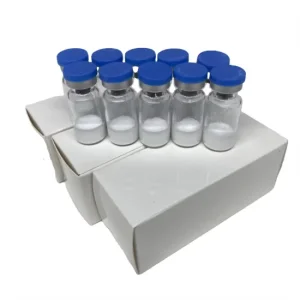
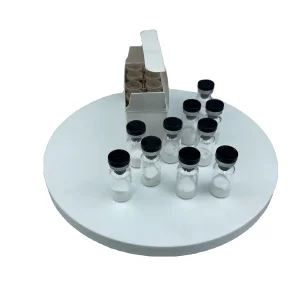
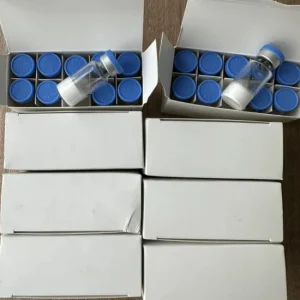
Verified batch integrity, comprehensive analytical documentation, and cold-chain logistics readiness across our specialized compound catalog.
Evaluating shifting production economics, generic API penetration, and the strategic positioning of global qualified raw material suppliers.
Pregabalin, chemically identified as (S)-3-(aminomethyl)-5-methylhexanoic acid (CAS Registry Number 148553-50-8), represents one of the modern pharmaceutical industry's most critical gamma-aminobutyric acid (GABA) analogues. Originally developed as an anticonvulsant and analgesic, Pregabalin acts primarily as a potent presynaptic binding ligand to the alpha-2-delta (α2δ) auxiliary subunit of voltage-gated calcium channels (VGCCs) in the central nervous system. By selectively displacing endogenous ligands and dampening calcium influx at hyper-excited neuronal junctions, it attenuates the exocytotic release of key excitatory neurotransmitters—including glutamate, substance P, and calcitonin gene-related peptide (CGRP).
Following the expiration of original compound patents worldwide, the global Pregabalin landscape transitioned from an originator-dominated market into a highly competitive, large-scale industrial bulk manufacturing arena. Today, the global demand exceeds 1,200 metric tons annually, driven by surging clinical adoptions across emerging healthcare infrastructures and mature pharmaceutical markets alike. As national health systems seek affordable treatments for diabetic peripheral neuropathy (DPN), post-herpetic neuralgia (PHN), and central neuropathic conditions, the responsibility falls squarely on qualified high-quality Pregablin suppliers capable of maintaining strict current Good Manufacturing Practice (cGMP) compliance while delivering multi-ton volumetric agility.
In this hyper-regulated paradigm, pharmaceutical manufacturers and formulators can no longer tolerate batch-to-batch variations, unexpected polymorph transitions, or delivery delays. A robust supplier must integrate deep stereochemical expertise with advanced process engineering to navigate increasingly stringent pharmacopeial monographs established by the United States Pharmacopeia (USP), European Pharmacopoeia (Ph. Eur.), and British Pharmacopoeia (BP).
Unpacking why direct synthesis hubs in China provide unparalleled scale, structural cost optimization, and rigorous batch uniformity.
Chinese manufacturing hubs hold direct geographic and commercial access to foundational precursor chemicals, including isovaleraldehyde, diethyl malonate, and cyanoacetic acid derivatives. This vertical raw material supply chain completely buffers production from global geopolitical shocks and petrochemical cost surges.
Transitioning away from cumbersome classical chemical resolution (e.g., using mandelic acid salts), leading facilities deploy advanced lipase-catalyzed enantioselective hydrolysis. This achieves optical purity exceeding 99.8% enantiomeric excess (ee) while recycling unwanted (R)-isomers via mild racemization pathways.
By replacing conventional multi-ton batch stirred tanks with continuous flow hydrogenation and catalytic microreactors, modern plants minimize reaction residence times, prevent thermal localized degradation, and drastically decrease batch-to-batch variation in crystal morphology.
The industrial synthesis of Pregabalin has undergone a profound evolution over the past decade. The early classical manufacturing route—centered around the condensation of isovaleraldehyde with ethyl cyanoacetate, followed by conjugate addition, decarboxylation, and resolution using chiral resolution agents—suffered from low atom economy, voluminous waste streams, and significant yield loss during racemate separation. Under modern Chinese chemical cluster dynamics, process chemistry has been revolutionized through both continuous catalytic hydrogenation and biocatalytic transformations.
State-of-the-art Chinese synthesis operations utilize proprietary immobilized enzymes in fixed-bed reactors to carry out stereospecific esterase cleavage. This enzymatic precision ensures that the intermediate mono-ester cleanly resolves into the targeted (S)-enantiomer precursor under mild aqueous conditions (pH 7.0–8.0, 30°C–35°C), thereby eradicating toxic organic solvents from the primary chiral stage. Furthermore, the unwanted (R)-enantiomer is not discarded; rather, it is subjected to continuous thermal racemization within a closed recycling loop, bringing total chemical utilization close to theoretical maximums and substantially reducing environmental discharge burdens.
From an infrastructure perspective, Chinese production platforms benefit from centralized utilities within designated National Chemical Parks. These parks provide dedicated high-pressure hydrogen pipelines, continuous steam delivery, on-site industrial wastewater treatment facilities, and direct deep-water port access. Consequently, procurement officers securing contracts with top-tier Chinese Pregabalin suppliers experience reliable production up-time, immediate access to large tonnage batches, and a stabilized pricing structure insulated from third-party logistics vulnerabilities.
Navigating how particle size distribution (PSD), polymorphism, and flowability influence finished dosage forms across therapeutic indications.
Indicated as primary clinical therapy for peripheral diabetic neuropathy, post-herpetic neuralgia, and spinal cord injury pain, demanding rapid dissolution rates and high bioavailability.
Serves as adjunctive therapy in adult patients with partial-onset seizures with or without secondary generalization, necessitating strictly monitored enantiomeric purity to eliminate psychoactive impurities.
Widely approved in the European Union and international markets for chronic anxiety disorders, exhibiting fast onset without benzodiazepine-associated dependency risks.
Demands custom micronized or granulated API grades with tailored bulk densities (0.35–0.55 g/mL) to guarantee homogeneous matrix distribution in once-daily gastric-retentive tablets.
In oral solid dosage (OSD) manufacturing, Pregabalin presents unique formulation challenges rooted in its crystalline physicochemical characteristics. As an amino acid derivative, Pregabalin possesses a zwitterionic nature, exhibiting high water solubility (~32 mg/mL across the physiological pH range) and belonging to Class I of the Biopharmaceutics Classification System (BCS). However, its mechanical properties—such as compressibility, flowability, and hygroscopicity—demand exacting precision during downstream crystallization and milling.
Formulation scientists frequently encounter issues with chemical degradation, particularly the intramolecular cyclization of Pregabalin into its lactam impurity, 4-isobutylpyrrolidin-2-one (Impurity C). This degradation is accelerated in the presence of heat, moisture, and excipient incompatibilities (such as reducing sugars through the Maillard reaction). Premium suppliers mitigate this vulnerability by strictly controlling crystal habit (typically achieving needle-like or plate-like monoclinic polymorphs) and providing API with residual moisture content maintained strictly below 0.2% w/w by Karl Fischer titration.
Moreover, modern high-speed encapsulation and tableting lines require precise Particle Size Distribution (PSD). For conventional immediate-release hard gelatin capsules (25mg to 300mg), an un-milled or gently de-lumped API with a D90 of ≤ 150 μm is preferred to preserve powder blend fluidity and prevent segregation. In contrast, for advanced extended-release matrix systems based on hydrophilic swelling polymers like hydroxypropyl methylcellulose (HPMC) or polyethylene oxide (PEO), micronized Pregabalin (D90 ≤ 30 μm) is required to ensure uniform swelling and consistent diffusion-controlled drug release over 24-hour therapeutic windows.
A rigorous audit comparison illustrating the analytical gap between commodity raw material brokers and certified direct API manufacturing suppliers.
When selecting a qualified Pregabalin supplier, pharmaceutical procurement directors must evaluate the supplier’s analytical capabilities across critical quality attributes (CQAs). International regulatory authorities—including the US FDA, EMA, PMDA, and NMPA—scrutinize the presence of related substances, genotoxic impurities, residual heavy metals, and chiral anomalies. A fully compliant Certificate of Analysis (COA) must be backed by validated chromatographic procedures according to ICH Q2(R1) guidelines.
| Analytical Parameter / CQA | USP / Ph. Eur. Standard Monograph | Standard Chemical Broker | Tier-1 Direct API Manufacturer |
|---|---|---|---|
| Enantiomeric Purity (S-Isomer) | ≥ 99.0% | Variable (98.5% - 99.2%) | ≥ 99.8% (Chiral HPLC, ee > 99.6%) |
| Pregabalin Lactam (Impurity C) | ≤ 0.15% | 0.10% - 0.25% (High degradation risk) | ≤ 0.05% (Validated at release and real-time) |
| Any Individual Unspecified Impurity | ≤ 0.10% | 0.08% - 0.15% | ≤ 0.05% (LC-MS/MS Traceable) |
| Total Related Substances | ≤ 0.50% | 0.35% - 0.60% | ≤ 0.20% Maximum |
| Residual Solvents (ICH Q3C) | Class 2 & 3 Compliance | Incomplete solvent screening | Headspace GC-FID verified below detection limits |
| Heavy Metals / Elemental Impurities | ICH Q3D Compliant | General wet chemistry tests | Full ICP-MS screen for Class 1, 2A, 2B, 3 elements |
| Regulatory Master Documentation | Open Part / Closed Part DMF | Non-DMF or third-party transfer | Active US DMF, CEP, Written Confirmation (WC) |
| Batch Reproducibility & Scale | Commercial Scale | Fragmented small-lot consolidation | Commercial 500kg - 2000kg single homogeneous lots |
Beyond baseline pharmacopeial thresholds, modern quality risk management requires monitoring nitrosamine contamination risks and mutagenic precursors. Comprehensive risk assessments conducted by certified manufacturing plants confirm that the synthetic route for Pregabalin eliminates secondary amines and nitrosating agents during all final purification and isolation stages, thus certifying the bulk product as free from nitrosamine drug substance-related impurities (NDSRIs).
Key risk-mitigation frameworks, strategic buffer warehousing, and environmental compliance demands governing multi-national API contracts.
Global pharmaceutical corporations are moving away from single-source dependencies. Long-term procurement requires qualified secondary production lines, geographically distributed warehouses, and verified reserve stockpiles capable of preventing stock-outs during regulatory re-inspections or logistical blockages.
Multinational tender boards now evaluate suppliers based on Scope 1, 2, and 3 carbon emissions, closed-loop solvent recycling, and advanced wastewater treatment systems. Direct Chinese factories with ISO 14001, ISO 50001, and zero-liquid-discharge (ZLD) infrastructures hold significant tender advantages.
Modern procurement extends beyond pure chemical delivery. Enterprise buyers require collaborative CDMO services, including customized co-crystallization, direct spherical crystallization, and tailored excipient pre-blends designed to reduce manufacturing cycle times at tableting plants.
As the pharmaceutical industry approaches 2030, competitive differentiation in bulk Pregabalin manufacturing will hinge upon digital traceability and sustainability. Leading manufacturers are investing in real-time Process Analytical Technology (PAT)—such as in-line Near-Infrared (NIR) spectroscopy and Focused Beam Reflectance Measurement (FBRM)—to continuously monitor crystallization dynamics, chord length distributions, and polymorph purity in real-time. This eliminates offline testing latency and ensures unyielding batch homogeneity across continuous operational campaigns.
Furthermore, international logistics strategies have adapted to fluctuating maritime conditions. Strategic suppliers maintain bonded cold-storage and air-freight hubs in major global transport intersections (including Hong Kong, Singapore, and Frankfurt), offering localized stock releases, expedited customs clearing support, and flexible Incoterms (CIF, CIP, DDP) supported by validated temperature data-loggers.
Technical, regulatory, and supply chain insights to accelerate vendor qualification and analytical verification.
We employ an advanced enzymatic resolution process utilizing stereospecific esterases combined with continuous chiral HPLC validation. Each commercial batch is analyzed using a specialized chiral stationary phase (such as Chiralpak) capable of baseline resolution between (S)-pregabalin and (R)-pregabalin. Our target enantiomeric excess (ee) consistently exceeds 99.8%, with the (R)-enantiomer kept strictly below 0.10%, fully satisfying the stringent limits of both the USP and Ph. Eur.
Pregabalin Lactam (Impurity C, 4-isobutylpyrrolidin-2-one) forms via an intramolecular condensation favored by thermal exposure and residual moisture. We enforce a triple-barrier containment protocol: API is dried to < 0.15% moisture content, packed inside double heat-sealed pharmaceutical-grade anti-static LDPE liners with food-grade molecular sieve desiccants, and enclosed within high-density tamper-evident fiber drums. Accelerated stability studies prove stability against lactam formation over 36 months under standard warehouse conditions.
Yes. We operate cleanroom-integrated air-classifier milling (ACM) and mechanical pin-mill systems that allow fine-tuning of the Particle Size Distribution. Whether your formulation requires micronized grades (D90 < 20 μm) for fast-acting formulations, standard grades (D90 ≤ 100 μm) for capsule encapsulation, or coarse, high-flowability granular crystals for direct compression, we supply tailored PSD curves verified by laser diffraction (Malvern Mastersizer) with every shipment.
Our regulatory team supports full global dossier submissions. We provide comprehensive Type II Drug Master Files (DMF) for the US FDA, European CEP/EDQM dossiers, and national DMF submissions across APIC/ASEAN jurisdictions. In addition, we deliver Letters of Access (LoA), ICH-compliant stability protocols (both real-time 25°C/60% RH and accelerated 40°C/75% RH), BSE/TSE-free declarations, elemental impurity reports (ICH Q3D), and Nitrosamine Risk Assessments.
For established commercial partners with rolling forecasts, we offer dedicated inventory reservations that ship within 48 to 72 hours of purchase order validation. For fresh production runs or custom-milled contracts, lead times span 2 to 3 weeks from synthesis to release. Shipments are handled through accredited pharmaceutical freight forwarders equipped with GPS and automated IoT temperature-logging sensors, providing 24/7 visibility from our factory warehouse to your receiving dock.
We welcome on-site quality assurance audits by qualified client audit delegations and accredited independent audit bodies (such as Rx-360). For accelerated timelines, we also offer secure virtual audits featuring 360-degree video walkthroughs of our cleanroom suites, analytical QC labs, solvent recovery units, and computerized warehouse management systems (WMS), alongside live digital review of electronic batch records (eBR).
Explore our extended catalog of lyophilized powders, endocrine modulators, and specialized high-purity biochemical references.