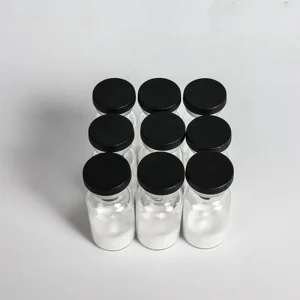
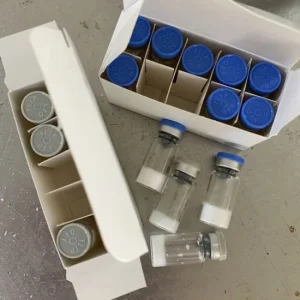
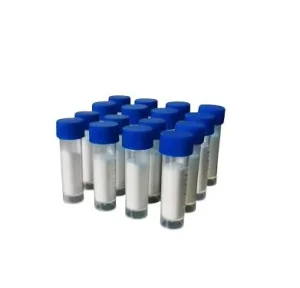
Immediate dispatch from verified inventory hubs. Each compound undergoes stringent multi-stage purity qualification via analytical HPLC, LC-MS, and structural NMR testing.
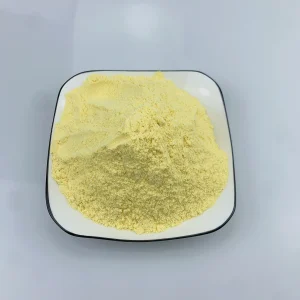
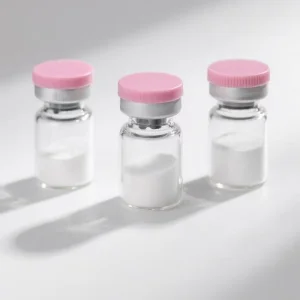
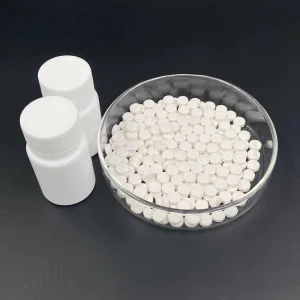

CAS 52-90-4 corresponds systematically to L-Cysteine ((2R)-2-amino-3-mercaptopropanoic acid), the rate-limiting sulfhydryl-containing amino acid fundamental to biological redox signaling, peptide macrocyclization, and industrial chemical synthesis.
| Analytical Parameter | Pharmacopoeial Standard (USP / EP / JP / FCC) | Typical Manufacturer COA Result | Analytical Verification Method |
|---|---|---|---|
| Chemical CAS Identification | CAS Registry Number: 52-90-4 | Matches Chemical Reference Substance | FTIR / Raman Spectroscopy |
| Assay Content (Dry Basis) | 98.5% – 101.5% | 99.35% – 99.80% | Non-aqueous Titration / HPLC |
| Appearance & State | White crystalline powder or crystalline mass | Conforms; odorless or slight characteristic odor | Visual / Sensory Inspection |
| Specific Optical Rotation [α]D20 | +8.3° to +9.5° (c = 8 in 1M HCl) | +8.85° | Automated Polarimetry |
| Chloride (Cl) & Sulfate (SO₄) | Cl ≤ 0.04%; SO₄ ≤ 0.03% | Cl < 0.02%; SO₄ < 0.015% | Ion Chromatography (IC) |
| Residue on Ignition (Sulfated Ash) | ≤ 0.10% | 0.04% | Gravimetric Muffle Furnace (600°C) |
| Heavy Metals & Lead (Pb) | Total ≤ 10 ppm; Pb ≤ 3 ppm; As ≤ 1 ppm | Total < 5 ppm; Non-detectable Arsenic | ICP-MS Elemental Analysis |
| Endotoxin Level (Cell Culture Grade) | < 0.05 EU/mg (upon buyer request) | Conforms to bioprocessing limit | Kinetic Turbidimetric LAL Assay |
Structural transitions in biopharmaceutical production, food safety regulations, and kosher/halal certifiability are fundamentally reshaping the global procurement landscape for L-Cysteine.
Historically, commercial L-Cysteine relied extensively on acid hydrolysis of human hair and poultry feathers. Stringent European Commission and US FDA regulatory scrutiny surrounding cross-species contamination, prion transmission (TSE/BSE), and moral dietary transparency has driven global buyers permanently toward certified non-animal biological fermentation.
The rapid expansion of the monoclonal antibody (mAb), therapeutic peptide, and GLP-1 receptor agonist markets has generated exponential demand for CAS 52-90-4. In recombinant mammalian cell culture media (e.g., CHO cell platforms), high-purity L-Cysteine is non-negotiable for counteracting oxidative stress and guaranteeing accurate intramolecular disulfide bridging.
In the bakery processing (E920 dough relaxation) and natural savory flavoring sectors, global supply chains mandate absolute traceability. Fermentation-derived L-Cysteine eliminates cross-contamination risks, instantly passing audits across North American, European, and Middle Eastern regulatory territories.
From fine active pharmaceutical ingredient (API) synthesis to high-throughput bioprocess bioreactors, discover how CAS 52-90-4 serves as a precision chemical building block.
CAS 52-90-4 is the direct stoichiometric precursor in the chemical manufacture of N-Acetyl-L-Cysteine (NAC), S-Carboxymethyl-L-Cysteine (Carbocisteine), and pharmaceutical-grade reduced Glutathione (GSH). Its free nucleophilic sulfhydryl group (-SH) serves as the primary reactive center in the synthesis of mucolytic therapeutics, paracetamol toxicity antidotes, and hepatic protective formulations.
In the industrial synthesis of complex peptides (such as Somatostatin, Oxytocin, Calcitonin, and engineered GLP-1 analogues), L-Cysteine is converted into orthogonally protected synthons like Fmoc-Cys(Trt)-OH and Boc-Cys(pMeBzl)-OH. Strict optical stereospecificity prevents racemization during peptide coupling cycles, preserving biological receptor binding affinity.
In high-density mammalian fed-batch and perfusion fermentation systems (CHO, HEK293), dissolved oxygen creates aggressive intracellular reactive oxygen species (ROS). L-Cysteine acts as an essential reducing agent, stabilizing cell viability, maximizing viable cell density (VCD), and regulating correct disulfide pairing to prevent IgG antibody misfolding or aggregation.
Cataloged as European food additive E920 and US FDA GRAS substance, L-Cysteine cleaves intramolecular disulfide bonds within wheat gluten proteins. By chemically relaxing gluten elastic networks, it reduces dough mixing times, optimizes automated sheet machinability, standardizes cracker crispness, and preserves uniform crust volume in commercial bakeries.
Thermal degradation of L-Cysteine in combination with reducing pentoses (such as D-xylose or ribose) triggers classical Maillard and Strecker degradation cascades. This process generates crucial heterocyclic sulfur volatiles (thiazoles, thiophenes, and mercaptans) that formulate natural roast meat, poultry, and savory broth flavoring systems.
In topical dermatology and advanced haircare, CAS 52-90-4 penetrates the stratum corneum and hair cuticle. It exerts active anti-glycation and anti-melanogenic effects by inhibiting tyrosinase activity and replenishing endogenous glutathione reservoirs, resulting in superior brightening serum formulations and non-toxic keratin bond reconstruction treatments.
Accelerated investments in metabolic pathway engineering, continuous crystallizers, and carbon-negative bio-routes are revolutionizing CAS 52-90-4 yield profiles and carbon footprints.
Treatment of poultry feathers with boiling concentrated hydrochloric acid (30% HCl) followed by chemical neutralization and electrolytic reduction of L-Cystine. Plagued by massive acid effluent discharge, odor emissions, and severe microbiological risks.
Utilizing resting microbial cells expressing L-cysteine desulfhydrase or via DL-2-amino-Δ2-thiazoline-4-carboxylic acid (DL-ATC) enzymatic hydrolysis. Achieved stereospecific synthesis but struggled with high biocatalyst degradation and raw material substrate costs.
Genetically engineered Escherichia coli or Corynebacterium glutamicum with deregulated serine acetyltransferase (SAT) and O-acetylserine sulfhydrylase (OASS) complexes. Uses renewable non-GMO starch and inorganic sulfate to produce high-titer, 100% vegetarian L-Cysteine.
Overcoming intracellular L-cysteine toxicity in host strains via engineered membrane transporters (YdeD, Bcr, and CydDC), unlocking unprecedented fermentation titers beyond 35 g/L and reducing downstream recovery costs by 40%.
Deploying ultrasonic-assisted continuous crystallization loops to strictly standardize crystal habit and particle size distribution (PSD), completely eliminating caking tendencies without requiring flow-enhancing silica anticaking additives.
Integrating nanofiltration (NF) and ceramic ultrafiltration (UF) modules in closed-loop mother liquor recovery systems, slashing biological chemical oxygen demand (COD) discharge by 95% and achieving carbon-neutral environmental compliance.
How deep domestic upstream vertical integration, mega-scale fermentation infrastructure, and modern logistical clustering provide unmatched procurement security for international partners.
China's comprehensive chemical infrastructure ensures uninterrupted upstream availability of core substrates: industrial corn starch, liquid sulfur precursors, and biological grade ammonia. By sourcing raw feedstocks inside unified chemical industrial parks, domestic manufacturers are completely shielded from transatlantic raw material shocks.
Modern Chinese biomanufacturing facilities operate commercial fermentation vessels exceeding 100,000 to 200,000 liters. This unmatched volumetric capacity delivers dramatic economies of scale, maintaining stable contract pricing (20–35% more cost-effective than Western or Japanese legacy alternatives) without sacrificing strict USP/EP tolerances.
Factory networks tied directly to premier maritime container hubs (Qingdao, Shanghai, Ningbo, and Tianjin) ensure container vessels sail weekly to North America, Rotterdam, and Southeast Asia. Standard ocean and expedited air-freight corridors guarantee unbroken procurement continuity even during peak logistical demand windows.
Meeting rigorous standards established by global regulatory authorities through continuous quality management systems, transparent traceability, and local partner representation.
We empower your regulatory affairs department with complete pre-qualification and submission packages for rapid international clearing:
Every production lot is governed by rigorous in-process controls (IPC) and terminal release criteria:
Chiral HPLC separation guarantees non-detectable levels of the unnatural D-enantiomer, guarding against loss of bioactivity.
Strict limits on residual elemental impurities per ICH Q3D via high-resolution ICP-MS (Cadmium, Lead, Arsenic, Mercury < 0.1 ppm).
Explore our complementary supply catalog featuring high-purity cosmetic peptides, coenzymes, metabolic modulators, and API reference standards.
Clear, authoritative technical answers addressing common quality, regulatory, analytical, and supply chain questions from chemical procurement teams.
CAS 52-90-4 refers specifically to free-base L-Cysteine ($C_3H_7NO_2S$, MW: 121.16 g/mol). In contrast, CAS 52-89-1 designates L-Cysteine Hydrochloride Anhydrous ($C_3H_7NO_2S \cdot HCl$, MW: 157.62 g/mol), while CAS 7048-04-6 represents L-Cysteine HCl Monohydrate. Free-base CAS 52-90-4 is preferred when adding chloride ions is undesirable, such as in direct solid-phase peptide couplings, pH-neutral cosmetics, and low-salt food formulations.
L-Cysteine contains a reactive free thiol (-SH) that readily oxidizes into the dimer L-Cystine (forming a disulfide bond, -S-S-) in the presence of atmospheric oxygen, moisture, and alkaline conditions. Our factory packages CAS 52-90-4 under vacuum with nitrogen flushing inside heavy-duty, multi-layer aluminum barrier foil bags sealed in fiber drums. Storage under dry conditions (<25°C, relative humidity <60%) ensures shelf stability of up to 36 months.
Yes. Every export lot comes with a comprehensive Certificate of Analysis (COA) detailing HPLC assay purity (typically ≥99.2%), optical rotation data, and chiral chromatography ensuring D-Cysteine is below 0.1%. Full raw integration chromatograms and elemental ICP-MS reports are available upon request during initial qualification.
Yes. Our flagship CAS 52-90-4 is produced exclusively via non-pathogenic microbial bio-fermentation using renewable plant glucose. It contains zero animal, human hair, or poultry-derived components. Formal annual certifications from accredited Halal organizations and recognized Kosher rabbinical boards are supplied with each batch.
Our standard industrial export packing consists of 25 kg net weight fiber drums lined with double heat-sealed polyethylene and aluminum moisture-barrier bags (palleted: 18 drums / 450 kg per pallet). For pre-production qualification and analytical validation, pilot sample quantities starting at 1 kg and 5 kg are readily available for immediate courier dispatch.
For in-stock material, warehouse release and dispatch to major container ports (Shanghai or Qingdao) takes 48–72 hours. Ocean transit times are typically 14–18 days to the US West Coast and 24–28 days to European base ports (Rotterdam/Hamburg). Urgent pilot or pre-clinical trial quantities can be dispatched via air freight (DAP/DDP) within 3–5 business days.