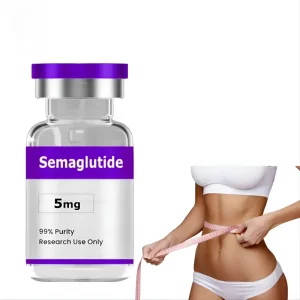
Explore high-specification pharmaceutical and laboratory compounds produced under ISO 9001 and cGMP-aligned manufacturing frameworks. Each product is accompanied by HPLC/MS batch release certificates.
A rigorous examination of L-Cysteine (C3H7NO2S, CAS: 52-90-4), its hydrochloride derivatives, and its role as an essential biological nucleophile and manufacturing precursor across global value chains.
L-Cysteine is distinct among the 20 standard proteinogenic amino acids due to its ionizable thiol (-SH) side chain, which exhibits strong nucleophilic activity and a pKa near physiological levels (~8.3). This renders it indispensable in formulating active pharmaceutical ingredients (APIs), stabilizing enzymatic peptide conformations through reversible disulfide bridge formation (Cystine linkage), and serving as an effective reactive oxygen species (ROS) scavenger.
Within cellular systems and industrial bioprocessing alike, L-Cysteine acts as the rate-limiting substrate in the biosynthesis of Glutathione (GSH, γ-L-glutamyl-L-cysteinylglycine). Industrial demand for L-Cysteine has accelerated rapidly due to its role as a key chemical precursor for N-Acetyl-L-Cysteine (NAC), carbocisteine, and S-carboxymethyl-L-cysteine, which are core mucolytic agents and liver-protectant pharmaceuticals.
B2B enterprise sourcing requires precise differentiation between chemical formats: L-Cysteine Base (CAS 52-90-4), L-Cysteine Hydrochloride Monohydrate (CAS 7048-04-6), and Anhydrous L-Cysteine HCl (CAS 52-89-1). Manufacturing compliance demands multi-monograph verification harmonized across USP (United States Pharmacopeia), EP (European Pharmacopoeia), FCC (Food Chemicals Codex), and JP (Japanese Pharmacopoeia).
How China's biomanufacturing corridors transformed from archaic hydrochloric acid keratin hydrolysis to state-of-the-art enzymatic and microbial fermentation hubs, establishing unmatched economies of scale.
Historically, commercial L-Cysteine relied on the extraction of human hair or poultry feathers through aggressive acid hydrolysis—a practice increasingly constrained by environmental mandates and religious dietary strictures (Halal/Kosher). Modern Chinese manufacturing facilities in Hebei, Shandong, and Jiangsu have transitioned heavily to non-animal bio-fermentation using metabolically engineered strains of Escherichia coli and Corynebacterium glutamicum. This shift ensures a non-GMO, vegan-certified supply with zero transmissible spongiform encephalopathy (TSE) or bovine spongiform encephalopathy (BSE) vector risks.
Chinese fine-chemical synthesizers benefit from domestic access to foundational raw materials. Upstream glucose syrups derived from expansive domestic corn-refining capacities, coupled with localized sulfur-source chemical synthesis (ammonium sulfate, thiosulfates), insulate Chinese fermentation infrastructure from the volatile price fluctuations seen in Western or import-reliant European processors. This vertical consolidation enables steady production schedules and predictable pricing structures for bulk long-term contracts.
Yield efficiency is determined in the downstream processing (DSP) stage. Leading Chinese producers utilize automated membrane microfiltration, cation-exchange resin chromatography, electrodialysis, and multi-effect vacuum crystallization trains. This produces L-Cysteine with optical rotation [alpha]D20 values consistently calibrated between +8.3° and +9.5° (in 5M HCl), minimizing D-enantiomer contamination and delivering pharmaceutical-grade enantiomeric purity (≥99.5%).
In alignment with national emissions caps, primary chemical manufacturing parks have implemented closed-loop solvent recovery, zero-liquid-discharge (ZLD) effluent remediation facilities, and biological desulfurization systems. Consequently, international buyers audit facilities that not only fulfill quality parameters, but also demonstrate stable production continuity free from environmental shutdown risks.
Strategic analysis of regulatory transitions, shifting consumer preferences, and technological milestones shaping the procurement mandates of Fortune 500 chemical and food corporations.
Global regulatory bodies and consumer watchdogs have driven the phasing out of avian and porcine hair-derived cysteine. In the European Union, Directive requirements for food additive E920 explicitly favor fermentation-derived variants for consumer transparency. Major multinational food manufacturers (bakery, savory flavors) now demand 100% DNA-traceable vegan certifications to mitigate brand reputation exposure, positioning synthetic and fermentation-based producers as the default global tier-1 suppliers.
With the rapid expansion of monoclonal antibodies (mAbs), recombinant therapeutics, and cellular agriculture, L-Cysteine and its oxidized dimer, L-Cystine, serve as critical feedstocks in chemically defined cell culture media (CD-CCM). Mammalian cell lines (such as Chinese Hamster Ovary / CHO cells) require high-purity, endotoxin-depleted L-Cysteine (< 0.05 EU/mg) to maintain high cell densities and optimal protein folding pathways without intracellular redox stress.
Next-generation processing embraces continuous biotransformation using immobilized enzymes (e.g., O-acetylserine sulfhydrylase or cysteine synthase). Continuous micro-reactor syntheses reduce energy profiles by over 30% compared to batch reactors. Furthermore, this technique eliminates toxic intermediary byproducts, ensuring heavy metal levels (Lead, Arsenic, Cadmium, Mercury) settle well under strict international baseline limits (< 1 ppm combined).
A granular breakdown of formulation parameters, reaction mechanisms, and qualitative requirements across global manufacturing disciplines.
In sterile parenteral nutrition (infusion therapies), L-Cysteine is an indispensable additive for neonatal and hepatic-impaired patients lacking the transsulfuration pathway to convert methionine to cysteine. In respiratory therapeutics, it is reacted with acetic anhydride to synthesize N-Acetyl-L-Cysteine (NAC), whose free sulfhydryl group depolymerizes mucin oligomers by cleaving intra- and intermolecular disulfide bonds.
Classified as Food Additive E920, L-Cysteine acts as a targeted dough conditioner. By executing disulfide-sulfhydryl exchange reactions, it breaks the gluten protein matrix (glutenin and gliadin polymers), lowering dough elasticity, reducing mixing times by up to 30%, and preventing dough snap-back during industrial tortilla, wafer, and bread loaf shaping.
Due to its high affinity for human keratin, L-Cysteine is deployed in cold-wave perming formulations to disrupt hair disulfides gently without the harsh olfactory profile of ammonium thioglycolate. In topical derma-ceuticals, L-Cysteine reduces excessive melanin synthesis by reacting with dopaquinone to form cysteinyldopa, favoring lighter pheomelanin production over eumelanin pigments.
L-Cysteine serves as a core sulfur-containing reagent in thermal Maillard Reaction Flavorings (MRFs). When co-heated with reducing sugars (such as xylose, ribose, or dextrose), it undergoes Strecker degradation to generate volatile aroma compounds, including furans, thiophenes, thiazoles, and mercaptans, perfectly replicating chicken, beef, and roasted savory aroma profiles.
A standardized strategic governance framework designed to eliminate supplier insolvency risks, regulatory hold-ups, and batch non-conformity in transcontinental amino acid logistics.
Global pharmaceutical and food companies cannot rely on simple broker assurances. Sourcing teams must audit factories based on three non-negotiable vectors:
Geopolitical tariffs, logistical choke-points, and localized industrial disruptions necessitate dual-sourcing architectures within China:
Streamlined regulatory onboarding demands exhaustive technical documentation prior to product receipt:
Direct comparative metrics mapping critical quality attributes (CQAs) of L-Cysteine forms against standardized international compendia.
| Analytical Parameter | L-Cysteine Base (USP/FCC) | L-Cysteine HCl Monohydrate (Ph.Eur/USP) | Anhydrous L-Cysteine HCl (Ph.Eur/JP) | Testing Methodology |
|---|---|---|---|---|
| CAS Number | 52-90-4 | 7048-04-6 | 52-89-1 | CAS Registry |
| Molecular Formula | C3H7NO2S | C3H7NO2S · HCl · H2O | C3H7NO2S · HCl | Empirical Formulation |
| Assay (Dry Basis) | 98.5% – 101.5% | 98.5% – 101.0% | 98.0% – 101.0% | Potentiometric Titration / HPLC |
| Specific Optical Rotation [α]D20 | +8.3° to +9.5° | +5.5° to +7.0° | +5.6° to +8.9° | Polarimetry (in prescribed solvent) |
| State of Solution (Transmittance) | ≥ 98.0% (430 nm) | ≥ 98.0% (Clear & Colorless) | ≥ 95.0% Clear | UV-Vis Spectrophotometry |
| Chloride (Cl) Content | ≤ 0.04% | 19.8% – 20.8% | 22.0% – 23.0% | Argentometric Titration |
| Sulfate (SO4) Residues | ≤ 0.03% | ≤ 0.02% | ≤ 0.03% | Turbidimetric Visual Comparison |
| Ammonium (NH4) | ≤ 0.02% | ≤ 0.02% | ≤ 0.04% | Colorimetric Spectrophotometry |
| Heavy Metals (as Pb) | ≤ 10 ppm | ≤ 5 ppm | ≤ 10 ppm | ICP-MS or Colorimetric Method |
| Arsenic (As) | ≤ 1 ppm | ≤ 1 ppm | ≤ 1 ppm | Hydride Generation AAS / ICP-MS |
| Loss on Drying (Moisture) | ≤ 0.5% | 8.5% – 12.0% | ≤ 1.0% | Thermogravimetric Oven (105°C) |
| Residue on Ignition (Ash) | ≤ 0.10% | ≤ 0.10% | ≤ 0.10% | Sulfated Ash Muffle Furnace (600°C) |
Preserving crystalline integrity and preventing premature oxidation during global intermodal transit through specialized packaging engineering.
L-Cysteine in free base format easily oxidizes into insoluble L-Cystine upon prolonged exposure to airborne oxygen and ambient moisture. To guarantee a 24-to-36-month shelf life, primary Chinese export packaging implements a double-layered barrier: an inner food/pharma-grade low-density polyethylene (LDPE) liner, sealed with food-grade desiccants, enclosed in an aluminum-foil barrier bag, and housed within a 25 kg fiber drum (kraft paper drum) or heavy-duty corrugated export box.
Ocean passage across equatorial routes exposes cargo to severe condensation ("container rain"). Bulk container loadings (typically 9 to 12 metric tons per 20GP container on heat-treated ISPM-15 wooden or plastic pallets) require high-capacity calcium chloride container desiccant strips suspended along interior walls, ensuring relative humidity remains strictly below 60% during maritime voyages.
Cross-border customs efficiency demands correct harmonized tariff scheduling. L-Cysteine and its hydrochloride salts are classified under HS Code: 2930.9090.99 (Organo-sulfur compounds, other) or specific subheadings depending on port of entry (e.g., US HTS 2930.90.9150). Providing accurate chemical nomenclature, CAS matching, and declared purity grades avoids costly demurrage and customs validation delays.
In-depth responses resolving complex analytical, legal, and operational questions surrounding industrial L-Cysteine transactions.
Chemically and stereochemically, the molecular structure of L-Cysteine (C3H7NO2S) is identical regardless of origin. However, the critical differentiation lies in the impurity profile. Keratin-extracted material often contains trace peptide fragments, potential avian pathogen residues, higher levels of trace arsenic/heavy metals from industrial acid hydrolysis, and broad chiral variance. Bio-fermentation L-Cysteine is synthesized via microbial fermentation using pure carbohydrate substrates, yielding zero animal-derived impurities, superior enantiomeric homogeneity (D-enantiomers < 0.1%), and full compatibility with vegan, Halal, and Kosher regulatory standards.
L-Cysteine Base exhibits poor water solubility (~0.11 g/mL at 20°C) and quickly auto-oxidizes to sparingly soluble L-Cystine at neutral or alkaline pH, forming a white precipitate. In contrast, L-Cysteine Hydrochloride Monohydrate (CAS 7048-04-6) is highly soluble in water (> 0.65 g/mL at 20°C) and produces an acidic solution (pH 1.5 – 2.0 at 10% concentration), which naturally stabilizes the free thiol (-SH) group against atmospheric oxidation, making it ideal for liquid feeds, parenteral admixtures, and beverage premixes.
Compendial guidelines (USP/EP) specify reverse-phase high-performance liquid chromatography (RP-HPLC) with ultraviolet detection (typically set between 210 nm and 220 nm) or thin-layer chromatography (TLC). In RP-HPLC, because the Cystine dimer possesses different retention characteristics and two disulfide-linked subunits, it is readily separated from the monomeric L-Cysteine peak. Limits for Cystine in pharmaceutical-grade L-Cysteine HCl are tightly capped at ≤ 1.0% (or ≤ 0.5% in high-purity bioprocess grades).
Every export consignment must include: (1) A batch-specific Certificate of Analysis (COA) detailing actual analytical figures alongside compendial limits; (2) A validated Safety Data Sheet (SDS) compliant with GHS Revision 8 / EU REACH standards; (3) Non-Animal / Origin Origin Statement; (4) Non-GMO Statement; (5) TSE/BSE-Free Attestation; (6) Allergen Statement (confirming absence of gluten, soy, nuts); and (7) Packing List and Commercial Invoice explicitly cross-referencing drum seal and batch numbers.
Standard commercial factory MOQs generally start at 1 metric ton (40 x 25 kg fiber drums) for standard food/feed-grade FCC materials. For specialized pharmaceutical-grade or low-endotoxin bioprocess grades, smaller sample pallets (100 kg to 500 kg) can be ordered. Normal manufacturing lead times for full 20GP container loads (approx. 10 to 12 MT) are 10 to 15 business days from order confirmation, with maritime transit times varying between 14 days (East Asian ports) to 25–35 days (Rotterdam, Hamburg, Los Angeles, Santos).
L-Cysteine HCl Monohydrate is moderately hygroscopic. Uncontrolled warehousing above 65% relative humidity and temperatures exceeding 25°C will trigger surface moisture absorption, resulting in crystalline caking and yellow discoloration via Maillard-like trace reactions. Facilities must store drums off the floor on clean racking, protected from direct sunlight, in temperature-controlled spaces (≤ 25°C, relative humidity ≤ 60%). Once opened, drums should be tightly resealed immediately under nitrogen overlay if stored for extended formulation campaigns.
Procure laboratory-grade reference chemicals, peptide synthesis analogues, and therapeutic evaluation compounds directly from specialized synthesis centers.