Verified laboratory-grade materials, peptide reference standards, and bio-active raw materials manufactured under rigorous analytical control protocols.
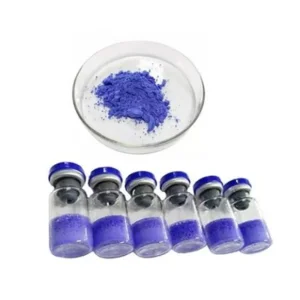
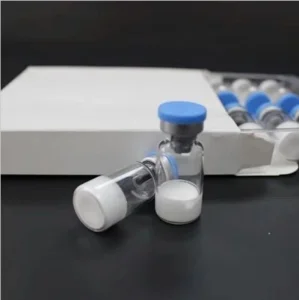
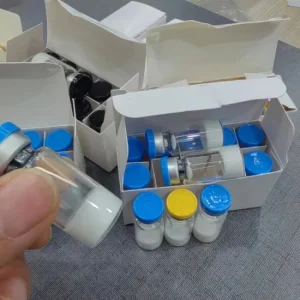
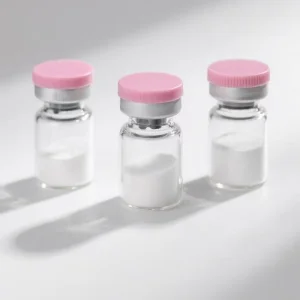
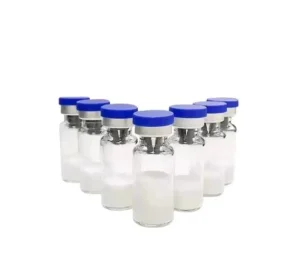
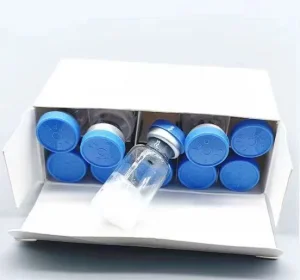
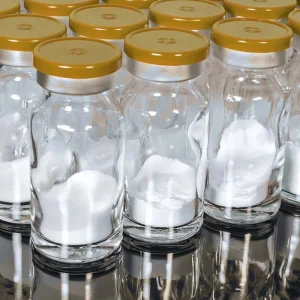
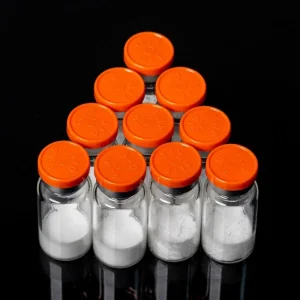
A granular analytical review of CAS 5949-44-0 for chemical procurement managers, formulation chemists, and contract manufacturing organizations (CMOs).
Testosterone undecanoate (17β-[(1-oxoundecyl)oxy]-androst-4-en-3-one) is an esterified androgen pro-drug synthesized by coupling native testosterone with undecanoic acid—a saturated 11-carbon medium-chain fatty acid. The ester modification dramatically increases molecular lipophilicity (LogP ~8.8), altering its physiological disposition depending on the drug delivery matrix.
When formulated in castor oil and benzyl benzoate excipients for deep intramuscular depot injection, the heavy aliphatic ester creates a massive tissue depot. Cleavage of the ester moiety by endogenous, non-specific esterases yields bioactive, non-alkylated testosterone at an exceptionally sustained, zero-order release rate, maintaining steady serum concentrations over an unprecedented 10-to-14-week therapeutic window.
In oral SEDDS (Self-Emulsifying Drug Delivery Systems) or SMEDDS soft gelatin formulations, testosterone undecanoate exhibits a unique pharmacokinetic pathway. Unesterified oral testosterone undergoes nearly 98% first-pass hepatic metabolism via 17β-hydroxysteroid dehydrogenase, rendering it clinically ineffective unless massively dosed.
Conversely, the high lipophilicity of the undecanoate ester enables it to dissolve into dietary triglycerides and lipophilic excipients, associating with intestinal chylomicrons during enterocyte processing. It bypasses the hepatic portal circulation via the thoracic duct directly into the systemic venous circulation, preventing hepatotoxicity and providing stable bio-accessibility without 17α-alkylation risks.
| Analytical Parameter | USP Monograph Standard | Ph. Eur. Reference Limit | Factory In-House Target |
|---|---|---|---|
| Chemical Identification | Infrared (FT-IR) & HPLC retention match | Concordant with EP CRS reference standard | 1H-NMR, 13C-NMR & High-Res HR-MS |
| Assay Purity (Dried Basis) | 97.0% - 103.0% (HPLC-UV) | 98.0% - 102.0% (Titrimetric/HPLC) | 99.20% - 99.85% (Reverse-Phase HPLC) |
| Free Testosterone Content | ≤ 0.50% | ≤ 0.50% | ≤ 0.10% (Ultra-Low Residual) |
| Individual Unknown Impurity | ≤ 0.20% | ≤ 0.10% | ≤ 0.05% |
| Total Impurities / Degradants | ≤ 1.00% | ≤ 0.50% | ≤ 0.30% |
| Residual Solvents (GC-HS) | Meets USP <467> Class 2/3 limits | Complies with ICH Q3C Guidelines | < 100 ppm Ethanol; < 50 ppm Heptane |
| Bacterial Endotoxins (Injectable) | ≤ 0.15 EU/mg API | ≤ 0.12 EU/mg API | ≤ 0.05 EU/mg (LAL Test Certified) |
Strategic purchasing insights for healthcare enterprises, pharmaceutical developers, and licensed compounders navigating shifting global demand.
Global demand for long-acting testosterone esters has expanded at an estimated CAGR of 7.8% over the past five years. Clinical transitions away from weekly short-chain esters (e.g., testosterone propionate, cypionate, and enanthate) have favored testosterone undecanoate due to superior patient adherence, elimination of volatile hormonal troughs, and minimal post-injection symptom fluctuations.
Hospitals, endocrine clinics, and telemedicine providers increasingly standardize clinical protocols around 1000 mg/4 mL extended depot injections, prompting primary pharmaceutical finished dosage manufacturers to seek steady multi-ton annual supplies of active API raw material.
Procuring raw testosterone undecanoate requires navigation of strict regulatory quotas. As an internationally scheduled androgen (DEA Schedule III in the United States, Controlled Substance in the United Kingdom, Class C in Europe), manufacturing volume allocations are constrained by national quotas administered by agencies such as the US DEA, Health Canada, and European drug authorities aligned with the International Narcotics Control Board (INCB).
Corporate procurement departments must establish long-term forward supply contracts with registered API synthesizers possessing certified production licenses to protect against sudden upstream material shortages.
Due to surging commercial premiums, the grey market is saturated with uncertified brokers supplying re-labeled industrial-grade material or under-dosed steroids adulterated with residual heavy metals and toxic catalyst traces (e.g., trace palladium or nickel from inefficient hydrogenations).
Direct engagement with primary synthetic chemical plants such as Miaoou ensures unadulterated batch traceability, complete access to raw spectral chromatograms (HPLC, MS, FT-IR), validated sterility certificates, and verifiable Certificate of Analysis (COA) documents linked directly to audited production lots.
A comprehensive breakdown of semi-synthetic steroid esterification, catalytic pathways, and critical crystallization protocols.
Industrial synthesis of pharmaceutical-grade testosterone undecanoate begins with high-purity natural or semi-synthetic testosterone base derived from plant-based phytosterols (such as stigmasterol or sitosterol via microbial side-chain cleavage to 4-androstenedione [4-AD]). The critical chemical step is the nucleophilic acyl substitution of the 17β-hydroxyl group with undecanoic acid derivatives.
The standard synthetic route utilizes undecanoyl chloride (undecyl chloride) in anhydrous solvent systems such as dichloromethane (DCM) or tetrahydrofuran (THF) under protective nitrogen purging. The reaction is driven by tertiary amine proton acceptors—predominantly pyridine, triethylamine (TEA), or 4-dimethylaminopyridine (DMAP) as a nucleophilic catalyst—at controlled low temperatures (0°C to 10°C) to prevent enol-esterification at the conjugated 3-ketone position.
Maintaining the acylating agent at 1.05 to 1.15 molar equivalents prevents bis-ester degradation while ensuring near-complete (>99.4%) conversion of unreacted testosterone raw material.
Following reaction quenching with purified water, the organic phase undergoes sequential acid-base wash cycles (dilute hydrochloric acid to remove amine bases, followed by sodium bicarbonate and saturated brine). The critical quality determinant is the selective downstream crystallization process.
Because testosterone undecanoate exhibits a low melting point (60–63°C), conventional thermal concentration risks oily phase separation (oiling out) rather than distinct crystal formation. Our synthesis plant implements a controlled anti-solvent cooling crystallization protocol employing pharmaceutical-grade absolute ethanol and chilled deionized water or heptane mixtures.
Controlled seeding at 25°C followed by linear cooling ramp rates to -5°C yields uniform, free-flowing crystalline powder with a narrow particle size distribution (PSD, d90 < 85 μm), providing optimal surface area and dissolution characteristics for downstream lipidic dispersion.
How our active pharmaceutical raw material manufacturing facilities guarantee zero cross-contamination and complete batch reproducibility.
Spectroscopic identity verification and optical rotation checks on incoming phytosterol-derived testosterone base and undecanoic acid reactants.
Real-time in-process HPLC (IPC) checks every 30 minutes to verify esterification completion and monitor 3-enol impurity generation.
Multiple recrystallization runs in ethanol-water media to scrub trace DMAP, unreacted fatty acids, and heavy metal residues down to sub-ppm levels.
Low-temperature rotary vacuum drying (≤ 35°C) preventing thermal oxidation and ensuring residual solvents fall far below ICH Q3C limits.
Final packaging in Grade C cleanrooms into double antistatic pharmaceutical LDPE bags sealed within argon-purged tamper-evident aluminum drums.
Technical guidance for galenical development laboratories engineering long-acting intramuscular depots and oral lipid capsules.
Developing an ultra-long-acting injectable depot requires precise solvent-vehicle optimization. Because testosterone undecanoate has high lipophilicity but tends to crystallize in simple light vegetable oils at cooler ambient temperatures, standard formulation practices employ a high-viscosity, pharmaceutical-grade castor oil base combined with benzyl benzoate as an active co-solvent (typically in a 40:60 to 45:55 volumetric ratio).
Benzyl benzoate enhances ester solubility up to 250 mg/mL while lowering overall solution viscosity, ensuring manageable syringe glide force through 20G or 21G intramuscular needles. Benzyl alcohol (2% to 4%) is incorporated as an antimicrobial preservative. The drug product must undergo qualified terminal sterilization (dry heat or validated nitrogen-blanketed steam autoclaving) without inducing ester thermal cleavage.
For oral capsules, conventional tablet compression is unfeasible due to low aqueous solubility and the low melting point of the active substance. Next-generation oral delivery utilizes Self-Microemulsifying Drug Delivery Systems (SMEDDS). The API is dissolved in an isotropic blend of medium-chain triglycerides (such as Miglyol 812), lipophilic surfactants (e.g., polyoxyl 40 hydrogenated castor oil, Labrasol, or Cremophor EL), and hydrophilic co-solvents (propylene glycol or PEG 400).
Upon oral ingestion, gastrointestinal motility triggers spontaneous emulsification, producing nanometer-sized droplets (< 50 nm). These droplets readily penetrate the unstirred mucosal water layer, facilitating direct lymphatic uptake via chylomicrons and ensuring reproducible bioavailability irrespective of dietary fat intake variations.
Active ingredients intended for sterile parenteral formulations require rigorous bacterial endotoxin control. Miaoou applies dedicated pyrogen-free water wash cycles and closed-circuit sterile crystal filtration to achieve endotoxin levels below 0.05 EU/mg, well within the safety thresholds required by USP <85> and EP 2.6.14 for injectable androgens.
Seamless international commercial documentation, import quota handling, and end-to-end audit security.
We provide full Drug Master File (DMF) technical packages, containing Open (Applicant’s) and Closed (Restricted) sections in eCTD format. This documentation includes detailed synthetic route validations, impurity profiling, purge studies, validation batch data, stability reports adhering to ICH Q1A(R2) conditions (25°C/60% RH long-term; 40°C/75% RH accelerated), and verified analytical method validations conforming to ICH Q2(R1).
Because steroid APIs fall under heightened customs scrutiny globally, our international export division coordinates directly with customs brokers and national regulatory bureaus. We manage formal End-User Declaration (EUD) verification, generate certified Proforma Invoices with accurate Harmonized Tariff Schedule (HTS) codes, and ensure compliant logistics pathways that prevent border delays or customs impoundments.
Given the sensitivity of lipid-ester steroids to extended heat exposure and hydrolytic degradation, all shipments utilize heavy-gauge fluorinated HDPE or sealed aluminum cylinders packed with pharmaceutical desiccants and oxygen scavengers. For air-freight logistics, temperature data loggers are included upon request to provide verifiable transit condition records from factory gate to receiving bay.
Evaluating future-facing manufacturing technologies shaping steroid API synthesis over the next decade.
The traditional batch synthesis of steroid esters is evolving toward continuous microreactor flow synthesis. Flow chemistry allows microsecond mixing of testosterone base with undecanoyl chloride under strict stoichiometric controls. This eliminates localized hotspots, reduces hazardous solvent volumes by over 60%, and restricts the formation of side-reaction enol-esters to less than 0.02%, yielding higher baseline purities before recrystallization.
To advance green chemistry, industrial researchers are engineering specialized immobilized lipases (such as engineered variants of Candida antarctica lipase B [CALB]). These biocatalysts mediate direct esterification between testosterone and free undecanoic acid in non-polar organic solvents, bypassing the need for acid chlorides, eliminating toxic halogenated wastes, and avoiding stoichiometric amine bases entirely.
Looking toward finished product innovation, pharmaceutical formulation pipelines are exploring aqueous nanosuspensions of crystalline testosterone undecanoate. By reducing particle sizes down to the sub-micron range (d50 < 400 nm) via high-pressure homogenization, aqueous depot suspensions can be administered subcutaneously via auto-injectors, replacing bulky oil-based intramuscular injections while sustaining multi-month release profiles.
Authoritative technical answers to key questions asked by pharmaceutical sourcing teams, technical auditors, and laboratory directors.
Every delivery includes an official batch-specific Certificate of Analysis (COA) specifying validated reverse-phase HPLC assay percentages, individual and total impurity quantifications, melting range data, loss on drying, heavy metal screenings (ICP-MS), and residual solvent profiles (GC-HS). On request under standard NDA/CDA, qualified buyers receive full raw analytical data packages, including FT-IR, HPLC chromatograms, 1H/13C NMR spectra, and high-resolution Mass Spectrometry (MS) traces.
Testosterone undecanoate possesses an 11-carbon aliphatic ester chain, compared to enanthate's 7 carbons and cypionate's 8 carbons. This longer alkyl chain produces substantially greater lipophilicity (LogP ~8.8 vs ~6.5), slowing release from intramuscular oil depots. Enanthate and cypionate require re-administration every 7 to 14 days to prevent hormonal troughs, whereas testosterone undecanoate in castor oil provides stable physiological levels for 10 to 14 weeks after initial loading doses.
Key parameters include: 1) Residual Free Testosterone (≤ 0.10%), which reflects incomplete esterification; 2) Residual 3-Enol Ester byproduct (≤ 0.10%), which signals uncontrolled acylation conditions; 3) Residual acylating reagents (undecanoic acid ≤ 0.20%); 4) Residual solvent levels under ICH Q3C limits; and 5) Bacterial endotoxin levels (≤ 0.05 EU/mg) for injectable grades.
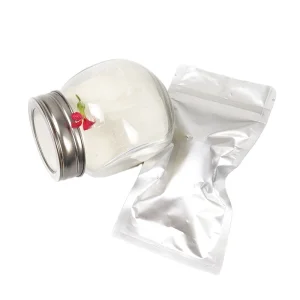
Our standard industrial packaging utilizes food/pharma-grade double low-density polyethylene (LDPE) inner bags with heat seals, packed inside tamper-evident, nitrogen-flushed aluminum bottles (1 kg, 5 kg) or high-density fiber/metal drums (25 kg). Every container includes food-grade silica desiccant pouches to prevent hydrolytic degradation during ocean or air transit.
Yes. We operate cleanroom fluid-energy jet milling systems capable of producing micronized testosterone undecanoate powders tailored to buyer specifications. Common target distributions include d90 < 20 μm or d50 < 5 μm, essential for uniform suspension in oral self-emulsifying capsules and specialized parenteral formulations.
Because testosterone undecanoate has a relatively low melting point of 60°C to 63°C, it is susceptible to sintering, clumping, or partial melting if exposed to heat. The recommended storage condition is controlled room temperature (15°C to 25°C, excursions permitted up to 30°C) in a dry, well-ventilated area protected from light. For multi-year inventory holding, storage at 2°C to 8°C in airtight nitrogen-flushed containers is recommended.
For in-stock catalog batches, dispatch occurs within 48 to 72 hours following regulatory clearance and verified international payment. For planned production campaigns of 100 kg to 500 kg, synthesis, purification, and full QC release typically require 3 to 4 weeks. Multi-ton annual supply schedules can be coordinated under monthly or quarterly call-off contracts.
Ester hydrolysis into free testosterone and undecanoic acid is typically driven by residual moisture or unneutralized acidic traces. Our factory maintains a strict dry vacuum drying process, keeping moisture content (Karl Fischer titration) consistently below 0.20%. Long-term stability testing in accordance with ICH Q1A guidelines demonstrates stability beyond 36 months when stored in sealed manufacturer containers.
Yes. We support pre-shipment sample testing by internationally accredited third-party testing laboratories (such as SGS, Eurofins, or customer-designated GLP/GMP analytical laboratories). Release criteria can be synchronized directly with your internal quality control monograph specifications.
Prospective pharmaceutical buyers can initiate vendor qualification by contacting our export compliance team. We provide standard Supplier Quality Questionnaires (SQQ), standard operating procedure summaries, facility layout schematics, and ISO/GMP compliance certificates. Both remote virtual audits and on-site facility inspections can be scheduled with our quality assurance directors.
Batch-verified fine chemicals, small molecule building blocks, and bioactive reference standards available for global laboratory procurement.