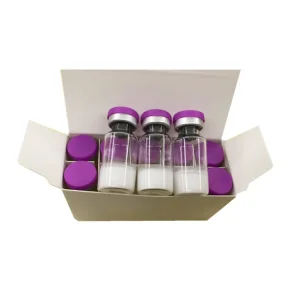
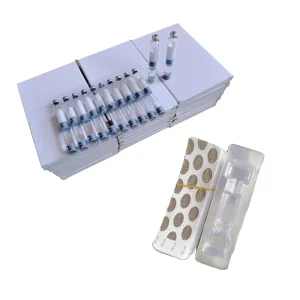
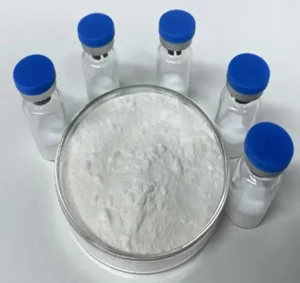
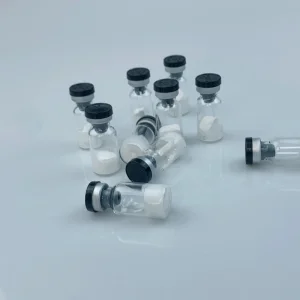
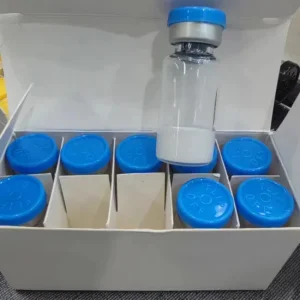
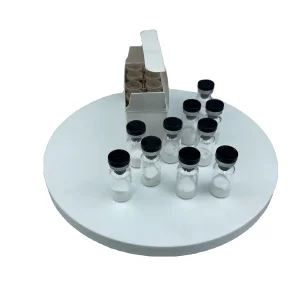
Explore verified factory-grade reference compounds, synthetic peptides, and active raw powders supplied with validated chromatographic assays and comprehensive Certificate of Analysis (COA) dossiers.
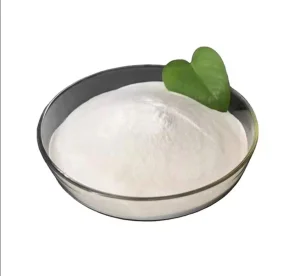
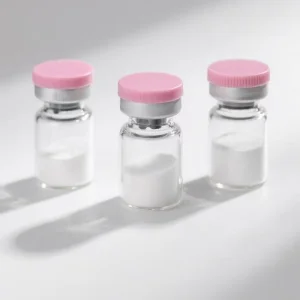
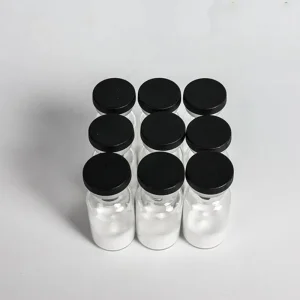
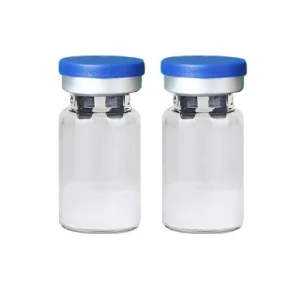
An exhaustive analysis of 17β-(acetyloxy)androsta-1,4-dien-3-one (CAS 2363-58-8). Understanding the thermodynamic kinetics, structural stability, and analytical release thresholds for international laboratory and industrial procurement.
| Analytical Parameter | Enterprise Technical Standard | USP / EP Reference Compliance | Analytical Instrumentation Method |
|---|---|---|---|
| Chemical Name | 17β-Hydroxyandrosta-1,4-dien-3-one 17-acetate | Conforms to International Nonproprietary Name (INN) | IUPAC Standard Nomenclature |
| CAS Registry Number | 2363-58-8 | Verified CAS Registry Standard | CAS Chemical Substance Database |
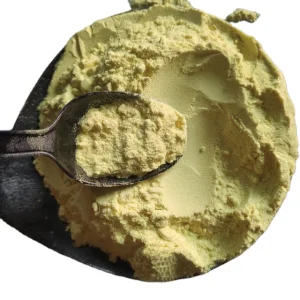
| Physical Appearance | White or almost white crystalline powder | Visual / EP Ph. Eur. 2.2.1 appearance check | Photometric Colorimetric Comparison |
| Chromatographic Purity (HPLC) | ≥ 98.5% – 99.5% area normalization | Strict Compliance (EP Monograph Standards) | Reverse-Phase HPLC (C18 Column, UV 240nm) |
| Specific Optical Rotation [α]D | +48° to +55° (c=1, dioxane / ethanol) | In-Range Verification | Photoelectric Automatic Polarimetry |
| Loss on Drying (LOD) | ≤ 0.50% w/w | ≤ 0.5% (USP <731>) | Vacuum Thermal Desiccation (105°C) |
| Residual Solvents | Methanol ≤ 3000ppm, Acetone ≤ 5000ppm | USP <467> Class 2/3 limits | Headspace Gas Chromatography (HS-GC-FID) |
| Heavy Metal Limits | ≤ 10 ppm total heavy metals | USP <232> / <233> Elemental Impurities | Inductively Coupled Plasma Mass Spec (ICP-MS) |
Boldenone Acetate differs significantly from the conventional Boldenone Undecylenate (Equipoise) ester due to its 2-carbon aliphatic ester chain. The reduced steric hindrance of the acetate ester accelerates in vivo and in vitro enzymatic esterase cleavage, yielding an extremely rapid pharmacokinetic half-life profile (approximately 24 to 48 hours compared to 14 days for undecylenate). This kinetic behavior is critical for equine metabolic modeling, receptor clearance quantification, and precise calibration in reference-standard toxicology testing.
How China's leading chemical synthesizers transitioned from legacy chemical dehydrohalogenation to sustainable biocatalysis and continuous micro-reaction flow engineering for high-yield, isomer-free steroid ester synthesis.
Utilizing high-density microbial fermentation with engineered Mycobacterium and Arthrobacter simplex strains. Natural soy phytosterols undergo selective side-chain degradation and stereospecific 1,2-dehydrogenation, yielding the 1,4-androstadiene-3,17-dione (ADD) intermediate with zero aromatic byproduct formation.
Employing diastereoselective reducing agents or immobilized ketoreductase (KRED) biocatalysts to reduce the 17-carbonyl moiety while preserving the conjugated 1,4-dien-3-one system. This preserves high β-isomer selectivity (>99.2% 17β-OH conformation), eliminating inactive alpha-epimers at the outset.
The 17β-hydroxy intermediate is esterified using high-purity acetic anhydride in automated glass-lined microchannel flow reactors. Residence time and thermal dissipations are maintained within ±0.2°C, suppressing dimerization, enol acetate generation, and oxidative degradation.
Continuous anti-solvent crystallization in food-grade ethanol and ultrapure deionized water. Ultrasonic seeding regulates narrow crystal size distribution (CSD), ensuring predictable powder dissolution, optimal tap density, and absolute elimination of mother-liquor solvent residues.
Why global contract manufacturing organizations (CMOs) and research institutes rely on Chinese steroid synthesis clusters for uninterrupted, price-competitive, and compliance-guaranteed raw materials.
China commands over 85% of global phytosterol extraction and 4-androstenedione (4-AD) upstream bio-conversion. Localized supply eliminates geopolitical trans-shipment vulnerability, hedging downstream API synthesis against international raw material shortages.
Direct pipeline integration with fine chemical feedstocks (acetic anhydride, organic solvents, industrial catalysts) ensures that factory synthesis continues without intermediate third-party brokerage markup or freight transit delays.
Concentrated in premier chemical development zones across Hebei, Hubei, and Shandong provinces, facilities leverage closed-loop utilities, centralized wastewater purification infrastructure, and integrated high-pressure hydrogenation facilities.
Shared testing and characterization facilities—including regional national-level NMR and high-resolution LC-MS/MS platforms—shorten release analytical validation timelines from weeks to hours, accelerating dispatch velocity for global partners.
Equipped with reactor vessels ranging from 50-liter pilot research reactors to 3,000-liter industrial glass-lined batch tanks. We smoothly service requirements from 100g academic calibration reference lots up to metric-ton commercial bulk deliveries.
Automated PLC batch control minimizes human handling variance, yielding unprecedented batch-to-batch consistency with polymorphic purity and particle uniformity that exceeds legacy western toll-synthesis benchmarks.
Analysis of international commercial applications, veterinary pharmacology protocols, equine performance research, and cross-border analytical quality standards.
In authorized international veterinary medicine, Boldenone esters serve as critical therapeutics for equine recovery. Specifically applied in equine rehabilitation protocols to reverse protein catabolism, stimulate erythropoiesis, and improve nitrogen balance after severe physical trauma, orthopedic surgeries, or debilitating chronic illness.
The short acetate ester is favored in specialized clinical trials where veterinarians require tight control over circulatory clearance and immediate cessation of compound exposure without prolonged depot accumulation.
Boldenone Acetate is extensively purchased by international anti-doping laboratories accredited by the World Anti-Doping Agency (WADA), the International Federation of Horseracing Authorities (IFHA), and state forensic bodies. It functions as an essential certified reference material (CRM).
Equipped with isotopic purity markers or ultra-high quantitative NMR assay profiles, our analytical-grade Boldenone Acetate standard calibrates gas chromatography-combustion-isotope ratio mass spectrometers (GC-C-IRMS) to distinguish between endogenous microbial urinary metabolites and synthetic steroid administration.
Operating in strict conformity with national and international chemical regulatory conventions. Every outgoing consignment is accompanied by formal dual-language commercial invoices, detailed packing declarations, Harmonized System (HS) code verification (HS: 2937290090), and non-controlled research declaration dossiers.
Our dedicated regulatory affairs team provides complete end-to-end documentation including Safety Data Sheets (SDS) adhering to UN GHS standards (Rev.9), Technical Data Sheets (TDS), and Certificates of Origin (CO) under regional free-trade frameworks.
Every commercial batch of Boldenone Acetate undergoes comprehensive analytical characterization. We do not release raw materials based on manufacturer estimates; our release dossiers are supported by primary instrumentation data.
Conducted via Agilent 1260 Infinity II HPLC using a reverse-phase Phenomenex Luna C18(2) column (250 × 4.6 mm, 5 μm) with isocratic acetonitrile/water mobile phase at 240 nm detection. We quantify total related substances and limit individual unassigned impurities to ≤ 0.10%.
Structural confirmation is validated by High-Resolution Electrospray Ionization Mass Spectrometry (HR-ESI-MS) detecting theoretical molecular ion [M+H]+ at m/z 329.2117. 1H-NMR and 13C-NMR spectra in CDCl3 confirm proton and carbon resonance chemical shifts, eliminating regioisomers.
Elemental impurities are determined through ICP-MS according to USP <232> for Lead (Pb), Cadmium (Cd), Arsenic (As), and Mercury (Hg) (<0.5 ppm each). Microbial enumeration ensures total aerobic microbial count <100 CFU/g, with complete absence of Salmonella and E. coli.
Clear, transparent answers addressing regulatory standing, minimum order quantities, stability profiles, packaging specifications, and cross-border delivery protocols.
Boldenone Acetate corresponds to CAS Number 2363-58-8, with the IUPAC chemical systematic designation [ (8R,9S,10R,13S,14S,17S)-10,13-dimethyl-3-oxo-6,7,8,9,11,12,14,15,16,17-decahydrocyclopenta[a]phenanthren-17-yl] acetate. Its empirical molecular formula is C21H28O3, presenting a molecular weight of 328.45 g/mol. Our factory produces it as a crystalline reference powder strictly meeting the ≥99% HPLC purity standard.
Due to the shorter acetate ester chain, Boldenone Acetate exists as a solid crystalline powder at room temperature, whereas Boldenone Undecylenate is typically an oily liquid. Boldenone Acetate exhibits excellent solid-state shelf stability when protected from moisture and light. It must be stored in airtight, double-layered polyethylene bags inside light-resistant aluminum foil pouches at 2°C to 8°C for long-term re-test integrity (36-month shelf life).
Every delivery includes a batch-specific Certificate of Analysis (COA) containing exact HPLC purity percentages, melting range data, loss on drying metrics, and residual solvent quantification. Upon request for technical validation or vendor qualification audits, our laboratory provides primary analytical data packs including high-resolution HPLC chromatograms, LC-MS spectra, 1H-NMR spectra, and standardized Safety Data Sheets (SDS) in accordance with GHS frameworks.
We offer flexible volume tiers tailored to both institutional laboratory research and large-scale formulation manufacturing. Standard research sample packs start at 100g, 500g, and 1kg in vacuum-sealed multi-barrier aluminum foil bags. Commercial bulk consignments are packaged in 25kg standard fiber drums with twin food-grade polyethylene internal liners, verified for international air and ocean cargo structural integrity.
We maintain professional logistics partnerships with specialized chemical forwarders familiar with localized air transport regulations (IATA) and standard chemical handling protocols. Shipments are processed under appropriate international Harmonized System codes with full declaration transparency. For qualified pharmaceutical distributors and accredited academic labs, we coordinate complete customs release assistance ensuring consistent transit times of 4 to 8 business days worldwide.
Expand your procurement portfolio with our synthesized growth-hormone secretagogues, freeze-dried peptide vials, cellular signaling molecules, and bioactive intermediates produced under stringent quality-control governance.