Explore high-purity batch releases, reference APIs, and validated precursors produced under ISO/cGMP-aligned synthetic and analytical release protocols.
A rigorous examination of molecular characteristics, comparative thermochemical advantages over purified terephthalic acid (PTA), and why international manufacturers rely on DMT for engineering polyesters.
CAS 120-61-6 corresponds to Dimethyl Terephthalate (C10H10O4), with a molar mass of 194.19 g/mol. Presenting as snow-white crystalline flakes or briquettes, it exhibits a distinct boiling temperature of 288 °C and an exact melting point of 140.6 °C.
Unlike purified terephthalic acid (PTA), which decomposes before atmospheric melting, DMT liquefies cleanly, permitting vacuum fractionated distillation down to parts-per-million optical clarity.
In polyesterification, DMT reacts with 1,4-butanediol (BDO) or ethylene glycol (EG) via catalytic transesterification. The driven expulsion of volatile methanol shifts the reaction equilibrium cleanly toward polymerization.
This kinetic profile prevents acidic catalyst corrosion, suppresses cyclization side-reactions (such as tetrahydrofuran generation in PBT production), and secures superior color indices (Hunter b* < 0.5).
DMT is the focal intermediate in methanolytic depolymerization of post-consumer PET waste. Unlike mechanical recycling, chemical glycolysis coupled with methanolysis breaks polycondensates back down into monomeric DMT.
Virgin-grade polymer synthesis is thus achieved from colored or composite polyester waste, satisfying stringent automotive, aerospace, and food-grade packaging mandates globally.
Hebei Miaoou Technology Co., Ltd. and aligned Chinese manufacturing clusters supply premium-grade DMT under rigorous analytical screening. The table below outlines parameters guaranteed across bulk container lots.
| Inspection Property | Certified Standard Specification | Typical Factory Lot Result | Test Protocol / Analytical Methodology |
|---|---|---|---|
| Assay Purity (DMT) | ≥ 99.80 wt% | 99.92 wt% | Capillary Column Gas Chromatography (FID) |
| Solidification Point | 140.6 ± 0.2 °C | 140.65 °C | Automated Thermal Equilibrium Sensor |
| Color in Molten State (Hazen/APHA) | ≤ 15 Pt-Co units | 8 Pt-Co units | Spectrophotometric Colorimetry at 150 °C |
| Monomethyl Terephthalate (MMT) | ≤ 0.05 wt% (500 ppm) | < 80 ppm | High-Performance Liquid Chromatography (HPLC) |
| Residual Catalyst Ash (as Heavy Metals) | ≤ 2 ppm | < 0.5 ppm | Inductively Coupled Plasma Mass Spectrometry (ICP-MS) |
| Acid Value | ≤ 0.03 mg KOH/g | 0.012 mg KOH/g | Potentiometric Titration |
| Water Content (Karl Fischer) | ≤ 0.02 wt% (200 ppm) | 75 ppm | Coulometric Moisture Titration |
| Form & Physical Appearance | Free-flowing white flakes / pastilles | Conforms precisely | Visual Inspection under 1000 Lux Day-light |
Note: Specialized polymer grades (e.g., optical grade for biaxially-oriented condenser films) with customized metal thresholds (<0.1 ppm Fe, Co) are available upon contractual request.
Understanding production methodology is essential for industrial procurement. Different synthetic streams govern isomer distribution, thermal color degradation, and long-term batch stability.
Para-xylene (pX) and methyl p-toluate (MPT) undergo liquid-phase aerobic oxidation utilizing transition-metal catalysts (cobalt/manganese naphthenates) without corrosive halogen additives.
Oxidation intermediates—mainly p-toluic acid and monomethyl terephthalate—are introduced into a pressurized esterification column with supercritical methanol at 240–280 °C.
The resulting raw ester undergoes fractional distillation under high vacuum. Low-boiling isomers are separated, while unreacted methyl p-toluate is continuously recycled back to oxidation.
DMT is recrystallized from pure methanol or passed through dynamic melt crystallizers to eliminate trace mono-esters and aldehydes, driving assay purity beyond the 99.9% frontier.
The ultra-pure melt is fed through rotating prilling towers or chill-belt flakers under a nitrogen blanket to eliminate oxidative discoloration, followed by moisture-barrier barrier packaging.
From automotive electrification components to optical barrier packaging, Dimethyl Terephthalate serves as an irreplaceable chemical engine across advanced materials science.
In the direct polycondensation of PBT, utilizing DMT + 1,4-Butanediol eliminates the THF cyclization penalty common with PTA. PBT synthesized from DMT achieves high crystalline rates, exceptional electrical insulation, and superior hydrolytic stability required for high-voltage EV connectors and automotive sensors.
High-end dielectric capacitor films demand zero micro-voids and near-zero metal ash. DMT's capacity to undergo multi-stage molten distillation provides a monomer free of abrasive particles, enabling biaxially oriented polyester (BOPET) films to be drawn thinner than 1.5 micrometers without dielectric breakdown.
DMT is copolymerized with poly(tetramethylene ether) glycol (PTMEG) and 1,4-butanediol to engineer high-flex thermoplastic ether-ester elastomers. These polymers power heavy-duty automotive constant-velocity joint boots, industrial timing belts, and air-spring dampers enduring millions of cyclic stresses.
Polycyclohexylenedimethylene terephthalate (PCT) and polyethylene naphthalate/terephthalate blenders require DMT for clean melt transesterification. The resulting products deliver elevated heat deflection temperatures (>250 °C) essential for surface-mount electronics and LED reflectors.
DMT provides uniform ester linkages for unsaturated polyester resins, powder coatings, and hot-melt electrical adhesives. Its lower melt viscosity compared to dicarboxylic acids ensures smooth leveling, outstanding weatherability, and corrosion resistance for marine and architectural paints.
In closed-loop polymer recycling infrastructure, post-consumer textile fibers and multi-layer food trays are depolymerized into crude DMT via high-pressure methanolysis. The crude product is purified to virgin purity, circumventing oil-refinery naphtha cracking completely.
A strategic overview of supply stability, export logistics from Chinese industrial clusters, and regulatory de-risking for enterprise chemical procurement directors.
Over the past decade, Chinese producers have integrated upstream paraxylene cracking with advanced continuous esterification. This integration provides an uninterrupted supply of raw feedstocks, insulating global contract buyers from volatility witnessed in smaller European or North American operations.
Hebei Miaoou Technology and associated production bases in Hebei, Jiangsu, and Shandong leverage automated multi-train distillers capable of outputting thousands of metric tons per month with rigorous batch consistency.
DMT is sensitive to atmospheric moisture uptake and physical agglomeration over long ocean transits. Leading Chinese manufacturers deploy specialized packaging formats:
Enterprise chemical procurement mandates absolute regulatory conformity. Export-grade CAS 120-61-6 from reputable suppliers is accompanied by complete documentation sets:
Pre-registered and fully registered dossiers for direct importation into EU member states.
Compliant Safety Data Sheets aligned with OSHA 29 CFR 1910.1200 and UN GHS rev 9.
Certified quality manufacturing with full traceability from catalyst recovery to batch packing.
Lot-specific GC chromatograms, Karl Fischer titrations, and spectrophotometric melt assessments.
How the Dimethyl Terephthalate market is evolving to meet net-zero carbon pledges, bio-based feedstock shifts, and artificial intelligence-driven catalytic reactors.
Innovations in biomass pyrolysis and lignin hydrodeoxygenation now produce 100% bio-paraxylene. Direct downstream conversion via Witten oxidation yields Drop-In Bio-DMT, reducing polymer life-cycle carbon footprints by up to 68% without modifying industrial PBT reactors.
Next-generation distillation towers are equipped with real-time NIR (Near-Infrared) spectrometry coupled with machine-learning predictive control. Minor deviations in catalyst activity are compensated within seconds, guaranteeing unprecedented uniformity across continuous production runs.
Global consumer product giants are partnering directly with Chinese DMT distillers. By deploying localized methanolysis plants that accept contaminated garment waste and maritime ropes, DMT acts as the definitive vehicle for cradle-to-cradle synthetic textiles.
Key technical, operational, and commercial questions answered by our synthesis specialists and international trade compliance officers.
DMT transesterifies with 1,4-butanediol (BDO) at lower temperatures and without producing water as a byproduct. The release of methanol prevents the acid-catalyzed cyclization of BDO into tetrahydrofuran (THF), preserving raw material yields and improving polymer molecular weight distribution.
Solid DMT flakes should be stored in a cool, dry, ventilated area below 35 °C, sheltered from direct UV radiation. Pallets should not be double-stacked over extended periods to prevent pressure-induced cake formation. Under unopened moisture-barrier packaging, shelf life exceeds 24 months.
Yes. For regional installations connected via domestic rail or road networks, DMT is delivered in insulated, heated ISO tank containers or road tankers equipped with steam coils, held at an optimal handling temperature of 150 °C to 160 °C under an inert nitrogen blanket.
Every commercial container shipment is dispatched with an individualized Certificate of Analysis (COA) specifying exact gas chromatography (GC) purity assay, solidification point, Karl Fischer water content, Molten Hazen color, and acid value, cross-verified by our QC team.
Our experienced export documentation department issues legalized commercial invoices, packing lists, clean bills of lading, certificates of origin (CO / Form E / Form A), and standard GHS-compliant safety documentation, securing zero-delay clearance through major global ports.
For trial evaluation batches and specialty laboratory applications, small-scale packaging is available. Standard commercial orders begin at one 20-foot FCL (approx. 20 metric tons). Standard lead times range from 7 to 14 business days from contract finalization to port loading.
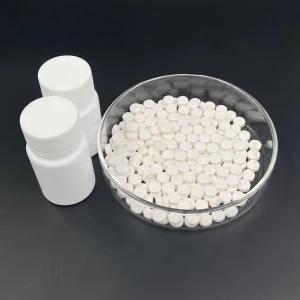
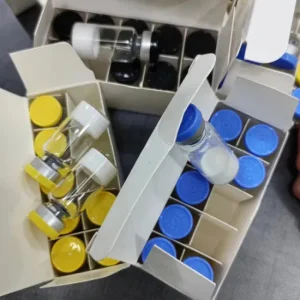
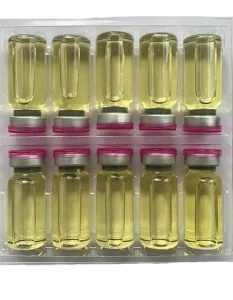
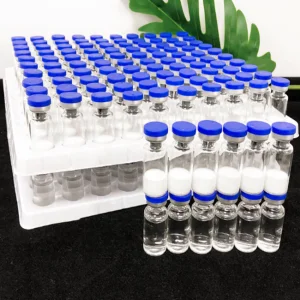
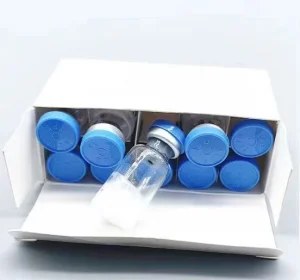
Browse our additional verified chemical portfolio, featuring fine chemicals, research peptides, and small-molecule APIs backed by lot-specific testing.


Connect directly with technical sales directors and quality assurance managers at Hebei Miaoou Technology Co., Ltd. for factory batch pricing, formal Proforma Invoices, full analytical dossiers, or scheduled third-party plant audits.
Facility Address: Room 1908, Building 6, Lucheng Business Center, 219 Xinhua Road, Shijiazhuang, Hebei, China · Global Supply Chain Desk

