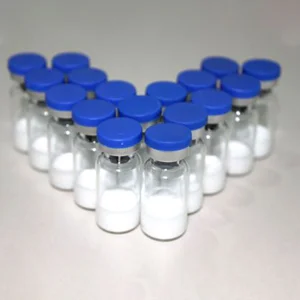
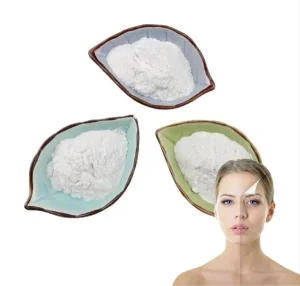
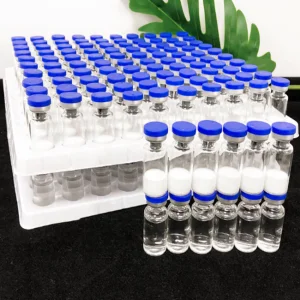
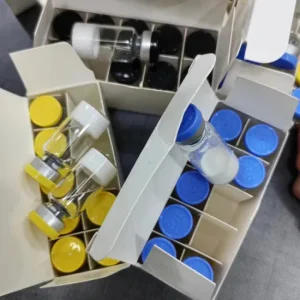
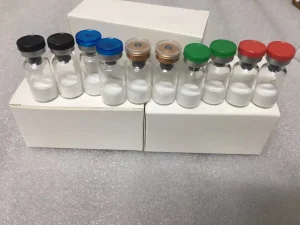
Our facility produces ultra-pure reference standards, active pharmaceutical ingredients (APIs), and lyophilized bio-peptides. Browse current high-demand production lots available for export.
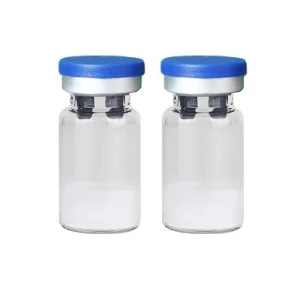
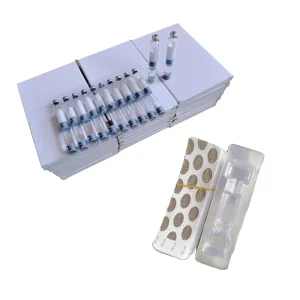
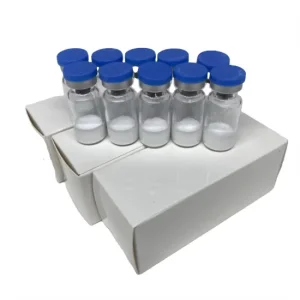
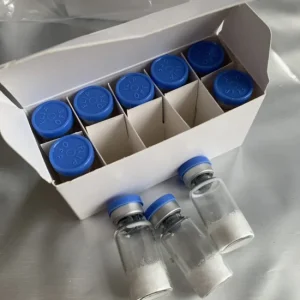
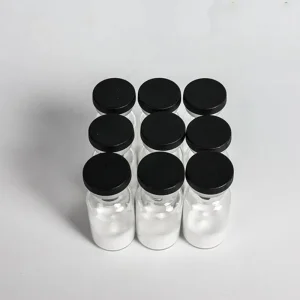
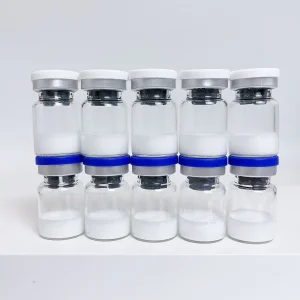
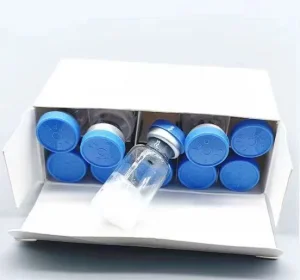
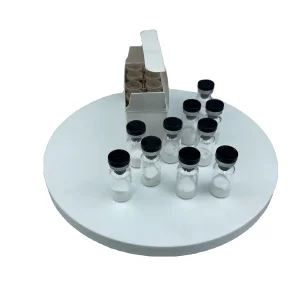
CAS 55981-09-4, chemically recognized as [2-[(5-nitro-1,3-thiazol-2-yl)carbamoyl]phenyl] acetate, stands as a critical synthetic nitrothiazole derivative possessing potent antiparasitic, antiprotozoal, and emerging broad-spectrum host-directed antiviral efficacy.
Nitazoxanide possesses the empirical formula C12H9N3O5S with a molecular weight of 307.28 g/mol. Synthesized via the coupling of 2-amino-5-nitrothiazole and acetylsalicyloyl chloride, the compound exhibits a crystalline lattice characterized by strong intermolecular hydrogen bonding, conferring distinct thermal stability and a sharp melting range between 202°C and 205°C.
Stringent synthesis protocols in top China manufacturing plants focus on mitigating Tizoxanide (desacetyl-nitazoxanide, CAS 261347-81-7), the primary active metabolite and degradation byproduct. Total impurity thresholds are strictly controlled below <0.5% (HPLC), with individual unknown impurities suppressed beneath 0.10% according to ICH Q3A/B guidelines.
CAS 55981-09-4 precipitates primarily as Form I (the thermodynamically stable crystalline polymorph). China factories employ advanced anti-solvent recrystallization and controlled supersaturation to eliminate metastable pseudopolymorphs and solvates, ensuring predictable dissolution kinetics across oral tablet and oral suspension dosage forms.
| Analytical Parameter | USP / BP Pharmacopoeial Standard | Factory Primary Lot Specification | Methodology / Analytical Equipment |
|---|---|---|---|
| Chemical Identification | Conforms to Reference Standard | Infrared Absorption (FT-IR) & HPLC Retention Match | PerkinElmer FT-IR / Agilent 1260 Infinity II HPLC |
| Chromatographic Purity (HPLC) | ≥ 98.0% - 102.0% | ≥ 99.5% (Anhydrous Basis) | RP-C18 Column, UV Detection @ 240nm / 340nm |
| Tizoxanide Degradation (Impurity A) | ≤ 0.50% | ≤ 0.12% (Consistently below detect threshold) | High-Performance Liquid Chromatography (HPLC) |
| Residual Solvents (ICH Q3C) | Option 1 / Class 2 & 3 Thresholds | Ethanol < 1500 ppm, Toluene < 120 ppm, DCM ND | Static Headspace Gas Chromatography (HS-GC-FID) |
| Particle Size Distribution (PSD) | Customized per Formulation Order | Micronized: D90 < 10 μm; Standard: D90 < 45 μm | Malvern Mastersizer 3000 Laser Diffraction |
| Heavy Metals & Elemental Impurities | ≤ 20 ppm / USP <232> compliant | ≤ 10 ppm total; Cd, Pb, As, Hg < 0.5 ppm | Inductively Coupled Plasma Mass Spectrometry (ICP-MS) |
| Loss on Drying / Water Content | ≤ 0.50% | ≤ 0.25% Karl Fischer Titration | Mettler Toledo Automated Coulometric KF Titrator |
The worldwide supply structure for CAS 55981-09-4 is undergoing unprecedented structural realignment driven by patent expirations, expanded veterinary antiparasitic programs, and emerging clinical trials evaluating broad-spectrum host cell kinase modulation.
China manufactures over 75% of global chemical precursors for Nitazoxanide, specifically 2-amino-5-nitrothiazole and acetylsalicylic acid derivatives. Relying on integrated upstream synthesis allows Chinese facilities to buffer volatile raw chemical swings, ensuring unhindered production runs even during severe geopolitical disruptions.
Beyond traditional eradication of Giardia lamblia and Cryptosporidium parvum, Nitazoxanide and its active metabolite Tizoxanide have gained monumental interest as host-directed antiviral agents against Coronaviruses, Influenza, Norovirus, and Rotavirus via the activation of PKR and inhibition of viral hemagglutinin maturation.
With patent barriers expired across major jurisdictions, generic pharmaceutical formulations in Latin America, Southeast Asia, the Middle East, and North America demand high-volume, cost-effective API batches accompanied by extensive stability dossiers to support local drug filings and fast-track approvals.
Nitazoxanide is classically categorized under the Biopharmaceutics Classification System (BCS) as a Class IV or poorly soluble Class II compound. Our China manufacturing platform deploys cutting-edge powder engineering to maximize in-vivo performance.
Oral dissolution rate is the rate-limiting step in systemic and luminal therapeutic efficacy. Utilizing fluid-energy air jet mills under sterile nitrogen purging, we tailor Particle Size Distributions down to D90 < 10 μm or D50 < 3 μm without inducing amorphous phase degradation or polymorphic transformation.
For research labs formulating advanced pediatric reconstitutable suspensions or controlled-release matrices, our factory provides technical consultation on water-soluble cellulose matrices (HPMC, PVP K30) and surfactant compatibility to avoid agglomeration and precipitation in aqueous media.
For veterinary applications addressing bovine, swine, and poultry parasitic cryptosporidiosis and coccidiosis, we offer specialized free-flowing granulated bulk grades engineered to resist segregation during mechanical feed mixing and extreme climate storage.
Navigating international pharmaceutical commerce requires unbending regulatory adherence. We offer turnkey qualification packages that streamline inspection timelines for procurement directors and national health agency auditors.
Every commercial batch is supported by exhaustive Common Technical Document (CTD) dossiers. Module 3 documentation covers validated synthetic routes, elemental impurity risk assessments (ICH Q3D), nitrosamine risk reviews, and stress testing under ICH Q1A(R2) conditions (acidic, alkaline, oxidative, thermal, and photolytic challenges).
Manufacturing adheres strictly to ICH Q7 guidance for Active Pharmaceutical Ingredients. From raw material supplier qualification to automated cleanroom packaging (Class D / ISO 8), our clean environments undergo rigorous microbiological monitoring, total particulate counts, and complete traceability audit trails.
International chemical logistics often face customs clearance bottlenecks. We mitigate supply chain interruption via established DDP (Delivered Duty Paid) channels, humidity-controlled airtight aluminum foil liners, and desiccant-infused tamper-evident HDPE fiber drums engineered to withstand trans-equatorial maritime shipping.
Our engineering facility is actively investing in next-generation process intensification to reduce the E-factor (waste-to-product ratio), eliminate hazardous solvent systems, and secure unmatched price competitiveness.
Transitioned from batch glass-lined reactors to continuous micro-channel reactors for the condensation of 2-amino-5-nitrothiazole. Results in near-instantaneous heat dissipation and reduces dangerous thermal runaway risks by 99%.
Implemented fractional distillation condensing units recovering >92% of operational acetone, ethyl acetate, and processing alcohols, driving operational carbon footprint down while ensuring compliance with stringent environmental mandates.
Eliminating chlorinated trace solvents (such as dichloromethane) entirely from the final purification cycle. Utilizing water-ethanol anti-solvent regimes guarantees zero risk of Class 1 or Class 2 genotoxic solvent residues.
Deploying Process Analytical Technology (PAT) incorporating in-situ NIR (Near-Infrared) probes and focused beam reflectance measurement (FBRM) to dynamically monitor crystal growth and polymorphic transitions in real time.
Clear, direct answers for QA directors, procurement officers, and regulatory specialists managing Nitazoxanide raw material sourcing from China.
Under airtight, light-resistant packaging stored at 15°C to 25°C (controlled room temperature), the validated retest period is 36 to 48 months. Real-time and accelerated stability studies (Zone IVb: 40°C ± 2°C / 75% RH ± 5% RH) confirm no detectable degradation or increase in Tizoxanide levels over 24 months.
Yes. Every single released lot is accompanied by a formal Certificate of Analysis (COA) containing quantitative HPLC purity data, 1H-NMR spectra, Mass Spectrometry (MS) verification, residual solvent GC data, and Karl Fischer moisture content. Raw analytical files can be made accessible to your QC team upon request.
Absolutely. Our milling suite accommodates custom grinding specifications, including ultra-fine micronization (D90 < 10 μm) for high-bioavailability suspensions and tablets, as well as granular formats for veterinary premixes. Laser diffraction reports are included with the release paperwork.
Our synthesis process has been systematically assessed for potent nitrosamine impurities (NDMA, NDEA, etc.) in compliance with FDA and EMA guidelines. Given our synthetic route and dedicated solvent lifecycle, the risk of nitrosamine formation is rigorously classified as negligible, supported by ICP-MS multi-element screening conforming to USP <232> / <233>.
Commercial scale API is packaged in standard 25 kg tamper-evident fiber drums lined with double polyethylene pharma bags. For R&D, formulation pilot runs, and method validation studies, pilot quantities starting from 100g, 500g, and 1kg are available from active stock.
Our internal export logistics division handles export licensing, chemical hazard classifications, commercial invoices, and non-DG declarations. We provide tracked express air freight or temperature-controlled sea freight with full customs clearance facilitation to your destination facility.
High-purity lyophilized vials and bulk powders maintained under constant climate-controlled warehousing. Real-time availability for global distribution.