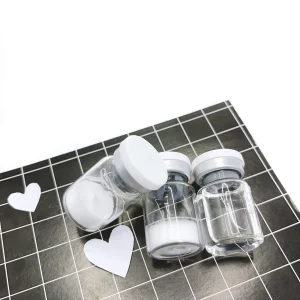
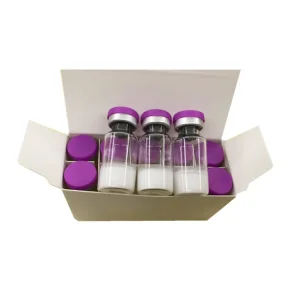
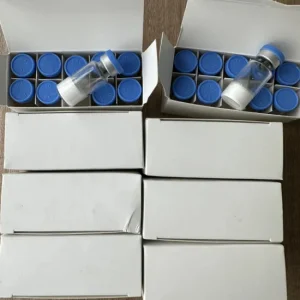
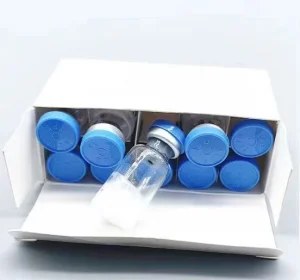
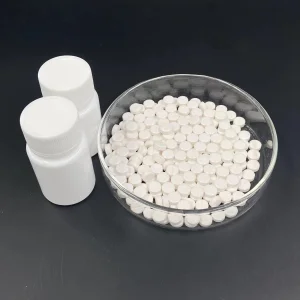
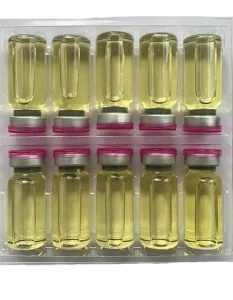
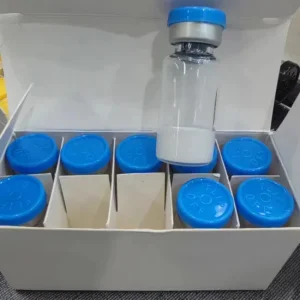
Directly sourced from advanced synthesis suites and batch-verified analytical lines. Verified purity assays and rapid export clearance pipelines.
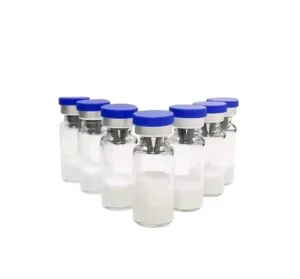
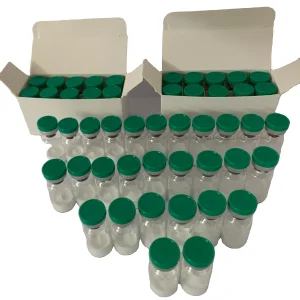
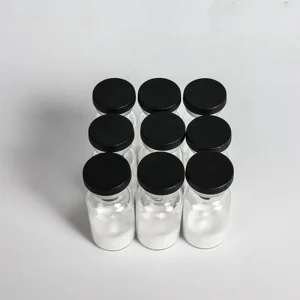
Lincomycin Hydrochloride Monohydrate: Structural integrity, analytical monograph compliance, and baseline pharmacopeial attributes for international procurement teams.
CAS 859-18-7 designates Lincomycin Hydrochloride (molecular formula: C18H34N2O6S·HCl·H2O; molecular weight: ~461.01 g/mol as monohydrate), a quintessential lincosamide class antibiotic derived via controlled aerobic fermentation of Streptomyces lincolnensis. Serving as an essential therapeutic active pharmaceutical ingredient (API) and veterinary bulk medicinal intermediate, Lincomycin works by reversibly binding to the 50S ribosomal subunit of target bacteria, specifically blocking transpeptidation and premature peptidyl-tRNA dissociation. Sourcing compliant, ultra-pure batches of CAS 859-18-7 requires exacting analytical rigor, as impurities such as Lincomycin B (the 4'-depropyl-4'-ethyl analogue) can directly modulate therapeutic index and stability profiles.
| Analytical Parameter | USP Monograph Standard | EP / BP Veterinary Standard | Enterprise Typical Batch Assay |
|---|---|---|---|
| Identification (FTIR & TLC/HPLC) | Conforms to Lincomycin HCl RS | Matches reference spectrum | Conforms (Identity verified via LC-MS/FTIR) |
| Assay (HPLC Chromatographic) | ≥90.0% to 105.0% (as dried base) | 82.5% to 93.0% (potency equivalent) | 99.2% (Chromatographic Purity) |
| Specific Optical Rotation [α]D25 | +135° to +150° | +135° to +145° | +141.5° (c=5 in H2O) |
| pH (1 in 10 Aqueous Solution) | 3.0 to 5.5 | 3.5 to 5.5 | 4.32 (Stable buffer capacity) |
| Water Content (Karl Fischer) | 3.0% to 6.0% (w/w) | 3.1% to 4.6% | 3.85% (Uniform crystalline monohydrate) |
| Chromatographic Impurities (Lincomycin B) | ≤5.0% of total response | ≤5.0% | ≤1.2% (Optimized fermentation cut) |
| Sulfated Ash / Residue on Ignition | ≤0.5% | ≤0.5% | 0.08% |
| Residual Solvents (ICH Q3C) | Class 2/3 limits (Butanol, Methanol) | Class 2/3 limits | Methanol <50 ppm; Butanol <100 ppm |
Market dynamics, purchasing vectors, qualification bottlenecks, and macroeconomic volume distributions across continents.
Commercial procurement of CAS 859-18-7 is heavily anchored in veterinary swine dysentery (caused by Brachyspira hyodysenteriae) and avian necrotic enteritis (Clostridium perfringens) mitigation. Industrial swine integrators in Latin America (Brazil, Mexico) and Southeast Asia (Vietnam, Thailand) source hundreds of metric tons per annum for formulation into water-soluble powders and oral premixes. Suppliers must guarantee flowability and consistent micro-granulometry to ensure dustless, uniform dispersion during automated feed milling.
Human and high-value veterinary parenteral formulations mandate specialized Sterile Crystallized Lincomycin Hydrochloride or sterile API intermediates subjected to validated gamma irradiation or dynamic aseptic recrystallization. Corporate buyers across Europe and North America prioritize ultra-low bacterial endotoxin specifications (<0.50 EU/mg) alongside stringent particulate matter validation (USP <788>), ensuring zero vascular irritation or systemic pyrogenic events upon administration.
A dominant percentage of industrial orders focus on fixed-ratio co-formulations: Lincomycin-Spectinomycin (commonly 1:1 or 1:2 w/w). This complementary pharmacokinetic synergy controls complex chronic respiratory disease (CRD) and enteric coinfections. Procurement directors routinely consolidate purchasing of both CAS 859-18-7 and Spectinomycin Sulfate/Dihydrochloride through vetted Chinese chemical manufacturers to streamline audit logistics, freight consolidation, and combined regulatory filing.
Strategic buyers evaluate Chinese suppliers not merely on FOB quotation differentials, but through an extended Total Cost of Ownership (TCO) lens. Key variables include batch-to-batch color stability (absence of oxidative degradation to yellowish hues), low residual moisture drift during ocean transit through equatorial corridors, and continuous availability of active DMF registrations. Our industrial processing platforms eliminate these supply chain risks by maintaining synchronized pilot-to-scale batch consistency and dedicated regulatory oversight.
Overcoming metabolic bottlenecks in Streptomyces lincolnensis cultures to achieve ultra-low Lincomycin B profiles and pristine crystal matrices.
Traditional production strains often yield excessive levels of byproduct Lincomycin B due to promiscuous amino acid transamination in the propylhygric acid moiety. Our partner manufacturing lines leverage ribosome engineering and metabolic flux redirection, isolating mutant S. lincolnensis phenotypes that selectively suppress Lincomycin B biosynthetic pathways without compromising primary volumetric fermentation titers.
Downstream broth processing has transitioned away from messy diatomaceous earth cake filtering to multi-stage ceramic microfiltration and tangential flow ultrafiltration (TFU). This closed-loop clarification removes cell debris, high-molecular-weight proteases, and colloidal colorants at 4°C, radically reducing downstream thermal degradation and downstream solvent load during initial extraction.
Precise crystal habit tuning is governed through process analytical technology (PAT), employing Focused Beam Reflectance Measurement (FBRM) and inline NIR spectroscopy. By controlling the exact supersaturation ramp during hydrochloric acid acidification and organic anti-solvent dosing (n-butanol/acetone systems), we yield uniform prismatic crystals that resist caking, eliminate Mother Liquor inclusions, and showcase accelerated dissolution rates.
Aligned with ESG benchmarks and municipal Chinese environmental directives, production infrastructures utilize automated vacuum membrane distillation and falling film evaporators. Solvents are recovered at rates exceeding 98.6%, drastically mitigating VOC footprints and lowering the chemical oxygen demand (COD) in wastewater effluent systems to negligible margins.
Anticipating regulatory tightening, antimicrobial stewardship, and advanced pharmaceutical delivery interfaces for CAS 859-18-7.
Integration of CRISPR-Cas-mediated transcription factor fine-tuning in industrial fermentation hosts to elevate base titer yields past 18 g/L. Concurrently, AI-driven digital twins model multi-parameter bioreactor agitation, dissolved oxygen cascades, and pH modulation in real time, virtually eliminating batch abort rates and standardizing crystalline particle size distribution (D90 < 150 μm).
With escalating World Health Organization (WHO) and WOAH oversight concerning antimicrobial resistance (AMR), industrial research is pivoting toward lipid-nanoparticle (LNP) and cyclodextrin-encapsulated Lincomycin delivery systems. These dosage forms improve tissue bio-distribution in pulmonary and intestinal targets, reducing effective API dosage by 35-50% while sustaining complete therapeutic eradication of anaerobic pathogens.
Transformation of baseline fermentation plants into net-zero biological factories. Feedstocks will transition toward non-food lignocellulosic sugars and renewable carbon sources. Continuous crystallized Lincomycin HCl will be manufactured in completely enclosed, automated isolator systems with localized continuous-flow quality release mechanisms, enabling instantaneous digital release certificates for border-free global customs transit.
Validated testing regimes, cGMP documentation, and auditable verification protocols for international enterprise clearance.
All Lincomycin Hydrochloride (CAS 859-18-7) batches originate from modern manufacturing facilities audited and operating under strict cGMP principles (ICH Q7 guidance). Continuous environmental monitoring in cleanrooms (Class C/D) safeguards physical and microbiological integrity across all crystallization, centrifugation, fluid-bed drying, and automated packaging interfaces.
To expedite client drug authorization and veterinary formulation approvals, comprehensive documentation is on file: Active Drug Master Files (US-FDA DMF Type II), European Certificate of Suitability (CEP), Canadian DMF, and Japanese Master Files. Modules 3.2.S (Characterization, Synthesis, Process Validation, Stability Data) are accessible under Non-Disclosure Agreements for technical sponsor review.
Product shelf-life stability is corroborated by formal 36-month Long-Term (25°C ± 2°C / 60% RH ± 5% RH) and 6-month Accelerated (40°C ± 2°C / 75% RH ± 5% RH) data. Results demonstrate remarkable resilience against photolytic degradation, moisture uptake, and related-substance elevation when held within double-lined pharmaceutical-grade polyethylene liners inside sealed drums.
Every commercial shipment is accompanied by a dual-stamped Certificate of Analysis (COA) detailing exact numerical values (no generic "conforms"), raw HPLC chromatograms verifying absence of unknown individual impurities (<0.2%), Karl Fischer moisture determination, heavy metal trace assays via ICP-MS, and validated bioburden counts.
End-to-end protective packaging, secure ocean/air consolidation, and seamless export compliance from Chinese ports to destination terminals.
Because crystalline Lincomycin Hydrochloride is slightly hygroscopic in uncontrolled ambient air, standard export packing utilizes 25 kg net weight UN-certified fiber drums lined with dual inner high-density polyethylene (HDPE) bags plus an optional vacuum-sealed tri-laminated aluminum foil barrier with food-grade molecular sieve desiccant packets. Pallets are thermo-shrink-wrapped and treated under ISPM-15 phytosanitary heat standards.
Direct departures managed via major Chinese hubs (Shanghai Port, Qingdao, Tianjin, and Guangzhou/Shenzhen). We accommodate flexible Incoterms including FOB, CIF, CFR, CPT, and full DDP door-to-door delivery. Temperature-controlled dry containers (reefers set to 15-25°C) are deployed for long-haul maritime routes across high-temperature maritime zones, preventing physical clumping or premature moisture condensation.
Every export dossier contains commercial invoices, detailed packing lists, COA, country-of-origin certificates (Form A, Form E, or CO), Non-Dangerous Goods declarations (MSDS compliant with GHS Rev. 9), and sanitary inspection certificates. Dedicated compliance teams interface directly with destination customs brokers in North America, the European Union, LATAM, and APAC, preventing demurrage fines or import quarantine delays.
Direct answers to critical analytical, regulatory, and contractual concerns posed by corporate procurement officers and quality assurance leads.
Lincomycin Hydrochloride naturally crystallizes as a stable monohydrate containing between 3.0% and 6.0% water (the theoretical monohydrate water content is ~3.9%). Attempting to forcefully desolvate or dehydrate the crystal structure to an anhydrous state yields an intensely hygroscopic, amorphous powder that rapidly absorbs atmospheric moisture, leading to clumping, degradation, and variable assay concentrations during formulation. The crystalline monohydrate represents the standard, pharmacopeially authorized form across USP, EP, and ChP.
Lincomycin B is a structural homologue differing by having an ethyl group instead of a propyl group on the pyrrolidine ring. While it shares partial antibacterial activity, its pharmacokinetic properties and potential toxicity profile differ. Both the USP and European Pharmacopoeia (EP) establish a stringent upper threshold of ≤5.0% for Lincomycin B. Advanced industrial suppliers achieve <1.5% routinely by utilizing strictly validated fermentation control parameters (feeding specific precursor amino acids) and selective crystallization fractionation.
Bulk Lincomycin Hydrochloride is primarily produced as a non-sterile API suitable for oral solid formulations, water-soluble premixes, or downstream sterile manufacturing where terminal filtration (0.22 μm sterile membrane) and aseptic crystallization or filling take place. However, pre-sterilized bulk or gamma-irradiated batches meeting sterile endotoxin thresholds (<0.50 EU/mg) can be custom-processed upon contract agreement for veterinary injection formulators lacking sterile reconstitution lines.
Commercial MOQ for bulk industrial API orders typically begins at 100 kg (four 25 kg drums) for standard pharmacopeial grade. For specialized particle size specifications (such as micronized powder with D50 < 20 μm) or custom DMF filing commitments, minimum volumes generally start at 500 kg to 1 metric ton. Pre-shipment qualification samples (50g – 200g) accompanied by comprehensive batch COAs are made available to qualified enterprise procurement laboratories prior to contract execution.
Every batch undergoes rigorous QC testing utilizing reversed-phase HPLC (with UV detection at 214 nm or refractive index detector depending on pharmacopeial protocol) to determine chromatographic purity and related substance quantification. Structural identity is established through Fourier Transform Infrared Spectrophotometry (FTIR) comparison to USP reference standards, specific optical rotation testing via polarimetry, Karl Fischer coulometric titration for water assay, and microbial endotoxin determination via Kinetic Chromogenic or Gel-Clot LAL assays.
Lincomycin HCl and Spectinomycin (Sulfate or Dihydrochloride) demonstrate complete physical and chemical compatibility in neutral to slightly acidic aqueous solutions (pH 3.8 – 5.2). They do not form insoluble co-precipitates under standard therapeutic concentrations. However, exposure to alkaline excipients or hard water with excessive polyvalent metal ions (Ca2+, Mg2+) can accelerate ester hydrolysis or precipitate free base forms; hence formulations frequently integrate chelating agents like EDTA-disodium to preserve broad reconstitution stability.
Crystalline Lincomycin HCl monohydrate must be maintained in tightly closed, light-resistant containers stored below 30°C (preferably 15-25°C) in dry warehouse conditions. Avoid sustained exposure to temperatures >40°C, which can cause subtle crystal water loss and superficial discoloration. When stored in original UN-rated fiber drums with double virgin polyethylene liners, historical real-time stability studies confirm negligible degradation (<0.5% potency drop over 36 months).
We support on-site GMP audits conducted by qualified corporate QA representatives or accredited third-party auditing firms (such as SGS, Eurofins, or specialized pharmaceutical audit agencies). Furthermore, comprehensive virtual audit tours backed by live video walk-throughs of manufacturing suites, documentation review rooms, and analytical instrumentation records (including 21 CFR Part 11 compliant audit trails) can be arranged within 10 business days of notification.
Explore our full line of fine chemicals, bioactive peptides, and specialized API compounds engineered for rigorous analytical specifications.