Browse our factory-backed bulk active materials, high-affinity receptor ligands, and verified reference standards manufactured under strict analytical batch supervision.
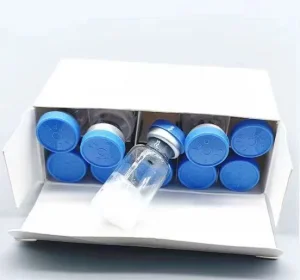
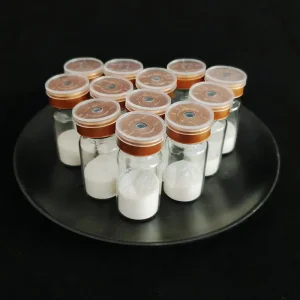
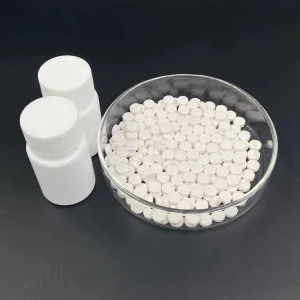
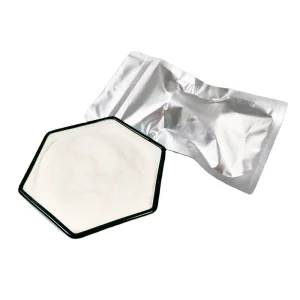
Diltiazem Hydrochloride (CAS: 33286-22-5 / 42399-41-7) remains a non-dihydropyridine calcium channel blocker (CCB) of critical significance in essential hypertension, chronic stable angina pectoris, and vasospastic (Prinzmetal's) angina management. For global pharmaceutical companies and CMO procurement teams, sourcing raw active substance from China necessitates navigating complex international regulatory standards, crystal habit uniformity, and trace contaminant containment.
Batch qualification adheres completely to triple-monograph criteria: USP, Ph. Eur. (EP), and JP. Full release testing guarantees specific optical rotation (+115° to +120°), rigorous heavy metal thresholds, and stringent limits on degradation congeners like Deacetyl-diltiazem.
Because Diltiazem HCl is broadly manufactured as both immediate-release tablets and multi-pellet extended-release (ER/XR) oral systems, crystal habit and particle size distribution (PSD) directly control dissolution kinetics and polymer coating adhesion.
In accordance with FDA, EMA, and ICH M7(R1) guidelines, our synthetic route strictly prohibits the secondary amine cross-reactions capable of forming N-nitrosodimethylamine (NDMA) or specialized nitrosated benzothiazepine derivatives.
Every delivery of Diltiazem Hydrochloride is accompanied by fully traceable batch analytical documentation, verified against European Pharmacopoeia and US Pharmacopeia monographs.
| Analytical Parameter | Acceptance Criteria (EP / USP Standard) | Typical Commercial Batch Result | Test Methodology |
|---|---|---|---|
| Chemical Name | (2S,3S)-5-[2-(Dimethylamino)ethyl]-2-(4-methoxyphenyl)-4-oxo-2,3-dihydro-1,5-benzothiazepin-3-yl acetate hydrochloride | Conforms to Structure | FTIR / 1H-NMR Spectroscopy |
| CAS Registry Number | 33286-22-5 (free base: 42399-41-7) | Verified Active Drug Substance | CAS Documentation |
| Appearance | White to almost white crystalline powder | White crystalline powder | Visual Inspection |
| Identification (IR / Chloride) | Infrared absorption matching reference standard; Positive chloride reaction | Conforms to Reference Standard | USP <197K> / EP 2.2.24 |
| Assay (Titration / HPLC) | 98.5% – 101.5% (calculated on dried substance) | 99.92% | HPLC / Potentiometric Titration |
| Specific Optical Rotation | +115.0° to +120.0° (on dried substance) | +117.8° | Polarimetry @ 20°C (c=1, water) |
| Loss on Drying | NMT 0.5% (105°C, 2 hours) | 0.12% | USP <731> / EP 2.2.32 |
| Residue on Ignition | NMT 0.1% | 0.04% | Sulfated Ash (USP <281>) |
| Impurity A (Deacetyl-diltiazem) | NMT 0.5% | 0.06% | Reversed-Phase HPLC (UV 240nm) |
| Any Individual Unspecified Impurity | NMT 0.10% | 0.03% | Reversed-Phase HPLC |
| Total Impurities | NMT 1.0% | 0.18% | High Performance Liquid Chromatography |
| Residual Solvents (Class 2/3) | Methanol < 3000ppm, Toluene < 890ppm, Acetone < 5000ppm | Below Quantitation Limits | Headspace Gas Chromatography (GC-FID) |
Scale-up synthesis of Diltiazem Hydrochloride demands tight stereochemical control over the two chiral centers at positions 2 and 3 of the 1,5-benzothiazepine ring structure.
The biological efficacy of Diltiazem resides entirely in the (2S,3S)-cis diastereomer. Classical pathways involve condensing 2-aminothiophenol with trans-3-(4-methoxyphenyl)glycidic acid methyl ester (Darzens condensation product), producing an intermediate racemic mixture.
Our state-of-the-art production facility incorporates enzyme-catalyzed dynamic kinetic resolution (DKR) and proprietary chiral resolving tartaric acid salt fractions. This technological leap prevents racemization, reducing unwanted cis-(2R,3R) and trans diastereomers to undetectable baseline levels, thereby optimizing downstream yields and preventing batch rejections during international formulation audits.
The subsequent N-alkylation using 2-(dimethylamino)ethyl chloride presents historical manufacturing challenges regarding exothermic runaway potential and handling hazardous reactive precursors.
We have transitioned traditional batch tank operations into automated tubular continuous flow microreactors. This engineering innovation yields precise sub-second thermal quenching, eliminating hazardous thermal runaways and dramatically reducing O-alkylated side products. The resulting crude intermediate undergoes clean acetylation with acetic anhydride followed by controlled gas-phase hydrogen chloride salification in high-grade solvent loops.
Analyzing global procurement trends, supply security, regulatory de-risking, and the role of integrated Chinese fine chemical hubs in global healthcare delivery.
Global API shortages frequently stem from upstream bottlenecks in basic chemical precursors: 2-aminothiophenol, p-methoxybenzaldehyde, and chlorinating agents. Operating within national petrochemical economic zones in China gives our production sites 100% domestic pipeline connectivity for all core starting building blocks, insulating clients against geopolitical disruptions.
We provide complete Open Part / Closed Part Drug Master Files (US FDA DMF Type II, active status), Certificates of Suitability (CEP) issued by EDQM, along with complete CTD format documentation modules (Module 3: Quality). This streamlines ANDA and MAA submission cycles for pharmaceutical license holders globally.
Modern Tier-1 pharmaceutical enterprises require rigorous environmental compliance. Our zero-liquid-discharge (ZLD) wastewater treatment plants, continuous catalytic solvent recovery lines, and solar-supplemented synthesis suites fulfill the stringent sustainability criteria evaluated by European and North American audit teams.
Ensuring supply chain reliability requires more than a standard Certificate of Analysis. Our global regulatory liaison teams deliver end-to-end audit defense, quality agreement execution, and on-site qualification support.
Fully compliant with ICH Q7 Good Manufacturing Practice Guidance for Active Pharmaceutical Ingredients. Cleanrooms operate under Class D (ISO 8) standards for final crystallization, centrifugation, drying, and primary packing.
Support for remote virtual and physical audits by regulatory bodies (US FDA, EMA, PMDA) as well as customer QP (Qualified Person) audits. Complete electronic batch production records (eBPR) maintained with audit trail integrity.
Real-time long-term stability studies (25°C/60% RH) and accelerated stability testing (40°C/75% RH) executed under ICH Q1A(R2) conditions. Re-test intervals established up to 60 months in double polyethylene sealed drums.
Bonded warehouse hubs in North America and Western Europe provide buffer inventories (VMI programs). High-barrier, anti-static tamper-evident drum configurations guarantee zero exposure to atmospheric moisture and UV degradation.
Comprehensive analytical, regulatory, and supply chain answers curated specifically for API procurement managers, pharmaceutical chemists, and regulatory directors.
CAS 33286-22-5 is the chemical identifier for the hydrochloride salt form (Diltiazem Hydrochloride), which is the active pharmaceutical ingredient formulated into commercial tablets, extended-release capsules, and injectable solutions. CAS 42399-41-7 corresponds to the free base molecular form (Diltiazem free amine). Commercial procurement for pharmaceutical manufacturing exclusively utilizes the hydrochloride salt due to its defined melting range (210°C–215°C with decomposition) and superior aqueous solubility.
Deacetyl-diltiazem (specified as Impurity A in the European Pharmacopoeia) is the principal hydrolytic degradation product resulting from cleavage of the ester bond at position 3. We control this through anhydrous crystallization protocols and final drying under deep vacuum (< 5 mbar) at low thermal profiles. Our commercial release limits strictly maintain Impurity A below 0.15% (well within the Ph. Eur. threshold of 0.5%), supported by validated reversed-phase gradient HPLC testing.
Yes. Sustained-release (SR/ER) systems often rely on fluid-bed coating of non-pareil seed cores or direct matrix extrusion. We offer mechanical pin-milling and air-jet micronization under an inert nitrogen blanket. Typical specifications include standard crystalline (D90 < 150 μm), semi-fine (D90 < 60 μm), and ultrafine micronized powder (D90 < 15 μm, D50 < 5 μm). PSD curves accompanied by span calculation and wet dispersion laser diffraction data are provided for each batch.
Every delivery includes a batch-specific Certificate of Analysis (COA) signed by the Qualified Quality Director, complete HPLC chromatograms, FTIR identity spectra, Residual Solvents GC analysis report, TSE/BSE free declaration, Nitrosamine Risk Assessment statement, Residual Metal Catalyst declaration (ICH Q3D), Safety Data Sheet (SDS), and formal proforma/commercial invoice documentation.
Our manufacturing route does not employ sodium nitrite or secondary amine combinations under acidic reaction states. All reagents, recovered solvents, and raw feedstocks are audited to prevent nitrosating agents. Confirmatory testing utilizing high-resolution Orbitrap LC-MS/MS confirms absence of NDMA, NDEA, NDIPA, and NDPA at a limit of detection below 0.01 ppm, fully compliant with FDA and EMA guidelines for mutagenic impurities.
For pre-formulation validation, pilot batch sampling starts at 500 grams to 5 kilograms. Commercial orders are packed in standardized 25 kg fiber drums with double food-grade polyethylene inner liners. Stock orders ship within 48 to 72 hours via air transport or temperature-monitored ocean container freight, with real-time GPS tracking provided by our logistics division.
Discover our comprehensive collection of biological signaling peptides, selective androgen receptor modulators, and hormone analogues packaged with comprehensive HPLC/MS verification.


Outlining our active engineering investments in Process Analytical Technology (PAT), solvent recycling loops, and enzymatic crystallization platforms toward 2030 sustainability benchmarks.
Integration of real-time Process Analytical Technology (PAT) using Fourier-transform near-infrared (FT-NIR) and in-situ Raman probes inside crystallization vessels. Continuous feedback tracks polymorph Form I versus metastable modifications, locking polymorphic purity at 100%.
Shifting from stirred cooling batch crystallizers to continuous oscillatory baffled crystallizers (COBC). This delivers narrow particle size distributions without milling, reducing crystal fracture, improving powder flowability, and enhancing dissolution profiles in finished dosage forms.
Implementing closed-loop distillation recovery systems that capture and repurpose over 96% of organic mother liquors (toluene, isopropanol, ethanol). Energy recovery steam loops reduce our carbon equivalent footprint per kilogram of active ingredient by 42% compared to industry averages.

