A rigorous industrial perspective on sourcing anesthetic-grade compounds, polymorphic stability, and continuous reaction engineering.
In modern pharmacological manufacturing and therapeutic chemistry, Esracaine (recognized internationally as an amino amide-type local anesthetic core, structurally and functionally aligned with Lidocaine/Lignocaine hydrochloride formulations) represents one of the most critical small-molecule agents for reversibly blocking peripheral nerve conduction. Operating predominantly via the voltage-gated sodium channel (Nav1.5 and adjacent neuronal isoforms) inhibition mechanism, Esracaine stabilizes neuronal membranes by decreasing permeability to sodium ions, effectively arresting the propagation of action potentials across axonic pathways.
As international procurement organizations, compounding pharmaceutical facilities, and medical device innovators face increasingly rigid regulatory audits under FDA 21 CFR Part 211, EU cGMP Annex 1, and global Pharmacopoeia standards (USP, EP, JP, ChP), navigating the vendor landscape demands empirical data over commercial rhetoric. China's chemical synthesis infrastructure has undergone a comprehensive transformation, elevating its role from bulk commodity synthesis to an advanced, digitally instrumented powerhouse characterized by continuous microreactor flows, precise polymorph isolation, zero-defect impurity profiling, and automated documentation packages.
Procurement teams sourcing Esracaine / Lidocaine API from China must verify that suppliers provide chromatographic isolation tracking for 2,6-dimethylaniline (DMA), a recognized mutagenic impurity governed under ICH M7 guidelines. Our manufacturing protocols utilize real-time catalytic hydrogenolysis and vacuum recrystallization in Class D cleanrooms to maintain DMA concentrations consistently below 2 ppm, surpassing the stringent thresholds mandated by European and North American regulatory authorities.
| Analytical Parameter | Reference Pharmacopoeia (USP / EP / ChP) | Factory Certified Batch Value | Analytical Methodology |
|---|---|---|---|
| Chemical Nomenclature | 2-(Diethylamino)-N-(2,6-dimethylphenyl)acetamide (Base/HCl) | Conforms to Reference Standard | FTIR / 1H-NMR Spectrometry |
| Assay (Purity on Anhydrous Basis) | 99.0% – 101.0% | 99.92% (HPLC) | RP-HPLC with UV Detection (254nm) |
| Melting Point Range | 66°C to 69°C (Free Base) | 67.4°C – 68.3°C | Automated Capillary Melting System |
| Heavy Metals Residue | ≤ 10 ppm | < 2 ppm | ICP-MS Inductively Coupled Plasma |
| Residual Solvents (ICH Q3C) | Class 2 (Toluene, Methanol) < Option 1 Limits | Below Quantitation Limits (LOQ) | Headspace GC-MS |
| Microbiological Bioburden | TAMC < 100 CFU/g, TYMC < 50 CFU/g | TAMC < 10 CFU/g, Absence of Pathogens | Membrane Filtration / USP <61> |
Bridging process analytical technology (PAT) with automated production to deliver dependable output at volume.
Traditional batch reaction vessels are prone to thermal gradients that create regional degradation and by-product impurities. By deploying continuous microchannel reactors, we achieve microsecond thermodynamic equilibrium during the acylation of 2,6-xylidine with chloroacetyl chloride, boosting yield consistency to >97.4% while eliminating thermal runaway hazards.
Crystal morphology heavily dictates transdermal penetration rates and topical formulation viscosity. Our automated crystallization skids manage solute supersaturation curves, controlled cooling rates, and seed introduction via programmable logic controllers (PLCs), delivering uniform needle-free monoclinic crystal clusters optimized for micronization.
The global pharmaceutical supply chain remains vulnerable to intermediate stockouts. Our integrated manufacturing hub produces core upstream precursors—including high-grade 2,6-dimethylaniline and diethylamine—on-site in Hebei and Shandong complexes, buffering B2B partners from international petrochemical and reagent price volatility.
How Tier-1 pharmaceutical formulators, CDMOs, and medical device companies harness high-grade Esracaine raw materials.
Cosmetic dermatology requires rapid onset combined with sustained epidermal numbness. Our micronized Esracaine base dissolves readily into lipophilic emulsions, eutectic mixtures (e.g., EMLA systems with prilocaine), and high-titer micro-needling sprays, delivering rapid onset within 15–20 minutes without skin irritation.
Modern pain management protocols favor transdermal patches for neuropathic conditions like post-herpetic neuralgia. Our Esracaine active powder exhibits consistent particle size distribution (D90 < 25 µm), ensuring smooth dissolution into adhesive matrices without solvent bleed or crystallite agglomeration over shelf lifespans.
For dental carpules and mucosal sprays, sterility, endotoxin control, and pH compatibility are critical. Our pharmaceutical-grade Esracaine HCl provides clear, pyrogen-free aqueous solutions that maintain chemical stability when formulated alongside vasoconstrictor agents like epinephrine at physiological pH.
Bulk veterinary formulations—such as epidural blocks, casting sprays, and wound sprays for large and companion animals—demand high-potency, cost-efficient active substances. We deliver multi-ton container shipments meeting stringent veterinary monographs with audited cross-contamination safeguards.
Eliminating border clearance friction, audit vulnerabilities, and international shipping uncertainties.
We supply comprehensive Common Technical Document (CTD) dossiers covering section 3.2.S (Drug Substance), encompassing synthesis routes, process validation, stability studies under ICH Q1A(R2) conditions (accelerated and long-term), and characterization data for seamless health authority filings.
Navigating global chemical customs requires proactive paperwork handling. We offer Delivered Duty Paid (DDP) arrangements to North America, the European Union, Southeast Asia, and South America, handling customs clearance, MSDS validation, and verified non-hazardous transport documentation end-to-end.
Quality assurance managers require full operational transparency. Our Shijiazhuang and regional manufacturing plants regularly host third-party qualified person (QP) inspections and remote video audits, granting uninhibited review of electronic batch records, change logs, and CAPA systems.
Anticipating the technological curve in local anesthetic synthesis, sustained release, and green chemistry.
Scale-up of fully automated microchannel flow synthesis for Esracaine free base and hydrochloride. Implementation of inline Raman spectroscopy and real-time NIR monitoring, cutting batch turnover times by 40% while driving residual DMA limits to sub-ppm levels.
Development of sustained-release Esracaine multivesicular liposomal complexes tailored for post-operative nerve blockade lasting up to 72 hours. Engineered lipid-to-drug ratios engineered for high entrapment efficiency and low early burst release.
Replacing traditional chlorinated alkylating agents with bio-engineered transaminase catalysis and enzymatic amidation. Slashing chemical oxygen demand (COD) in wastewater by 85% to create carbon-neutral API production profiles that satisfy European ESG mandates.
Detailed insights addressed directly to procurement managers, formulation chemists, and compliance directors.
Esracaine Free Base (CAS 137-58-6) possesses high lipophilicity with limited aqueous solubility, making it the premier choice for anhydrous topical creams, lipophilic patches, oily suspensions, and cosmetic gels. Conversely, Esracaine Hydrochloride (CAS 73-78-9) is a monohydrate salt with high water solubility (>50 mg/mL at 25°C), engineered for aqueous dental carpules, subcutaneous infiltration injections, and hydrophilic mucous membrane sprays.
In compliance with ICH M7 standards for mutagenic impurities, our synthesis pathway strictly monitors 2,6-dimethylaniline (DMA) via validated trace gas chromatography-mass spectrometry (GC-MS/MS). Process parameters during catalytic hydrogenation are controlled through automated closed-loop systems, guaranteeing residual DMA remains well below the calculated Toxicological Concern threshold (TTC) of <2 ppm across every commercial batch.
Yes. We run jet-milling and cryogenic micronization suites capable of producing bespoke D10, D50, and D90 parameters. For transdermal matrix compounding and rapid-absorption dermal systems, we routinely mill to D90 < 15 µm, preventing grit feeling in topical bases and ensuring immediate, homogenous dispersion across polymer backings.
Every dispatch is accompanied by an original batch Certificate of Analysis (COA) displaying specific analytical values (not blanket 'Conforms' statements), HPLC chromatograms, 1H/13C-NMR identity spectra, GC residual solvent analysis, heavy metals ICP-MS data, Safety Data Sheets (SDS in 16 standard GHS sections), and TSE/BSE risk-free declarations.
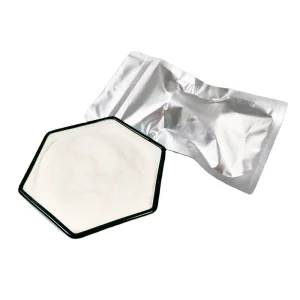
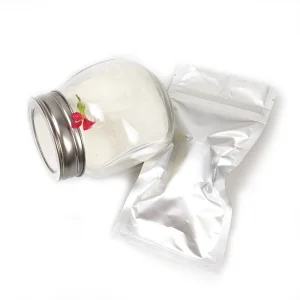
Standard industrial packing utilizes double pharmaceutical-grade low-density polyethylene (LDPE) food-and-drug contact liner bags, vacuum heat-sealed with desiccant packets, contained within an outer aluminum foil barrier pouch, and housed inside UN-certified fiberboard drums (typically 25 kg net weight). Custom packaging ranging from 1 kg foil pouches to 500 kg bulk bags is available upon qualification.
We accommodate global treasury requirements through documented Letter of Credit (L/C at sight), telegraphic transfer (T/T against bill of lading), and escrow arrangements. Long-term supply agreements include safety stock reserves maintained in our climate-controlled warehouses, price-lock covenants over 12-month delivery schedules, and guaranteed delivery lead times.
Partner with China's leading synthesis plant for batch-verified anesthetic compounds, complete regulatory documentation packages, and audited supply chain resilience.
Request Regulatory Dossier & Commercial Quotation