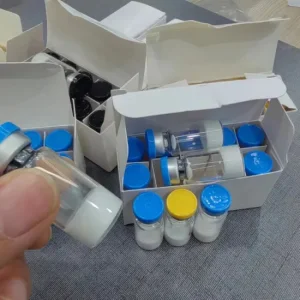
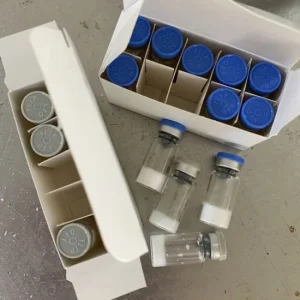
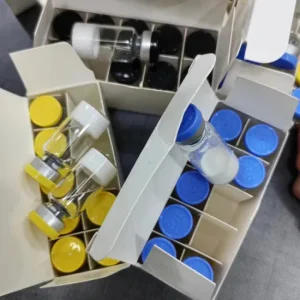
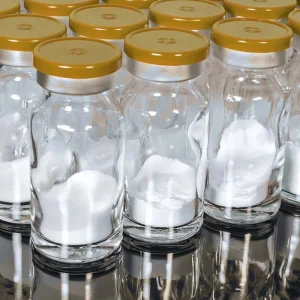
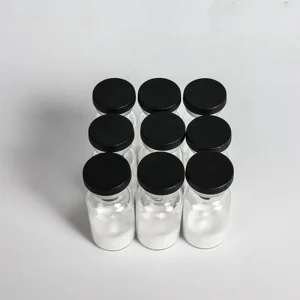
Verified laboratory supply portfolio with comprehensive analytical release certificates (HPLC/MS, Gas Chromatography, NMR) and documented batch integrity.
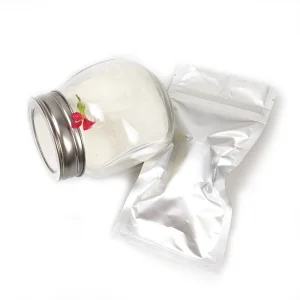
Exemestane (CAS 107868-30-4), commercially identified as Aromasin, represents an irreversible steroidal Type I aromatase inactivator. Discover how scaled manufacturing in China addresses structural vulnerabilities across the global supply chain.
Unlike non-steroidal reversible aromatase inhibitors (such as Anastrozole and Letrozole), Exemestane acts as a pseudo-substrate. It binds irreversibly to the catalytic pocket of the aromatase enzyme, requiring de novo enzyme synthesis and eliminating competitive estrogen surge rebound effects.
China manufactures over 78% of global steroidal raw material precursors, principally derived from phytosterols and 4-androstenedione (4-AD). Direct factory linkage ensures domestic uninterrupted precursor access, insulating international buyers from external geopolitical volatility.
By streamlining chemical dehydrogenation using proprietary DDQ or selenium dioxide catalysts, modern Chinese synthesis reactors achieve superior atom economy, elevated diastereomeric selectivity, and lower energy consumption at multi-metric-ton output capacities.
| Analytical Parameter | USP Reference Criteria | EP / BP Specification | Factory In-House Target |
|---|---|---|---|
| Chemical Name | 6-Methylenandrosta-1,4-diene-3,17-dione (CAS: 107868-30-4) | ||
| Assay Purity (HPLC) | 97.5% – 102.0% (anhydrous) | 98.0% – 102.0% | ≥ 99.40% (Batch-Average) |
| Individual Impurity | ≤ 0.20% | ≤ 0.15% | < 0.08% (Specified Degradants) |
| Residual Solvents (GC) | ICH Q3C Compliant | ICH Q3C Class 2/3 Limits | Ultra-Low Trace (Ethanol/Ethyl Acetate) |
| Heavy Metals / Residue | ≤ 20 ppm / ≤ 0.1% Ignition | ≤ 10 ppm Total | < 5 ppm Heavy Metals Verified |
Enterprise procurement requires absolute regulatory defensibility. Chinese Exemestane manufacturing hubs conform strictly to cGMP conditions, offering complete validation dossiers for streamlined local authorization.
Export batches are supported by Drug Master Files (DMF Module 3) detailing synthesis routes, critical process parameters (CPPs), impurity profiling, and stability data under ICH Q1A(R2) conditions.
Utilizing high-resolution UHPLC-MS/MS and solid-state 13C/1H NMR, every lot is tested against potential genotoxic impurities (such as alkyl sulfonates) ensuring limits well below the Threshold of Toxicological Concern (TTC).
Customs documentation, dual-tier HS code reconciliation, temperature-regulated vacuum foil packaging, and bonded warehousing services minimize transit degradation and customs detention risk globally.
Direct communication with in-house regulatory affairs personnel provides technical deviations, Change Notification Protocols (CNP), and Out-of-Specification (OOS) audits within a binding 24-hour turnaround.
Exemestane's physicochemical features demand stringent particle engineering to guarantee bioavailability and formulation stability across diverse therapeutic disciplines.
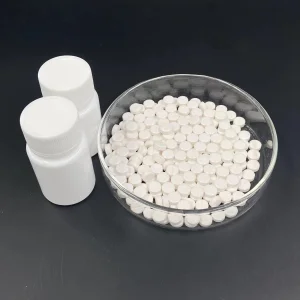
Classified under BCS Class II (low solubility, high permeability), micronized Exemestane powder (D90 < 10 μm) manufactured under strict crystallization controls is critical for direct compression tablets (standard 25 mg Aromasin reference).
Exemestane remains the primary treatment choice for postmenopausal estrogen-receptor-positive (ER+) early and advanced breast cancer post-tamoxifen therapy. Purity profiles adhere directly to long-term clinical safety metrics.
Laboratory research organizations rely on reference-grade API material for preclinical endocrine disruptor assays, bone mineral density co-factor models, and androgen-receptor binding experiments without non-specific artifact interference.
The transition toward carbon-neutral pharmaceutical chemistry is reshaping active pharmaceutical ingredient manufacturing across China. Our technological roadmap benchmarks sustainable engineering innovations through 2030.
Replacing heavy stoichiometric metal oxidants with engineered bacterial biocatalysts (e.g., Arthrobacter simplex variants) for site-selective Δ1,2-dehydrogenation, driving solvent waste down by 42% while improving enantiomeric purity.
Transitioning from traditional multi-thousand-liter batch vessels to continuous plug-flow microreactors for the Mannich methylenation stage. Real-time temperature control and in-line FT-IR spectroscopy drastically mitigate runaway exothermic reactions.
Integration of machine learning algorithms to govern crystallization dynamics (FBRM monitoring). Uniform polymorphic phase nucleation (Form I stable crystals) eliminates crystal lattice conversion risks during shelf storage.
Essential guidance covering regulatory clearance, analytical testing criteria, and minimum commercial order thresholds for institutional buyers.
Every commercial batch is accompanied by an authenticated Certificate of Analysis (COA) specifying HPLC purity, GC residual solvents, related substances, and heavy metal concentrations. Raw analytical data files (HPLC chromatograms, MS spectra) and safety datasheets (SDS) are provided directly.
Exemestane is an irreversible steroidal inactivator that permanently bonds to the aromatase substrate-binding site. Letrozole and Anastrozole are non-steroidal reversible inhibitors. Exemestane provides distinct benefits in therapeutic regimens resistant to non-steroidal inhibitors without cross-resistance concerns.
Exemestane API is double-bagged inside antistatic medical-grade polyethylene liners, sealed in heat-reflective aluminum foil pouches, and packed into fiber drums or secure export cartons. Vacuum flushing with high-purity nitrogen is optional to prevent oxidative degradation.
Yes. Air-jet milling services allow custom distribution profiles, including standard D90 < 20 μm, D90 < 10 μm, or ultra-fine D50 < 3 μm, complete with Malvern laser diffraction particle size distribution (PSD) analysis reports.
Explore our extensive fine-chemical, peptide, and pharmaceutical intermediate lines backed by validated laboratory infrastructure and prompt international shipping.