Immediate procurement dispatch for verified pharmaceutical intermediates, small-molecule APIs, and synthetic compounds with complete HPLC & MS validation dossiers.
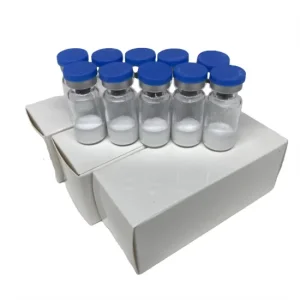
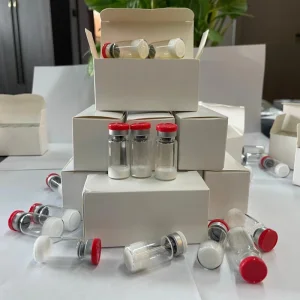
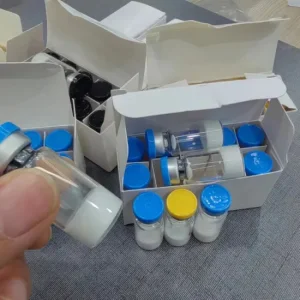
Strategic insights into the global macro-supply chain of macrocyclic lactones, capacity allocations, and structural sourcing risk-mitigation for enterprise buyers.
Ivermectin (CAS No. 70288-86-7), a broad-spectrum macrocyclic lactone derived as a semi-synthetic derivative of the avermectins, occupies an indispensable position within modern global veterinary medicine, aquaculture, and human tropical parasitology. Over the past three decades, the epicentre of chemical synthesis and industrial fermentation for Ivermectin has consolidated within Chinese production corridors. Driven by unmatched upstream deep-tank fermentation capacity for Streptomyces avermitilis, coupled with sophisticated downstream catalytic hydrogenation facilities, China Ivermectin factories produce more than two-thirds of the world's merchant active pharmaceutical ingredient (API) supply.
In today's volatile regulatory and macroeconomic environment, global pharmaceutical manufacturers, multinational veterinary supply houses, and agricultural ministries encounter escalating supply chain vulnerabilities. Geopolitical frictions, strict carbon-neutral environmental governance within China (such as VOC discharge restrictions and wastewater treatment mandates), and localized chemical park compliance audits have created sudden production contractions among non-compliant manufacturers. As a consequence, procurement directors are transitioning from opportunistic spot-market purchases to verified strategic partnerships with established Chinese synthesizers capable of delivering unbroken regulatory dossiers, cGMP certification, and auditable sustainability practices.
A comprehensive examination of industrial sourcing demonstrates that China's integrated supply chain advantages extend far beyond competitive labor. The true economic moat rests in the domestic availability of bio-feedstocks (such as high-glucose starches and industrial soya meal required for primary avermectin broth fermentation), domestic manufacturing of specialized Wilkinson's catalysts, and advanced preparative-scale chromatography column infrastructure. This horizontal integration insulates Chinese chemical manufacturing facilities from external price shocks, allowing tier-one Chinese facilities to maintain high batch-to-batch consistency and price stability even amidst raw chemical market gyrations.
Multi-site production hedging across established provinces (Hebei, Shandong, Zhejiang) provides continuous dual-facility sourcing, guaranteeing uninterrupted baseline delivery during peak global veterinary dispensing cycles.
Tailored physical-chemical property engineering, including ultra-micronized powder morphologies (D90 < 15μm) for injectable suspensions and targeted crystalline forms for pour-on veterinary matrices.
Full qualification packages including Type II Drug Master Files (DMF), Certificate of Suitability (CEP) under EDQM guidelines, stability chambers data (ICH Q1A R2), and multi-batch residual solvent analyses.
A rigorous examination of bacterial fermentation routes, homogeneous catalytic hydrogenation kinetics, and the stringent chromatographic controls that differentiate premium pharmaceutical grades.
The manufacturing process of high-purity Ivermectin begins in 100,000-liter sterile bioprocessing fermenters utilizing optimized strains of Streptomyces avermitilis. Under rigorously controlled dissolved oxygen, temperature, and feeding regimes, secondary metabolic expression yields crude Avermectin, predominantly composed of the four homologous pairs: A1, A2, B1, and B2. Industrial downstream extraction isolates the critical precursor, Avermectin B1, which comprises the macrocyclic lactone components B1a (5-O-demethyl-22,23-dihydroavermectin A1a) and B1b (5-O-demethyl-25-de(1-methylpropyl)-22,23-dihydro-25-(1-methylethyl)avermectin A1a).
The pivotal transformation into Ivermectin is the chemoselective catalytic reduction of the C22-C23 olefinic double bond within the avermectin macrolide core, leaving other conjugated dienes and acid-sensitive glycosidic linkages intact. Chinese manufacturers utilize specialized tris(triphenylphosphine)rhodium(I) chloride (Wilkinson's catalyst) or heterogeneous modified palladium systems under specific hydrogen partial pressures (0.2 to 0.8 MPa) and controlled thermal windows (20°C to 45°C). Over-reduction generates inactive tetrahydro-derivatives, while incomplete hydrogenation results in unreacted residual avermectin B1, an impurity strictly regulated by global pharmacopoeias.
| Analytical Parameter | European Pharmacopoeia (EP 10.0) | United States Pharmacopeia (USP 43) | Miaoou Factory Standard Grade |
|---|---|---|---|
| Appearance | White or yellowish-white powder | White to yellowish-white, crystalline powder | Pure white microcrystalline powder |
| Component H2B1a Content | ≥ 90.0% (anhydrous basis) | ≥ 90.0% (anhydrous basis) | ≥ 93.5% (typically 94.2% - 96.0%) |
| Sum of H2B1a + H2B1b | 95.0% - 102.0% | 95.0% - 102.0% | 98.5% - 101.5% |
| Ratio (H2B1a / [H2B1a + H2B1b]) | ≥ 90.0% | ≥ 90.0% | ≥ 92.5% |
| Residual Avermectin B1a | ≤ 1.0% | ≤ 1.0% | ≤ 0.25% (Ultra-low threshold) |
| Total Other Impurities | ≤ 2.5% | ≤ 2.5% | ≤ 0.8% |
| Heavy Metals (Pb, As, Cd) | ≤ 20 ppm | ≤ 20 ppm | ≤ 5 ppm (ICP-MS Verified) |
| Residual Solvents (Ethanol, Toluene) | Meets ICH Q3C Guidelines | Meets USP <467> limits | Headspace GC - Well below ICH limits |
Advanced chromatography verification forms the bedrock of chemical validation at Hebei Miaoou Technology Co., Ltd. Each production batch undergoes reversed-phase high-performance liquid chromatography (RP-HPLC) coupled with high-resolution electrospray ionization mass spectrometry (ESI-HRMS). This guarantees structural fidelity, accurate isotopic distribution, and unambiguous detection of minor trace congeners. For contract manufacturing organizations (CDMO) formulating sensitive aqueous solutions or parenteral injections, trace heavy metal contaminants (such as residual rhodium catalyst leaching) are quantified down to parts-per-billion (ppb) utilizing Inductively Coupled Plasma Mass Spectrometry (ICP-MS).
Engineering customized physical attributes to address demanding biological matrices across international veterinary, agricultural, and specialized clinical markets.
For 1% w/v subcutaneous livestock solutions (bovine, ovine, porcine), Chinese chemical factories supply Ivermectin with low bioburden and verified clarity in glycerol formal and propylene glycol vehicles, minimizing site-injection necrosis and guaranteeing 28-day persistent parasite clearance.
Designed for transdermal penetration in beef and dairy herds. API crystalline habits are tailored to enhance solvent affinity in isopropyl alcohol and dynamic surfactant blends, preventing recrystallization on cattle hide during high-humidity or sub-zero ambient field exposure.
Critical for commercial salmonid sea-lice (Lepeophtheirus salmonis) oral medicated feed pelleting. The compound requires exceptional thermal stability during high-pressure extrusion and uniform dispersion across lipid coatings without chemical degradation.
Low microgram-level homogeneity is imperative for chewable anthelmintic tablets. Chinese suppliers offer pre-blended, validated triturations with inert pharmaceutical binders, eliminating micro-segregation during automated high-speed tablet compression.
Ultra-micronized USP-grade Ivermectin utilized in 1% topical hydrophilic creams for the eradication of Demodex folliculorum mites in papulopustular rosacea, demanding strict limit testing on dermal irritants, organochlorines, and crystalline uniformity.
Bridging Chinese manufacturing capability with global customs jurisdictions through exhaustive documentation, cold-chain assurance, and legal trade compliance.
Exporting active pharmaceutical substances from China demands meticulous attention to regulatory cross-border protocols. At Miaoou Technology, every consignment is matched with real-time audit traceability. We supply comprehensive ICH CTD-format Drug Master Files (DMF), providing national regulatory authorities (US FDA, EMA, TGA, ANVISA) with unredacted manufacturing procedures, raw material vendor qualifications, in-process testing limits, and environmental controls.
Our export compliance infrastructure directly supports global buyers through dedicated customs brokerage, automated harmonized tariff schedule (HS) code assignment, non-dangerous goods (DG) chemical declaration certification, and Shanghai Institute of Chemical Industry safety flight transport appraisal dossiers. International freight transit (whether via temperature-monitored airfreight express or full refrigerated container ocean freight) is sealed in anti-static, food-grade polyethylene primary packaging inside moisture-barrier aluminium foil vacuum enclosures, nestled in impact-resistant fiber drums.
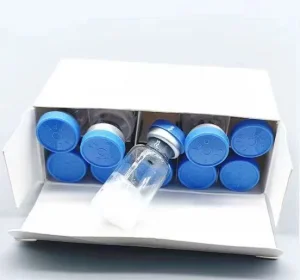
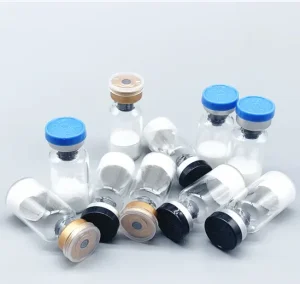
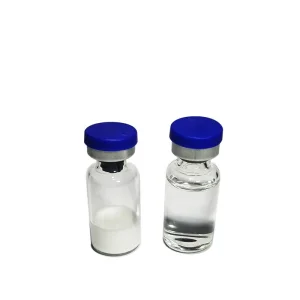
Expand your clinical and commercial synthesis pipeline with our factory-direct specialty compounds, manufactured under strict process analytics.
Anticipating the technological disruptions re-shaping macrocyclic lactone manufacturing over the 2026–2030 industrial lifecycle.
The manufacturing horizon for antiparasitic APIs is experiencing a paradigm shift towards continuous microfluidic hydrogenation and synthetic biology. Leading Chinese manufacturing clusters are progressively divesting from traditional high-pressure batch autoclaves in favor of continuous-flow micro-reactors. This engineering transition achieves microsecond mixing efficiency, optimal hydrogen gas-liquid mass transfer, and strict contact time modulation over precious-metal heterogeneous catalyst beds. The outcome is the near-total suppression of over-reduced tetrahydro-avermectin byproducts, lifting component H2B1a yields consistently above 95.5% while reducing energy overhead by 34%.
Simultaneously, genomic editing utilizing CRISPR-Cas9 tools on Streptomyces avermitilis wild strains has engineered targeted metabolic pathway bypasses. By selectively knocking out genes responsible for avermectin A-component and B2-component biosynthesis (such as aveE gene mutations and oligoketide cyclase alterations), newly deployed industrial strains biosynthesize Avermectin B1 with over 88% crude selectivity in the primary fermentation broth. This reduces downstream solvent extraction volumes, mitigates toxic solvent exposure, and sets a new milestone in environmentally sustainable fine-chemical synthesis.
Eliminating batch autoclave variability through continuous pressurized micro-channel reactors. Real-time online PAT NIR spectroscopy modulates reaction conditions, slashing catalyst leaching to negligible limits.
Comprehensive installation of closed-loop cryogenic condensation and membrane distillation units, recovering > 98.5% of process alcohols, toluene, and acetone solvents within factory boundaries.
Implementation of immutable cryptographic batch ledgers mapping primary precursor fermentation, chemical hydrogenation, chromatography elution, and final packaging timestamps for absolute anti-counterfeiting.
In-depth responses to critical analytical, logistical, and commercial inquiries routinely presented by international pharmaceutical procurement audits.
Ivermectin is an intentional homologous mixture of two semi-synthetic derivatives: 22,23-dihydroavermectin B1a (H2B1a) and 22,23-dihydroavermectin B1b (H2B1b). Both molecules demonstrate virtually identical antiparasitic potency and pharmacokinetics. However, international compendia (EP, USP, BP, ChP) specify that H2B1a must constitute not less than 90.0% of the total active substance. This requirement ensures that the original upstream fermentation profile of Streptomyces avermitilis was rigorously controlled. A rise in B1b content indicates irregular broth carbon-source ratios or strain instability, which can disrupt formulation reproducibility and crystallization kinetics in delicate human or veterinary injectable products.
The avermectin core contains multiple functional moieties vulnerable to non-selective attack, including conjugated 1,3-diene systems (C8-C11), allylic alcohols, and acid-labile oleandrosyl disaccharide units. Industrial catalytic reduction must selectively hydrogenate the non-conjugated, isolated C22=C23 double bond. Chinese chemical plants achieve this chemoselectivity by employing homogeneous coordination catalysts like Wilkinson's catalyst (RhCl(PPh3)3) in oxygen-free benzene/toluene systems, or modified palladium catalysts under strictly mild conditions (1-3 bars, 25-35°C). Over-reduction leads to tetrahydro-derivatives with reduced potency, while unselective cleavage destroys the terminal glycosidic bond, resulting in the inactive aglycone impurity.
For liquid injectable solutions (typically dissolved in organic solvent blends like glycerol formal and propylene glycol), high-bulk-density crystalline powder is preferred due to rapid dissolution and minimal dusting. However, for aqueous veterinary suspensions or oral chewable tablets, micronized powder (D90 < 15 microns or D50 < 5 microns) generated via air-jet milling under nitrogen shielding is recommended. Micronization maximizes specific surface area, prevents rapid sedimentation in parenteral flacons, and facilitates content uniformity in large-batch solid dose blending.
Every commercial batch released by Hebei Miaoou Technology Co., Ltd. is accompanied by: (1) A comprehensive Certificate of Analysis (COA) containing batch number, manufacture date, retest date, and itemized testing results against both USP and EP specifications; (2) Fully integrated HPLC chromatograms displaying resolution factors between H2B1a and H2B1b; (3) Mass Spectrometry (MS) identity confirmation; (4) Certified Safety Data Sheet (SDS) conforming to GHS Revision 9; (5) Certificate of Origin (COO); and (6) Non-Dangerous Goods Declaration for air/sea transit.
Under current EMA and US FDA regulatory expectations, all synthetic pathways undergo formal Nitrosamine Risk Evaluations. Ivermectin's chemical structure and semi-synthetic derivation do not incorporate secondary or tertiary amines, and sodium nitrite is not used in processing. Potential risks are confined to trace secondary amine impurities within process solvents or cross-contamination in multipurpose facilities. Our production plants mitigate this by dedicating isolated stainless-steel hydrogenation and crystallization suites solely to macrocyclic lactones, alongside regular GC-MS/MS trace screening to verify total absence of volatile nitrosamines (NDMA, NDEA) below 0.03 ppm limits.
Ivermectin is sensitive to prolonged light exposure, atmospheric oxygen, and moisture at temperatures above 30°C, which accelerate oxidation into epimers and keto-derivatives. We package API in heavy-duty, double pharmaceutical-grade polyethylene liners evacuated under inert argon gas flush, enclosed in heat-sealed composite aluminium foil bags with silica desiccant. These inner packs are seated inside durable, tamper-evident fiber drums. For hot climate routes, refrigerated reefer containers (maintained at 15°C - 25°C or 2°C - 8°C) with continuous datalogger telemetry are deployed.
Standard crystalline USP/EP grade Ivermectin is maintained in spot inventory in Shijiazhuang, Hebei, with dispatch capability within 24 to 48 hours for quantities from 1 kg up to 500 kg. Custom particle-size engineering (air-jet micronization to specific D90 requirements) requires a lead-time of 7 to 12 business days to permit cleanroom setup, inert gas milling, particle-size distribution (PSD) laser diffraction testing, and post-milling analytical release testing. Custom production MOQs generally start at 10 kg.
Yes. We welcome formal vendor-qualification audits from international quality assurance teams. Buyers can conduct on-site facility audits covering our fermentation cascades, hydrogenation bays, cleanroom crystallization halls, and QA/QC laboratories. Alternatively, for expedited qualifications, we provide full Virtual Audit Packages containing 360-degree cleanroom video walkthroughs, equipment calibration logs (IQ/OQ/PQ), water system validation data, operator training files, and past regulatory inspection summaries.
Eliminate intermediary margins, secure uninterrupted raw material supply, and receive verifiable batch documentation directly from China's premier synthesis specialists.
Our export sales directors and technical regulatory specialists provide commercial quotes, customized packaging quotes, and complete analytical sample dossiers within 24 operational hours.

