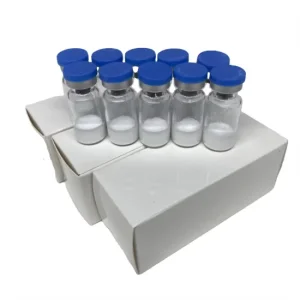
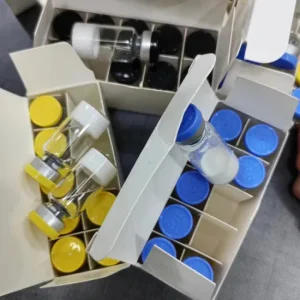
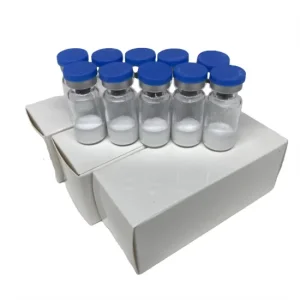
Each lot is produced in compliance with international purity baselines, validated via quantitative analytical chemistry, and backed by individual Certificate of Analysis (COA) documentation.
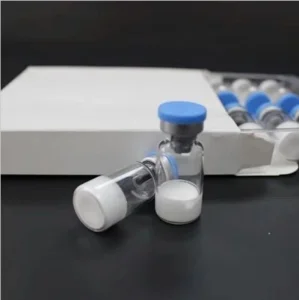
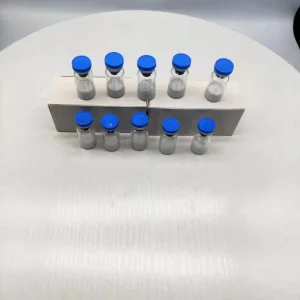
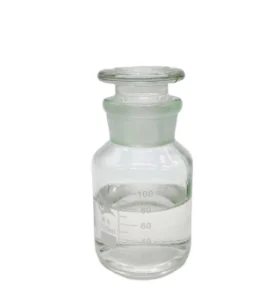
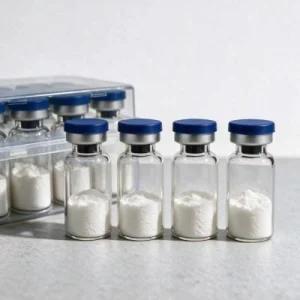
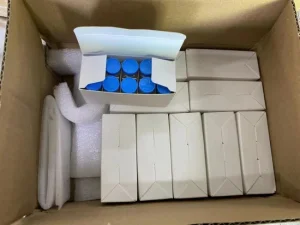
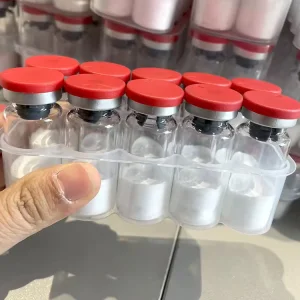
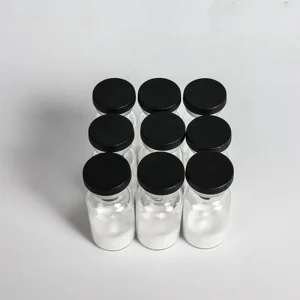
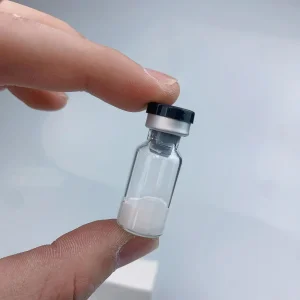
MK-2866 (CAS: 841205-47-8, C19H14F3N3O3) is a non-steroidal Selective Androgen Receptor Modulator (SARM). Designed to selectively stimulate androgenic signaling pathways in muscular and osseous tissues without eliciting classical steroidal androgenic cross-reactivity, precision multi-kilogram synthesis demands rigorous environmental containment, impurity fingerprinting, and chiral validation.
| Analytical Parameter | USP / In-House Reference Standard | Observed Factory QC Values (Lot Avg.) | Validation Technique |
|---|---|---|---|
| Chemical Identification | Conforms to Structure | Conforms exactly | FT-IR Spectroscopy & 1H-NMR (400 MHz) |
| Assay Purity (Chromatographic) | ≥ 98.5% Area Normalization | 99.2% – 99.6% | RP-HPLC (C18 Column, UV Detection @ 220nm) |
| Molecular Mass Confirmation | 389.33 ± 0.5 Da | 389.31 Da | High-Resolution Mass Spectrometry (HR-MS) |
| Enantiomeric / Chiral Purity | ≥ 99.0% (S-enantiomer) | 99.4% (ee) | Chiral HPLC (Chiralpak IA) |
| Residual Solvents (ICH Q3C) | Class 2 ≤ Limits; Class 3 < 0.5% | Complies with ICH thresholds | Headspace Gas Chromatography (GC-MS) |
| Heavy Metals Residue | ≤ 10 ppm Total | < 2 ppm (Cd, Pb, As, Hg undetectable) | Inductively Coupled Plasma Mass Spectrometry (ICP-MS) |
| Loss on Drying / Moisture Content | ≤ 0.50% | 0.28% | Karl Fischer Titration |
The international trajectory of MK-2866 is defined by dual pressure vectors: expansive translational clinical research exploring neuromuscular stabilization and cachexia abatement, set against strict regional consumer regulatory guidelines. Multinational biochemical enterprises depend on China’s primary active chemical manufacturing clusters to supply bulk research material accompanied by tamper-proof documentation trails.
Chinese chemical processing facilities benefit from vertically integrated synthetic precursors, ranging from basic halogenated building blocks to advanced aryl-ether intermediates. By integrating continuous flow microreactors and multi-ton crystallizers, domestic factories minimize batch divergence, reduce thermal degradation, and yield dramatic scale economies unmatched across Western merchant production.
MK-2866 serves academic medical research groups, bioscience contract organizations (CROs), and analytical instrumentation developers. Predominant research domains include androgen receptor co-activator kinetic studies, downstream protein transcription profiling, non-genomic membrane cross-talk assays, and reference chromatographic standard calibration for anti-doping matrices.
Securing fine chemical APIs and synthetic modulators requires deep scrutiny of supply partner verification workflows. Enterprise purchasers should enforce stringent audit vectors to mitigate regulatory and contamination risks.
Synthetic precursors must undergo spectroscopic qualification prior to reactor admission. Fully mapped chain-of-custody documentation shields formulations from unreacted aryl halide contaminants.
Real-time chromatographic monitoring tracks conversion kinetics throughout the cyano-ester substitution phase, avoiding sub-optimal coupling and reducing byproduct accumulation.
Automated solvent-antisolvent crystallization parameters determine polymorphic integrity and particle size distribution, ensuring dependable dissolution dynamics in formulation research.
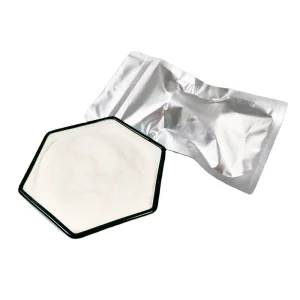
Final packaging within double pharmaceutical polyethylene inner liners, heat-sealed aluminum foil envelopes, and vacuum desiccated nitrogen headspaces guards against oxidative shifts.
The small-molecule modulator manufacturing industry is moving away from fragmented synthesis toward specialized, highly automated production centers governed by integrated environmental and quality frameworks.
Global corporate clients are no longer content with self-generated manufacturer certificates. Sustainable trade models rely on dual-layer verification, coupling in-house GC/HPLC reporting with independent ISO/IEC 17025 accredited laboratory assays.
Upgraded Chinese chemical manufacturing zones enforce zero-liquid-discharge (ZLD) requirements and closed-loop solvent recovery cycles. These measures insulate enterprise supply chains from regulatory plant shutdowns while improving yield efficiency.
Cross-border logistics for complex organic compounds demands meticulous tariff classification (HS Code 292429), precise toxicology dossiers, and reliable DDP forwarding pipelines that navigate strict transatlantic and regional customs clearance protocols.
Addressing critical inquiries surrounding chemical characterization, lot-to-lot tolerances, shipping security, and commercial compliance.
MK-2866 requires strict S-enantiomer configuration at the chiral carbon. Synthesis incorporates chirally pure (2S)-methyl-2-oxirane carboxylic acid derivatives or asymmetric catalytic condensation. Every commercial release is analyzed via chiral stationary phase HPLC to verify an enantiomeric excess (ee) exceeding 99%.
Material stability is characterized in compliance with ICH Q1A accelerated conditions (40°C ± 2°C / 75% RH ± 5% RH). When protected in airtight aluminum foil vacuum liners, high-purity crystalline MK-2866 demonstrates degradation rates below 0.1% over simulated intercontinental transit profiles.
Each shipment includes an analytical dossier: batch-specific Certificate of Analysis (COA), high-resolution RP-HPLC chromatograms, 1H-NMR/MS raw data, Safety Data Sheet (SDS) prepared under GHS Revision 9, and commercial export declarations detailing precise chemical identification.
Standard commercial order volumes commence at 100g research pilot packs and scale smoothly to 25kg multi-drum production campaigns. Custom packaging—including pre-weighed laboratory glass ampoules, fluorinated containers, or customized drum configurations—is supported on request.
Expanding beyond synthetic SARMs, our chemical infrastructure manufactures and delivers peptide sequences, specialized endocrine raw materials, and bioactive molecules with end-to-end analytical traceability.