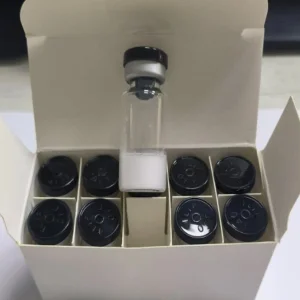
Explore high-specification batches manufactured under stringent chromatographic quality assurance. Retaining direct supply chain traceability from certified synthesis facilities.
Pentanophenone (CAS: 1009-14-9), commonly designated as 1-phenylpentan-1-one, valerophenone, or butyl phenyl ketone, represents a critical aromatic ketone intermediate utilized across photoinitiator manufacturing, active pharmaceutical ingredients (APIs), and agrochemical active synthesis.
Under ambient operating conditions, valerophenone exists as a clear, colorless to slightly pale-yellow organic liquid possessing a characteristic sweet, aromatic odor. The compound exhibits a boiling point range of 239.5°C to 241.0°C at 760 mmHg and a density of 0.988 g/cm³ at 20°C. Owing to its specific aromatic-aliphatic ketone linkage, it possesses excellent solubility in ethanol, diethyl ether, ethyl acetate, and chloroform, with minimal water solubility (<0.1 g/L at 25°C).
| Chemical Name | Pentanophenone / Valerophenone / 1-Phenyl-1-pentanone |
| CAS Registry Number | 1009-14-9 |
| Molecular Formula | C₁₁H₁₄O |
| Flash Point (Closed Cup) | 102°C (215.6°F) |
| Refractive Index (n20/D) | 1.514 - 1.518 |
Global procurement specialists evaluate valerophenone not solely on nominal purity percentages, but through rigorous critical impurity profiling. Contaminants such as residual benzene, valeric acid, mono-chlorobenzene, and positional isomers dictate performance viability in downstream fine-chemical synthesis.
China's dominance in the global pentanophenone manufacturing sector is underpinned by integrated petrochemical supply clusters, advanced continuous-flow microreactor technologies, and highly optimized scale economics.
Chinese producers are situated directly adjacent to mega-refinery complexes in Shandong, Jiangsu, and Hebei. This provides uninterrupted pipeline access to benzene, valeric acid (pentanoic acid), and valeryl chloride. By eliminating inter-regional transportation freight and intermediate storage degradation, raw material feedstocks maintain stoichiometric purity, resulting in immediate unit cost reductions of 15% to 22% compared to Western European batch reactors.
Modern Chinese facilities have pivoted away from conventional Friedel-Crafts glass-lined stirred tank reactors toward automated continuous-flow microreactors. The electrophilic acylation of benzene with valeryl chloride utilizes heterogeneous catalysts or precisely metered anhydrous AlCl₃. Continuous flow ensures microsecond thermal dissipation, suppressing thermal hot spots, eliminating over-acylation side-products, and lifting single-pass synthetic yields above 94.8%.
China's Tier-1 chemical parks mandate closed-loop hydrochloric acid (HCl) recovery systems. During Friedel-Crafts acylation, off-gassed HCl is systematically scrubbed through falling-film absorbers, generating high-purity commercial 31% technical hydrochloric acid for local industrial consumption. Solid aluminum oxide sludges are processed into coagulant salts for municipal water treatment, virtually neutralizing hazardous discharge liability.
Valerophenone functions as a versatile synthon across multiple specialty sectors. Its distinct photochemical properties and aliphatic tail length deliver specific mechanical advantages over shorter chain acetophenones.
In UV-curing coatings, graphic inks, and additive manufacturing (3D photopolymer resins), valerophenone serves as a premier model compound for studying Norrish Type II photochemical fragmentation. Upon photon absorption in the 310–330 nm UV range, it undergoes intramolecular gamma-hydrogen abstraction, generating an active 1,4-biradical intermediate. This reaction path makes valerophenone derivatives critical in formulating specialty photoinitiator packages that demonstrate reduced volatile emissions and low migration characteristics in food-contact packaging coatings.
The butyl aryl carbonyl backbone of pentanophenone offers a privileged scaffold for active pharmaceutical ingredients. It undergoes stereoselective catalytic hydrogenation, asymmetric reductive amination, and alpha-halogenation to synthesize a wide range of neuro-active candidates, central nervous system (CNS) stimulants, analgesics, and antidepressant derivatives. The precise control over residual water (≤0.05%) and trace metals (Pd, Fe ≤ 5 ppm) in Chinese export-grade pentanophenone ensures high stereoselectivity during chiral asymmetric transformations.
Agricultural crop protection chemistry relies heavily on aromatic ketones for constructing multi-ring heterocyclic systems, including substituted triazoles and imidazole fungicides. Pentanophenone’s four-carbon aliphatic tail confers enhanced lipophilicity (LogP approx. 3.2), improving leaf surface penetration and cellular membrane transport in active pesticidal molecules. Utilizing high-assay pentanophenone prevents unreacted ketone precursors from degrading formulated suspension concentrates (SC) during extended shelf life storage.
Valerophenone exhibits a rich, persistent balsamic, floral-aliphatic fragrance profile with subtle dry-woody undertones. High-vacuum fractionated grades are utilized in trace quantities as middle-to-base note fixatives in non-cosmetic industrial fragrancing, technical perfumes, and maskants. Furthermore, its unique dipole moment (approx. 2.9 D) and elevated thermal stability make it a specialized high-boiling solvent for conducting high-temperature non-aqueous polymer condensations.
The global fine chemical sector is undergoing structural transformation driven by international ESG requirements, EU REACH restrictions, and stringent domestic decarbonization mandates within China's provincial industrial parks.
The historical reliance on stoichiometric anhydrous aluminum chloride (AlCl₃), which produces corrosive aqueous wastewater during product quenching, is systematically being phased out. Pioneering Chinese manufacturers are implementing regenerative solid acid catalysts, such as H-beta zeolites, sulfated zirconia, and Nafion-functionalized mesoporous silicas. These solid catalysts enable gas-phase or liquid-phase continuous-flow acylation, allowing catalyst recycling across hundreds of cycles without generating metal-salt effluent.
R&D breakthroughs in cross-coupling methodologies are moving toward catalytic C-H activation. Chinese research clusters in collaborative partnership with the Chinese Academy of Sciences (CAS) are scaling nickel- and iron-catalyzed coupling routes utilizing pentanal or valeric anhydride directly with benzene. This route bypasses chlorinated acyl intermediates entirely, unlocking ultra-low halogen pentanophenone grades (Cl < 5 ppm) specifically targeted at high-end microelectronics and pharmaceutical synthesis.
Global multi-national buyers in Europe and North America increasingly demand product carbon footprints (PCF) aligned with ISO 14067 standards. Major Chinese producers are integrating solar photovoltaic arrays on chemical warehouse rooftops and utilizing electrified reboilers in fractionation columns. By capturing waste steam from nearby district thermal plants, modern manufacturing units have reduced embedded lifecycle carbon per kilogram of pentanophenone by 28% since 2021.
Evaluating chemical suppliers across Asia requires a structured audit protocol beyond commercial quotation comparisons. Procurement directors must assess factory compliance across analytical testing, storage integrity, and transport safety.
Demand comprehensive Certificates of Analysis (COA) specifying validated GC column stationary phases (e.g., DB-5 or DB-WAX). Require high-resolution GC-FID chromatograms indicating peak baseline separation. Ensure residual unreacted benzene levels comply with REACH SVHC (Substances of Very High Concern) and OSHA action limits (<1 ppm threshold). Confirm moisture testing via coulometric Karl Fischer titration rather than loss-on-drying.
Valerophenone readily oxidizes upon prolonged contact with atmospheric oxygen, forming hydroperoxide intermediates that shift color from water-white to dark amber. Certified suppliers must pack material under high-purity dry nitrogen blankets (N₂ purity ≥99.999%). Packaging options should feature UN-rated PVDF-lined steel drums (200 kg net) or fluorinated HDPE containers. For bulk transport, dedicated 20,000-liter T11 ISO tank containers equipped with bottom-discharge safety valves are required.
Confirm the manufacturer holds full or active tonnage-band registrations under EU REACH, UK REACH, and US EPA TSCA (Toxic Substances Control Act). Chinese facilities must possess valid National Hazardous Chemical Operation Licenses and Environmental Impact Assessment (EIA) approvals. Ensure that standard shipping declarations match accurate HS Codes (2914.39.9090) to prevent customs delays during port terminal audits.
In-depth responses to critical technical, logistic, and contractual inquiries submitted by chemical enterprise buyers and supply chain managers.
Export-grade pentanophenone manufactured for industrial intermediate and synthesis applications typically mandates a minimum assay of 99.0% by Gas Chromatography (GC-FID). However, Tier-1 Chinese manufacturers serving high-compliance API synthesis and advanced photoinitiator formulations consistently provide high-purity grades certified at ≥99.50% purity, with individual organic impurities restricted below 0.10% and moisture below 0.05%.
Continuous microchannel reactors exhibit ultra-high area-to-volume heat exchange ratios, mitigating localized overheating during the strongly exothermic Friedel-Crafts acylation of benzene with valeryl chloride. This precise residence time control reduces the formation of high-boiling condensation by-products and poly-alkylated aromatics, increasing product yields from ~85% in conventional batch reactors to over 95%, while substantially lowering unit catalyst consumption.
Pentanophenone should be stored in tightly sealed, airtight containers under a dry nitrogen blanket in a cool, well-ventilated warehouse maintained between 15°C and 25°C, away from direct sunlight, open flames, and strong oxidizing agents. Under intact nitrogen-sealed conditions in UN-approved PVDF-lined steel drums, the product maintains full analytical compliance for a certified shelf life of 24 months from the manufacturing release date.
Valerophenone possesses a high closed-cup flash point of approximately 102°C (215.6°F) and is generally classified as non-hazardous for road (ADR/RID), sea (IMDG), and air (IATA/ICAO) transport under standard temperature regimes. However, accurate SDS documentation compliant with GHS Revision 9 must accompany every shipment to streamline international customs clearance without classification conflicts.
Yes. In addition to commercial technical-grade pentanophenone, certified synthesis facilities offer custom deuterated analogues (such as Pentanophenone-d11) for NMR spectroscopic internal standards and metabolic pathway mapping. Specialized low-chlorine and custom fractional distillation fractions are produced upon formal contract review and bilateral Technical Quality Agreement (TQA) execution.
Standard pre-shipment documentation includes a batch-specific Certificate of Analysis (COA) containing GC assay chromatograms, Karl Fischer water content, and refractive index measurements; an updated 16-section Safety Data Sheet (SDS); raw material origin declarations; BSE/TSE statements; and REACH compliance confirmation letters for qualified European port entries.
Explore our extended batch-verified fine chemical portfolio, manufactured in adherence with stringent quality control standards and export logistics integrity.