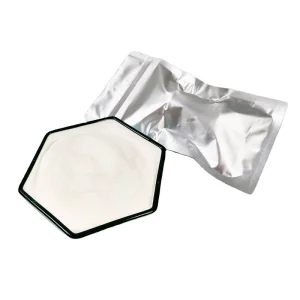
Standard-certified biochemical compounds, peptide analogues, and advanced fine chemicals produced with end-to-end analytical traceability (HPLC, LC-MS) for institutional procurement.
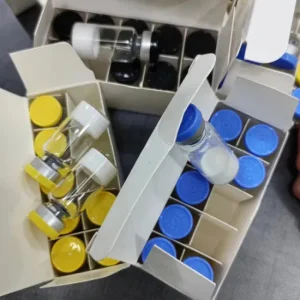
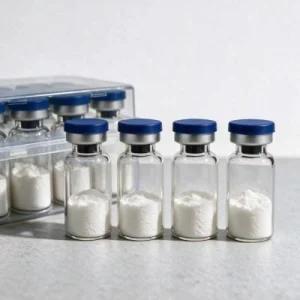
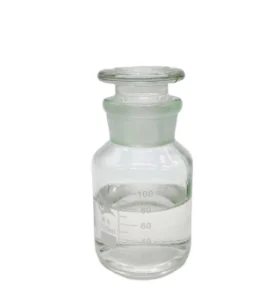
Known chemically as 1,3-Divinyl-1,1,3,3-tetramethyldisiloxane (often abbreviated as DVTMDSO or VM2), CAS 2627-69-2 serves as the cornerstone organosilicon ligand in modern coordination catalysis and silicone polymer engineering.
| Analytical Parameter | Technical Specification Value | Detection Methodology | Audit Status |
|---|---|---|---|
| IUPAC Chemical Name | 1,3-diethenyl-1,1,3,3-tetramethyldisiloxane | IUPAC Standard Naming Protocol | Standard Verified |
| CAS Registry Number | 2627-69-2 | Chemical Abstracts Service | Registered |
| Empirical Formula & MW | C8H18OSi2 | 186.40 g/mol | High-Resolution Mass Spectrometry (HRMS) | Conforms |
| Purity Grade (GC-FID) | ≥99.0% (Industrial) / ≥99.5% (Electronic / Catalyst Grade) | Gas Chromatography with Flame Ionization Detector | Batch Released |
| Refractive Index (n20/D) | 1.412 – 1.414 | Abbe Refractometer (20.0°C ± 0.1°C) | Pass |
| Boiling Point & Flash Point | 139.0°C at 760 mmHg | 24.4°C (Closed Cup) | ASTM D93 Closed Cup Standard | UN 1993 Compliant |
| Residual Hydrolysis Acidity | ≤ 10 ppm (calculated as HCl) | Potentiometric Acid-Base Titration | < 5 ppm Certified |
From modern semiconductor packaging to high-end dental impressions and platinum-catalyzed addition curing, understanding localized application mechanics unlocks dramatic chemical efficiencies.
CAS 2627-69-2 acts as the mandatory stabilizing ligand for Platinum(0) complexes. The vinyl coordination stabilizes zero-valent platinum clusters without unwanted metallic precipitation, allowing instantaneous hydrosilylation in silicones without elemental platinum fallout.
In microelectronics packaging, ultra-dry CAS 2627-69-2 functions as an efficient end-capper and cross-linking modifier for silicone gels. Its tight boiling range and low ionic chloride residue prevent copper lead-frame corrosion and micro-voiding during high-heat soldering cycles.
Applied within addition-cure vinyl polysiloxane (VPS) dental impression matrices and medical grade skin adhesives. By fine-tuning the ratio of vinyl end-caps, formulators achieve rigid dimensional stability and rapid mouth-setting kinetics without toxic leachables.
China's fully integrated silane production corridors ensure reliable raw monomer flow, lower energy conversion overheads, and comprehensive risk buffering for international buyers facing regulatory and market volatility.
Proximity to basic methylchlorosilane and acetylene cracking units safeguards feedstock continuity even during macro raw-material shortages.
Continuous vacuum rectification columns operating under inert atmospheres eliminate batch variations, yielding uniform >99.5% purity.
Direct Dangerous Goods (DG) shipping routes through Qingdao, Shanghai, and Ningbo expedite export clearance and cut transit cycle delays.
Dedicated bilingual technical support teams ensure standard COA and inquiry turnarounds within 24 hours to accelerate validation cycles.
An evaluation of changing regulatory frameworks across the EU, US, and APAC markets, paired with next-generation green synthesis pathways and solvent-free production standards.
CAS 2627-69-2 complies fully with REACH registration obligations and TSCA inventories. Unlike cyclosiloxanes (D4/D5/D6) facing SVHC environmental scrutiny, 1,3-divinyl-1,1,3,3-tetramethyldisiloxane exhibits minimal bioaccumulation, presenting a sustainable alternative for silicones.
Traditional chlorosilane hydrolysis generates corrosive hydrochloric acid byproducts. Modern manufacturing workflows employ catalytic condensation using non-corrosive alkoxysilane precursors, slashing halogen residues to sub-ppm levels for microchip encapsulation.
Emerging optical waveguides, micro-LED encapsulants, and solid-state electrolyte interfaces demand functionalized vinyl disiloxanes with custom refractive indices (>1.52). Targeted chemical modification positions CAS 2627-69-2 derivatives at the heart of next-generation photonics.
Ensuring end-to-end cargo safety from class 3 dangerous goods packaging through multi-port customs logistics, batch verification, and storage stability protocols.
Classified as UN 1993, Flammable Liquid, N.O.S., Packing Group III. Materials are packaged in UN-certified steel drums (160 kg net weight) or fluorinated HDPE carboys protected under dry nitrogen blankets to prevent atmospheric moisture hydrolysis.
Every export consignment is paired with an updated GHS-compliant Safety Data Sheet available in 12 languages, complete with standard 16-section declarations, acute aquatic toxicity profiles, and emergency response plans.
We support blind third-party sample testing via SGS, Intertek, or institutional client laboratories before bill-of-lading confirmation, ensuring batch-to-batch consistency for all commercial contracts.
Clear, auditable answers to the most common procurement, technical, and regulatory questions raised by chemical engineers and supply chain managers.
Full chain-of-custody raw powders, metabolic research peptides, and performance APIs packaged for industrial formulation and high-purity laboratory applications.