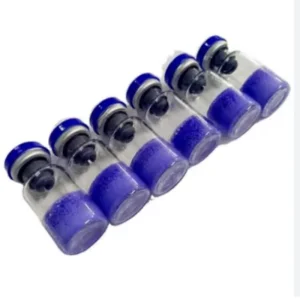
Direct laboratory-grade synthesis batches qualified via HPLC, Mass Spectrometry, and strict cGMP-aligned manufacturing parameters for contract research and global distributors.
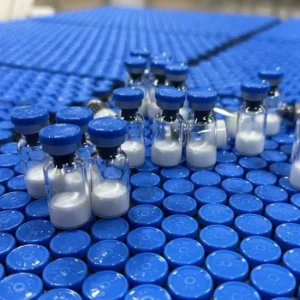

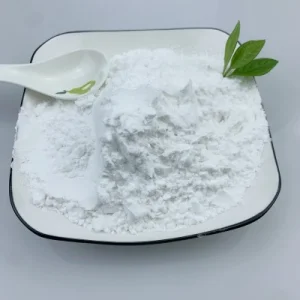


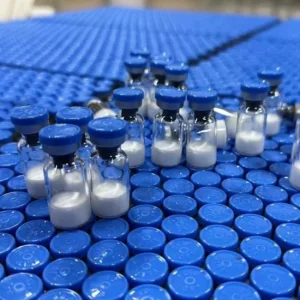

An in-depth analysis of high-purity methylaminium salts [CH3NH3]+, electronic-grade crystallization dynamics, and their expanding multi-billion dollar role in clean tech and advanced synthetic chemistry.
Methylaminium halides—predominantly Methylammonium Lead Iodide (MAPbI3), Methylammonium Chloride (MACl), and Methylammonium Bromide (MABr)—form the structural crystalline backbone of hybrid organic-inorganic perovskite solar cells (PSCs). With commercial cell efficiencies surging past 26.1% in single-junction architectures and exceeding 33% in tandem silicon configurations, the demand for bulk electronic-grade methylaminium salts has transitioned from academic gram-scale synthesis to multi-ton industrial procurement.
Beyond optoelectronics, methylaminium cations and protected amine salts function as essential building blocks and counter-ions in fine chemical synthesis, peptide elongation, and chiral active pharmaceutical ingredient (API) pathways. In solid-phase peptide synthesis (SPPS), customized methylammonium buffers and cleavage scavengers stabilize reactive intermediates, minimizing epimerization during the coupling of complex GLP-1 and metabolic analogs.
The unique optoelectronic properties of high-purity methylaminium compounds extend into direct-conversion flat-panel X-ray detectors, high-resolution radiation sensors, and narrow-linewidth light-emitting diodes (LEDs). Because carrier diffusion lengths depend directly on crystallographic perfection, leading international fabs require manufacturers to deliver rigorous stoichiometric consistency and verified particle size distribution across every production lot.
Combining upstream feedstocks, automated continuous crystallization reactors, and stringent analytical release workflows to drive unprecedented economies of scale without compromising purity.
The manufacturing architecture in China provides an unmatched structural edge in methylaminium synthesis. With immediate access to domestically synthesized methylamine gas, hydroiodic acid, hydrobromic acid, and ultra-dry solvents within dedicated industrial chemical parks, Chinese manufacturing facilities eliminate international intermediate shipping delays and raw material volatility. Utilizing continuous-flow microreactor systems enables real-time thermochemical regulation, mitigating exothermic degradation pathways and yielding narrow, highly predictable crystal morphology.
Traditional batch precipitation often introduces inconsistent local supersaturation ratios, causing wide grain-size variations and solvent occlusion. Premier Chinese manufacturing facilities operate continuous antisolvent crystallization columns coupled with inert-atmosphere centrifugal washing. This guarantees identical particle size distributions (PSD), eliminating batch-to-batch solubility variations during thin-film spin coating, blade coating, or slot-die roll-to-roll printing.
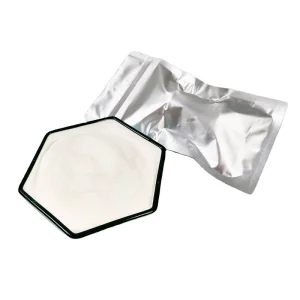
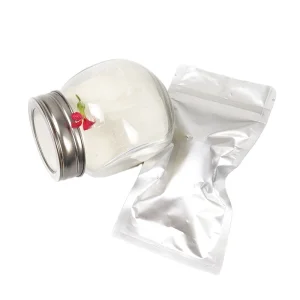
Methylaminium salts exhibit pronounced hygroscopicity, decomposing into volatile amine gas and corrosive halides upon ambient air exposure. Advanced Chinese production suites house synthesis, filtration, and packaging within automated gloveboxes maintaining dew points below -60°C and oxygen concentrations below 0.1 ppm. Products are vacuum-sealed inside multi-layer aluminum barrier pouches backfilled with ultra-pure dry argon gas.
Equipped with specialized dangerous goods (DG) export licenses, certified UN-approved shipping containers, and dedicated direct-flight routes departing from Shanghai, Beijing, and Hong Kong hubs, suppliers provide door-to-door transit times under 7 business days to North America, the European Union, and Asia-Pacific research centers, backed by complete DGD, MSDS, and customs clearance protocols.
Comprehensive analytical parameters comparing purity grades, physical forms, and targeted commercial deployment zones across international laboratory and fab environments.
| Compound Name | CAS Registry | Assay (HPLC / Titration) | Key Impurity Thresholds | Primary Industrial Use Case |
|---|---|---|---|---|
| Methylammonium Iodide (MAI) | 14965-49-2 | ≥ 99.99% (Electronic Grade) | Water ≤ 100 ppm; Pb, Fe ≤ 1 ppm | Perovskite Solar Absorber Layers, Tandem Cells |
| Methylammonium Chloride (MACl) | 593-51-1 | ≥ 99.5% (High Purity) | Residue on Ignition ≤ 0.05% | Crystallization Additive, Grain Boundary Engineering |
| Methylammonium Bromide (MABr) | 6876-37-5 | ≥ 99.95% (Optical Grade) | Moisture ≤ 150 ppm; Heavy Metals ≤ 5 ppm | Wide-Bandgap Tandem Cells, Perovskite LEDs |
| Methylammonium Formate (MAFo) | 6876-14-8 | ≥ 99.0% (Synthesis Grade) | Free Acid ≤ 0.2%; Insoluble matter ≤ 0.01% | Ionic Liquid Precursor, Green Organic Synthesis |
| Methylammonium Acetate (MAAc) | 1904-58-1 | ≥ 99.0% (Reagent Grade) | Sulfate ≤ 50 ppm; Chloride ≤ 20 ppm | Peptide Coupling Buffers, API Alkylation Synthon |
| Methylammonium Tetrafluoroborate | 4253-22-9 | ≥ 99.8% (Battery/Capacitor Grade) | Water ≤ 50 ppm; F- free ≤ 10 ppm | Solid-State Electrolytes, Electrochemical Storage |
Applied in multi-junction architectures where methylammonium iodide is co-deposited with lead iodide and cesium halides to achieve tunable optical bandgaps (1.55 eV to 1.78 eV). Guarantees high open-circuit voltage (Voc) and minimal hysteresis in high-throughput industrial vacuum evaporation or ultrasonic spray coating operations.
MACl operates as a sacrificial volatile additive in slot-die perovskite printing. During thermal annealing, MACl facilitates large crystal grain growth exceeding 2 micrometers and then sublimes cleanly without leaving residual chlorine traps, reducing non-radiative recombination by up to 80%.
Serves as a purified nitrogen donor and methyl source in stereospecific condensation reactions. In complex bioactive peptides such as glucagon-like peptide analogs and signaling peptides, controlled amine salts preserve tertiary folding while ensuring batch reproducibility.
Addressing thermal stability limits, mixed-cation developments, and the institutional analytical standards demanded by international corporate procurement auditors.
The photovoltaic sector is aggressively shifting toward multi-cation "cocktail" formulations combining methylaminium (MA), formamidinium (FA), and cesium (Cs). While pure MAPbI3 experiences phase transitions near 55°C, strategic doping of 5-15% methylaminium into FA-dominant lattices locks the photoactive black alpha-phase against humidity-induced degradation, maintaining thermal stability under continuous 85°C/85% RH damp-heat testing standards.
Driven by the EU RoHS directive and global green chemical safety goals, major factories are scaling bismuth, antimony, and tin-based perovskites. Methylaminium remains the critical organic polar cation balancing electronegativity in tin-halide structures such as MASnI3, facilitating lead-free optoelectronic devices with optical bandgaps exceptionally aligned with the solar spectrum.
Every commercial batch released from premier Chinese production lines must pass rigorous five-tier analytical screening: High-Performance Liquid Chromatography (HPLC) for chemical purity, Inductively Coupled Plasma Mass Spectrometry (ICP-MS) for trace metals, Proton NMR (1H-NMR) for organic identification, Karl Fischer titration for moisture, and X-ray Diffraction (XRD) for phase purity.
Modern procurement officers across North America, Germany, Japan, and South Korea adhere to a zero-tolerance sourcing protocol. Low prices mean nothing if a 50 ppm moisture contamination destroys a $100,000 slot-die coating run. Leading Chinese factories distinguish themselves through verified Certificate of Analysis (COA) data packages matching real lot barcodes, documented chain-of-custody sealed shipping, and bonded samples retained for three years post-production.
Real-world insights on batch validation, moisture control, MOQ, logistics, and supply continuity directly answered by chemical supply directors.
When packaged under inert dry argon atmosphere inside hermetically heat-sealed aluminum laminate foil pouches, electronic-grade methylaminium salts maintain guaranteed purity for 24 months. Storage should be maintained in a dark, dry environment at 2°C to 8°C or room temperature (-20°C for long-term critical reserves), strictly avoiding exposure to ambient humidity above 30% RH.
Trace transition metals like iron, nickel, chromium, and copper function as deadly carrier traps in semiconductor devices. Premier Chinese synthesis plants utilize ultra-pure electronic-grade precursors (such as triple-distilled hydroiodic acid), fluoropolymer-lined reaction vessels, and multi-stage recrystallization from non-coordinating anhydrous solvent matrices. Release is validated by Inductively Coupled Plasma Mass Spectrometry (ICP-MS) ensuring total heavy metals remain below 1-5 ppm.
For customized electronic-grade methylaminium halides (MAI, MABr, MACl), standard laboratory validation packs begin at 100g to 1kg. For commercial industrial supply contracts, standard batches are supplied in 25kg fiber drums with dual barrier liners up to multi-ton container shipments. In-stock compounds dispatch within 24 to 48 hours; custom multi-ton synthesis campaigns require 2 to 3 weeks lead time.
Every delivery includes a lot-specific Certificate of Analysis (COA) containing the exact numerical test values (not merely "conforms"), accompanied by high-resolution HPLC chromatograms, Proton NMR spectrum verifying single-peak chemical shift without free amine or acid artifacts, Karl Fischer moisture titration data, and an SDS compliant with GHS and REACH specifications.
Yes. Contract synthesis capabilities include deuterated methylammonium salts (CD3NH3I, CH3ND3I) for specialized phonon scattering and lattice dynamics research, alongside alternative counter-ions including methylammonium thiocyanate (MASCN), methylammonium triflate, and mixed-halide single-phase solid solutions custom-crystallized to customer molar ratios.
Comprehensive pharmaceutical raw materials, reference standard peptides, and performance APIs manufactured under rigorous process analytical technology (PAT) protocols.