Lyophilized research-grade analogs manufactured under strict cGMP-grade procedural controls, optimized for translational laboratories, university bio-incubators, and pharmaceutical formulation testing across Osaka Prefecture.
Understanding why Osaka represents Japan's epicenter for peptide chemistry procurement, clinical pipeline scaling, and cross-border API partnerships.
For over four centuries, Doshomachi in Chuo-ku, Osaka, has functioned as the historical heart of Japan's pharmaceutical trade. Today, this dense cluster houses the global and regional headquarters of top-tier domestic pharmaceutical enterprises alongside specialized API trading houses. As contemporary drug discovery pivots from classical small molecules to synthetic peptides, therapeutic peptidomimetics, and peptide-drug conjugates (PDCs), Osaka's biopharmaceutical infrastructure demands rigorous supply stability that domestic synthesis suites alone cannot fully satisfy.
Modern Osaka-based contract researchers and academic hubs—such as Osaka University's Institute for Protein Research in Suita and the Saito Life Science Park in Northern Osaka—require kilogram-scale synthetic capacity with turnaround times that accelerate milestone delivery. Our cross-border pipeline directly links high-capacity solid-phase peptide synthesis (SPPS) plants in China with Doshomachi distributors, bypassing traditional domestic backlogs while maintaining stringent analytical oversight.
Japanese life science firms face escalating raw material costs and constrained local peptide synthesis suites, leading to three systemic bottlenecks:
How advanced Chinese manufacturing hubs solve throughput constraints without compromising on isomeric fidelity or regulatory traceability.
Optical rotation, D/L enantiomeric ratio checking, and chromatographic fingerprinting of Fmoc-protected amino acids and high-loading Wang/CTC resins.
Multi-channel microwave-assisted and continuous-flow peptide synthesizers monitoring real-time UV deprotection peaks to prevent deletion sequences.
Tailored scavenger cocktails (EDT, TIS, phenol) prevent tryptophan alkylation and methionine oxidation during complete global deprotection.
Preparative C18/C4 reverse-phase columns coupled with ion-exchange protocols to convert toxic trifluoroacetate (TFA) into biocompatible acetate or HCl salts.
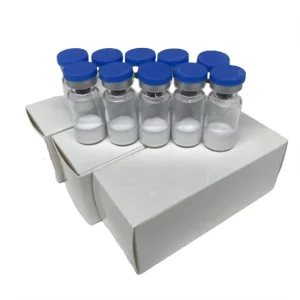
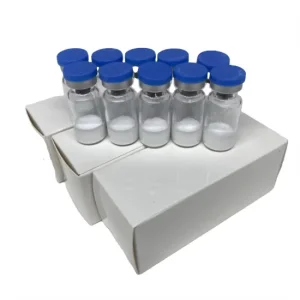
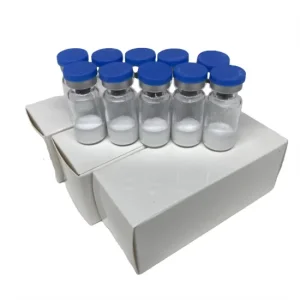
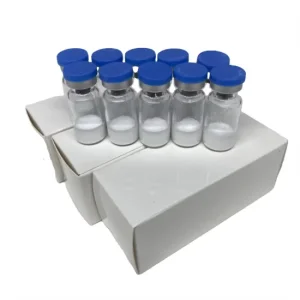
Class 10,000 cleanroom freeze-drying cycle yielding uniform cake morphology, followed by inert nitrogen headspace vacuum sealing.
| Analytical Metric | Standard Research Grade | Osaka Clinical/Bio-Incubator Grade | Methodology / Instrumentation |
|---|---|---|---|
| Purity by HPLC | ≥95.0% - 98.0% | ≥99.0% - 99.8% | Agilent 1290 Infinity II UHPLC, C18 2.1x100mm, UV 214/220nm |
| Identity Confirmation | Single Quad ESI-MS | High-Resolution LC-MS/MS & Q-TOF | Thermo Fisher Scientific Q Exactive Orbitrap Mass Spec |
| Residual Counter-Ion | TFA present (8%–15%) | Acetate / HCl Swap (<1% TFA) | Ion-Exchange Chromatography (IC) / 19F-NMR Spectroscopy |
| Bacterial Endotoxin | Not routinely tested | <0.05 to <0.01 EU/mg | Turbidimetric Kinetic LAL (Limulus Amebocyte Lysate) Assay |
| Residual Solvents | Non-quantified | Compliant with ICH Q3C Guidelines | Headspace Gas Chromatography with Flame Ionization (GC-HS/FID) |
Navigating Japan's stringent import standards with transparent analytical dossiers and validated transit networks into Osaka.
Procuring peptides in Japan requires immaculate documentation. Every shipment bound for Osaka labs includes an exhaustive Certificate of Analysis (COA) containing raw baseline HPLC integration curves, total ion chromatograms (TIC), optical rotation data, Karl Fischer water content analysis, and net peptide content calculations. We support Japanese partners with full DMF (Drug Master File) technical support.
Peptide sequences are vulnerable to thermal denaturation during international transit. We coordinate validated packaging systems—ranging from -20°C gel phase-change shippers to -78.5°C cryogenic dry-ice vacuum insulated panels (VIPs)—clearing customs swiftly at Kansai International Airport (KIX) and delivering straight to Osaka, Kobe, or Kyoto research desks via temperature-logged express routes.
Our dedicated cross-border sales and technical support team eliminates communication barriers. With fluent English and Japanese communication channels, inquiries regarding sequence confidentiality, non-disclosure agreements (NDAs), custom vial crimping, private labeling, and batch reservation are handled within a guaranteed 24-hour turnaround.
How our catalog and custom peptide capabilities power specialized academic, clinical, and biotechnology programs in Western Japan.
With the global rise of multi-receptor incretins, research groups in Osaka's bio-incubators are actively mapping glucagon-like peptide-1 (GLP-1), glucose-dependent insulinotropic polypeptide (GIP), and glucagon receptor (GCGR) tri-agonism. Compounds like Semaglutide, Tirzepatide, and Retatrutide provide gold-standard reference ligands for cellular affinity assays and metabolic pharmacokinetic profiling.
The Kansai corridor is world-renowned for its iPS cell discovery and regenerative medicine research. Short signaling peptides (such as Thymosin fragments, BPC-157 analogues, and extracellular matrix mimetic sequences) are widely used to coat polymeric nanofiber scaffolds, promoting stem cell adhesion, vascularization, and accelerated tissue regeneration in preclinical animal models.
Targeted oncological therapy represents a cornerstone of Osaka's clinical drug pipeline. Peptides acting as high-affinity homing devices are linked with cytotoxic payloads or radiolabels via cleavable linkers. Our synthesis laboratories deliver specialized peptide sequences modified with maleimide linkers, PEG spacers, D-amino acids, and fluorescent probes for high-resolution target imaging.
Pioneering sustainable, high-fidelity synthesis technologies to meet future environmental benchmarks and molecular complexity.
Classical Solid-Phase Peptide Synthesis has traditionally depended on hazardous dipolar aprotic solvents such as N,N-dimethylformamide (DMF) and N-methyl-2-pyrrolidone (NMP). In response to international ESG directives and Japan's Chemical Substances Control Law (CSCL), our production plants are rapidly transitioning toward bio-renewable green solvents, including dihydrolevoglucosenone (Cyrene) and 2-methyltetrahydrofuran (2-MeTHF).
This green chemistry revolution lowers carbon footprint, reduces heavy metal waste during resin deprotection, and eliminates trace toxic solvent residuals in final lyophilized cakes, ensuring Osaka research clients receive environmentally sound products aligned with international regulatory trends.
For peptide sequences exceeding 40 amino acids, classical step-by-step chemical elongation often faces cumulative yield drops. We are deploying Chemo-Enzymatic Peptide Ligation (CEPL) combined with continuous-flow microreactors. This hybrid approach enables atom-economical block coupling, significantly reducing aggregation and ensuring purity in ultra-long macrocyclic configurations.
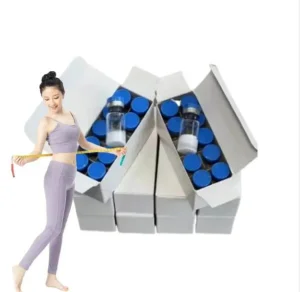
Explore our certified catalog of metabolic research reagents, growth-hormone releasing secretagogues, and custom formulated research vials supplied directly with third-party analytical documentation.

Essential technical, analytical, and supply chain insights for Japanese procurement teams and laboratory investigators.
Every production batch undergoes dual analytical testing: High-Performance Liquid Chromatography (RP-HPLC) utilizing optimized solvent gradients to establish relative purity percentages, combined with Electrospray Ionization Mass Spectrometry (ESI-MS) or Q-TOF to verify monoisotopic mass. Raw chromatograms and spectral charts accompany each shipment, demonstrating baseline stability and the absence of truncated sequences.
Peptides synthesized via Fmoc-SPPS typically retain residual trifluoroacetate (TFA) salts from cleavage cocktails, which can interfere with in vitro cellular viability and in vivo biological assays. We provide validated ion-exchange chromatography protocols to substitute TFA with biocompatible acetate or hydrochloric acid (HCl) salts, reducing residual TFA levels to below 1.0% or non-detectable thresholds.
All shipments to Osaka and greater Kansai are routed via international priority express air freight with designated dangerous goods/cold-chain clearance capabilities. Depending on peptide stability, products are encased in validated phase-change cold packs (-20°C) or specialized dry-ice containers (-78.5°C) equipped with real-time temperature data loggers to guarantee zero thermal spikes during transit.
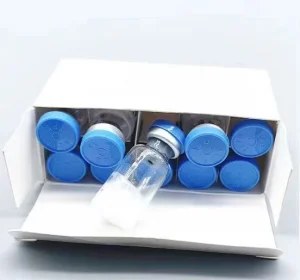
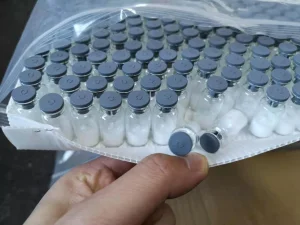
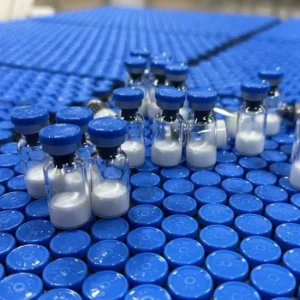
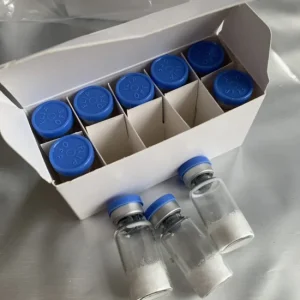
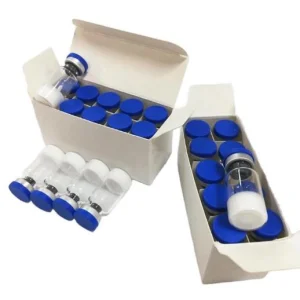
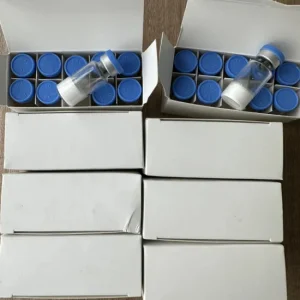
Yes. We operate cleanroom filling lines supporting lyophilized vial formats from 2mg up to 100mg, as well as bulk gram and multi-kilogram packaging in fluorinated HDPE containers. Custom flip-off caps, tamper-evident seals, localized barcode/matrix labeling, and blind packaging are fully customizable under strict OEM confidentiality agreements.
To ensure frictionless customs processing through Japanese Customs and the Ministry of Health, Labour and Welfare (MHLW) guidelines, we provide comprehensive commercial invoices with precise HS codes, complete Certificates of Analysis (COA), Safety Data Sheets (SDS) in English and Japanese, and formal Non-Drug / Research-Only declarations.
In-stock catalog items (such as standard research incretin mimetics and growth hormone secretagogues) are dispatched within 24 to 48 hours, arriving at Kansai facilities within 3 to 5 business days. Custom solid-phase synthesis sequences (de novo synthesis, isotopic labeling, or cyclization) typically require 2 to 3 weeks including analytical QC release.

