High-demand bioactive peptides and benchmark compounds synthesized for Melbourne research institutions, clinical trial CROs, and industrial analytical chemistry laboratories.
An authoritative review of Victoria’s world-class clinical research precincts, academic pharmacology requirements, and strict regulatory governance governing Selective Androgen Receptor Modulators (SARMs).
Melbourne, the state capital of Victoria, represents the southern hemisphere’s premier biomedical and translational medicine hub. Anchored by the globally recognized Parkville Precinct—which houses the University of Melbourne, the Walter and Eliza Hall Institute (WEHI), the Peter MacCallum Cancer Centre, and the Florey Institute of Neuroscience and Mental Health—alongside the Monash Technology Precinct in Clayton, Melbourne accounts for over 40% of Australia's entire medical and biochemical research output. Within this sophisticated scientific ecosystem, Selective Androgen Receptor Modulators (SARMs) have shifted from peripheral biochemical novelties into focal points of rigorous investigation for muscular atrophy, cancer-associated cachexia, sarcopenia in aging populations, and metabolic bone disorders.
Understanding the commercial and laboratory landscape in Victoria necessitates an exact breakdown of Australian law. In Australia, SARMs (including Enobosarm/Ostarine MK-2866, Ligandrol LGD-4033, Testolone RAD-140, and Andarine S-4) are categorized under the Therapeutic Goods Administration (TGA) Poisons Standard as Schedule 4 (Prescription Only Medicine) substances or, under specific anti-doping and customs provisions, strictly regulated import materials. The Australian Border Force (ABF) works concurrently with the TGA to interdict illicit, unverified, or mislabelled imports intended for unsupervised human administration or non-compliant consumer distribution.
Consequently, the legitimate institutional demand in Melbourne stems almost exclusively from accredited laboratory research: academic institutions, commercial contract research organizations (CROs), and analytical validation labs requiring certified reference materials (CRMs). Qualified industrial and academic procurement officers require full compliance with Section 19 of the Therapeutic Goods Act 1989 or hold valid TGA Customs (Prohibited Imports) Regulations permits. For these institutional entities, partnering with high-echelon Chinese manufacturers that supply fully traced, HPLC-verified, batch-labeled synthetic powders provides the operational lifeline needed to execute preclinical trials without contamination risks or regulatory non-compliance.
Oncological wasting and cachexia cellular modeling require unadulterated non-steroidal AR ligands with validated dissociation constants to eliminate cross-reactivity with glucocorticoid and progesterone receptors.
Endocrine signal transduction analysis in rodent and murine phenotypes depends on micro-gram precision batch homogeneity and zero heavy metal/residual solvent cross-contamination.
Independent analytical testing services operating in metropolitan Melbourne rely on high-grade Chinese API manufacturing to source calibrated reference standards for anti-doping forensic screening.
As Victoria intensifies its investments in state-level mRNA and targeted therapeutic synthesis infrastructure, the demand for precise receptor ligands has broadened. Chinese manufacturing powerhouses have adapted by transforming their synthesis pathways from bulk industrial commodities into specialized, documentation-heavy chemical synthesis that meets the strict validation criteria mandated by Australian institutional review boards (IRBs).
Unpacking the technological depth, precursor chemical supply chain mastery, and continuous flow engineering behind China’s leadership in high-purity SARM active pharmaceutical ingredients.
The global SARM and specialized endocrine ligand market has undergone a decisive structural bifurcation over the past decade. While pharmacological target discovery, structural biology, and Phase I/II clinical trials predominantly originate in Western biotech centers across North America, Australia, and Western Europe, the global supply of raw chemical APIs (Active Pharmaceutical Ingredients) and non-steroidal receptor agonists is virtually concentrated within advanced Chinese chemical clusters. Provinces such as Hebei, Jiangsu, Shandong, and Hubei house the world’s most fully integrated organic chemistry supply networks.
Synthesizing selective androgen receptor modulators is not a trivial commodity reaction. For instance, compounds of the arylpropionamide class (such as Ostarine and Andarine) or pyrrolidinyl benzamide derivatives require complex, multi-step stereo-selective organic reactions. Achieving the precise (S)-enantiomer is critical; the enantiomeric excess (ee) must consistently exceed 99% because the (R)-enantiomer often exhibits completely negligible binding affinity or may induce antagonistic or unintended enzymatic interactions.
Chinese high-tech facilities leverage continuous flow microreactors, automated catalytic hydrogenation systems, and advanced chiral chromatography resolution techniques. By synthesizing basic starting reagents—such as substituted phenols, bromo-anilines, and chiral precursors like (S)-methylacrylic acid derivatives—in massive internal scale, Chinese chemical plants eliminate external supply vulnerabilities that plague Western contract manufacturers.
| Synthesis & Supply Metric | Standard Western CMOs | Advanced Chinese Synthesis Plants | Impact on Melbourne Laboratory Buyers |
|---|---|---|---|
| Precursor Chain Integration | Fragmented; dependent on imported intermediates | Fully backward-integrated up to basic petrochemicals | Stable price points, uninterrupted continuous supply cycles |
| Chiral Separation Efficiency | Batch-mode HPLC (lower volume, elevated costs) | Simulated Moving Bed (SMB) & continuous chiral catalysts | Consistently high enantiomeric purity (>99% ee) without premium surcharges |
| Analytical Transparency | Third-party outsourcing (slow documentation) | Integrated 600MHz NMR, LC-MS, HPLC in-house suites | Real-time batch COA delivery with complete raw spectra verification |
| Lead Time for Custom Batches | 8 to 16 weeks typical engineering queue | 2 to 4 weeks rapid scale-up synthesis | Immediate alignment with tight Australian academic grant timelines |
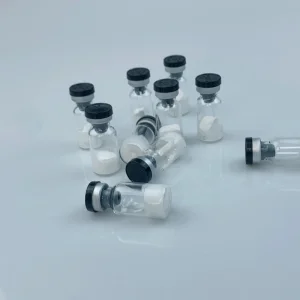
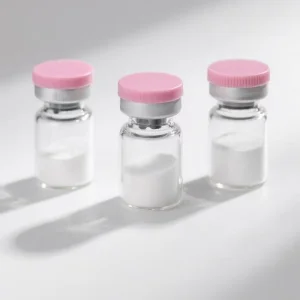
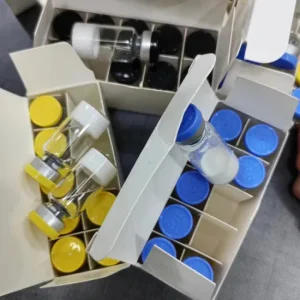
| Export & Packaging Agility | Rigid commercial packaging minimums | Custom lyophilized micro-vials to multi-kilogram bulk drums | Flexible order scales suited for both micro-assays and pilot bioreactors |
Moreover, Chinese chemical producers operate under stringent ISO 9001 and ISO 14001 quality management guidelines, with select dedicated laboratories adopting cGMP (Current Good Manufacturing Practice) guidelines aligned with WHO and ICH Q7 standards. This infrastructural scale allows Chinese facilities to offer economies of scale that reduce synthesis cost-per-gram by 60% to 75% compared to European counterparts, while maintaining analytical parameters that satisfy the world’s most stringent research quality raters.
Examining how high-purity SARM active powders and reference compounds drive cutting-edge biomedical discoveries in Melbourne’s premier research facilities.
The application of selective androgen receptor ligands in Melbourne’s industrial and research ecosystem spans a diversified array of cellular, tissue, and whole-organism experimental architectures. Unlike traditional anabolic-androgenic steroids (AAS), which exhibit indiscriminate tissue binding and cause profound hepatic, cardiovascular, and virilizing secondary side-effects, SARMs are engineered to elicit organ-selective anabolic responses primarily within skeletal muscle and osteoblast lineage cells, with diminished activity within the prostate gland and sebaceous tissues.
In ongoing oncology trials across Melbourne's clinical cancer institutions, compounds like Enobosarm (MK-2866) serve as biological standard references to test preservation of lean muscle mass during aggressive fluorouracil and cisplatin-based systemic chemotherapy regimens.
Post-menopausal osteopenia models in preclinical Victorian rodent studies utilize tissue-selective ligands to stimulate periosteal bone formation and trabecular micro-architecture recovery without inducing unwanted endometrial hypertrophy.
Victorian neuroscience groups evaluate the neuroprotective mechanisms of non-aromatizable selective modulators on motoneuron survival and functional re-innervation following traumatic nerve crush injuries.
A vital area of investigation within Melbourne’s academic pharmacology circles is the exact dissection of tissue-selective transcriptional activation. When a SARM binds to the ligand-binding domain (LBD) of the intracellular androgen receptor, it induces a distinct conformational structural shift. This unique steric conformation dictates which nuclear receptor coregulators—either coactivators (such as SRC-1, SRC-2) or corepressors (such as NCoR, SMRT)—are recruited to the androgen response elements (AREs) located on the genomic DNA.
To systematically quantify these micro-interactions in vitro, laboratories require compounds of exceptional chemical homogeneity. Trace impurities, enantiomeric inversions, or synthetic byproducts can disrupt receptor dimerization or trigger spurious transcriptional cascades, invalidating multi-year grant-funded clinical experiments. China’s advanced analytical grade facilities deliver precisely quantified ligand batches with certified net peptide and active compound content, providing Melbourne researchers with absolute experimental reproducibility.
Essential verification protocols, analytical standard operating procedures, and risk mitigation criteria for procurement directors operating within Australia and globally.
Institutional chemical procurement is transitioning rapidly toward radical data transparency. Gone are the days when a superficial PDF certificate claiming "99% purity" satisfied enterprise compliance managers. Global life-science enterprises and Melbourne-based corporate buyers implement stringent audit pathways before approving raw material release into operational bio-laboratories.
The broader biochemical landscape is seeing intense cross-pollination between small-molecule AR modulators and therapeutic peptides. Emerging research pipelines in Victoria and globally are exploring dual-acting hybrid conjugates—where selective receptor agonists are covalently linked via cleavable ester or amide linkers to signaling peptides (such as BPC-157 or GHK-Cu) to produce synergized target action in musculoskeletal regeneration models.
Furthermore, top-tier Chinese manufacturers are progressively eliminating batch-reactor variability through continuous automated flow chemistry. This micro-fluidic continuous synthesis prevents exothermic thermal spikes, drastically lowers solvent waste (Green Chemistry protocols), and ensures micro-fractional batch homogeneity that fulfills the stringent sustainability targets demanded by international institutional stakeholders.
Partner directly with China's leading synthesis infrastructure. Get HPLC, NMR, and LC-MS certificates tailored to your institutional compliance framework. Rapid dispatch to Melbourne & international ports.
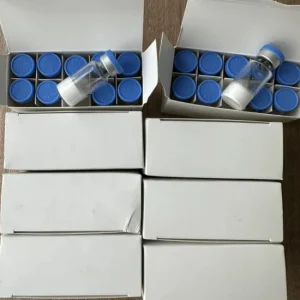
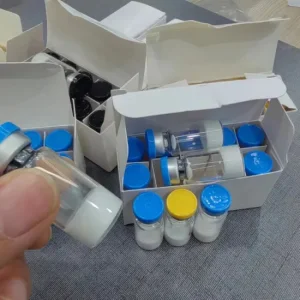
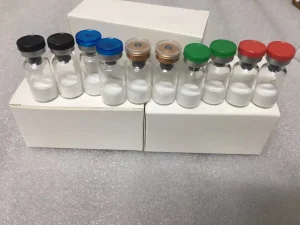
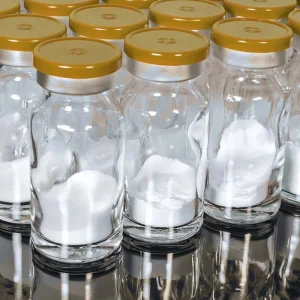
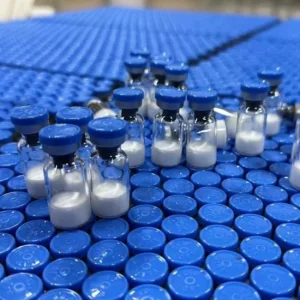
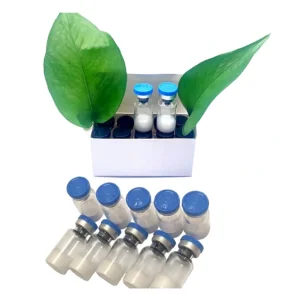
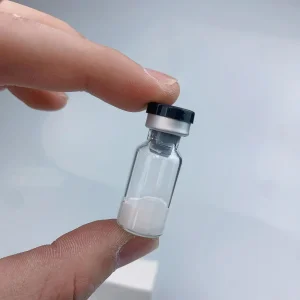
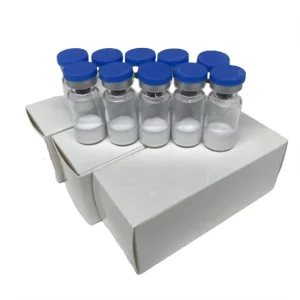
Browse our globally validated catalog of lyophilized peptides, hormonal reference standards, and rare botanical active pharmaceutical compounds configured for Australian and global laboratories.
Direct answers for institutional researchers, commercial procurement specialists, and compliance directors regarding our manufacturing, verification, and Melbourne export framework.
Every batch delivered to Victoria is accompanied by an authoritative Certificate of Analysis (COA) containing raw HPLC chromatograms, LC-MS molecular weight confirmation, 400/600MHz ¹H-NMR spectra, and quantitative residual solvent GC-MS sheets. Full SDS (Safety Data Sheets) conforming to the GHS (Globally Harmonized System) are included to facilitate Australian customs clearance.
For legitimate university laboratories, contract research organizations (CROs), and analytical entities in Melbourne, import documentation is handled under valid TGA Section 19 exemptions or authorized research chemical import permissions. We provide complete chemical declarations, HS tariff classifications, and batch technical dossiers to your licensed customs broker to guarantee seamless Australian Border Force compliance.
Utilizing specialized pharmaceutical express courier networks, direct air freight from Shanghai (PVG) or Beijing (PEK) to Melbourne Tullamarine (MEL) typically transits within 4 to 7 business days. Lyophilized peptides and temperature-sensitive compounds are packed with qualified phase-change cooling packs or vacuum insulated dry-ice shipping systems.
We utilize stereo-specific asymmetric synthetic routes coupled with continuous chiral chromatography columns (Chiralpak/Chiralcel). Purity checks include polarimetry and chiral HPLC with dedicated chiral stationary phases to confirm that optical purity exceeds 99.0% enantiomeric excess (ee), ensuring zero off-target interaction in receptor-binding models.
Yes. Our synthesis lines scale seamlessly from pilot milligram vials intended for micro-plate high-content screening up to multi-kilogram active raw chemical bulk production for long-term contract manufacturing partnerships, with batch repeatability guaranteed across successive synthesis runs.
No. All compounds, reference standards, and raw chemical modulators supplied on this portal are strictly synthesized for in vitro laboratory research, analytical calibration, and authorized preclinical experimental assays by certified scientific professionals. They are not formulated for direct human or veterinary therapeutic administration.
Connect directly with our synthesis engineers and global export compliance teams. Receive customized quotation sheets and full chromatographic data within 24 hours.
Send Inquiry Now
