
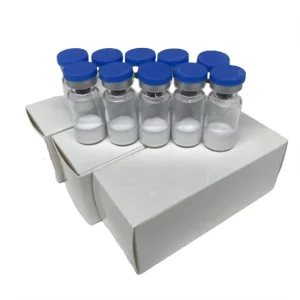
Lyophilized peptides formulated under strict quality control standards for analytical and metabolic exploration.
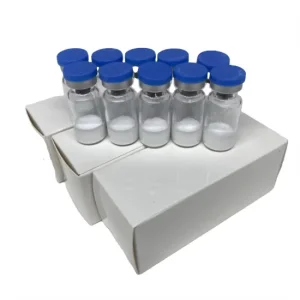
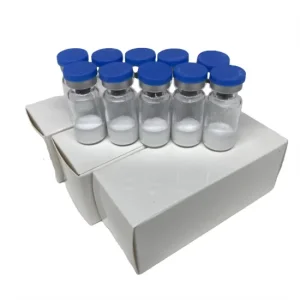
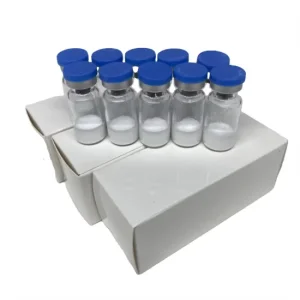
Evaluating domestic growth drivers, National Organization for Medicines (EOF) standards, and research demand vectors.
The Hellenic pharmaceutical market has structurally transformed over the last decade. Greece represents one of the Mediterranean's most strategically situated pharmaceutical manufacturing hubs, with clusters situated in Attica, Thessaloniki, and the University of Patras Science Park. Although domestic contract manufacturing organizations (CMOs) maintain robust capacity in small-molecule solid dosages and sterile injectables, secondary peptide synthesis remains largely reliant on overseas Active Pharmaceutical Ingredient (API) supply chains.
Greek clinical and analytical trials demand rigid alignment with the National Organization for Medicines (EOF) and EMA guidelines, requiring authentic batch HPLC chromatograms, MS fingerprinting, and heavy metal screening.
Southern European epidemiology shows elevated clinical focus on metabolic syndrome, non-alcoholic steatohepatitis (NASH), and Type 2 diabetes, driving procurement for dual and triple agonist peptide analogues.
With Piraeus operating as a key maritime gateway connecting Asian manufacturing corridors to the European Union, Greece benefits from direct cold-chain customs clearance and rapid transshipment routes.
In accordance with the guidelines established by the European Medicines Agency (EMA), academic institutions such as the National and Kapodistrian University of Athens (NKUA) and the Foundation for Research and Technology - Hellas (FORTH) require analytical references of unquestioned purity. The shift from manual peptide synthesis to continuous-flow solid-phase peptide synthesis (CF-SPPS) has elevated international expectations regarding batch-to-batch purity, net peptide content, and trifluoroacetic acid (TFA) removal protocols.
How state-of-the-art Chinese synthesis infrastructure delivers verifiable analytical precision and competitive procurement for Hellenic enterprises.
By leveraging high-throughput automated SPPS synthesizers and industrial preparative HPLC columns (up to 300mm internal diameter), production facilities achieve linear scalability from milligram pilot studies to multi-kilogram commercial contracts.
Direct domestic sourcing of protected Fmoc/Boc amino acids and coupling reagents (HBTU, HATU, DIC) suppresses intermediate production expenses, transferring meaningful margin benefits directly to Greek B2B procurement partners.
Every exported lot is accompanied by a comprehensive Certificate of Analysis (COA) specifying residual water content (Karl Fischer), counter-ion profiling (acetate vs. TFA), purity confirmation via analytical HPLC, and molecular weight validation by ESI-MS.
Our analytical and technical specialists review requests within 24 hours. Benefit from direct synthesis, certified documentation, and insured door-to-door temperature-monitored shipping.
Send Inquiry NowFrom metabolic signaling research to cellular regenerative models, identifying downstream value chains.
Incretin-based therapeutics have catalyzed research into GLP-1 (Glucagon-Like Peptide-1), GIP (Glucose-Dependent Insulinotropic Polypeptide), and GCGR (Glucagon Receptor) co-agonists. Greek research groups are heavily engaged in elucidating non-glycemic signaling events, such as neuroprotection, cardiovascular risk attenuation, and lipid clearance mechanisms. High-purity Tirzepatide, Semaglutide, and Retatrutide reference materials allow researchers to calibrate receptor-binding assays with millimolar precision.
In addition to metabolic targets, interest in cellular repair cascades has driven increased demand for GHRH analogues (such as CJC-1295, Sermorelin, and Tesamorelin) alongside secretagogues like Hexarelin. These biomolecules serve as analytical standards for mapping the somatotropic axis, evaluating endogenous hormone secretion, and exploring downstream IGF-1 upregulation pathways across laboratory settings.
International corporate buyers are shifting away from fragmented trading intermediaries toward integrated manufacturers capable of providing audited quality agreements. Critical demands now encompass complete impurity profiling (identification of D-amino acid enantiomers and truncation sequences via LC-MS/MS), sterile lyophilization within ISO Class 5 cleanrooms, and long-term stability testing compliant with ICH Q1A(R2) conditions.
Explore certified peptide powders, dual/triple agonist vials, and growth hormone secretagogues.


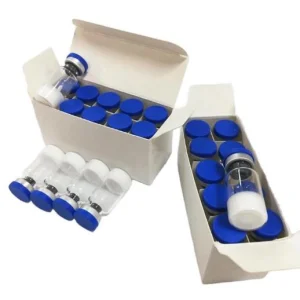
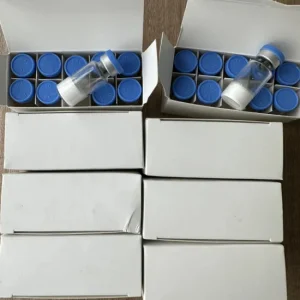
Essential guidance on regulatory boundaries, analytical verification, cold-chain customs clearance, and ordering procedures.
Commercial peptide imports into Greece require a Proforma Invoice with appropriate HS codes (typically 2937.19 or 3002.15), an exhaustive Certificate of Analysis (COA) specifying batch number and analytical purity, and a Safety Data Sheet (SDS) prepared under EU REACH standards. Research compounds must clearly indicate "For Laboratory Research Use Only" to comply with EOF protocols.
Every production batch undergoes dual-stage analytical verification: Reverse-Phase High-Performance Liquid Chromatography (RP-HPLC) to assess chromatographic purity and detect related substances, and Electrospray Ionization Mass Spectrometry (ESI-MS) to confirm precise molecular mass against theoretical sequence values.
Our peptides undergo high-vacuum lyophilization to reduce moisture content below 3%, rendering them thermodynamically stable at ambient temperatures for short-term transit. For temperature-sensitive consignments to Athens, Thessaloniki, or the Greek islands during summer peaks, insulated packaging with calibrated phase-change gel packs or dry ice is deployed.
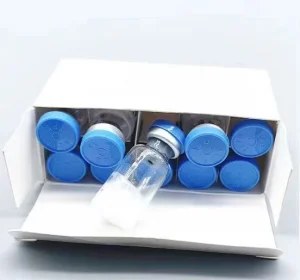
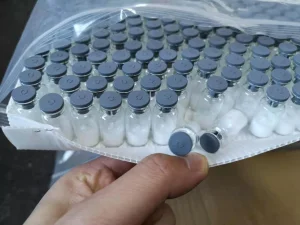
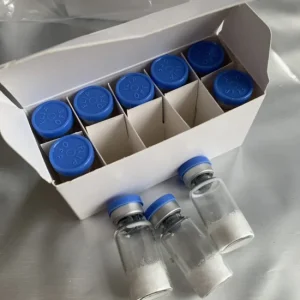
Yes. We offer fully integrated OEM/ODM capabilities, including precise aseptic filling into neutral tubular borosilicate glass vials (2ml, 5ml, 10ml), custom lyophilization cakes, specialized flip-off cap colors, and OEM labeling that complies with European technical documentation standards.
