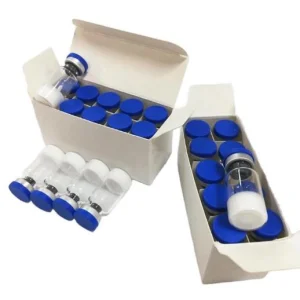
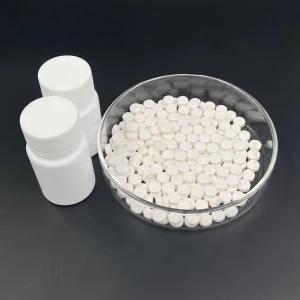
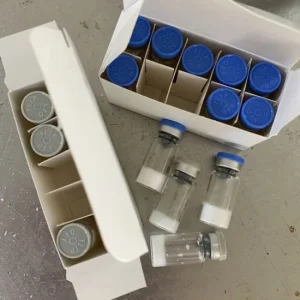
Procure laboratory-grade and bulk fine chemicals with validated Certificate of Analysis (COA), HPLC chromatograms, and end-to-end international export documentation.
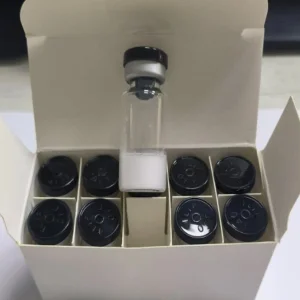
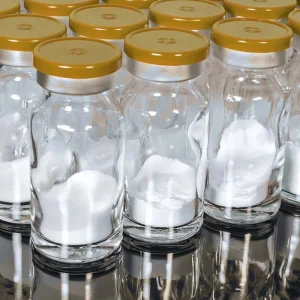
1,4-Butanediol (CAS 110-63-4, $C_4H_{10}O_2$) serves as an essential bifunctional aliphatic diol underpinning the synthetic polymer, technical solvent, and fine-chemical synthesis industries. Choosing the right manufacturer requires evaluating synthesis routes, catalysts, and trace impurity profiles.
The catalytic reaction of acetylene with aqueous formaldehyde over modified copper-bismuth catalysts yields 1,4-butynediol (BYD), followed by a two-stage high-pressure fixed-bed hydrogenation to crude BDO. This classic route dominates low-cost, coal-integrated manufacturing bases.
Maleic anhydride is esterified with methanol or ethanol to generate dialkyl maleate, which is then hydrogenated in the vapor phase over chromium-free copper catalysts. This process delivers ultra-low sulfur, high optical purity material favored for electronics and microcellular polymers.
Emerging bio-based BDO synthesis relies on direct carbohydrate fermentation using genetically engineered E. coli or yeast hosts (Genomatica pathway). This technology bypasses petrochemical feedstocks, reducing cradle-to-gate carbon intensity by up to 70%.
The global 1,4-Butanediol marketplace is undergoing a profound structural realignment. Understanding capacity clusters, raw material indexation, and tariff friction is vital for international procurement executives securing industrial feedstocks.
China accounts for over 65% of global installed BDO synthesis capacity, fueled by massive coal-to-chemical Reppe installations in Xinjiang, Inner Mongolia, and Shaanxi. This domestic scale has altered pricing indices globally, establishing benchmark FOB pricing while driving down regional processing margins.
Producers in the US Gulf Coast and Western Europe (e.g., BASF Ludwigshafen, LyondellBasell) focus primarily on captive downstream integration: high-spec Polytetramethylene Ether Glycol (PTMEG) for elastane fiber spinning and electronic grade N-Methyl-2-pyrrolidone (NMP) precursors.
Recent cross-border trade friction, anti-dumping investigations, and European CBAM (Carbon Border Adjustment Mechanism) carbon audits require BDO importers to verify raw feedstock origins, synthetic energy sources, and certified Scope 1 and Scope 2 carbon intensity scores before booking trans-oceanic ISO containers.
| Analytical Parameter | Test Standard / Method | Guaranteed Industrial Grade | High-Purity Electronic Grade |
|---|---|---|---|
| Assay (1,4-Butanediol) | Gas Chromatography (GC-FID) | ≥ 99.50 wt% | ≥ 99.85 wt% |
| Moisture / Water Content | ASTM E1064 / Karl Fischer | ≤ 0.050 wt% (500 ppm) | ≤ 0.020 wt% (200 ppm) |
| Color Index | ASTM D1209 (Pt-Co / Hazen) | ≤ 10 APHA | ≤ 5 APHA |
| Refractive Index ($n_D^{20}$) | Refractometer (20°C) | 1.4450 – 1.4470 | 1.4458 – 1.4462 |
| Total Carbonyl Number | Hydroxylamine Titration | ≤ 0.50 mg KOH/g | ≤ 0.15 mg KOH/g |
| Free Acidity (as Acetic Acid) | Acid-Base Titration | ≤ 0.005 wt% | ≤ 0.002 wt% |
Because 1,4-Butanediol can be chemically converted into Gamma-Butyrolactone (GBL) and Gamma-Hydroxybutyrate (GHB), it is subject to rigorous regulatory oversight. Compliant sourcing requires adherence to global trade controls, export licensing, and localized KYC protocols.
In the United States, BDO is monitored under the Chemical Diversion and Trafficking Act (CDTA). Distributors must hold verified End-User Declarations (EUD) and file documented transactional logs with the DEA.
Within the European Union, BDO is classified as a Category 1 or monitored Category 2 precursor depending on volume and territorial transposition. Full REACH dossier registration and strictly monitored import permits are mandatory.
BDO is classified under GHS as Harmful if Swallowed (H302) and May Cause Drowsiness (H336). Shipping requires certified UN-rated steel drums or dedicated stainless steel ISO tank containers fitted with external heating channels.
BDO is strongly hygroscopic. Prolonged atmospheric exposure causes ambient water absorption and oxidative carbonyl formation. Compliant packaging requires nitrogen ($N_2$) blanketing at <0.03 MPa headspace pressure.
1,4-Butanediol functions as an indispensable diol intermediate across five key chemical sectors, each placing distinct demands on assay purity, trace aldehyde content, and batch-to-batch moisture stability.
Formed through the polycondensation of BDO with dimethyl terephthalate (DMT) or pure terephthalic acid (PTA). PBT is an engineering thermoplastic widely deployed in automotive electrical connectors, EV battery enclosures, and precision mechanical housings due to its dimensional stability and heat resistance.
Dehydration of BDO produces Tetrahydrofuran (THF), which is polymerized via ring-opening catalysis into Polytetramethylene Ether Glycol (PTMEG). PTMEG forms the soft polyol segment in thermoplastic polyurethanes (TPU) and elastane/spandex textiles, offering high tensile recovery.
Dehydrogenation yields Gamma-Butyrolactone (GBL), which reacts with monomethylamine to synthesize N-Methyl-2-pyrrolidone (NMP). NMP is the vital solvent used in lithium-ion battery cathode manufacturing for PVDF binder dispersion and precision microelectronic cleaning.
Polybutyrate Adipate Terephthalate (PBAT) relies on 1,4-butanediol as its core diol feedstock copolymerized with adipic acid and terephthalic acid. With global bans on single-use plastics, demand for PBAT in biodegradable agricultural mulch films and flexible compostable packaging continues to expand.
As a short-chain linear diol, BDO reacts with aromatic diisocyanates (such as MDI) to form the crystalline hard segments in cast polyurethanes (CPU) and thermoplastic polyurethanes (TPU). It imparts exceptional abrasion resistance to industrial roller coatings, seals, and technical footwear soles.
The industrial synthesis of 1,4-Butanediol is evolving toward closed-loop circular systems, continuous automated catalytic synthesis, and lower Scope 1-3 carbon footprints.
Phase-out of legacy copper-chromite catalysts across Reppe and maleic esterification units in favor of nanostructured copper-zinc-silica catalysts. This shift eliminates hazardous chromium sludge disposal, lowers reaction operating temperatures by 20–30°C, and reduces thermal degradation byproducts.
Second-generation cellulosic sugars, non-food agricultural biomass, and syngas fermentation will complement conventional dextrose-fed microbial synthesis. Global bio-BDO capacity is projected to exceed 450,000 metric tons annually, meeting corporate Scope 3 decarbonization targets in the apparel and consumer packaging sectors.
Commercialization of chemical depolymerization facilities capable of hydrolyzing post-consumer PBT and PBAT plastics back into terephthalic acid and high-purity recycled 1,4-butanediol. Circular monomer recovery will decouple high-performance polymer manufacturing from fossil hydrocarbon extraction.
Key technical, handling, and commercial insights compiled by chemical procurement specialists to help streamline your industrial purchasing process.
1,4-Butanediol has a crystallization/freezing point of approximately 20.1°C (68.2°F). In cold climates, drums and ISO tank containers may solidify into a white crystalline block. To liquefy the product safely, use warm water baths or steam heating coils not exceeding 50°C (122°F). Avoid open flames and localized heating above 60°C to prevent thermal oxidation, discolouration, and moisture condensation within the headspace.
Review four primary indicators: (1) Assay Purity via GC (≥99.85%), (2) Water Content via Coulometric Karl Fischer (≤0.03 wt% or 300 ppm), (3) Color Index (APHA/Pt-Co) (≤10 Hazen), and (4) Carbonyl / Acid Value (≤0.1 mg KOH/g). For polyurethane and spandex applications, excessive moisture consumes isocyanates, causing unreacted polyol ends and micro-foaming defect loops.
BDO is strongly hygroscopic and readily draws ambient water vapor through drum bungs and tank vents. In addition, atmospheric oxygen reacts with terminal primary alcohol groups, forming butyraldehyde, 4-hydroxybutyraldehyde, and acidic byproducts that alter the Hazen color. Maintaining a dry nitrogen ($N_2$) blanket with a dew point below -40°C prevents oxidative discolouration and keeps moisture within spec.
BDO is typically exported in three main containment configurations: (1) 200-liter internal-coated steel drums (200 kg net weight, 80 drums per 20ft FCL = 16.0 MT), (2) 1,000-liter intermediate bulk containers (IBCs) (1,000 kg net weight), and (3) T11 stainless steel ISO Tank containers (20,000 to 25,000 kg capacity with steam or electric heating jackets for bulk consumers).
Importers must provide a certified End-User Declaration (EUD) stating specific manufacturing intent, an active chemical import license from the local regulatory authority (e.g., DEA in the US, national precursor agencies in the EU), an original Certificate of Origin, and a 16-section compliant GHS Safety Data Sheet (SDS) reflecting localized language and transport classifications.
When stored in factory-sealed, undamaged drums under an inert nitrogen blanket at temperatures between 20°C and 35°C, high-purity BDO has a standard shelf life of 24 months from the date of manufacture. Once opened, drums should be purged with dry nitrogen and consumed within 30 to 60 days to avoid ambient moisture pickup.
Explore our extended line of specialty chemicals, pharmaceutical intermediates, and reference reagents, backed by comprehensive testing and dedicated export support.