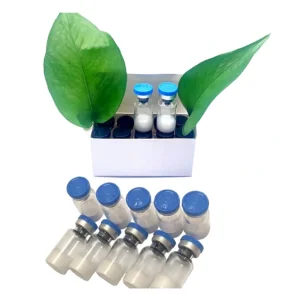
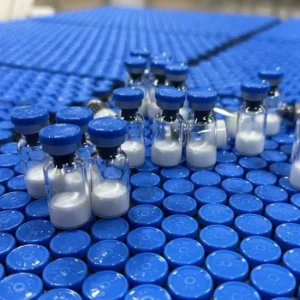
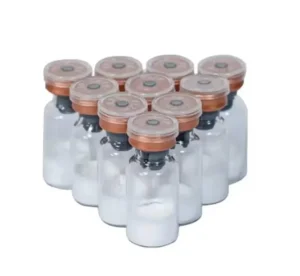
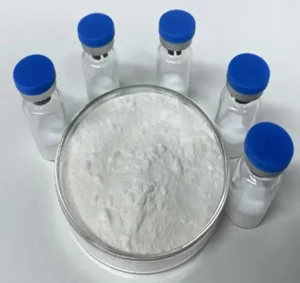
Direct supply from controlled peptide synthesis workshops. Every production batch is fully documented with verified HPLC chromatograms, electrospray ionization mass spectrometry (ESI-MS), and standardized Certificate of Analysis (COA).
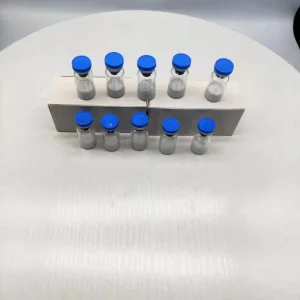
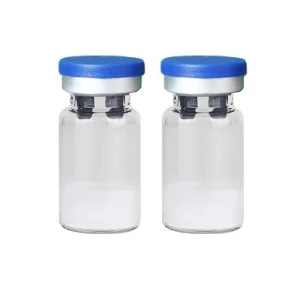
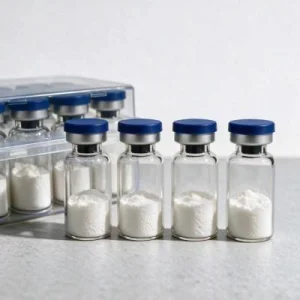
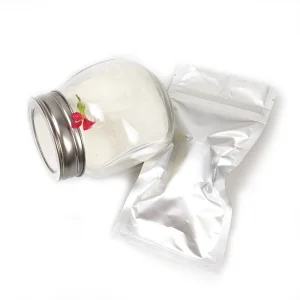
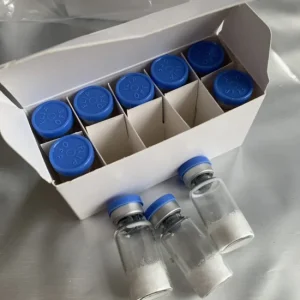
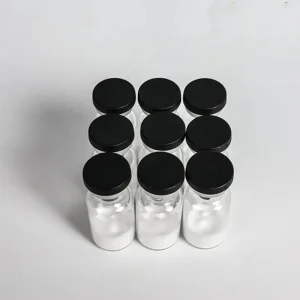
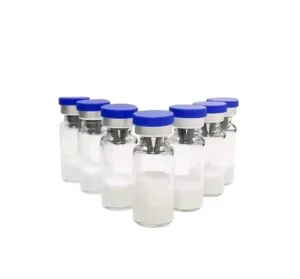
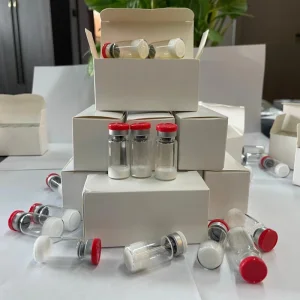
A rigorous biochemical overview of Body Protection Compound-157 (BPC-157), derived from human gastric juice protein BPC, engineered for maximum tertiary stability in preclinical research environments.
Regulatory & Research Compliance Notice: Body Protection Compound 157 (CAS 137525-51-0) referenced herein is engineered exclusively for in vitro laboratory investigations, preclinical physiological modeling, receptor binding assays, and advanced biochemical synthesis. It is strictly not intended for direct clinical administration, food additives, or diagnostic human use.
| Scientific Parameter | Analytical Specification | Methodology / Instrument | Commercial Significance |
|---|---|---|---|
| Chemical Name | Body Protection Compound 157 (Pentadecapeptide) | IUPAC Standard Naming | Universal scientific identification |
| CAS Registry Number | 137525-51-0 | Chemical Abstracts Service | Customs clearance & import registration |
| Linear Amino Acid Sequence | Gly-Glu-Pro-Pro-Pro-Gly-Lys-Pro-Ala-Asp-Asp-Ala-Gly-Leu-Val | Automated Edman Sequencing / MS-MS | Guarantees exact bio-active target binding |
| Molecular Formula | C62H98N16O22 | Elemental Microanalysis | Accurate stoichiometric formulations |
| Molecular Weight | 1419.53 Da (Monoisotopic: 1418.70 Da) | Electrospray Ionization MS (ESI-MS) | Zero tolerance for truncated impurities |
| Chemical Purity Level | ≥ 99.00% (Area Normalization) | Reversed-Phase HPLC (RP-HPLC) at 214nm | Eliminates off-target research artifacts |
| Available Salt Counterions | Acetate Salt (Standard) / L-Arginine Salt (Stable Form) | Ion-Exchange Chromatography / 1H-NMR | Critical for solution stability kinetics |
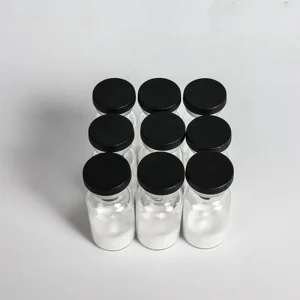
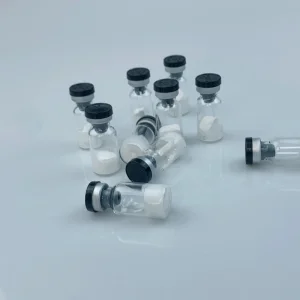
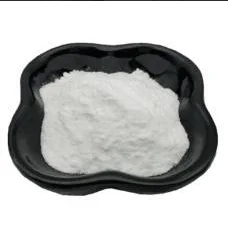
| Physical State | Sterile, White, Lyophilized Amorphous Powder | Visual & Optical Microscopy | Easy reconstitution in sterile bacteriostatic water |
Unlike standard linear signaling oligopeptides that degrade rapidly in proteolytic fluids, BPC-157 demonstrates unique conformational folding resistance. The three sequential proline residues (Pro3-Pro4-Pro5) introduce a structural kink that shields the adjacent peptide bonds from endogenous serine proteases and gastric peptidases.
Standard BPC-157 acetate salts are susceptible to ambient thermal degradation and moisture uptake. Industrial salt engineering with L-arginine yields a highly stable crystal matrix capable of withstanding exposure to high temperature (50°C) and low pH (1.0) environments for up to 5 hours with zero breakdown.
Our freeze-drying cycles apply deep flash-freezing at -55°C followed by primary sublimation under 0.05 mbar vacuum and secondary desorption. The resulting cake has residual water below 2.5%, ensuring long-term batch potency when stored at -20°C under dry, inert nitrogen purging.
An enterprise-level examination of supply chain consolidation, shifting contract manufacturing organization (CMO) capabilities, and the global macroeconomic demand for synthetic repair peptides.
The global peptide therapeutics and research reagent market is expanding at a Compound Annual Growth Rate (CAGR) exceeding 9.2%. Within this paradigm, BPC-157 has emerged as the foremost focal compound for academic laboratories, biotechnology incubators, and sports science institutes investigating musculoskeletal rehabilitation, soft-tissue regeneration, and microvascular stabilization. What was once a niche laboratory molecule synthesized on a milligram bench scale has evolved into a high-throughput, multi-kilogram bulk procurement commodity requiring rigorous industrial-scale synthesis platforms.
Traditional liquid-phase synthesis of 15-mer chains is plagued by incomplete couplings, variable stereoisomerism, and severe yield reductions. Modern cGMP contract manufacturers have transitioned to microwave-assisted or continuous-flow automated Solid-Phase Peptide Synthesis (SPPS). This transition allows precise coupling of sterically hindered residues (such as the Pro-Pro-Pro motif), driving overall crude purity above 88% prior to preparative chromatography, while significantly diminishing toxic reagent footprints.
Regulatory scrutiny across the United States (FDA 503A/503B category compounding rules), the European Union (EMA guidelines on research reagents), and Australasia (TGA classifications) has created clear demarcation lines between unlicensed human compounding and verified research API supply. Qualified procurement teams must navigate these compliance shifts by sourcing exclusively from certified manufacturers capable of supplying audit-ready documentation packages, trace solvent analytics, and customs-compliant declarations.
The proliferation of grey-market chemical distributors has flooded digital channels with sub-potent, degraded, or mislabeled pentadecapeptides. Independent testing consistently reveals that non-certified suppliers distribute batches containing as low as 60% active peptide content, with the remainder composed of deletion sequences (missing leucine or lysine) and bacterial endotoxins. Enterprise procurement directors now demand blind-sample LC-MS verification and verified batch serialization before issuing purchase orders.
Deconstructing the orthogonal Fmoc chemistry, purification mechanics, and multi-tier quality control protocols utilized to manufacture industrial-scale BPC-157.
Utilizing high-swelling 2-chlorotrityl chloride (2-CTC) or Wang resin. The C-terminal amino acid (Fmoc-Val-OH) is immobilized under anhydrous DIPEA conditions to suppress enantiomerization. Sequential deprotection is executed via 20% piperidine in DMF.
Stepwise elongation utilizes PyBOP/HBTU or DIC/OxymaPure coupling agents. Coupling times for the rigid Pro-Pro-Pro sequence are actively monitored via quantitative ninhydrin (Kaiser) or chloranil testing to ensure complete >99.5% conversion at each cycle.
Global deprotection and simultaneous resin cleavage are achieved using a high-efficiency scavenger cocktail: Trifluoroacetic acid (TFA), Triisopropylsilane (TIS), and ultrapure water (95:2.5:2.5 v/v). Cold diethyl ether precipitation isolates the crude pentadecapeptide.
Crude peptide is subjected to dual-stage preparative C18 reverse-phase HPLC with a linear acetonitrile-water gradient containing 0.1% TFA or 1% acetic acid. Counterion conversion to stable L-arginate or pure acetate is conducted via specialized anion-exchange resins.
Every commercial batch is tested against analytical C18 columns (4.6 × 250 mm, 5 μm) using UV detection at 214 nm and 254 nm. Single largest individual impurity must not exceed 0.5%, with cumulative related substance thresholds locked strictly below 1.0%.
High-resolution electrospray ionization mass spectrometry verifies the monoisotopic mass envelope at [M+H]+ = 1419.53 ± 0.5 m/z, [M+2H]2+/2 = 710.27 m/z. Absence of aberrant peaks confirms complete deprotection of all Glu, Lys, and Asp side-chain protective groups.
Headspace Gas Chromatography (GC) confirms residual dichloromethane, acetonitrile, and DMF adhere to strict ICH Q3C limits. Inductively Coupled Plasma Mass Spectrometry (ICP-MS) certifies lead, mercury, arsenic, and cadmium levels below 0.1 ppm.
Documented biochemical pathways and experimental benchmarks where BPC-157 serves as a standard reference pentadecapeptide across preclinical research laboratories.
In human umbilical vein endothelial cell (HUVEC) and rodent microvascular models, BPC-157 stimulates the early gene expression of Egr-1, Nab2, and FAK-paxillin pathways. It accelerates capillary sprouting by modulating VEGFR2 phosphorylation without inducing aberrant pathological neovascularization or oncogenic VEGF overexpression.
Preclinical transection models of the rat Achilles tendon demonstrate that BPC-157 markedly elevates Type I collagen deposition while balancing matrix metalloproteinases (MMP-2 and MMP-9). Fibroblast migration assays show marked enhancement in cell outgrowth and biomechanical tensile strength recovery across the myotendinous junction.
As a native gastric juice derivative, BPC-157 modulates intestinal barrier integrity through the upregulation of zonula occludens-1 (ZO-1) and claudin proteins. It serves as a benchmark compound in mitigating ethanol-, NSAID-, and surgical stress-induced mucosal lesions while counterbalancing nitric oxide synthase (eNOS vs iNOS) activity.
Addressing the critical risk factors confronting biotechnology institutes, university research labs, and commercial contract distributors when procuring bulk peptides.
A prevalent risk in global peptide procurement is the recycling of static PDF Certificates of Analysis across distinct synthesis lots. Our enterprise supply program incorporates raw spectral data files (.raw / .cdf), unique lot QR codes linked to live analytical database records, and mandatory dual-lab re-testing protocols with independent Swiss or US analytical partners.
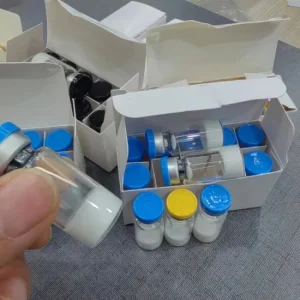
Thermal cycling during trans-oceanic shipping accelerates deamidation of asparagine/glutamine and peptide aggregation. Every commercial consignment is dispatched in nitrogen-purged, rubber-stoppered crimped borosilicate Type I glass vials, packaged within vacuum-sealed foil barriers with continuous RFID temperature loggers.
Cross-border shipments of synthetic research compounds often encounter administrative impoundment due to improper tariff classification. Our logistics documentation specialists provide precise Harmonized System (HS) declarations under HS Code 2937.19, complete with non-hazardous material safety data sheets (MSDS) and commercial declarations.
Factory Direct Production Capabilities: Operating from dedicated state-of-the-art cleanroom facilities in Shijiazhuang, Hebei, China, Hebei Miaoou Technology Co., Ltd. controls the complete synthesis envelope from gram-scale catalog vials to multi-kilogram industrial batches. Our dedicated QA audit teams support virtual video audits, third-party blind testing escrow, and custom labeling requirements.
Anticipating the technological transitions in green peptide synthesis, lipid nanoparticle encapsulation, and novel conjugate formulations over the coming decade.
Industrial manufacturing is systematically transitioning away from hazardous DMF, NMP, and DCM. Next-generation facilities are deploying bio-derived greener alternative solvents, including Cyrene, 2-Methyltetrahydrofuran (2-MeTHF), and propylene carbonate, cutting organic chemical effluent by over 60% without compromising coupling metrics.
Investigative research into peptide bioavailability is currently validating PLGA-PEG microspheres and hyaluronic acid hydrogel conjugates. These delivery systems achieve sustained, localized release of BPC-157 over 28-day intervals, eliminating the need for daily administrative dosing in musculoskeletal repair models.
While chemical synthesis currently dominates, molecular biology researchers are engineering optimized Pichia pastoris and E. coli fermentation strains with fusion-protein constructs. Recombinant microbial fermentation holds the potential to reduce production costs by up to 50% for high-volume agricultural and veterinary research models.
Expert answers addressing quality verification, chemical stability, customs compliance, and commercial terms for institutional purchasing directors.
Explore our extended line of synthesized APIs, metabolic signaling analogues, and high-demand reference biochemicals available for immediate dispatch to accredited institutions.