Factory-direct supply lines with verified HPLC/MS analytical releases, strict cold-chain warehousing, and global expedited logistics support.
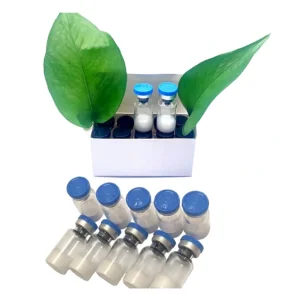
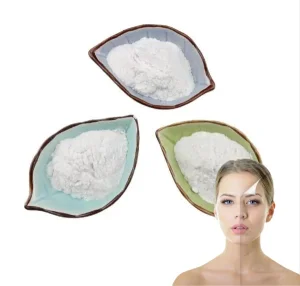
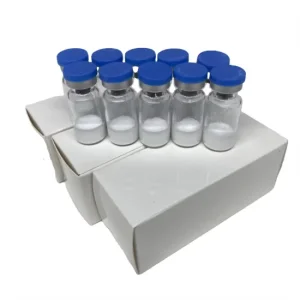
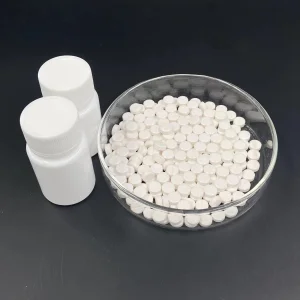
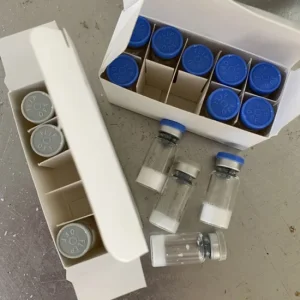
CAS 10043-35-3 designates Orthoboric Acid (H₃BO₃), a critical, Lewis-acidic inorganic compound that serves as the premier source of boron across advanced manufacturing. Below are the verified molecular constants and analytical release parameters.
| Analytical Parameter | Technical / Industrial Grade | USP / EP Pharmaceutical Grade | Semiconductor / Electronic Grade |
|---|---|---|---|
| Assay (as H₃BO₃) | 99.0% – 99.5% | 99.5% – 100.5% (Dried basis) | ≥ 99.999% (Trace metal basis) |
| Appearance | White granular crystalline powder | White, odorless unctuous laminae | High-purity crystalline flake |
| Heavy Metals (Pb, As, Cd) | ≤ 20 ppm max | ≤ 5 ppm (Heavy metals total) | ≤ 0.05 ppm combined |
| Sulfate (SO₄²⁻) | ≤ 400 ppm | ≤ 100 ppm | ≤ 5 ppm |
| Chloride (Cl⁻) | ≤ 150 ppm | ≤ 20 ppm | ≤ 1 ppm |
| Loss on Drying (105°C) | ≤ 0.5% | ≤ 0.2% | ≤ 0.05% |
| Key Trace Elements (Fe, Na, Ca) | Fe ≤ 15 ppm | Fe ≤ 3 ppm; Ca ≤ 20 ppm | Individual cation < 5 ppb |
| Primary Compliance | ISO 9001:2015 | cGMP / USP-NF / Ph. Eur. | SEMI C1 / C7 Ultra-Pure |
The global supply ecosystem of CAS 10043-35-3 is experiencing unprecedented structural shifts driven by semiconductor fabrication, battery technology, and green borosilicate glass transitions.
Over 72% of accessible global boron mineral reserves (colemanite, kernite, and tincal) are concentrated in Turkey (Eti Maden) and California's Mojave Desert (Rio Tinto Borax). This geographic clustering makes fine-chemical manufacturers with multi-continent sourcing contracts essential for guaranteeing uninterrupted factory delivery schedules.
Photovoltaic glass requires low-iron, high-clarity borosilicate glass to endure decades of extreme environmental exposure. Simultaneously, 3nm and 2nm semiconductor fabs demand ultra-pure CAS 10043-35-3 as a p-type dopant and etching buffer, creating strong upward valuation for sub-ppb electronic-grade material.
Within the European Union, boric acid is registered under Annex XVII and identified as a Substance of Very High Concern (SVHC) for reproductive toxicity above specific concentrations. Importers require validated REACH dossiers, compliant SDS documentation, and verifiable worker-exposure control systems to maintain full statutory licensing.
Because CAS 10043-35-3 exhibits unique planar triclinic symmetry and distinct Lewis acidity, its utility reaches across fundamentally diverse industrial domains.
In high-throughput solid-phase peptide synthesis (SPPS) and API small-molecule development, boric acid serves as an indispensable precursor for arylboronic acids and boronate esters. These molecules form the cornerstone of Suzuki-Miyaura cross-coupling reactions, allowing researchers to synthesize complex bioconjugates, anti-cancer pharmacophores (e.g., Bortezomib analogues), and specialized peptidomimetics with exceptional stereochemical fidelity.
Due to its mild bacteriostatic and fungistatic properties, USP-grade CAS 10043-35-3 is widely deployed as an isotonic buffering agent in ophthalmic drops, topical skin formulations, and veterinary washes. It stabilizes active molecules against oxidative degradation while maintaining physiological pH balance (pH 4.8 – 5.5) without provoking cellular irritation.
During the thermal diffusion and ion implantation processes in silicon wafer fabrication, electronic-grade boric acid is vaporized to deposit atomic boron as an essential acceptor dopant. Trace contaminants—particularly sodium, iron, and potassium—must be suppressed below parts-per-billion (ppb) thresholds to prevent crystal defect propagation and breakdown voltages.
In pressurized water reactors (PWR), boric acid dissolved in primary coolant loops acts as a soluble chemical shim. The ¹⁰B isotope features a colossal thermal neutron capture cross-section (3,838 barns). By dynamically titrating boric acid concentrations, nuclear plant operators manage core reactivity transients, fuel burn-up cycles, and cold-shutdown emergency control margins.
Boric acid reduces the coefficient of thermal expansion in borosilicate glass (Pyrex, Schott Duran), imparting near-zero thermal shock vulnerability. This makes it vital for pharmaceutical ampoules, high-resolution microscope lenses, flat-panel display substrates (TFT-LCD/OLED), and refractory ceramic tiles on aerospace heat shields.
When exposed to high temperatures, H₃BO₃ undergoes endothermic condensation, liberating chemically bonded water molecules ($2H_3BO_3 \rightarrow B_2O_3 + 3H_2O$) while generating a vitrified, oxygen-impermeable glassy char layer. This unique pyrolysis suppression mechanism protects cellulose insulation, wood composites, and flame-retardant industrial textiles.
Meeting modern environmental mandates and sub-angstrom chip geometries requires revolutionary innovations in crystallization thermodynamics, hydrometallurgy, and selective isotopic separation.
Traditional sulfuric acid leaching generates high-volume calcium sulfate (gypsum) by-products. Miaoou and Tier-1 refining partners are implementing closed-loop carbonated leaching routes, reducing acidic wastewater discharges by 85% while capturing process CO₂ for carbonate regeneration.
For semiconductor fabs handling Gate-All-Around (GAA) architectures, fractional multi-stage evaporative crystallizers constructed from electropolished PTFE and titanium prevent metallic leaching, delivering ultra-pure crystal lattices with iron and copper impurities strictly below 10 parts-per-trillion.
To support modular nuclear reactors (SMRs) and Boron Neutron Capture Therapy (BNCT) oncology drugs, cutting-edge vacuum distillation of boric acid-trifluoride complexes is shifting towards greener centrifugal mass fractionation, elevating ¹⁰B enrichment levels from natural 19.9% to over 99.0%.
B2B chemical procurement requires certainty: batch traceability, audit-ready compliance dossiers, and moisture-controlled international shipping protocols.
Every delivery includes verified lot-specific release documents to eliminate testing overhead on receipt.
Moisture barrier packaging designed to eliminate caking and electrostatic agglomeration during marine freight.
Seamless cross-border customs execution with documented international regulatory alignments.
Clear, definitive answers to the most common technical, regulatory, and logistics queries submitted by QA/QC directors and chemical supply managers.
Orthoboric acid (CAS 10043-35-3, H₃BO₃ or B(OH)₃) possesses a planar triclinic crystal structure where boron is coordinated by three hydroxyl groups in an sp² hybridization matrix. Metaboric acid (HBO₂), by contrast, is formed when orthoboric acid is thermally heated above 100°C–130°C, causing dehydration and polymerizing into trigonal or monoclinic chains. For synthetic coupling, pharmaceutical excipient use, and buffering applications, Orthoboric Acid is the mandatory chemical entity specified by USP, EP, and SEMI standards.
Boric acid functions as an essential, high-efficiency boron feedstock used to synthesize boronic acid building blocks, including phenylboronic acids and boronate esters. In peptide synthesis and bio-organic chemistry, these boronic acid motifs participate in palladium-catalyzed Suzuki-Miyaura cross-couplings to staple peptide backbones, link fluorophores, or synthesize modified amino acids (such as 4-boronophenylalanine). Furthermore, boric acid/borate buffer systems are used during solid-phase purifications to stabilize vicinal diols in glycopeptide assemblies.
Standard B2B export documentation includes a batch-specific Certificate of Analysis (COA) specifying assay by acid-base titrimetry in the presence of mannitol, Inductively Coupled Plasma Mass Spectrometry (ICP-MS) trace metal profiling, moisture analysis (LOD), full Safety Data Sheet (SDS) compliant with GHS Revision 9, Certificate of Origin (COO), Packing List, Bill of Lading, and a non-animal origin / BSE-TSE declaration where required by pharmaceutical buyers.
The dissolution kinetics of boric acid are strongly endothermic. At 0°C, its solubility in water is only 2.52 g/100 mL, rising to 4.72 g/100 mL at 20°C. However, at 80°C, solubility jumps dramatically to 23.75 g/100 mL, and reaches 39.1 g/100 mL at boiling point (100°C). This steep solubility curve is industrially exploited in re-crystallization purification systems, enabling the separation of trace chloride, sulfate, and alkali metal impurities with high separation factors.
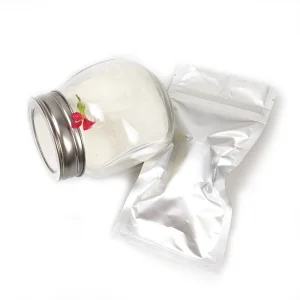
Boric acid is prone to consolidation caking when exposed to cyclic relative humidity (>65%) and compressive pallet loading. Our facilities package material in multi-layered, hermetically heat-sealed poly-lined Kraft sacks or UV-stabilized FIBC totes incorporating interior PE barrier film. Palletized cargo must be stored below 30°C in well-ventilated, moisture-controlled warehouses, with container desiccants deployed inside ocean freight boxes to eliminate container-rain during transit across equatorial shipping lanes.
Partner directly with Hebei Miaoou Technology Co., Ltd. for scalable supply agreements, custom packaging, and comprehensive regulatory documentation. Our international export team replies within 24 hours on all business days.
Exclusively supplied for professional laboratory testing, synthetic route validation, and active API formulation development.