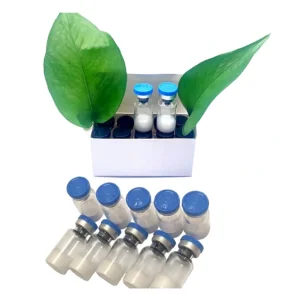
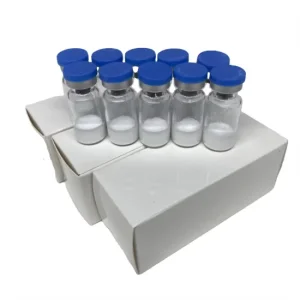
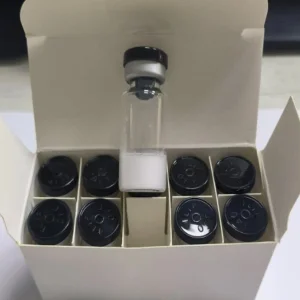
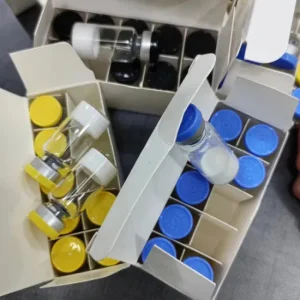
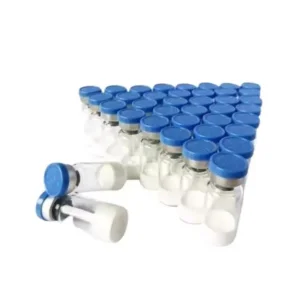
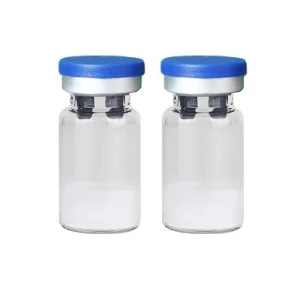
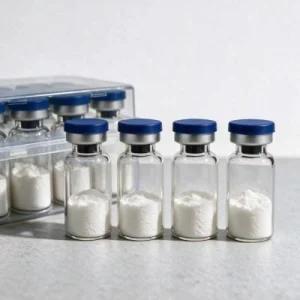
Direct laboratory-verified active compounds, peptides, and standard reference materials manufactured under strict HPLC batch-traceable environments.
In-depth structural, chemical, and physical parameters governing Dextromethorphan Hydrobromide Monohydrate synthesis, validation, and laboratory verification.
CAS 23239-88-5 identifies Dextromethorphan hydrobromide monohydrate, the crystalline monohydrate hydrobromide salt of the dextrorotatory enantiomer of levorphanol methyl ether: (4bS,8aR,9S)-3-methoxy-11-methyl-6,7,8,8a,9,10-hexahydro-5H-9,4b-(epiminoethano)phenanthrene hydrobromide monohydrate. Represented by the empirical chemical formula C18H25NO · HBr · H2O, this morphinan-derivative compound exhibits an absolute stereochemical configuration that completely differentiates its pharmacological profile from the levorotatory opioid series. Unlike levomethorphan or morphine, dextromethorphan acts primarily as a high-affinity non-competitive N-methyl-D-aspartate (NMDA) receptor antagonist, a potent sigma-1 receptor agonist, and a central nervous system (CNS) cough reflex suppressant without engaging mu-opioid receptor-mediated physical dependence pathways at physiological concentrations.
For chemical procurement teams, contract development and manufacturing organizations (CDMOs), and institutional researchers looking to buy CAS 23239-88-5 from qualified global manufacturers, ensuring strict stereochemical enantiomeric separation and crystal stability is paramount. The monohydrate state is critical: sub-optimal thermodynamic crystallization can result in anhydrous forms or variable hydration states, leading to erratic dissolution rates, altered crystalline packing, and bioequivalence inconsistencies in oral dosage and liquid syrup formulations.
| Analytical Test Parameter | Acceptance Criteria (USP / Ph. Eur. Harmonized) | Miaoou In-House Lot Release Standards | Methodology / Instrumentation |
|---|---|---|---|
| Chemical Name | Dextromethorphan Hydrobromide Monohydrate | Conforms to Reference Standard | IUPAC Nomenclature Validation |
| CAS Registry Number | 23239-88-5 (Monohydrate) / 125-69-9 (Anhydrous) | 23239-88-5 Verified | Chemical Identity Cross-Audit |
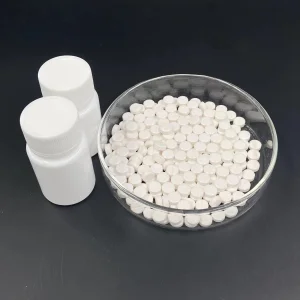
| Appearance | White or almost white crystalline powder | Pure White Microcrystalline Powder | Visual inspection under D65 daylight |
| Solubility Profile | Sparingly soluble in water; freely soluble in ethanol (96%) | Complies (Clear, colorless solution) | Thermodynamic Gravimetric Dissolution |
| Identification (IR & MS) | Concordant with USP reference spectrum | Infrared Absorption matches CRS; MS m/z 272.2 [M+H]+ | FT-IR Spectroscopy (ATR) / ESI-MS |
| Chromatographic Purity (HPLC) | Total Impurities ≤ 0.50%; Any Single Impurity ≤ 0.10% | Single < 0.05%, Total < 0.20% | Reverse-Phase UHPLC-UV (280 nm) |
| Specific Optical Rotation | +27.0° to +30.0° (calculated on anhydrous basis) | +28.2° to +28.9° | Digital Automatic Polarimeter (λ = 589 nm) |
| Water Content (Karl Fischer) | 4.0% to 5.5% (w/w) | 4.6% to 4.9% (Ideal stoichiometric monohydrate) | Volumetric Karl Fischer Titration |
| Heavy Metals & Elemental Impurities | Within ICH Q3D limits (Class 1, 2A, 2B, 3) | Pb ≤ 0.5 ppm, As ≤ 0.5 ppm, Cd ≤ 0.2 ppm, Hg ≤ 0.1 ppm | ICP-MS Inductively Coupled Plasma |
| Residual Solvents (ICH Q3C) | Toluene ≤ 890 ppm; Methanol ≤ 3000 ppm; Ethanol ≤ 5000 ppm | Undetected or < 10% of ICH limit | Headspace Gas Chromatography (GC-FID) |
Addressing supply chain volatility, GMP audit requirements, batch consistency, and global trade friction for pharmaceutical and chemical formulation partners.
By enforcing closed-loop automated crystallization and DCS-monitored chemical synthesis, Hebei Miaoou Technology mitigates lot-to-lot variability. We maintain consistent particle size distribution (D10, D50, D90) and crystal habit to ensure frictionless blending and tableting in downstream high-speed production lines.
Global logistics disruptions and energy quotas frequently delay raw intermediate supply. We maintain a rolling safety stock of key precursors (including 1-(4-methoxybenzyl)octahydroisoquinoline) and finished CAS 23239-88-5 material to insulate enterprise buyers from spot market shortages and price spikes.
Our dedicated regulatory affairs team provides complete compliance documentation including open-part Drug Master Files (DMF), Certificates of Suitability (CEP submission readiness), GMP audit declarations, BSE/TSE-free certifications, and Nitrosamine Impurity Risk Assessments.
Because CAS 23239-88-5 is a stoichiometric monohydrate sensitive to high relative humidity (RH > 75%) and extreme thermal desiccation, our packaging features double food/pharma-grade polyethylene liners sealed inside vacuum-sealed aluminum-foil bags within fiber drums equipped with desiccant indicators.
Market volume, trade routes, key consumption corridors, and the evolving therapeutic repositioning of Dextromethorphan HBr.
The global demand for Dextromethorphan Hydrobromide Monohydrate (CAS 23239-88-5) remains exceptionally robust, sustained by its foundational role in over-the-counter (OTC) cold and cough therapeutic formulations across North America, Europe, Asia-Pacific, and Latin America. Historically perceived purely as a legacy antitussive, the commercial horizon of CAS 23239-88-5 has undergone a notable transformation over the past five years due to breakthrough neuropharmacological discoveries. Emerging clinical paradigms pairing dextromethorphan with metabolic enzyme inhibitors (such as low-dose bupropion or quinidine) have created high-value therapeutic applications in neuropsychiatry—specifically for pseudobulbar affect (PBA), treatment-resistant major depressive disorder (MDD), and agitation associated with neurodegenerative conditions.
This dual utility—sustaining hundreds of millions of standard OTC cough syrup units globally while fueling innovative patentable CNS drug regimens—has created structural shifts in global manufacturing demands. China and India represent the predominant primary synthesis hubs for dextromethorphan chemical precursors and active drug substances. However, stringent environmental audits, zero-carbon manufacturing requirements, and strict non-narcotic stereoselective synthesis protocols have led to market consolidation around fully compliant, technologically mature producers.
Navigating global chemical control legislation, pharmacopoeial harmonization, customs clearance, and import authorizations.
For US and Canadian importers, we provide documentation verifying that CAS 23239-88-5 meets United States Pharmacopeia (USP) requirements. Materials are audited to ensure full compliance with FDA 21 CFR Part 211, residual solvent thresholds (ICH Q3C), and elemental impurities guidelines (ICH Q3D).
Our production strictly conforms to the European Pharmacopoeia (Ph. Eur.) monographs for Dextromethorphan Hydrobromide. We support REACH chemical compliance where applicable, facilitate import customs handling through validated documentation, and provide Nitrosamine Risk Evaluations in line with EMA/CHMP guidance.
We provide localized customs classification support, verified Harmonized System (HS) Code 2933.49 declarations, bilingual Certificates of Analysis (COA), Certificate of Origin (Form E, CO, etc.), and fast-tracked export clearing via direct air-freight and temperature-monitored marine container lines.
Technical integration methodologies spanning traditional antitussive syrups to advanced controlled-release drug delivery systems.
Due to the hydrobromide salt structure, CAS 23239-88-5 demonstrates specific solubility kinetics in aqueous and hydroalcoholic vehicles. Formulators utilize pharmaceutical-grade cosolvents (such as propylene glycol or glycerin) and targeted buffer systems (pH 4.0 to 5.5) to prevent precipitation and suppress bitter taste profiles through molecular masking agents.
For solid oral dosage forms, particle size distribution is critical. Our crystalline grade features optimized bulk density and flowability indices (Carr's Index < 18%), facilitating direct compression or wet granulation without capping or segregation in high-throughput rotary tablet presses.
Advanced 12-hour sustained-release cough suspensions utilize ion-exchange resinate technology. CAS 23239-88-5 is complexed with sodium polystyrene sulfonate resin, followed by ethylcellulose polymer coating, creating uniform diffusion-driven release resistant to dose dumping.
In academic and preclinical research, CAS 23239-88-5 serves as an essential reference probe for characterizing Sigma-1 receptor binding kinetics, PCP-site non-competitive NMDA channel blockades, and glutamate-mediated neuroprotective signaling cascades.
From classical Grewe cyclization to catalytic stereoselective hydrogenation: engineering the future of high-purity morphinan synthesis.
Condensation of cyclohexenyl ethylamine with p-methoxyphenylacetic acid derivatives to generate the foundational octahydroisoquinoline core under inert nitrogen atmosphere.
Acid-catalyzed Grewe cyclization using superacidic media or methanesulfonic acid systems, directing ring closure with absolute regioselectivity and eliminating structural isomers.
Optical resolution utilizing chiral resolving agents (such as D-tartaric acid) to selectively isolate the dextrorotatory enantiomer with optical purity exceeding 99.8% enantiomeric excess (ee).
Eschweiler-Clarke N-methylation followed by controlled stoichiometric reaction with purified hydrobromic acid in ultra-pure water to yield raw dextromethorphan hydrobromide.
Controlled cooling crystallization under acoustic sonication parameters to yield stoichiometric monohydrate crystals (CAS 23239-88-5), followed by low-temperature fluidized bed drying.
The Future Roadmap (2026–2030): The modern chemical synthesis landscape is aggressively moving toward flow chemistry and enzymatic biocatalysis. Hebei Miaoou Technology is actively investing in microchannel continuous-flow reactors to replace batch Grewe cyclizations. This shift reduces thermal excursion hazards, minimizes hazardous solvent consumption by 45%, and completely eliminates batch-level micro-heterogeneities in CAS 23239-88-5 production. Furthermore, our R&D team is piloting green catalytic optical resolution using immobilized chiral enzymes, anticipating stricter international environmental mandates and ensuring long-term price stability for our B2B manufacturing partners.
How Hebei Miaoou Technology guarantees pharmaceutical-grade chemical integrity through validated chromatographic and spectroscopic release protocols.
Every commercial batch is analyzed using validated RP-HPLC methods equipped with photodiode array (PDA) detectors. We quantify related substances, residual stereoisomers, and synthetic precursors down to a Limit of Detection (LOD) of 0.01%, ensuring uncompromised chemical purity.
Unambiguous identity confirmation is established through Electrospray Ionization High-Resolution Mass Spectrometry (ESI-HRMS) and 400 MHz Proton Nuclear Magnetic Resonance (1H-NMR), confirming molecular structure, functional groups, and isotopic mass distribution.
Because CAS 23239-88-5 must remain precisely in its monohydrate form, we employ Thermogravimetric Analysis (TGA) and Differential Scanning Calorimetry (DSC) alongside coulometric Karl Fischer titration to track bound crystalline water vs. free surface moisture.
Authoritative technical answers to common questions asked by corporate purchasing directors, quality managers, and laboratory researchers.
CAS 23239-88-5 specifically designates the monohydrate crystalline form of Dextromethorphan Hydrobromide (C18H25NO · HBr · H2O, MW: 370.32 g/mol), which is the standard commercial form recognized by most global pharmacopoeias (USP, Ph. Eur., BP) due to its atmospheric crystalline stability. In contrast, CAS 125-69-9 designates the anhydrous form (C18H25NO · HBr, MW: 352.31 g/mol). Anhydrous material is hygroscopic and will naturally absorb ambient humidity to convert into the monohydrate state under ambient conditions, making CAS 23239-88-5 the preferred, stable, and reproducible standard for pharmaceutical formulation and laboratory analytical work.
Yes. Every single dispatch of CAS 23239-88-5 is issued with a lot-specific Certificate of Analysis detailing physical appearance, specific optical rotation, HPLC chromatographic purity, related impurity breakdown, Karl Fischer water content, residue on ignition, and heavy metals screening. Raw HPLC chromatograms, FT-IR spectra, and LC-MS molecular weight confirmation reports are available upon request for quality audit files prior to order release.
Under the 1961 UN Single Convention on Narcotic Drugs, dextromethorphan was evaluated and specifically excluded from narcotic scheduling due to its lack of opioid-like addictive properties when handled in accordance with standard medical and chemical practices. It is officially declared under HS Code 2933.49 (heterocyclic compounds with nitrogen hetero-atom(s) only, containing a quinoline or isoquinoline ring-system). However, individual destination countries may enforce localized import license verifications or monitor quantities to prevent diversion. Miaoou provides complete export paperwork, commercial invoices, and packing declarations to facilitate legitimate, legally compliant customs clearance.
Standard commercial packaging is 25 kg fiber drums lined with double heat-sealed polyethylene moisture-barrier bags and food/pharma-grade aluminum-foil outer barriers. For pilot testing and research laboratories, we offer custom pack sizes of 100 g, 500 g, 1 kg, and 5 kg. The material must be stored in tightly closed, light-resistant containers in a dry, well-ventilated warehouse maintained between 15°C and 25°C (59°F–77°F), shielded from direct sunlight and extreme thermal/moisture fluctuations.
Absolutely. Hebei Miaoou Technology operates under transparent, verifiable manufacturing principles. We fully support independent pre-shipment sampling and testing by accredited third-party laboratories. You are welcome to commission certified re-testing of purity, assay, or microbiological parameters to validate concordance with your internal specifications prior to commercial container dispatch.
Catalog stock and standard evaluation quantities (up to 50 kg) ship within 48 to 72 hours following commercial invoice confirmation via tracked priority international air express. Full commercial production runs (multi-ton drum consignments) typically maintain a dispatch window of 2 to 3 weeks, accompanied by continuous logistical tracking and pre-cleared customs documentation.
Explore our complete manufacturing series spanning research peptides, hormone precursors, and active laboratory compounds.