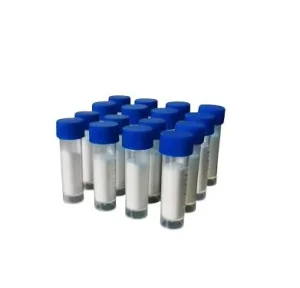
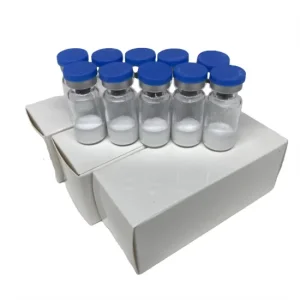
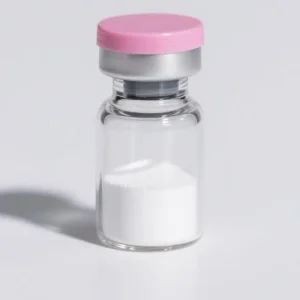
Procure fully characterized laboratory reference materials, peptide sequences, and fine chemical precursors backed by verified batch Certificates of Analysis and comprehensive analytical chromatographic validation.
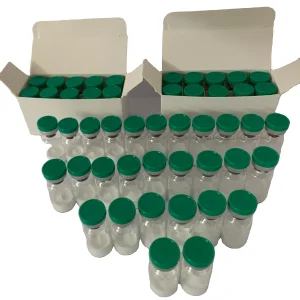
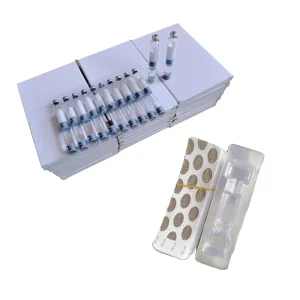

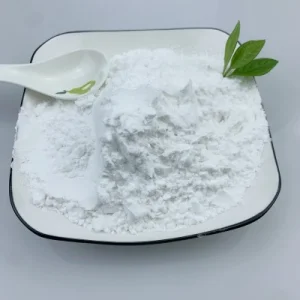
An exhaustive analysis of 17β-hydroxy-17α-methyl-2-oxa-5α-androstan-3-one for analytical chemists, quality assurance officers, and professional procurement teams.
CAS Registry Number 5949-44-0 represents a chemically unique, heterocyclic anabolic-androgenic steroid derivative chemically designated as 17β-hydroxy-17α-methyl-2-oxa-5α-androstan-3-one (widely known within pharmacopeial references as Oxandrolone). Distinct from conventional cyclopentanoperhydrophenanthrene core structures, CAS 5949-44-0 incorporates an oxygen atom substitution at the C-2 carbon of the A-ring, creating an oxasteroidal lactone configuration. This unique modification, coupled with 17α-alkylation, fundamentally stabilizes the core molecule against rapid hepatic metabolization while dramatically reducing its binding affinity for aromatase and 5α-reductase enzymes.
When searching to buy CAS 5949-44-0 from certified manufacturers, B2B procurement managers and compliance engineers must navigate severe regulatory divides, analytical thresholds, and synthetic pathway challenges. Purity requirements for reference standards and synthesis intermediates routinely demand assays exceeding 98.5% to 99.5% by reverse-phase High-Performance Liquid Chromatography (RP-HPLC), with strictly characterized limits on chiral impurities, heavy metals, residual solvents, and related degradation products.
| Analytical Metric | USP / Ph. Eur. Monograph Specification | Factory Primary Manufacturer Target | Testing Instrumentation |
|---|---|---|---|
| Chemical Identification | Conforms to Reference Standard Spectrum | 100% Match via FT-IR & 1H-NMR Spectra | Fourier-Transform Infrared (FT-IR) / 400 MHz NMR |
| Chromatographic Assay (Purity) | 97.0% – 102.0% (anhydrous basis) | ≥ 99.00% Area Normalization | RP-HPLC equipped with DAD / UV Detector (210 nm) |
| Related Impurity A (Seco-acid) | ≤ 0.50% | ≤ 0.15% | Ultra-High-Performance Liquid Chromatography (UHPLC) |
| Related Impurity B (17-Epimer) | ≤ 0.50% | ≤ 0.10% | Chiral Stationary Phase HPLC |
| Loss on Drying (Volatiles) | ≤ 1.0% | ≤ 0.35% | Thermogravimetric Analysis (TGA) / Vacuum Oven (105°C) |
| Residue on Ignition (Sulfated Ash) | ≤ 0.1% | ≤ 0.05% | Muffle Furnace Ashing (600°C ± 50°C) |
| Residual Solvents (ICH Q3C) | Methanol ≤ 3000ppm, Acetone ≤ 5000ppm | Non-detectable or < 10% ICH Thresholds | Headspace Gas Chromatography (HS-GC-FID/MS) |
Examining primary manufacturing hubs, raw steroid intermediate sourcing, geopolitical trade corridors, and supply-risk mitigation frameworks.
Global production of steroidal APIs and core intermediates is heavily centralized in specialized industrial corridors across Eastern China and India. The production of CAS 5949-44-0 relies on key precursors such as mestanolone or 17α-methylandrostanolone, which demand sophisticated multi-step chemical cleavage and lactonization facilities that adhere to rigorous environmental and safety standards.
Sudden disruptions in regulatory audits, factory relocations, and environmental shutdowns in baseline chemical industrial parks often result in severe shortage cycles. Qualified procurement managers establish dual-sourcing contracts with verified direct manufacturers capable of demonstrating continuous multi-ton upstream sterol fermentation capabilities.
Modern pharmaceutical manufacturers require Contract Development and Manufacturing Organizations (CDMOs) to provide complete Drug Master Files (DMF), Certificates of Suitability (CEP), and documented synthesis routes. Tier-1 manufacturers provide verifiable batch tracking, analytical audit packages, and validated stability studies.
Within the international B2B marketplace, buyers seeking to buy CAS 5949-44-0 are separated into distinct tiers: licensed pharmaceutical manufacturers targeting commercial prescription drug formulation, institutional academic centers conducting endocrine and metabolic receptor studies, and analytical standard repackagers supplying accredited testing agencies. Each cohort requires distinct regulatory, packaging, and purity dossiers, mandating that primary manufacturers operate flexible, high-compliance manufacturing lines capable of scaling from gram-scale pilot lots to multi-hundred-kilogram commercial campaigns.
A rigorous examination of oxidative cleavage, ring-A lactonization, and chromatographic resolution applied in world-class chemical manufacturing suites.
Mestanolone (17α-methyl-5α-androstan-17β-ol-3-one) undergoes enol-esterification or halogenation at the C-2 position to activate the steroid A-ring for regioselective oxidation.
Treatment with lead tetraacetate, ruthenium tetroxide, or ozone opens the C1–C2 carbon-carbon bond, yielding the 1,2-seco-1-acid aldehyde or dicarboxylic intermediate under controlled temperature.
Selective sodium borohydride (NaBH4) reduction converts the seco-aldehyde intermediate into the corresponding 1-hydroxy-2-oic acid without affecting the 17β-hydroxy functionality.
Intramolecular cyclization mediated by acid catalysts (e.g., p-toluenesulfonic acid) constructs the 2-oxa-3-one lactone ring, followed by repeated recrystallization from medicinal ethanol.
The manufacturing complexity of CAS 5949-44-0 centers on the precise control of the lactonization kinetics. Incomplete lactonization leaves residual 1,2-seco acid derivatives, whereas excessive heating or harsh acidic catalysts promote the dehydration of the tertiary 17β-hydroxyl group, generating the unreactive 17-methylene or 17-alkenyl byproduct. Primary manufacturers mitigate these degradation pathways by implementing continuous flow micro-reactors for the oxidative ring-opening sequence and employing automated temperature-controlled crystallizers to isolate the target polymorph Form I consistently.
Furthermore, the 17α-methyl moiety introduces steric strain that can induce epimerization at adjacent chiral centers under unoptimized synthetic conditions. Qualified manufacturers utilize high-resolution mass spectrometry (HRMS) and 600 MHz nuclear magnetic resonance (¹H and ¹³C NMR) to verify absolute stereochemical integrity at positions C-5, C-10, C-13, and C-17 prior to commercial release.
Ensuring complete adherence to DEA Schedule III, INCB international conventions, and stringent regional customs documentation requirements.
CAS 5949-44-0 is scheduled under national and international controlled substance lists across most jurisdictions (including US DEA Schedule III, UK Misuse of Drugs Act Class C, and Australian Schedule 4). Responsible manufacturers operate strictly under authorized commercial export licensing frameworks, requiring valid end-user declarations (EUDs) and government import permits prior to releasing material.
Every commercial consignment is supported by an audit-ready compliance dossier: GHS-compliant Safety Data Sheets (SDS), lot-specific HPLC chromatograms, heavy metal ICP-MS impurity analyses, non-doping scientific statements, and international HS tariff declarations (HS Code: 2937290000) ensuring transparent, rapid customs processing.
Given the moisture sensitivity of steroid lactone configurations over extended storage periods, materials are packaged in pharmaceutical-grade, heat-sealed double polyethylene liners housed inside opaque aluminum foil barrier bags with inert argon gas flushing, further encased in tamper-evident fiber drums or heavy-duty containers.
Mapping the practical, high-value technical and therapeutic domains where certified CAS 5949-44-0 material is actively deployed.
Accredited forensic, athletic doping control (WADA-accredited), and clinical pathology laboratories require primary trace reference materials of CAS 5949-44-0 and its principal metabolites (17-epioxandrolone, 16α-hydroxyoxandrolone) to calibrate GC-MS/MS and LC-HRMS screening libraries.
Pharmaceutical research teams study CAS 5949-44-0 for its potent anticatabolic and protein-synthesis-stimulating properties in severe involuntary weight loss conditions, extensive thermal injury recovery, chronic infection convalescence, and age-related sarcopenia animal models.
In pediatric endocrinology studies, CAS 5949-44-0 serves as a crucial pharmacological tool to evaluate growth velocity promotion in girls suffering from Turner syndrome without accelerating premature epiphyseal maturation or causing severe virilization symptoms.
Due to its high anabolic-to-androgenic ratio (> 10:1 compared to methyltestosterone), CAS 5949-44-0 remains a benchmark molecule for computational chemistry, in silico ligand-receptor binding simulations, and the design of novel Selective Androgen Receptor Modulators (SARMs) seeking to segregate tissue-specific anabolic gene transcription from systemic virilizing actions.
Projecting the transformation of steroid API manufacturing across the 2026–2035 horizon, highlighting biocatalysis, continuous-flow microfluidics, and green chemical engineering.
Traditional chemical oxidants (such as heavy-metal-based reagents) are systematically phased out in favor of recombinant engineered microbial strains (e.g., Mycobacterium, Pseudomonas) exhibiting high stereospecific C1–C2 oxidative cleavage. This transition eliminates toxic heavy-metal contamination risks and slashes environmental effluent treatment loads.
Micro-reactor flow chemistry empowers manufacturers to maintain residence times under millisecond control during the lactonization step. This precise kinetic containment prevents over-reaction, curtails related substance accumulation, and elevates overall isolated yields beyond 85% with complete batch-to-batch reproducibility.
Integrating artificial intelligence into Process Analytical Technology (PAT) allows real-time spectral monitoring of polymorphic transformations and solvent residue evacuation. In-line NIR and Raman probes automatically detect crystallization deviations, ensuring that every shipment of CAS 5949-44-0 matches the exact customer monograph specifications.
Direct technical and operational answers to the most pressing commercial, legal, and quality questions submitted by corporate buyers.
Direct chemical manufacturers typically supply CAS 5949-44-0 at an absolute minimum HPLC assay purity of ≥ 98.5%, with ultra-pure analytical reference grades guaranteed at ≥ 99.2% to 99.8%. Each lot is issued with a complete batch Certificate of Analysis (COA) detailing individual known and unknown impurity profiles, residual solvents, and loss on drying.
Impurity control is achieved by optimizing the reaction temperature during the oxidation phase, utilizing mild reducing agents (such as NaBH4 under buffered conditions), and performing multi-stage fractional recrystallization from pure pharmaceutical solvents. Chiral chromatography is standardly employed to ensure the 17-epimer remains below 0.10%.
Because CAS 5949-44-0 is a regulated active substance across international territories, manufacturers require a formal corporate End-User Declaration (EUD) outlining the intended research, analytical standard, or formulation application, along with copies of applicable regional controlled-substance import permits or laboratory licenses.
For custom research facilities and analytical labs, MOQs typically begin at 10 grams to 100 grams in sealed amber glass bottles or foil barrier pouches. For commercial industrial formulation campaigns, supply quantities scale from 1 kilogram to 50+ kilograms packed in heavy-duty UN-certified fiber drums with double food/pharma polyethylene linings.
CAS 5949-44-0 powder should be stored under well-closed, light-resistant conditions at controlled room temperature (20°C to 25°C), protected from extreme moisture and acidic or basic vapors. Prolonged exposure to high humidity or elevated temperatures can induce slow surface hydrolysis of the lactone bond back into its seco-acid degradation product.
Yes. Primary manufacturers operate cleanroom air-jet micronizers capable of tailoring particle size distribution down to D90 < 20 μm or D50 < 5 μm, which is essential for pharmaceutical formulation clients requiring rapid dissolution rates and uniform blend homogeneity in solid oral dosage forms.
Explore our extended portfolio of fine chemicals, advanced peptides, and antibiotic intermediates synthesized under standardized quality control protocols.