Procure premium research-grade peptides, active hormone raw materials, and APIs tested via validated HPLC and Mass Spectrometry with traceable batch COAs.
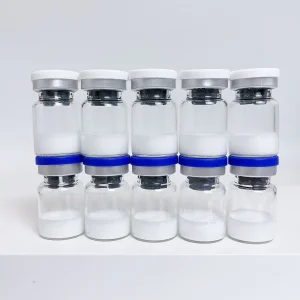
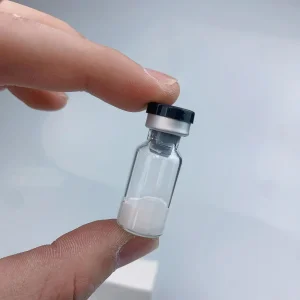
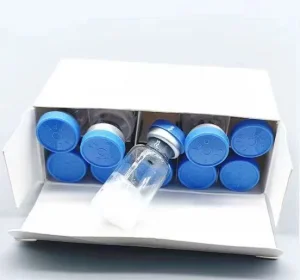
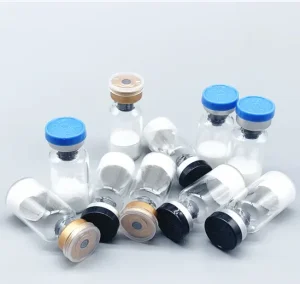
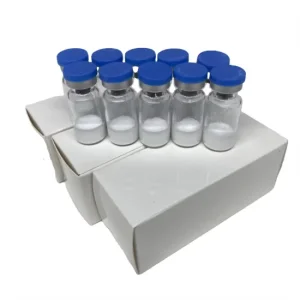
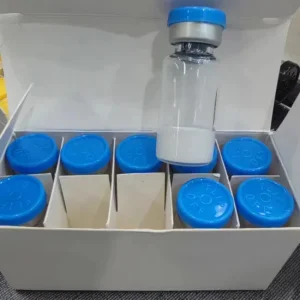
A rigorous examination of 19-nor-4-androstene-3-one-17β-phenylpropionate (CAS 62-90-8), detailing stereochemistry, receptor affinity kinetics, and analytical release specifications.
Nandrolone Phenylpropionate (NPP) is an esterified variant of the parent 19-nortestosterone anabolic-androgenic steroid. By coupling a short-chain phenylpropionate ester to the 17-beta hydroxyl group, the active molecule attains an optimized lipophilicity profile when dissolved in carrier oil systems.
Unlike the sluggish decanoate ester (which possesses an active half-life of 7 to 10 days), the phenylpropionate ester exhibits an active half-life in human tissue models of approximately 2.5 to 3.5 days. This rapid hydrolysis enables tighter plasma concentration management, reduces undesirable long-term systemic accumulation, and dramatically accelerates clearance intervals upon cessation of experimental dosing protocols.
From an organic chemistry perspective, the phenyl group introduces mild steric stabilization around the ester linkage while retaining susceptibility to endogenous intramuscular carboxylesterases. This kinetic harmony ensures rapid bioavailability without the extreme supra-physiological peak surges typical of unesterified hormones.
The structural removal of the 19-methyl carbon from testosterone confers an enhanced binding affinity for the androgen receptor (AR) while paradoxically yielding a marked attenuation of androgenic adverse profiles. In target tissues expressing 5α-reductase, Nandrolone Phenylpropionate is converted to 5α-dihydronandrolone (DHN) rather than dihydrotestosterone (DHT).
DHN demonstrates a substantially diminished binding affinity to the AR compared to DHT, dramatically decreasing the incidence of androgenic events in scalp tissue, dermal sebaceous glands, and prostatic stroma. As a result, the pharmacological Myotrophic-to-Androgenic Ratio of NPP sits near 3.29:1 (compared to Testosterone's 1:1 baseline).
Furthermore, NPP undergoes aromatization to estrogen at a rate roughly 20% that of testosterone, via an alternative aromatase-mediated 19-nor-hydroxylation pathway resulting in 17β-estradiol. This muted estrogenic conversion eliminates fluid retention spikes, making high-purity NPP API an indispensable reagent for specialized pharmacological cachexia models and bone mineral density studies.
| Analytical Parameter | USP / Ph.Eur. Compendial Standards | Hebei Miaoou In-House Factory Release | Methodology / Analytical Equipment |
|---|---|---|---|
| Chemical Structure & CAS | CAS: 62-90-8 | Molecular Formula: C₂₇H₃₄O₃ | 100% Conforms to 19-nor Structural Identity | FTIR / High-Resolution 400 MHz ¹H-NMR |
| HPLC Chromatographic Assay | 97.0% – 103.0% (Dried Basis) | ≥99.20% (Typical Batch: 99.45% - 99.80%) | Reverse-Phase UHPLC-UV (240 nm Detection) |
| Melting Range | 91.0 °C to 95.0 °C | 92.5 °C to 94.0 °C (Sharp crystallization) | Automated Melting Point Capillary System |
| Specific Optical Rotation | +48.0° to +51.0° (Dioxane, c=1.0%) | +49.2° to +50.1° | Precision Optical Polarimetry @ 20°C |
| Individual Impurity | ≤ 1.0% maximum permitted | < 0.10% (Unknown), < 0.15% (Specified) | UPLC High Sensitivity Gradient Profile |
| Residual Solvents (ICH Q3C) | Meets Class 2 and Class 3 Solvents | Methanol < 100 ppm, Acetone < 200 ppm | Headspace Gas Chromatography (GC-FID/MS) |
| Heavy Metals (Pb, As, Cd, Hg) | ≤ 20 ppm Total Metals | < 5 ppm Total (Cd < 0.5 ppm, Pb < 1.0 ppm) | Inductively Coupled Plasma Mass Spectrometry (ICP-MS) |
| Bacterial Endotoxins & Bioburden | Sterile API Grade Verification Available | < 0.25 EU/mg (Bio-burden < 10 CFU/g) | LAL Kinetic Chromogenic Reagent Test |
How Hebei Miaoou Technology mitigates global API supply disruptions through automated synthesis, closed-loop environmental controls, and integrated steroid intermediate manufacturing.
Traditional steroid manufacturing is exposed to intense pricing volatility driven by intermediate precursor shortages (such as 4-AD and 19-Norandrostenedione). Miaoou's integrated chemical network utilizes scalable microbiological fermentation of natural plant phytosterols derived from non-GMO soy and pine sources.
By locking down the upstream supply of 19-Nor-4-androstenedione (19-Nor-AD) at our dedicated manufacturing base in China, we bypass intermediary brokers, ensuring consistent raw material feeding stocks and insulating global B2B procurement partners from dramatic pricing spikes or factory allocation limits.
Traditional batch reaction kettles often suffer from localized temperature variations and prolonged contact times, which lead to thermal degradation and unwanted phenylpropionate ester side-isomers. We implement modern continuous micro-channel reactor technology.
This closed-loop automated system precisely controls the stoichiometric mixing of 19-nortestosterone with high-purity phenylpropionyl chloride under sub-second thermal equilibrium. The result is a 99.4% reaction conversion yield, minimal formation of unreacted free base, and virtually zero hazardous atmospheric emissions, representing state-of-the-art green pharmaceutical engineering.
Our production line integrates in-line Process Analytical Technology (PAT), featuring continuous near-infrared (NIR) and focused beam reflectance measurement (FBRM) to monitor supersaturation during recrystallization from ultra-pure alcoholic solutions.
This automated crystallization ensures precise control over polymorphism, producing uniform, free-flowing crystalline powder with high bulk density. Materials flow effortlessly through automated filling lines, completely eliminating clumping and batch variability for downstream sterile oil reconstitutions or pellet compaction.
Analyzing the compound annual growth rate (CAGR), contract manufacturing consolidation, and shifting procurement landscapes across North America, Europe, LATAM, and Asia-Pacific.
The international steroid compound market has fundamentally bifurcated over the last decade. Historically characterized by fragmented, non-compliant brokerage networks, enterprise pharmaceutical and compounding buyers now mandate exhaustive analytical transparency, full traceability, and absolute supply chain certainty.
As chronic wasting conditions, cancer-induced cachexia, severe osteoporosis, and micro-dosed endocrine wellness therapies advance through novel clinical and pre-clinical investigative pipelines, the global requirement for high-purity Nandrolone Phenylpropionate is experiencing steady annual compound growth projected at 6.8% CAGR through 2032.
Compounding pharmacies in Latin America, specialized clinics throughout Eastern Europe, and analytical testing laboratories across North America require high-grade raw powders that comply not only with basic melting-point markers, but with rigorous ICH Q3A/B impurity profiling and verifiable low endotoxin limits.
When procurement executives evaluate bulk chemical manufacturers for Nandrolone Phenylpropionate, four operational pillars dictate contract allocation:
Understanding how global biomedical institutions, compounding facilities, and veterinary research centers utilize Nandrolone Phenylpropionate API.
Nandrolone derivatives stimulate renal erythropoietin secretion and exert direct stimulatory action on bone marrow erythroid progenitor cells. In chronic kidney disease (CKD) research models and refractory aplastic anemia protocols, NPP provides the rapid onset of red blood cell elevation required for acute stabilization.
Because NPP possesses a faster metabolic clearance profile than decanoate esters, researchers can precisely dial in hematocrit targets and cease treatment swiftly if hemoglobin thresholds approach hyper-viscosity risk indices.
A hallmark of 19-nortestosterone molecules is their potent stimulation of procollagen mRNA expression and enhanced intestinal calcium absorption. In post-menopausal osteoporosis models and structural connective tissue research, NPP exhibits substantial bone mineral density enhancements.
The shorter ester allows pulsatile cyclical administration, synchronizing bone turnover cycles without causing extended hypothalamic-pituitary-gonadal (HPG) axis shutdown.
In equine sports science and veterinary medicine, high-purity NPP is investigated for treating severe muscle trauma, postsurgical catabolic states, and deep tissue ulcerations. Its non-hepatotoxic injectable profile ensures liver enzyme stability during prolonged therapy.
The absence of alkylation at the C17-alpha position prevents the toxic cholestatic jaundice seen with oral androgens, making it the preferred therapeutic choice for animal vigor restoration.
Ensuring zero contamination, absolute chemical stability, and 100% compliant border transit across international jurisdictions.
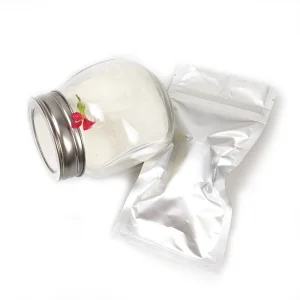
Steroid APIs are sensitive to photo-oxidation, moisture ingress, and thermal degradation. Hebei Miaoou packages every batch of Nandrolone Phenylpropionate powder inside an inert, nitrogen-purged environment (Class 10,000 cleanroom):
International shipping of specialized APIs requires nuanced regulatory acumen. Our in-house export documentation desk provides complete logistics support:
Direct technical answers regarding purity validation, minimum order quantities, regulatory documentation, and payment guarantees.
Every batch undergoes rigorous High-Performance Liquid Chromatography (HPLC) coupled with UV spectrophotometry at 240 nm against international reference standards. A full chromatographic profile showing baseline separation, retention times, peak area percentage, and total assay (consistently ≥99.2%) is supplied with the lot-specific Certificate of Analysis.
To support qualified compounding pharmacies, R&D laboratories, and CDMO qualification audits, we offer evaluation sample sizes starting from 50g to 100g. Commercial scale pricing discounts apply to volume contracts exceeding 1 kg, 5 kg, and bulk 25 kg fiber drums.
Yes. We supply comprehensive Technical Data Packages (TDP) and CTD-format Module 3 quality sections (S-section: Characterization, Synthesis Route, Impurity Origin, In-process Controls, Stability) under Non-Disclosure Agreements (NDA) for clients undergoing local drug registration or veterinary filing.
Due to the intermediate melting point (91-95°C) and the phenylpropionate ester group, NPP dissolves readily in standard pharmaceutical oils (MCT oil, USP Grapeseed oil, Sesame oil). Complete dissolution is typically achieved at 100mg/mL to 150mg/mL using 1-2% Benzyl Alcohol (preservative) and 15-20% Benzyl Benzoate (solvent) without crystallizing out at low room temperatures.
The retest period for our Nandrolone Phenylpropionate is 36 months from the date of manufacture when stored in original unopened, vacuum-sealed packaging at controlled room temperature (15°C to 25°C), shielded from direct sunlight and ambient relative humidity exceeding 60%.
We back all commercial B2B orders with our 100% Guaranteed Reshipment Policy. If an unforeseen customs hold occurs within our authorized shipping transit lanes, our logistics dispatch unit immediately releases a duplicate replacement batch via an alternative dedicated route at zero additional expense.
Explore our extended synthetic portfolio of clinical-grade weight management peptides, hormone regulators, and high-potency small-molecule compounds.
Connect directly with our synthesis chemists and export logistics directors. Request batch-specific COAs, complete HPLC/MS analytical spectra, Tier-1 bulk price matrices, or custom sterile-fill specifications within 24 hours.

