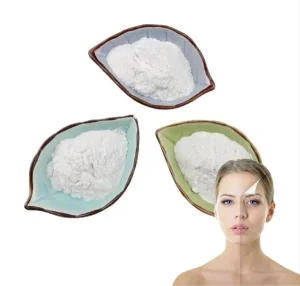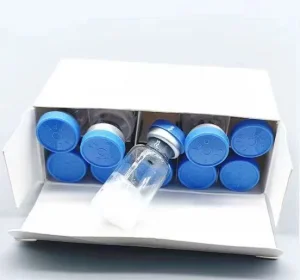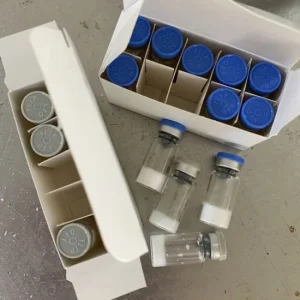
Direct-from-plant synthesis, tightly controlled chromatographic verification, and complete batch analytical release documentation.
A granular, engineering-grade breakdown of Boric Acid (CAS 11113-50-1), detailing crystallographic behavior, thermal decomposition parameters, and multi-tier pharmaceutical/technical purity matrices.
CAS 11113-50-1, universally recognized in industrial, chemical, and pharmaceutical registries as Boric Acid (orthoboric acid, $H_3BO_3$), represents one of the most structurally critical inorganic compounds within advanced manufacturing. In crystalline form, CAS 11113-50-1 comprises planar $B(OH)_3$ units bound by a symmetrical network of hydrogen bonds, constructing a layered triclinic lattice that imparts notable lubricity, high thermodynamic stability, and controlled dissociation kinetics. When evaluated by global procurement directors and analytical chemists, compound identity verified under CAS 11113-50-1 requires strict differentiation between technical, electronic, reagent, and pharmaceutical (USP/EP/BP) grades.
| Analytical Parameter | Technical / Industrial Grade | High-Purity Electronic Grade | Pharma / Reagent Grade (USP/EP) | Test Methodology |
|---|---|---|---|---|
| Assay ($H_3BO_3$ Content) | ≥ 99.20% | ≥ 99.85% | 99.50% – 100.50% | Acidimetric Titration (Mannitol Complexation) |
| Insoluble Matter in Water | ≤ 0.05% | ≤ 0.005% | ≤ 0.005% (Clarity of Solution) | Gravimetric Filtration at 80°C |
| Sulfate ($SO_4^{2-}$) | ≤ 0.10% | ≤ 0.001% (10 ppm) | ≤ 0.005% (50 ppm) | Turbidimetric / Ion Chromatography |
| Chloride ($Cl^-$) | ≤ 0.05% | ≤ 0.0005% (5 ppm) | ≤ 0.001% (10 ppm) | Potentiometric AgCl Precipitation |
| Heavy Metals (as Pb) | ≤ 20 ppm | ≤ 1 ppm | ≤ 5 ppm | ICP-OES / ICP-MS |
| Iron ($Fe$) | ≤ 15 ppm | ≤ 1 ppm | ≤ 2 ppm | Spectrophotometry (o-Phenanthroline) |
| Arsenic ($As$) | ≤ 5 ppm | ≤ 0.2 ppm | ≤ 1 ppm | Hydride Generation AAS / ICP-MS |
| Particle Sizing / Mesh | Granular (30-80 mesh) | Ultra-fine powder (100-325 mesh) | Micronized or Controlled Crystalline | Laser Diffraction (Malvern Mastersizer) |
Commercial borate compounds frequently encounter specification ambiguities during international border transit. Identifying CAS 11113-50-1 demands rigorous validation of structural water loss. Upon gradual heating to 100–130°C, orthoboric acid transitions into metaboric acid ($HBO_2$), subsequent to tetraboric acid ($H_2B_4O_7$), and ultimately into anhydrous boron trioxide ($B_2O_3$) at temperatures exceeding 300°C. Our factory's automated Karl Fischer titration and thermogravimetric validation (TGA) ensure unadulterated structural integrity prior to dispatch.
How Chinese chemical manufacturing infrastructure delivers unmatched supply resilience, multi-stage continuous refining, and global price-performance superiority.
China's centralized borate processing hubs leverage direct raw mineral integration with state-of-the-art sulfuric acid leaching infrastructure. By securing raw borax, ascharite, and imported high-grade colemanite concentrates under multi-year feedstock contracts, our facilities avoid the volatile price surges common to non-integrated secondary processors, passing downstream stability directly to enterprise purchasers.
Traditional batch processing frequently produces inconsistent crystal habit, uneven particle size distributions, and high mother-liquor entrapment. Our plant operates continuous multi-stage vacuum crystallization units coupled with enclosed fluid-bed drying systems. This ensures an ultra-low sulfate footprint, prevents cake agglomeration during multi-week ocean transport, and generates an exceptionally consistent crystal morphology.
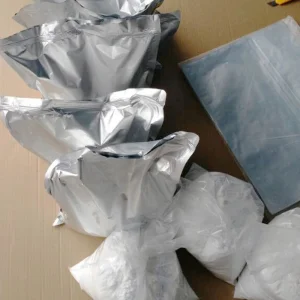
Operating near major primary export ports (Tianjin, Qingdao, and Shanghai) eliminates internal freight friction. We supply CAS 11113-50-1 in palletized 25kg multi-wall kraft paper sacks with double PE heat-sealed liners, 1000kg/1200kg heavy-duty anti-static FIBC jumbo bags, or bulk container liners. Every shipment benefits from streamlined pre-berthing customs clearance and automated GHS labeling.
How Fortune 500 chemical buyers, contract manufacturing organizations (CMOs), and advanced research institutions audit, validate, and contract CAS 11113-50-1 sources.
Corporate chemical procurement has pivoted from transactional spot-market purchasing toward structurally audited, resilient partnerships. In the procurement of CAS 11113-50-1, international supply chain managers face multifaceted operational challenges: batch-to-batch impurity spikes, caking and hygroscopic clumping during long maritime transit, incomplete regulatory filings, and ambiguous origin declarations. Our production and export division resolves these failure points through a verifiable four-tier Quality Assurance Architecture:
Every single bag or drum shipped carries a high-definition serialized QR code and alphanumeric batch code directly tied to our laboratory LIMS database. Purchasing directors can instantly review raw material extraction dates, crystallizer vessel IDs, in-process mother liquor filtration data, and final packaged moisture curves.
In addition to internal HPLC, UV-Vis, and ICP-OES validation, we collaborate with internationally accredited testing bodies (SGS, Eurofins, Intertek) to provide independent third-party Certificates of Analysis (COA) prior to dispatch upon client request, eliminating dispute risks at discharge ports.
Boric acid is prone to ambient moisture absorption and pressure consolidation during oceanic cross-equator shipment. We employ multi-layer composite moisture barrier packaging, automated nitrogen purging for sensitive pharmaceutical grades, and vacuum-sealed pallets shrink-wrapped with UV-resistant stretch hoods.
Our regulatory affairs unit furnishes full Technical Data Packages: 16-section GHS Safety Data Sheets (multilingual), BSE/TSE-free statements, residual solvent risk assessments (ICH Q3C), non-GMO declarations, and REACH Only Representative (OR) certification coverage.
Navigating complex international chemical frameworks: REACH, SVHC restrictions, TSCA inventories, and customs clearance assurance.
Cross-border commerce in boron derivatives mandates sophisticated regulatory insight. In the European Union, CAS 11113-50-1 is identified under Annex VI of the CLP Regulation and falls under specific substance evaluation frameworks concerning reprotoxicity categories when exceeding defined concentration thresholds. Consequently, professional international supply requires active compliance mechanisms to protect downstream entities:
We maintain dedicated Only Representative (OR) agreements across the European Union and the United Kingdom, ensuring that non-EU purchasers importing our CAS 11113-50-1 are fully covered under tonnage band registrations, exempting them from complex downstream registrant liabilities.
Our manufactured Boric Acid is fully listed and certified on the United States Toxic Substances Control Act (TSCA) Active Chemical Inventory. Shipments to North American ports (Long Beach, Newark, Houston) include automated Section 13 TSCA Positive Import Certification declarations to ensure zero terminal demurrage.
Every export parcel is accompanied by localized GHS-compliant labels displaying relevant Hazard (H) and Precautionary (P) statements (H360FD, P201, P280, P308+P313) in the target country's official language. We supply engineering controls guidance for ventilation, dust collection, and PPE deployment to support plant safety officers.
From optical telecommunications glass to pharmaceutical synthesis and nuclear moderator chemistry: how high-purity boric acid drives modern technical disciplines.
In low-expansion borosilicate glass, pharmaceutical neutral vials, and TFT-LCD display substrates, CAS 11113-50-1 acts as an indispensable network-forming flux. The inclusion of $B_2O_3$ reduces molten viscosity, suppresses thermal expansion coefficients, and significantly elevates resistance to chemical attack and thermal shock.
Used as a gentle tonicity modifier and physiological pH buffer in ophthalmic ointments, topical suspensions, and ear irrigation fluids. Furthermore, CAS 11113-50-1 serves as a foundational precursor in organoboron chemistry, including Suzuki-Miyaura cross-coupling catalysts for complex small-molecule synthesis.
Within silicon wafer fabrication, ultra-pure CAS 11113-50-1 is utilized as a p-type dopant source. In electrolytic capacitor manufacturing, ammonium pentaborate prepared from pure boric acid establishes superior dielectric oxide films with low leakage current and high voltage endurance.
Owing to the substantial thermal neutron capture cross-section of the boron-10 ($^{10}B$) isotope, nuclear-grade boric acid is dissolved directly into the primary cooling loops of Pressurized Water Reactors (PWRs) as a soluble chemical shim to modulate reactivity kinetics.
When incorporated into cellulosic insulation, technical polymers, and wood laminates, CAS 11113-50-1 releases endothermic water of hydration at elevated temperatures, forming a protective glassy surface barrier that suppresses oxygen diffusion and retards pyrolysis.
How progressive environmental policies, automated crystallizers, and circular solvent recovery are transforming Chinese inorganic chemical synthesis.
The international borate industry is undergoing rapid evolutionary shifts spurred by global decarbonization, tighter permissible exposure limits (PEL), and demand for ultra-trace metal impurity controls. Chinese manufacturers are spearheading this transition through massive capital allocation toward closed-loop crystallizers, carbon-neutral thermal drying, and ion-exchange polishing units:
With advanced lithium-ion battery separators and high-frequency communication glass demanding iron and arsenic profiles below 500 parts per billion (ppb), our manufacturing line has integrated advanced chelating ion-exchange resins and multi-stage sub-micron membrane filtration systems.
By utilizing Mechanical Vapor Recompression (MVR) evaporation technology across our crystallization loops, we have reduced boiler steam consumption by 62%, simultaneously recycling 98.5% of process condensate back into raw mineral dissolution circuits to achieve zero liquid discharge (ZLD).
Integrating artificial intelligence models into our mother-liquor cooling curves allows precise predictive control over supersaturation gradients. This algorithmic crystal growth guarantees tightly uniform crystal size distributions, eliminating micro-fines that cause downstream pneumatic line clogging.
Comprehensive answers to the primary compliance, analytical, packaging, and commercial questions raised by international procurement managers.
Continuous production portfolio spanning peptide synthesis, active precursors, and high-purity pharmaceutical intermediate standards.