Verified structural purity, full spectrum analytical characterization (HPLC/LC-MS), and compliant bulk synthesis ready for immediate dispatch.
Comprehensive pharmaceutical intermediate profiling for chemical synthesis teams, validation analysts, and international procurement officers.
In modern organic synthesis and advanced API (Active Pharmaceutical Ingredient) processing, CAS 148553-50-8 (chemically designated as (3S)-3-(aminomethyl)-5-methylhexanoic acid, commonly referred to globally in commercial pharmaceutical pipelines as Pregabalin intermediate / API) stands as an indispensable neurological chemical compound. Used primarily as a high-affinity ligand for voltage-gated calcium channels (α2δ subunit) in central nervous system pharmacotherapies, the procurement of this substance requires relentless attention to chiral resolution, stereochemical purity, and residual solvent control.
| Analytical Parameter | USP / EP Pharmacopoeia Standard | China Factory 4.0 Actual Run | Testing Methodology |
|---|---|---|---|
| Chemical Name | (3S)-3-(aminomethyl)-5-methylhexanoic acid | ||
| CAS Registry Number | 148553-50-8 | ||
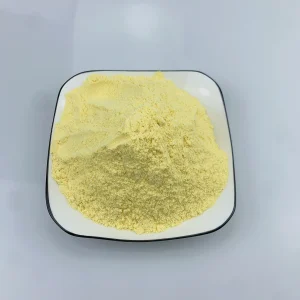
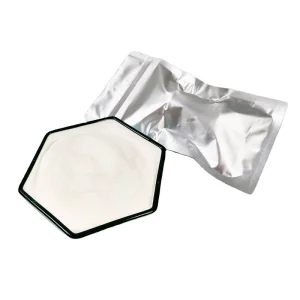
| Physical Appearance | White to Off-White Crystalline Powder | Conforms (White microcrystals) | Visual Inspection / Organoleptic |
| Chromatographic Purity (HPLC) | ≥ 98.5% | ≥ 99.50% - 99.85% | High Performance Liquid Chromatography (UV 210nm) |
| Chiral / Enantiomeric Purity | (S)-isomer ≥ 99.0% | (S)-isomer ≥ 99.90% (R-isomer ≤ 0.1%) | Chiral HPLC (Crown Ether Column) |
| Loss on Drying (LOD) | ≤ 0.5% | 0.12% - 0.22% | Thermogravimetric Analysis / Halogen Oven |
| Residue on Ignition / Ash | ≤ 0.1% | 0.04% | Muffle Furnace (800°C ± 25°C) |
| Heavy Metals Content | ≤ 10 ppm | ≤ 2 ppm (Cd, Pb, As undetected) | ICP-MS (Inductively Coupled Plasma) |
How automation, continuous flow microreactors, and upstream precursor clustering define the technological leadership of Chinese fine chemical manufacturing.
Traditional batch reactors carry inconsistent thermodynamic gradients leading to thermal degradation. Modernized facilities employ tubular continuous microreactors that maintain strict enantioselective resolution during the key chiral catalytic addition steps, ensuring that every batch of CAS 148553-50-8 displays exact molecular uniformness.
Moving beyond costly and toxic classical tartaric acid crystallization methods, our smart factories leverage proprietary immobilized microbial esterases and biocatalytic lipases. This green-chemistry pathway eliminates harsh transition metals while increasing the optical rotation purity to over 99.8% (S-isomer).
Unlike non-integrated compounding blenders, our facilities operate in unified chemical development clusters with direct feeds of basic petrochemical building blocks, such as isovaleraldehyde and cyanoacetic acid. This isolates international supply chains from external upstream raw material embargoes and tariff volatility.
Market projections indicate sustained growth for neuromodulators and intermediate precursors across Europe, North America, Southeast Asia, and Latin America.
Global healthcare demographics show a dramatic shift toward early-stage neuropathic diagnosis, fibromyalgia care, and generalized anxiety disorder interventions. Because CAS 148553-50-8 serves as the active core molecule for these generic medications, multinational generic pharma formulations are expanding procurement quotas by an estimated 8.4% CAGR through 2030.
Overseas contract manufacturing organizations (CMOs) and CDMOs are mitigating geographical concentration risks. Enterprise procurement divisions demand suppliers that offer multi-ton stock resilience, warehouse-to-door temperature integrity, and immediate access to validated inspection batches backed by international validation files.
Import borders have heightened analytical scrutiny on potential genotoxic impurities (PGIs) and nitrosamine precursors. Partnering with a state-certified Chinese manufacturer provides buyers with deep validation trails, guaranteeing that residual alkyl halides and nitrosamine contamination levels fall below strict EMEA and FDA thresholds.
CAS 148553-50-8 features distinct mechanical, dissolution, and bioavailability parameters across targeted industrial disciplines.
Used directly by qualified dosage form facilities to manufacture hard gelatin capsules (25mg, 50mg, 75mg, 150mg, 300mg) and oral solution matrices. Requires precision particle size distribution (PSD: D90 < 30μm via micronization) to prevent capsule fill weight variance during high-speed encapsulation.
In fine chemical synthesis, CAS 148553-50-8 functions as a functionalized chiral synthon for secondary amino acid analogues. Its rigid conformation and protected amine configurations allow researchers to assemble innovative peptidomimetic structures and enzyme-substrate probes.
Rapidly rising application in veterinary pharmacology for the relief of feline hyperesthesia and canine osteoarthritis-associated neuropathic pain. High-bulk stability and complete water solubility make it suitable for controlled-release chewable delivery units and sterile oral suspensions.
Expert answers addressing quality control, export handling, batch documentation, and supplier compliance standards.
We guarantee a chromatographic purity of ≥ 99.4% with individual impurities restricted below 0.1%. Because CAS 148553-50-8 has a chiral center, enantiomeric excess ((S)-isomer) is verified via validated chiral-HPLC on an immobilized polysaccharide column, holding the (R)-enantiomer strictly under 0.15%.
Every delivery includes a lot-specific Certificate of Analysis (COA), comprehensive 1H-NMR / 13C-NMR spectroscopy, High-Resolution Mass Spectrometry (HRMS), full HPLC purity chromatograms, and a compliant 16-section Safety Data Sheet (SDS) following GHS Revision 8.
Our manufacturing line integrates aseptic air-jet micronization systems. We tailor Particle Size Distribution (PSD) upon request to D50 < 10μm or D90 < 25μm, delivered with complete Malvern laser diffraction particle size reports for direct compressible direct-to-capsule manufacturing.
Standard packing consists of 25kg UN-certified fiber drums lined with dual antistatic polyethylene barrier bags and food-grade heat-sealed aluminum foil overwraps. Samples for analytical evaluation can be supplied in 100g, 500g, and 1kg vacuum-sealed packages.
CAS 148553-50-8 remains stable for up to 36 months when stored in sealed, light-resistant containers within a controlled, dry environment at 15°C to 25°C. Real-time stability testing and ICH-accelerated stability data (40°C ± 2°C / 75% RH ± 5%) can be supplied on request.
Operating from established fine chemical export terminals (including Shijiazhuang, Tianjin, Shanghai, and Qingdao ports), our dedicated trade logistics team clears non-dangerous chemical declarations rapidly, arranging direct air express and container sea freight with door-to-door tracking.
Explore our extensive fine-chemical, peptide, and small-molecule catalogue supported by in-house synthesis and rigorous quality assurance.