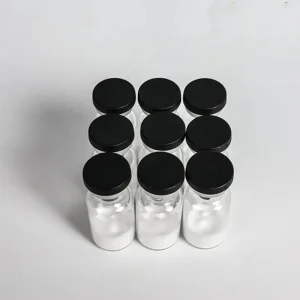
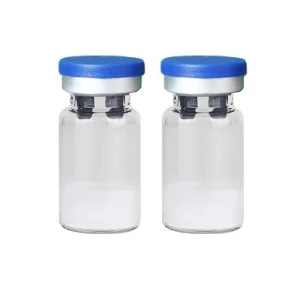
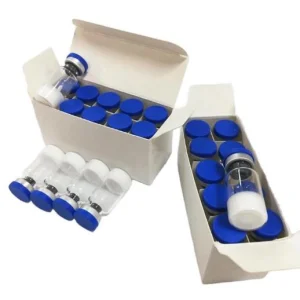
Direct supply from state-of-the-art Chinese synthesis lines. Every batch is stringently qualified via HPLC, 1H/13C-NMR, LC-MS, and complete impurity profile tracking.
Cabozantinib (free base, CAS 443998-65-0) represents an essential multi-tyrosine kinase inhibitor targeting MET, VEGFR2, and RET oncogenic pathways. Our manufacturing protocols execute a zero-defect crystallization process.
| Analytical Parameter | Pharmacopeial Specification | Empirical Factory Batch Results | Analytical Methodology |
|---|---|---|---|
| IUPAC Chemical Name | N-(4-((6,7-dimethoxyquinolin-4-yl)oxy)phenyl)-N'-(4-fluorophenyl)cyclopropane-1,1-dicarboxamide | Structure Confirmation (NMR/HRMS) | |
| CAS Registry Number | 443998-65-0 (Free Base) |
Conforms to Reference Standard | Registry Verification |
| Molecular Formula & Weight | C28H24FN3O5 | 501.51 g/mol | 501.50 ± 0.05 g/mol | High-Resolution Mass Spec (HRMS) |
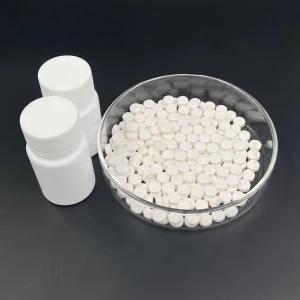
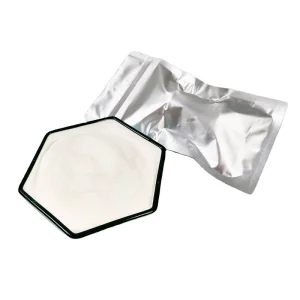
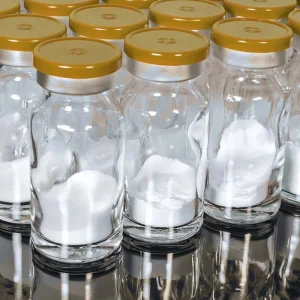
| Physical Appearance | Off-white to pure white crystalline powder | Conforms (White microcrystalline) | Visual / Microscopic Inspection |
| Assay (Anhydrous Basis) | 98.5% – 102.0% w/w | 99.82% w/w | Quantitative HPLC vs Reference |
| Related Substances (HPLC) | Total Impurities ≤ 0.50%; Single Max ≤ 0.10% | Total 0.18%; Max Single 0.04% | Reverse Phase HPLC-DAD (254nm) |
| Residual Solvents (ICH Q3C) | MeCN < 410 ppm, DCM < 600 ppm, DMF < 880 ppm | MeCN: Not Detected, DCM: 22 ppm | Headspace Gas Chromatography (GC-FID) |
| Heavy Metals / Elemental Impurities | Cd ≤ 0.5, Pb ≤ 0.5, As ≤ 1.5, Hg ≤ 1.5 (ppm) | Meets ICH Q3D elemental limits | ICP-MS Inductively Coupled Plasma |
| Loss on Drying / Water Content | Karl Fischer ≤ 0.5% w/w | 0.14% w/w | Coulometric Karl Fischer Titration |
The chemical synthesis of Cabozantinib (CAS 443998-65-0) demands strict kinetic control over each condensation and coupling sequence. In our state-of-the-art facility located in Hebei, China, the convergent synthetic pathway originates from the precise coupling of 4-chloro-6,7-dimethoxyquinoline with 4-aminophenol to generate 4-(6,7-dimethoxyquinolin-4-yloxy)aniline (CAS 190728-25-7). Concurrently, 1-((4-fluorophenyl)carbamoyl)cyclopropanecarboxylic acid (CAS 849217-48-7) is synthesized through the catalytic reaction of cyclopropane-1,1-dicarboxylic acid with 4-fluoroaniline under micro-reactor thermodynamic parameters.
The subsequent amide coupling between the amino intermediate and the carboxylic cyclopropane moiety involves modern peptide coupling catalysts (such as EDCI/HOBt or propylphosphonic anhydride - T3P) to eliminate the formation of cytotoxic acylurea byproducts and minimize the generation of des-fluoro or bis-anilino impurities. Our closed-loop crystallization trains optimize polymorph Form N-1 stabilization, preventing pseudo-polymorphic transformations during industrial isolation and scale-up centrifugation.
By shifting the final amidation stage into continuous plug-flow reactors, our factory reduced local hotspot accumulation, curtailed thermal degradation, and successfully curbed the potential formation of genotoxic cyclopropane impurities below the strict Threshold of Toxicological Concern (TTC) of 1.5 µg/day under ICH M7 guidelines.
Polymorphic screening is fundamental for CAS 443998-65-0. We assure batch-to-batch thermodynamic consistency:
How our vertically integrated chemical production infrastructure delivers unassailable security of supply, cost efficiency, and batch reproducibility to international biopharma buyers.
Unlike secondary CDMOs that purchase intermediate precursors from external vendors, our domestic facility synthesizes fundamental building blocks in-house:
Our Hebei production campus employs distributed control systems (DCS) and micro-reaction technology:
Chinese pharmaceutical manufacturing delivers undeniable structural cost benefits without compromising regulatory rigor:
Bridging Chinese factory manufacturing with the regulatory stringency demanded by FDA, EMA, PMDA, and NMPA reviewing authorities.
When purchasing CAS 443998-65-0 for clinical or commercial dossiers, documentation is just as vital as physical purity. We supply a complete Common Technical Document (CTD) Module 3 package:
We eliminate international cross-border procurement frictions through specialized multi-lingual regulatory and logistical services:
CAS 443998-65-0 serves as the pivotal free-base substrate across diverse clinical, academic, and industrial formulation architectures.
Commercial solid oral dosages (tablets and capsules indicated for advanced renal cell carcinoma, medullary thyroid cancer, and hepatocellular carcinoma) utilize the (S)-malate salt form (CAS 849217-68-1).
Our ultra-pure CAS 443998-65-0 free base functions as the pristine parent precursor for stoichiometric salification with L-malic acid. Low residual free moisture and negligible inorganic ash in our free base guarantee quantitative salt formation yields (>98%) and superior crystal lattice stability without amorphous entrapment.
With international patents transitioning toward expiration across major markets, generic pharmaceutical formulation developers require reliable reference substance quantities:
Academic biomedical institutions and biotech discovery incubators leverage our laboratory-scale quantities for non-clinical research:
Anticipating market evolution: How changing patent horizons, green chemistry mandates, and supply-chain diversification redefine API vendor qualification.
Global pharmaceutical supply chain strategy has permanently migrated from single-source vulnerability to multi-jurisdiction risk dispersion. Western sponsors routinely establish certified Chinese secondary manufacturing partners to guarantee uninterrupted supply of key oncology APIs, dampening geopolitical logistics shocks and energy volatility.
Modern Chinese chemical parks mandate tier-1 Environmental, Health, and Safety (EHS) systems. Our plant features RTO thermal oxidizers for VOC containment, catalytic wet oxidation for wastewater treatment, and solar micro-grids. Meeting global scope 1, 2, and 3 emissions audit criteria ensures procurement longevity for European and North American MNCs.
With health authorities tightening mutagenic impurity boundaries under ICH M7 guidelines, future market leadership belongs strictly to manufacturers with documented LC-MS/MS trace analysis capabilities. Our laboratory routinely monitors halogenated precursors and reactive intermediates at single-digit ppm resolution.
Direct answers concerning chemistry specifications, documentation packages, logistics safety, and compliance parameters for CAS 443998-65-0.
CAS 443998-65-0 designates Cabozantinib Free Base (molecular weight 501.51 g/mol). CAS 849217-68-1 corresponds to Cabozantinib (S)-malate salt (molecular weight 635.59 g/mol). We produce the free base as an ultra-pure chemical entity which is subsequently utilized directly for clinical research assays or converted via stoichiometric salification with L-malic acid into the pharmaceutical crystal salt. Both products are manufactured within our cGMP facility lines.
Every lot ships with a comprehensive Batch Certificate of Analysis (COA) containing exact assay percentage, raw analytical HPLC chromatograms, 1H-NMR spectra confirming identity, Mass Spectrometry (MS) verification, Karl Fischer water determination, residual solvent headspace GC-FID trace profiles, and elemental impurities testing via ICP-MS matching ICH Q3D requirements. Full raw electronic data files are provided upon request.
Yes. To assist your QA and analytical method validation teams in developing stability-indicating testing methods, we supply characterized impurity reference standards, including des-fluoro Cabozantinib, aminoquinoline precursors, 1,1-cyclopropane diester intermediates, and oxidative degradation products with fully assigned NMR/MS spectra.
We operate in-house air-jet micronization systems inside cleanroom suites. Depending on your solid dosage formulation or bio-dissolution constraints, we deliver customized particle size distributions, such as D90 < 10 µm, D50 < 5 µm, or standard unmicronized free-flowing granules. Each lot is certified using Malvern Mastersizer 3000 laser diffraction instrumentation.
Standard packaging comprises primary pharmaceutical-grade double polyethylene bags, desiccants, secondary heat-sealed aluminum foil barrier bags (light- and moisture-proof), protected inside UN-approved fiber drums. Shipments are handled via specialized temperature-controlled air freight services (FedEx, DHL, air cargo charter) complete with continuous temperature-logging USB trackers.
No. Compounds and chemicals manufactured and supplied on this platform are strictly intended for laboratory research, formulation optimization, drug discovery assays, and industrial pharmaceutical further-manufacturing by authorized commercial organizations. They are not direct-to-consumer medicines and must be handled exclusively by qualified technical professionals in licensed facilities.
Explore our parallel production capacities across high-demand bio-active peptides, signaling factors, and specialty chemical compounds.