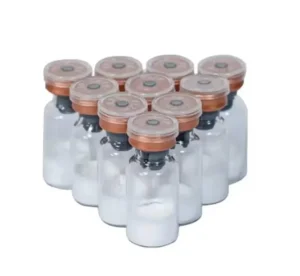
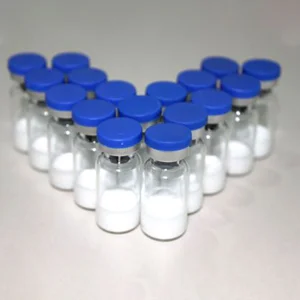
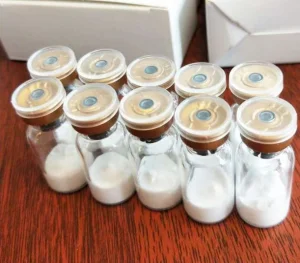
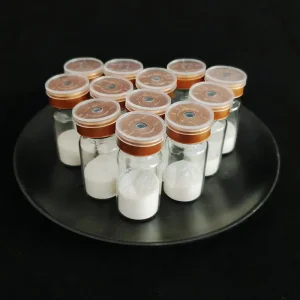
Direct factory production from verified cGMP facilities with validated HPLC chromatographic reports, net content disclosures, and full cold-chain audit capabilities.
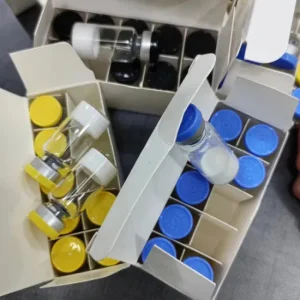
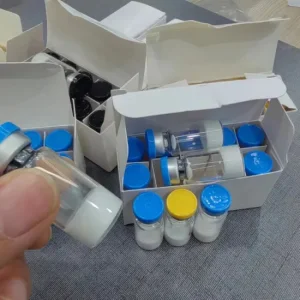

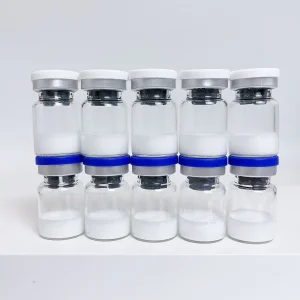
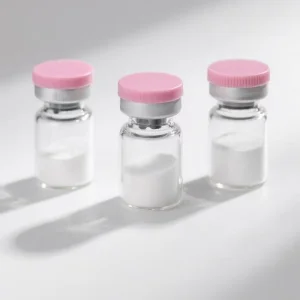
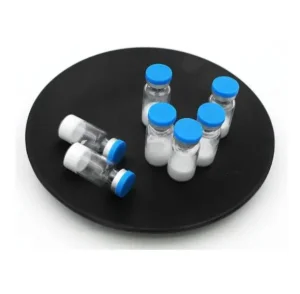
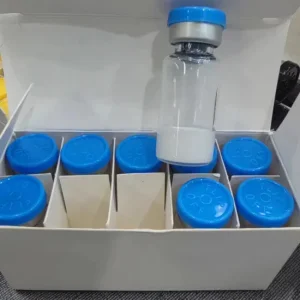
Procaine Hydrochloride (CAS 51-05-8) serves as an indispensable local ester-type anesthetic raw material and primary precursor for complex active pharmaceutical synthesis globally.
China maintains a preeminent status in the synthesis of 2-(diethylamino)ethyl 4-aminobenzoate hydrochloride. Supported by mature upstream chemical clusters delivering continuous feedstocks of 4-nitrobenzoic acid and 2-diethylaminoethanol, Chinese manufacturing parks in Hebei, Shandong, and Jiangsu execute high-efficiency catalytic hydrogenations. This integrated industrial foundation prevents cost turbulence and shields global pharmaceutical formulators from systemic inventory outages.
Procaine HCl international shipments require uncompromising convergence with pharmacopeial benchmarks, specifically USP, Ph. Eur. (EP), BP, and ChP. Verified manufacturers must maintain zero-deviation control against degradation pathways—chiefly the spontaneous hydrolytic decomposition into 4-aminobenzoic acid (PABA) and diethylaminoethanol. Leading producers enforce micro-environmental humidity dampers below 40% RH throughout secondary crystallization.
Legacy iron-powder reduction systems for CAS 51-05-8 synthesis have been comprehensively phased out in certified production facilities across China. They have been replaced by closed-loop heterogeneous noble-metal catalysis (Pd/C and Raney Ni under pressurized H2), slashing heavy metal residual profiles to less than 10 ppm, eliminating toxic sludge emissions, and aligning enterprise output directly with the REACH regulation and environmental ESG imperatives.
Enterprise-level analytical certificates reflect multi-point validation using HPLC-UV, LC-MS, Infrared Spectrophotometry (IR), and Karl Fischer titration.
| Analytical Parameter | Pharmacopeial Standard (USP / EP) | Factory Internal QC Standard | Testing Methodology |
|---|---|---|---|
| Chemical Nomenclature | 2-(Diethylamino)ethyl 4-aminobenzoate monohydrochloride | CAS 51-05-8 High Purity Grade | IUPAC Convention |
| Appearance | White or almost white crystalline powder | Fine odorless crystalline powder | Visual Inspection |
| Identification (IR & Chloride) | Conforms to Reference Standard spectra; positive chloride | Infrared absorption concordant with reference | FTIR / Ag检 (Precipitation) |
| Assay Content (Dried) | 99.0% – 101.0% | 99.5% – 100.5% | Potentiometric Titration with 0.1M HClO4 |
| Melting Range | 153°C to 158°C | 154°C to 157°C (Sharp endotherm) | Capillary Thermal Analysis |
| Related Substances (PABA) | ≤ 0.5% individual, ≤ 1.0% total | ≤ 0.05% PABA; total impurities < 0.20% | Reverse-Phase HPLC (C18, UV 290nm) |
| Loss on Drying | ≤ 0.50% | ≤ 0.25% | Vacuum drying over silica gel / 105°C |
| Heavy Metals Residue | ≤ 20 ppm | ≤ 10 ppm (Pb, As, Cd, Hg controlled) | ICP-MS Atomic Emission |
Direct condensation of 4-aminobenzoic acid with 2-diethylaminoethanol via transesterification or acid chloride intermediate is monitored kinetically. Maintaining tight moisture exclusion stops back-hydrolysis during crystallization stages.
Hydrochloride salt precipitation is orchestrated under continuous micro-reactor flows using anhydrous alcoholic hydrogen chloride. Controlled supersaturation ensures narrow particle size distribution (PSD) without solvent inclusion.
Targeted spray lyophilization and controlled anti-solvent crystallization produce non-caking crystals with optimized flowability (Hausner ratio < 1.18), reducing dusting hazards and improving direct compression yield during formulation.
Exploring the wide-ranging deployment of CAS 51-05-8 across human therapeutics, veterinary formulations, and high-precision chemical block synthesis.
CAS 51-05-8 operates through reversible voltage-gated sodium ion channel blockade along the neuronal axon membrane, preventing action potential propagation. Widely deployed in regional infiltration, peripheral nerve blocks, and dental surgery due to its short duration of action and negligible tissue irritation.
Essential ingredient in veterinary pain management and surgical intervention protocols. Frequently compounded into combination injectable suspensions (such as Procaine Penicillin G) to mitigate localized post-injection muscular pain and improve sustained therapeutic bioavailability across livestock.
In specialized synthetic chemistry, CAS 51-05-8 serves as an amine-functionalized ester platform for developing extended-release supramolecular networks, liposomal drug carriers, and dual-action anti-inflammatory derivatives targeting complex cellular microenvironments.
Utilized globally as a standard reference compound in neurobiology to elucidate the biophysical kinetics of lipid-protein boundary interactions, ion channel gating currents, and comparative enzyme hydrolysis rates mediated by plasma butyrylcholinesterase.
Deploying multi-tier risk mitigation mechanisms across global borders—spanning legal import authorization, dual-layered packaging, and end-to-end telemetry tracking.
Every commercial consignment leaves our certified warehouse accompanied by an unalterable batch Certificate of Analysis (COA), formal Safety Data Sheet (SDS) conforming to GHS Revision 9, Certificate of Origin (COO), and BSE/TSE declaration statements.
With strategic freight partnerships spanning North America, the European Union, Southeast Asia, and Latin America, our logistics coordinators facilitate friction-free clearance through precise HS code classification (HS 292249) and bonded warehouse routing.
Because Procaine HCl crystals display hydro-sensitivity over extended trans-ocean voyages, materials are sealed inside food/pharma grade double polyethylene inner liners within heat-welded aluminum foil barriers, packed in rigid 25kg UN-approved fiber drums.
Leading Chinese manufacturing facilities are undergoing rapid structural evolution, adopting intelligent predictive models and closed-loop process automation.
Migrating the exothermal esterification and acylation sequence from traditional 5,000L batch reactors to continuous microchannel glass/silicon reactors. This transition decreases localized thermal hotspots, locks impurity generation below 0.05%, and boosts overall atom efficiency by 18%.
Integrating in-line Process Analytical Technology (PAT)—combining Focused Beam Reflectance Measurement (FBRM) and ParticleTrack analytics with artificial intelligence algorithms to govern nucleation kinetics dynamically, delivering customizable polymorph and crystal size distributions.
Achieving a 98.5% closed-loop recovery rate for mother liquors and secondary processing solvents (such as ethanol and isopropanol) through advanced membrane distillation units, slashing per-ton carbon footprint and reinforcing sustainability mandates.
Critical technical, compliance, and supply chain questions addressed directly by our analytical QA and international trade leadership.
The global compendial standard for Procaine Hydrochloride (CAS 51-05-8) requires an assay purity between 99.0% and 101.0% on a dried basis. The primary critical degradation impurity is 4-aminobenzoic acid (PABA), formed via ester bond cleavage. High-end Chinese manufacturers control PABA below 0.05% through refrigerated secondary crystallization and nitrogen purged container sealing.
Historical seasonal shutdowns caused by environmental crackdowns have been mitigated among premier Tier-1 suppliers. Modern producers operate inside National Chemical Industrial Parks featuring centralized wastewater treatment, catalytic VOC oxidizers, and green catalytic hydrogenation setups that ensure continuous year-round supply continuity.
Yes. In addition to standard crystalline grades, our manufacturing partners deploy fluid-energy air jet milling to furnish micronized powders with customizable d90 values down to < 20 μm. Every specialized micronized batch is cross-tested for bulk density, angle of repose, and PSD repeatability.
Every export lot includes an authentic batch Certificate of Analysis (COA) with complete HPLC/MS chromatograms, a multi-lingual GHS Safety Data Sheet (SDS), Packing List, Commercial Invoice, Certificate of Origin (COO), and formal statements verifying that materials are non-GMO, TSE/BSE-free, and melamine-free.
Explore our complementary portfolio of verified peptide sequences, reference compounds, and high-purity small molecule derivatives manufactured under rigorous QA oversight.