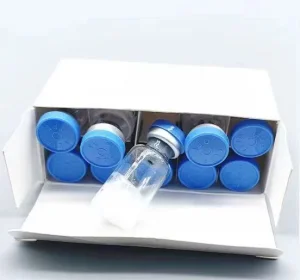
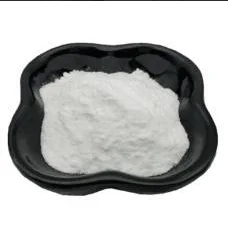
Examine our certified manufacturing compounds, ranging from complex synthetic peptides to refined bioactive APIs produced under rigorous cleanroom conditions.
A deep scientific assessment of Ivermectin (CAS 70288-86-7), exploring molecular architecture, component ratio dynamics (H2B1a vs. H2B1b), crystallization thermodynamics, and pharmacopoeial impurity limits.
In compliance with EP and USP compendia, the major active component 5-O-demethyl-22,23-dihydroavermectin A1a must remain strictly controlled, balancing efficacy and crystalline stability.
Structural formula C48H74O14 represents the hydrogenated macrocyclic lactone derivative, characterized by a disaccharide substituent at the C-13 position of the aglycone core.
Karl Fischer titration strictly managed below 1.0% prevents hydrolytic cleavage of the oleandrosyl disaccharide bridge over extended industrial shelf-life regimes.
High-temperature incineration confirms zero inorganic contamination from heterogeneous catalytic reduction beds, complying with veterinary medicine safety guidelines.
| Analytical Parameter | European Pharmacopoeia (EP 11.0) | United States Pharmacopeia (USP-NF) | Industrial High-Purity Research Grade |
|---|---|---|---|
| Identity Test | IR Spectroscopy & HPLC Retention Time | IR Absorption <197K> & RP-HPLC | 1H/13C NMR, FT-IR & HR-MS (m/z [M+Na]+) |
| Assay (H2B1a + H2B1b) | 95.0% - 102.0% (anhydrous substance) | 95.0% - 102.0% (anhydrous basis) | ≥ 99.0% (Sum of Homologues via RP-HPLC) |
| Component H2B1a Ratio | ≥ 90.0% | ≥ 90.0% | ≥ 92.5% (Optimized Homogeneity) |
| Related Substances (Individual) | Impurity A ≤ 0.5%, Any Other ≤ 0.5% | Any individual unspecified ≤ 0.5% | Any single specified < 0.20%, Total < 0.8% |
| Heavy Metals / Catalyst Pd | ≤ 20 ppm | Meets USP <232> / <233> Elemental Limits | ICP-MS Verified (Pd < 2 ppm, As/Cd/Pb < 0.5 ppm) |
| Specific Optical Rotation | +86.0° to +92.0° (in Methanol) | +87.0° to +92.0° (in Methanol) | +88.5° to +91.5° (20°C, D-line) |
Analyzing macro purchasing trends, contract manufacturing vulnerabilities, and dual-sourcing architectures across major pharmaceutical clusters.
Accounting for more than 75% of worldwide gross consumption, veterinary procurement demands consistent bulk deliveries for livestock herd treatments (bovine, ovine, equine) and companion animal parasite prevention (heartworm prophylaxis). Formulators require tailored particle sizing (D90 < 20 μm) to maintain prolonged suspension stability.
Under WHO onchocerciasis and lymphatic filariasis elimination initiatives, international pharmaceutical consortiums source EP/USP human-grade CAS 70288-86-7. Critical procurement focus centers on genotoxic impurity qualification, sub-ppm residual metal validation, and strict regulatory DMF availability.
Specialty agrochemical enterprises incorporate macrocyclic lactone chemistry into broad-spectrum crop protection concentrates. Demands prioritize cost-effective metric-ton supply, low solvent residues, and customized bulk packaging designed for formulation blending facilities.
Translational academic institutes and contract research organizations (CROs) evaluate CAS 70288-86-7 across off-target cellular signaling mechanisms, including glutamate-gated chloride channel modulation, importin α/β1-mediated nuclear transport inhibition, and broad-spectrum virological assays.
From deep fermentation tanks to selective catalytic hydrogenation: A detailed inspection of chemical reaction engineering and yield optimization.
High-yielding mutant strains of Streptomyces avermitilis undergo 120-160 hours of strictly controlled aeration, carbon feeding (dextrose, corn steep liquor), and temperature maintenance (28-30°C) inside 100-m³ bioreactors to yield the natural Avermectin B1 complex (B1a and B1b).
Broth filtration separates insoluble mycelia containing the active lipophilic macrolides. Solvent extraction using food-grade ethyl acetate or acetone, followed by multistage flash evaporation, produces an enriched avermectin concentrate exceeding 85% natural lactone purity.
The critical chemical transformation occurs at the C22=C23 double bond. By employing a homogeneous Wilkinson catalyst [RhCl(PPh3)3] or specialized heterogeneous Pd/C in mild toluene/ethanol media at 25-40°C under moderate H2 pressure (0.2-0.5 MPa), the isolated olefin is reduced without affecting the sensitive conjugated diene system at C8-C11.
Crude ivermectin is purified through controlled solvent-antisolvent crystallization (methanol/water or cyclohexane). Supercritical fluid washing and rotary conical vacuum drying at ≤50°C guarantee that residual volatile solvents stay well below ICH Q3C Class 2 & Class 3 safety thresholds.
Overcoming hydrophobic limitations, chemical degradation pathways, and bioavailability bottlenecks in commercial veterinary and industrial systems.
Sterile subcutaneous veterinary solutions require precise non-aqueous co-solvent systems, typically combining propylene glycol and glycerol formal (60:40 v/v). Maintaining low endotoxin levels (< 0.5 EU/mg) and low peroxide numbers in the excipient vehicle protects the C-13 lactone from auto-oxidative degradation.
Topical application across cattle demands penetration enhancers like isopropyl myristate, isopropanol, and ethoxydiglycol. CAS 70288-86-7 must exhibit ultra-low heavy metal concentrations to eliminate catalyst-induced discoloration in clear solvent blends.
Equine and companion oral formats necessitate high shear micronization (laser diffraction median size D50 < 5 μm). Controlled particle sizes guarantee uniform content uniformity across high-throughput compressed tablet and extrusion production lines.
To extend antiparasitic therapeutic windows up to 180 days, biodegradable poly(lactic-co-glycolic acid) (PLGA) microspheres encapsulate pure CAS 70288-86-7. The high crystal purity and batch uniformity minimize unpredicted burst-release effects in commercial livestock.
Complete transparent audit readiness: Drug Master Files (DMF), Certificate of Suitability (CEP), EU-GMP alignment, and comprehensive safety documentation.
Every shipment of CAS 70288-86-7 is accompanied by fully traceable batch Certificates of Analysis (COA), detailed HPLC chromatograms, 1H/13C NMR spectra, high-resolution mass spectrometry (HR-MS), and GC headspace residual solvent data sheets.
In accordance with EMA/409815/2020 and FDA guidance, comprehensive risk evaluations confirm zero synthetic presence of secondary/tertiary amines or nitrosating agents throughout the fermentation and hydrogenation process trains.
Our submerged fermentation culture media is formulated strictly using plant-derived carbon and nitrogen sources. We provide formal statements affirming the absence of animal origins, eliminating TSE/BSE biological contamination vectors.
Our experienced global chemical export division prepares professional customs documentation, MSDS/SDS according to GHS Rev. 9 standards, HS Code classification (2932.9990), and real-time monitored cold-chain or ambient freight logistics.
Advancing the synthetic envelope of macrolide chemistry through continuous flow microreactors, metabolic pathway engineering, and solvent recycling.
Genetic reprogramming of Streptomyces avermitilis targeting the aveC gene cluster to exclusively biosynthesize Avermectin B1 over the unwanted B2 series, driving initial broth fermentation purity to record yields.
Transitioning from conventional stirred-tank reactors (STR) to micro-packed bed continuous flow reactors. This setup shortens catalytic contact times to seconds, eliminating over-reduction impurities and cutting rhodium/palladium consumption by 65%.
Eliminating halogenated and aromatic solvents from post-reaction workflows by adopting bio-derived ethyl lactate and 2-methyltetrahydrofuran (2-MeTHF), backed by in-line continuous distillation systems recycling 92% of working solvents.
Deploying real-time Raman spectroscopy coupled with trained convolutional neural networks to monitor crystalline polymorphic transitions during vacuum crystallization, cutting batch analytical turnaround time from 72 hours to real-time release.
Authoritative, clear answers to the most common analytical, regulatory, and supply chain questions raised by international procurement managers.
Discover complementary reference substances, veterinary APIs, and specialized synthetic peptides manufactured under strict regulatory controls.