Explore core verified chemical reference standards, active pharmaceutical compounds, and research-grade peptide lines manufactured under strict quality assurance frameworks.

A rigorous biochemical profile engineered to satisfy analytical chemistry protocols, ICH Q3A/B impurity guidelines, and global pharmacopeial monographs (USP / EP).
Chemical Identification and Molecular Architecture: CAS Registry Number 76-43-7 corresponds systematically to 9α-fluoro-11β,17β-dihydroxy-17α-methylandrost-4-en-3-one (chemical formula: C20H29FO3). Recognized worldwide under the non-proprietary trade denomination Fluoxymesterone, this molecule represents a synthetic, halogenated derivative of 17α-methyltestosterone characterized by a distinct fluorine substitution at the C-9 position and a stereospecific β-hydroxyl group at C-11. The introduction of the strongly electronegative 9α-fluorine atom drastically enhances the metabolic stability of the steroid nucleus against enzymatic reduction and enhances the biological affinity toward androgen receptors while suppressing peripheral aromatization into phenolic estrogenic metabolites.
| Analytical Parameter | Monograph Standard (USP/EP Grade) | Factory Actual Typical Result | Testing Methodology | Compliance Status |
|---|---|---|---|---|
| Appearance | White or off-white crystalline powder | Conforms (White crystalline) | Visual Inspection / Colorimetry | ✓ Verified |
| Assay Purity (Dry Basis) | 97.0% – 102.0% | 99.45% – 99.80% | RP-HPLC (UV 240 nm) | ✓ Verified |
| Specific Optical Rotation [α]D25 | +104.0° to +112.0° (in ethanol) | +108.4° | Polarimetry (c = 1 in EtOH) | ✓ Verified |
| Melting Range | 270°C to 278°C (with decomposition) | 273.5°C – 275.0°C | Capillary Melting Apparatus | ✓ Verified |
| Organic Impurities (Individual) | Not more than 0.5% | < 0.12% | HPLC Gradient Elution | ✓ Verified |
| Total Process Impurities | Not more than 1.5% | < 0.38% | HPLC Summation | ✓ Verified |
| Loss on Drying (Moisture) | Not more than 1.0% | 0.28% | Karl Fischer / Oven 105°C | ✓ Verified |
| Residue on Ignition (Sulfated Ash) | Not more than 0.1% | 0.04% | Muffle Furnace (600°C) | ✓ Verified |
| Residual Solvents (ICH Q3C) | Methanol < 3000 ppm, Acetone < 5000 ppm | Methanol: 140 ppm, Acetone: 210 ppm | Headspace Gas Chromatography (GC-MS) | ✓ Verified |
Analyzing high-value downstream deployment across forensic toxicology, reference standard synthesis, steroid pharmacology, and metabolic pathway research.
Global anti-doping authorities (such as WADA accredited facilities) and national forensic institutions mandate hyper-pure CAS 76-43-7 reference standards to calibrate GC-MS/MS and LC-HRMS instruments for targeted qualitative and quantitative detection.
In biomedical research institutes, Fluoxymesterone serves as an essential ligand for mapping selective androgen receptor binding affinity, receptor-mediated transcriptional activation, and cellular resistance profiles in estrogen-receptor-negative breast oncology models.
Pharmaceutical custom synthesis teams deploy high-grade CAS 76-43-7 as an advanced organic synthetic scaffold. Its strategically installed 9α-fluoro and 11β-hydroxy groups provide access to novel fluorine-substituted therapeutic entities.
Exploring the chemical paradigm shift from traditional multi-step heavy metal oxidation to enzymatic biotransformation and continuous microchannel fluorination.
Historic Synthetic Limitations vs. Modern Synthesis Engineering: The historical chemical route toward CAS 76-43-7 depended upon 11α-hydroxy-17α-methyltestosterone derived from microbial fermentation, followed by dehydration to the Δ9(11)-olefin, bromohydrin formation at C-9 and C-11, oxirane epoxide closure (9β,11β-epoxy), and subsequent nucleophilic oxirane ring opening using hazardous anhydrous hydrogen fluoride (HF). This classical pathway presented high environmental hazards, low atom economy, and problematic regioselectivity, often generating excessive 11α-fluoro-9β-hydroxy diastereomers.
Employing specialized Hastelloy microreactors allowing precise sub-second residence time control during the epoxide cleavage step. By substituting corrosive batch liquid HF with buffered amine-HF complexes (e.g., Olah's reagent) under continuous flow conditions, trans-diaxial opening is controlled with >98.5% stereospecificity, virtually eliminating toxic thermal runaways.
Advancements in engineered cytochrome P450 monooxygenase enzymes have replaced heavy metal chemical oxidation. Tailored strains of Curvularia lunata or recombinant Escherichia coli express targeted hydroxylases that selectively introduce the 11β-hydroxyl moiety directly from cost-effective phytosterol-derived substrates with minimal 11-keto degradation.
Implementation of Process Analytical Technology (PAT) using in-line Focused Beam Reflectance Measurement (FBRM) and Raman spectroscopy. This automated crystallization framework controls supersaturation curves, ensuring high bulk density crystalline form I with complete rejection of residual halogenated oligomers and solvent clathrates.
How deep vertical precursor integration, green industrial parks, and advanced logistics guarantee uninterruptible B2B supply of CAS 76-43-7.
China's chemical supply chain holds an unmatched strategic advantage through complete domestic control of upstream steroidal building blocks. The raw bioconversion of phytosterols into 4-androstenedione (4-AD) and 9α-hydroxy-4-AD takes place in large-scale fermentation hubs across Jiangxi, Henan, and Hebei, shielding downstream synthesis of CAS 76-43-7 from foreign raw material price volatility.
Synthesis facilities operate within State-Level Chemical Industrial Parks equipped with centralized hazardous waste treatment, automated solvent recycling systems, and continuous environmental monitoring. This enables 24/7 continuous pilot-to-ton production cycles without vulnerability to sudden municipal shutdowns or regional energy rationing.
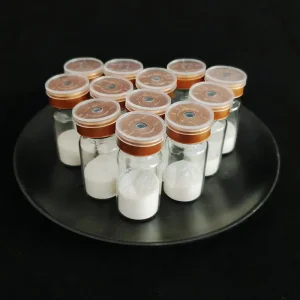
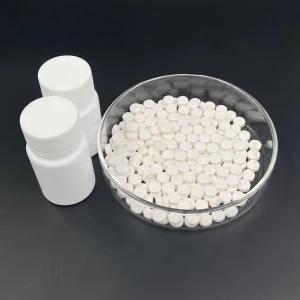
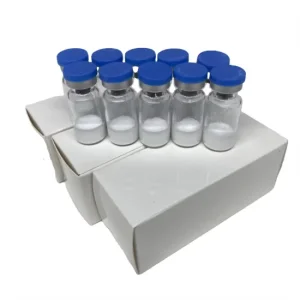
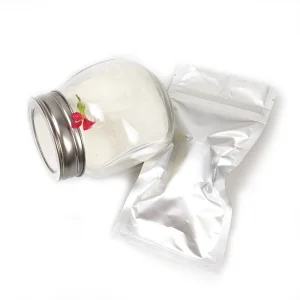
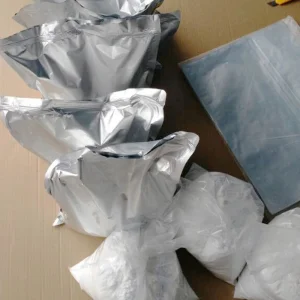
CAS 76-43-7 powders are packaged under nitrogen-purged double food-grade polyethylene liners enclosed inside heavy-duty aluminum barrier foil drums. For international delivery, logistics teams provide dual-channel air cargo express with continuous data logger temperature tracing to guarantee product stability through transit.
A rigorous compliance roadmap providing pharmaceutical buyers and research laboratory procurement managers complete transparency and risk mitigation.
International Controlled Substance Status and Trade Formalities: Because Fluoxymesterone exhibits potent anabolic-androgenic potency, its cross-border circulation is strictly categorized under international and national chemical management frameworks:
Addressing the fundamental technical, chemical storage, quality release, and logistical concerns of analytical buyers and procurement managers.
Release testing is conducted using reverse-phase HPLC equipped with a C18 column (typically 250 mm × 4.6 mm, 5 µm). The mobile phase uses an isocratic or stepped acetonitrile/water mixture (typically 45:55 v/v) at a flow rate of 1.0 mL/min with UV detection calibrated precisely at 240 nm. Purity must exceed 99.0% with no individual related impurity exceeding 0.20%.
Under stress conditions (elevated temperatures or extreme acidic/basic pH), the primary degradation pathway involves dehydration of the 11β-hydroxyl group, yielding the 9(11)-dehydro analog, or oxidation into 11-ketofluoxymesterone. CAS 76-43-7 must be stored protected from light, sealed tightly under nitrogen, at controlled temperatures between 2°C and 8°C or room temperature (below 25°C) in dry conditions.
Yes. In addition to primary proton (1H) and carbon (13C) NMR characterization, Fluorine-19 NMR (19F-NMR) spectral analysis is standard to confirm the exact stereochemical substitution and absence of regioisomeric 11α-fluoro impurities. Spectra are delivered alongside raw FID files upon commercial release.
Logistics specialists generate complete export declarations, verified dangerous goods assessments (if applicable), proforma invoices reflecting true chemical identification, and explicit certificates of origin. Clients are guided through the precise HS tariff definitions to ensure rapid customs transit without unexpected border holds.
Under unopened factory packaging specifications (sealed double-layer PE within vacuum-sealed foil barriers), the validated re-test period is 36 months from the date of final synthesis. Real-time and accelerated stability studies run continuously in accordance with ICH Q1A guidelines.
We supply research and analytical laboratories starting from 10g, 50g, and 100g bottled units with complete reference analytical documentation. For formulation manufacturers and downstream intermediate synthesis, bulk batch sizes from 1kg, 5kg, up to multi-hundred kilogram fiber drum volumes are supported with dedicated batch reservations.
Browse our integrated chemical supply lines including tissue repair peptides, selective estrogen receptor modulators, and endocrine research compounds.