Primary catalog items synthesized under ISO-9001/cGMP-aligned automation, fully tested with HPLC and electrospray mass spectrometry (ESI-MS) for immediate procurement release.
A rigorous analytical assessment of the nonapeptide H-Trp-Ala-Gly-Gly-Asp-Ala-Ser-Gly-Glu-OH, detailing structural conformation, slow-wave sleep synchronization, and neuromodulatory cascades.
Delta Sleep-Inducing Peptide is a linear nonapeptide with the designated primary amino acid sequence: Trp-Ala-Gly-Gly-Asp-Ala-Ser-Gly-Glu (WAGGDASGE). The terminal tryptophan residue confers significant UV absorption properties at 280 nm, while aspartic acid and glutamic acid provide critical acidic functional side-chains that modulate ionic bonding and receptor-docking dynamics.
Discovered originally in rabbit cerebral venous blood during low-frequency electrical stimulation of the thalamus, DSIP crosses the blood-brain barrier through saturable transport systems. It induces pronounced spindle and delta-wave EEG oscillations (0.5–4 Hz), facilitating restorative non-rapid eye movement (NREM) sleep stages without altering natural physiological sleep architecture or inducing hypnotic dependency.
Beyond somnogenic control, DSIP acts as an endogenous stress-limiting neurohormone. It down-regulates corticotropin-releasing factor (CRF) production in the paraventricular nucleus, curtails acute ACTH secretion, and normalizes serum corticosterone/cortisol levels under prolonged autonomic stress, demonstrating potent neuroprotective and anti-convulsant actions.
| Analytical Parameter | Validation Technique | Manufacturer Specification | Observed Factory Batch Output |
|---|---|---|---|
| Identity Confirmation | LC-MS Electrospray Ionization | Theoretical Molecular Mass: 848.81 ± 1 Da | [M+H]+ = 849.8 Da, [M+Na]+ = 871.8 Da |
| Chromatographic Purity | RP-HPLC (C18 Column, Gradient System) | ≥ 98.00% (Area normalization) | 99.35% (Retention time = 14.28 min) |
| Peptide Net Content | Quantitative Amino Acid Analysis (AAA) | ≥ 80.0% (Balance counter-ions & H2O) | 84.7% Net Active Peptide Content |
| Counter-Ion Profiling | Ion-Exchange Chromatography / HPLC | Acetate (Standard) ≤ 12.0% | TFA < 0.1% | Acetate: 7.2%, Residual TFA: Non-Detectable |
| Moisture Content (Karl Fischer) | Coulometric Karl Fischer Titration | ≤ 7.00% w/w | 3.84% w/w Lyophilized Cake |
| Residual Solvents | Headspace Gas Chromatography (GC-HS) | Acetonitrile < 410 ppm, DMF < 880 ppm | Complies with USP <467> / ICH Q3C |
A comprehensive manufacturing workflow illustrating scalable solid-phase peptide synthesis (SPPS), continuous micro-flow coupling, preparative chromatography, and lyophilization thermodynamics.
Synthesis initiates utilizing 2-Chlorotrityl Chloride Resin or Wang Resin pre-loaded with Fmoc-Glu(OtBu)-OH. Fmoc-deprotection is performed using 20% piperidine in dimethylformamide (DMF) with spectrophotometric UV tracking of dibenzofulvene-piperidine adducts to ensure >99.5% deprotection completeness per cycle.
Sequential elongation with protected amino acids (Fmoc-Gly-OH, Fmoc-Ser(tBu)-OH, Fmoc-Ala-OH, Fmoc-Asp(OtBu)-OH, and Fmoc-Trp(Boc)-OH) executed using HBTU/HOBt or DIC/Oxyma Pure activation systems. Real-time Kaiser ninhydrin and chloranil assays guarantee zero truncation or deletion sequence accumulation.
Global acidolytic deprotection and resin cleavage performed with Trifluoroacetic acid (TFA) / Triisopropylsilane (TIS) / Water / 1,2-Ethanedithiol (EDT) cocktails (92.5:2.5:2.5:2.5 v/v). EDT/TIS mixtures rigorously scavenge reactive carbocations, preventing electrophilic adduction at the Trp indolyl ring.
Preparative reverse-phase HPLC purification is executed on dynamic axial compression (DAC) columns packed with 10μm spherical C18 silica gel. Secondary elution utilizes dilute ammonium acetate (NH4OAc) buffers to convert the crude TFA-salt form to research-grade acetate salts with residual TFA < 0.1%.
Emerging academic, industrial, and clinical investigations targeting sleep-wake regulation, central nervous system rehabilitation, autonomic stability, and metabolic preservation.
Investigated in sleep laboratory protocols for phase-advancing circadian rhythm disruptions induced by rapid trans-meridian travel, rotating night shifts, and primary chronic insomnia. Unlike conventional GABAergic hypnotics, DSIP does not suppress rapid eye movement (REM) sleep or cause daytime rebound somnolence.
Models of transient cerebral ischemia and reperfusion injury indicate that DSIP attenuates lipid peroxidation, restores mitochondrial membrane potential, and limits excessive extracellular glutamate accumulation. It stabilizes blood-brain barrier permeability, thereby dampening ischemic cerebral edema formation.
Clinical exploratory trials in European centers have evaluated DSIP infusion protocols for mitigating acute physiological withdrawal syndromes associated with alcohol, benzodiazepines, and opioids. It significantly reduces vegetative tremors, paroxysmal sweating, tachycardia, and psychological agitation.
Vertical integration from raw petrochemical precursors to automated multi-kilogram solid-phase reactors delivers exceptional economic scalability and supply-chain continuity.
Our domestic synthesis infrastructure is backed by continuous, on-site synthesis of chiral protected amino acids (Fmoc-Trp(Boc)-OH, Fmoc-Asp(OtBu)-OH), coupling additives (Oxyma, HOAt), and high-swelling cross-linked polystyrene resins. We are completely immune to trans-oceanic component shortages or raw chemical price spikes.
Our manufacturing centers house ISO Class 5 laminar flow filling enclosures inside certified ISO Class 7 cleanrooms. Fully automated lyophilization chambers handle up to 50,000 vials per run, with multi-sensor shelf temperature and pirani vacuum monitoring ensuring perfect cake structure without collapsing.
Direct supply agreements with express cargo carriers guarantee real-time cold-chain air freight (-20°C validated gel packs or dry-ice insulated containers). Custom clearance documentation, dual-language HS declarations, and local fulfillment hubs in North America and Europe streamline rapid delivery.
Evaluating worldwide market demand, contract research organization (CRO) integration, quality qualification, and risk mitigation strategies in peptide procurement.
With global neuro-peptide market valuations exceeding $2.4 billion, biopharmaceutical demand for non-addictive, peptide-based sleep modulators and circadian regulatory molecules has escalated. Academic institutions and CDMOs rely on high-purity nonapeptide materials to establish reproducible animal trials.
Market studies show uncertified suppliers distribute peptides with up to 35% truncated peptide fragments, unreacted protecting groups, and severe bacterial endotoxin contamination. Miaoou enforces 100% batch-specific Certificate of Analysis documentation containing full HPLC and ESI-MS chromatograms.
Products supplied under Harmonized System Code 2937.19.00 strictly comply with research chemical export declarations and SDS classifications according to OSHA HCS (29 CFR 1910.1200) and European REACH Regulation (EC) No 1907/2006 for safe global transit and customs transparency.
Technical, analytical, and supply chain answers covering purity determination, salt modifications, reconstitution, and worldwide delivery assurances.
All commercial research-grade DSIP batches are supplied at ≥ 98.0% purity (typically averaging 99.1% - 99.5%) verified via analytical Reverse-Phase High-Performance Liquid Chromatography (RP-HPLC) with a dual-wavelength UV detector (214 nm and 280 nm). Molecular weight is confirmed by electrospray ionization mass spectrometry (ESI-MS) to precisely match 848.81 g/mol.
We supply DSIP primarily in an acetate salt form, which is preferred for biological research and mammalian cell assays due to lower cytotoxicity compared to standard trifluoroacetic acid (TFA) salts. TFA-salt DSIP can also be provided on request for specific analytical chromatography baselines.
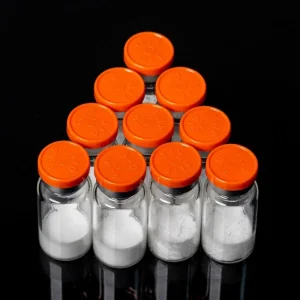
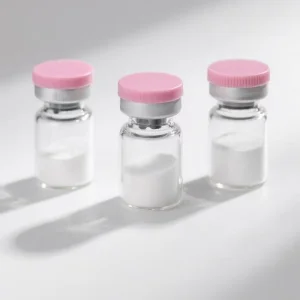
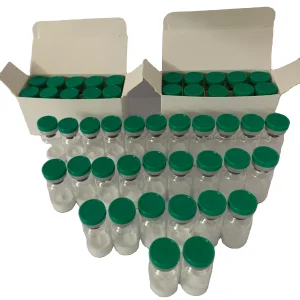
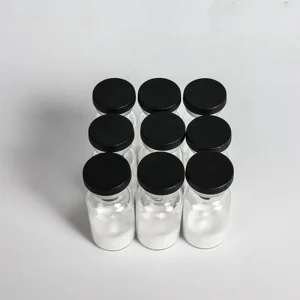
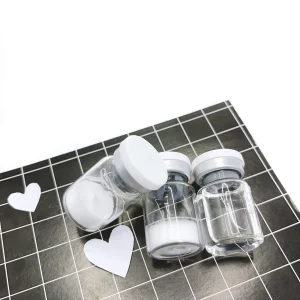
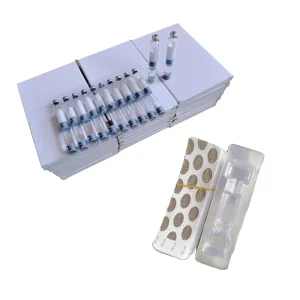
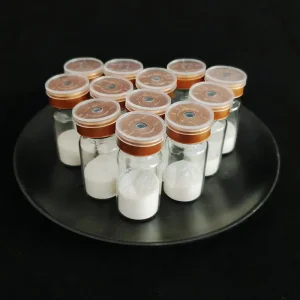
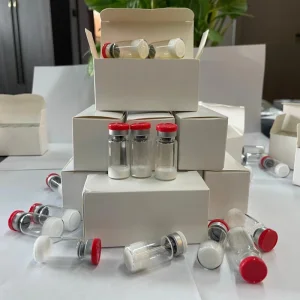
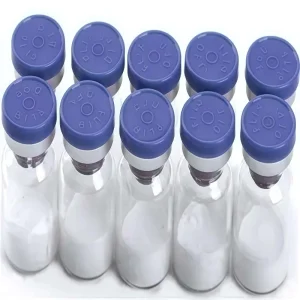
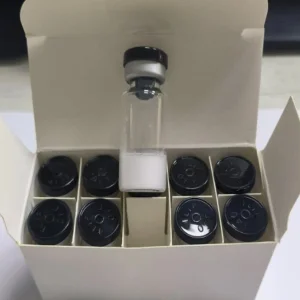
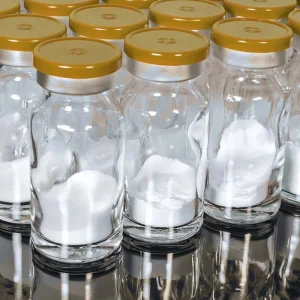
DSIP is formulated as a lyophilized white crystalline cake packaged in borosilicate glass vials (2mg, 5mg, or 10mg) with butyl rubber stoppers and aluminum flip-off seals under an inert nitrogen vacuum. This prevents oxidative degradation of the terminal tryptophan residue during ambient international air transport.
Lyophilized powder remains stable at room temperature for up to 30 days, but long-term storage is specified at -20°C desiccated. Reconstitution should be performed using sterile bacteriostatic water or sterile PBS buffer (pH 7.2–7.4). Once reconstituted, aliquots should be stored at -80°C to avoid repetitive freeze-thaw cycles.
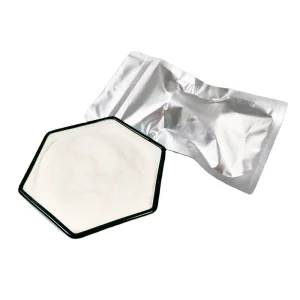
Yes. In addition to standard 2mg/5mg/10mg research vials, we offer industrial-scale bulk peptide powder in amber glass bottles or heat-sealed multi-layer foil pouches from 100g to multi-kilogram batches, fully supported by customized labeling, barcoding, and client-specific COA generation.
Our export department provides comprehensive documentation, including commercial invoices, packing lists, Material Safety Data Sheets (MSDS/SDS), Certificate of Origin, and technical declarations under HS code 29371900. We maintain dedicated DDP shipping options with guaranteed customs clearance to over 80 countries.
Manufactured under the same strict analytical quality control parameters, available for bulk export and laboratory procurement worldwide.
Our technical engineering team provides immediate documentation packages within 24 business hours, including raw HPLC data files, mass spectrometry traces, custom synthesis quotes, and verified international door-to-door cold-chain logistics schedules.

