Direct supply portfolio from certified Chinese cleanroom synthesis lines. Each batch is qualified via validated Analytical HPLC and High-Resolution Mass Spectrometry (HRMS) documentation.
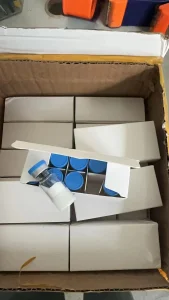
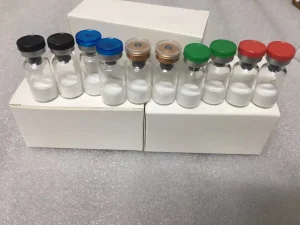
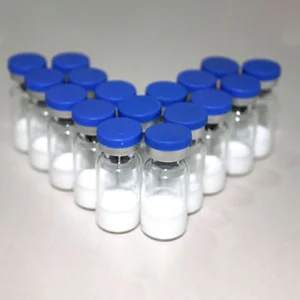
Understanding the synthesis chemistry, pharmacological efficacy, impurity controls, and international regulatory shifts shaping nucleoside analog supply chains.
GS-441524, chemically designated as (2R,3R,4S,5R)-2-(4-aminopyrrolo[2,1-f][1,2,4]triazin-7-yl)-3,4-dihydroxy-5-(hydroxymethyl)tetrahydrofuran-2-carbonitrile, represents a breakthrough 1'-substituted small-molecule nucleoside analogue. Originally synthesized as the parent nucleoside precursor to the prodrug Remdesivir (GS-5734), GS-441524 has emerged as the definitive therapeutic reference molecule for coronaviral RNA-dependent RNA polymerase (RdRp) inhibition, most notably resolving Feline Infectious Peritonitis (FIP)—historically a universally fatal immune-mediated vasculitis in domestic felids.
Unlike remdesivir, which utilizes a complex ProTide phosphoramidate moiety designed to bypass the initial intracellular monophosphorylation bottleneck in human hepatocytes, GS-441524 relies on endogenous cellular nucleoside kinases (principally adenosine kinase) to undergo sequential intracellular triphosphorylation into its active triphosphate form (GS-441524-TP). In feline physiological systems, GS-441524 demonstrates extraordinarily superior plasma half-life, negligible hepatotoxicity relative to remdesivir, and high intracellular bioavailability without triggering the acute microvascular tissue irritation often caused by phenolic prodrug cleavage byproducts.
The structural placement of the 1'-nitrile (-C≡N) group exerts critical steric hindrance inside the active catalytic site of the viral RNA-dependent RNA polymerase (RdRp, non-structural protein 12 / nsp12). Upon incorporation of GS-441524-TP into the nascent RNA chain at position i, delayed chain termination occurs predictably at position i+3 to i+5.
GS-441524 exists in distinct polymorphic and solvated crystal habits (Forms I, II, and amorphous state). For international formulators, polymorphic identity is critical to avoid unpredictable precipitation in aqueous or cosolvent injection matrices.
Procurement teams sourcing GS-441524 from Chinese industrial clusters broadly represent three core sectors with distinct analytical and documentation expectations:
Achieving optical purity at the C-1' stereocenter: how cutting-edge Chinese manufacturers manage organometallic coupling, cyanation stereoselectivity, and catalytic impurity purging.
Condensation of pyrrolo[2,1-f][1,2,4]triazin-4-amine core and protected D-ribonolactone (2,3,5-tri-O-benzyl-D-ribonolactone). Verification of optical purity [α]D before initiation.
Halogen-lithium exchange at -78°C via n-butyllithium or Turbo-Grignard (iPrMgCl·LiCl) ensuring quantitative anomeric addition while suppressing homocoupling impurities.
Lewis-acid-mediated (TMSOTf or BF3·OEt2) cyanation using trimethylsilyl cyanide (TMSCN) at sub-zero temperatures, enforcing beta-anomer stereoselectivity (>98:2 β:α ratio).
Deprotection of benzyl ethers via boron trichloride (BCl3) or hydrogenolysis over Pd/C. In-line pH regulation prevents spontaneous lactone rearrangement.
Multi-stage solvent/antisolvent crystallization (ethanol/water or isopropanol systems) yielding Form I needle crystals with low bulk density and controlled particulate size.
| Analytical Parameter | USP/EP Aligned Standard | Typical Chinese Tier-1 Factory Results | Clinical / Biological Significance |
|---|---|---|---|
| HPLC Chromatographic Purity | ≥ 99.0% (area under curve) | 99.60% – 99.85% (UV 254 nm / 246 nm) | Guarantees minimal therapeutic dose variance; eliminates inactive anomers. |
| Alpha-Anomer Impurity (C-1') | ≤ 0.20% | < 0.05% (Below limit of quantification) | Alpha stereoisomers fail to bind RdRp catalytic clefts, causing dead-weight batch dosing. |
| Heavy Metals (ICP-MS) | ≤ 10 ppm total (ICH Q3D) | < 2 ppm (Pd < 0.5 ppm, As < 0.1 ppm, Pb < 0.1 ppm) | Prevents nephrotoxicity and tissue accumulation during extended 84-day treatment protocols. |
| Residual Solvents (GC-HS) | ICH Q3C Class 2 & Class 3 limits | DCM < 50 ppm, THF < 100 ppm, EtOH < 1500 ppm | Mitigates neurotoxic solvent exposure and avoids injection site irritation or ulceration. |
| Bacterial Endotoxin (LAL) | ≤ 1.0 EU/mg | < 0.2 EU/mg (Validated Cleanroom Lyophilization) | Mandatory for parenteral subcutaneous injection solutions to prevent pyrogenic shock. |
| Residual Boron & Silicon | Boron < 10 ppm; Si < 20 ppm | Boron < 2 ppm; Silicon < 5 ppm | Assures complete hydrolysis and clearing of BCl3 and TMSCN cleavage residues. |
How China's domestic upstream petrochemical feedstocks, automated continuous flow synthesis, and strict environmental compliance secure uninterrupted global supply.
Western and regional European secondary manufacturers often suffer chronic supply crunches because they rely on imported basic precursors. In contrast, Chinese industrial clusters (concentrated in Jiangsu, Shandong, Zhejiang, and Hebei) source primary building blocks—such as D-ribose, pyrrolotriazine heterocycles, and trimethylsilyl reagents—directly from integrated domestic synthesis hubs.
Traditional batch reaction vessels struggle with extreme exotherms during organolithium halogen-metal exchange (-78°C). Leading Chinese manufacturers have transitioned commercial-scale GS-441524 production to micro-channel continuous flow reactors.
Environmental disruptions historically troubled early fine chemical suppliers. Today's Tier-1 Chinese manufacturers operate in state-designated chemical parks equipped with continuous online emissions monitoring, advanced catalytic oxidizers, and zero-liquid-discharge (ZLD) wastewater facilities.
From low-solubility aqueous hurdles to cutting-edge cyclodextrin complexes and enteric micro-tablets: how global formulators engineer bioavailable GS-441524 therapies.
GS-441524 demonstrates poor native solubility in pure neutral water (~1.1 mg/mL at pH 7.2). Developing stable parenteral formulations at clinical concentrations (15 mg/mL to 20 mg/mL) requires precise solubility engineering:
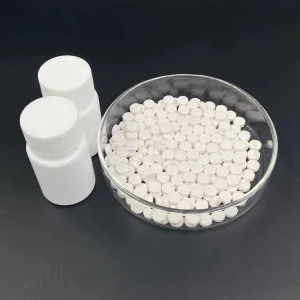
Long-term 84-day subcutaneous protocols frequently cause injection-site granulomas, sterile abscesses, and behavioral resistance. Modern veterinary medicine increasingly adopts oral solid dosage forms:
The standard treatment regimen established in veterinary literature involves a continuous daily administration period of 84 days (12 weeks). The therapeutic dose varies substantially based on disease pathology:
A rigorous review of US FDA GFI #256, UK VMD Cascade exemptions, Australian APVMA authorizations, and essential supplier audit criteria.
Under FDA Guidance for Industry (GFI) #256, animal drug compounding from bulk active pharmaceutical ingredients is legally permitted under strictly circumscribed conditions where no FDA-approved veterinary alternative exists. Licensed 503A state-licensed pharmacies and 503B registered outsourcing facilities require full supplier pedigree, verified Certificates of Analysis (COA), and identity verification before compounding veterinary emergency preparations.
In the UK, the Veterinary Medicines Directorate (VMD) permits legally prescribed compounding of GS-441524 under the 'Prescribing Cascade', authorizing veterinarians to prescribe specially formulated medicines through authorized specials manufacturers (e.g., BOVA Specials). In continental Europe (under EU Regulation 2019/6), imported bulk API must meet strict veterinary pharmaceutical monograph standards and conform with national veterinary imports licensing.
The Australian Pesticides and Veterinary Medicines Authority (APVMA) allows registered compounding pharmacies to source active chemical ingredients under veterinarian prescription. Overseas buyers from Japan, South Korea, and South America rely directly on export declarations and audited batch analytical packages provided by verified Chinese manufacturers.
Critical clarifications on analytical chemistry, batch release criteria, packaging, and commercial freight protocols for institutional buyers.
Every commercial batch produced by leading Chinese facilities is standardized to an HPLC purity of ≥99.0%, with standard lots achieving between 99.5% and 99.85%. Verification is executed using reverse-phase HPLC (C18 stationary phase, water/acetonitrile gradient containing 0.1% trifluoroacetic acid or ammonium formate buffer) coupled with dual-wavelength UV detection (246 nm and 254 nm). Full analytical reports include raw retention times, integration tables, and high-resolution MS/MS confirmation.
During the C-1' cyanation step, trace alpha-anomer byproduct can form if reaction temperatures or Lewis acid catalysts fluctuate. We employ chiral HPLC methodologies (Chiralpak IA or equivalent polysaccharide phases) and 500 MHz 1H-NMR coupling constant analysis (evaluating the H-1' to H-2' dihedral angles) to verify that the alpha-anomer is strictly suppressed below 0.10% (well within ICH Q3A qualification thresholds).
Yes. A comprehensive Certificate of Analysis (COA) accompanied by Headspace Gas Chromatography (GC-HS) and Inductively Coupled Plasma Mass Spectrometry (ICP-MS) reports accompanies each shipment. This documents residual solvents conforming to ICH Q3C limits (specifically checking dichloromethane, tetrahydrofuran, toluene, ethanol, and methanol) and quantifies residual catalyst elements (palladium, ruthenium, boron) down to parts-per-billion (ppb) detection levels.
GS-441524 raw API powder demonstrates outstanding solid-state thermodynamic stability when protected from moisture and direct ultraviolet radiation. In its anhydrous crystalline form (Form I), stability data generated under ICH Q1A(R2) conditions confirm a re-test period of 36 months when stored in sealed light-resistant pharmaceutical containers at controlled ambient temperature (2°C to 8°C for prolonged commercial storage, or -20°C for ultra-long-term reference standards).
Yes. We offer specialized particle size engineering, including jet-milled micronized powder (D50 < 5 μm, D90 < 10 μm) specifically tailored for oral tablet direct-compression or capsule filling. Furthermore, for licensed clients formulating parenteral injections, dedicated cleanroom-crystallized, low-endotoxin grades (<0.2 EU/mg) are available with bioburden validation.
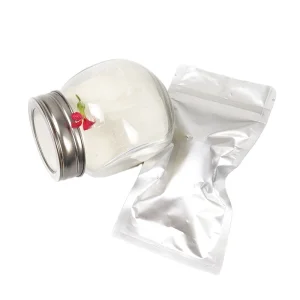
To eliminate atmospheric moisture absorption and photo-oxidation during transit, standard packing utilizes double-layer food-grade pharmaceutical polyethylene bags inside vacuum-sealed aluminum moisture-barrier foil pouches. Secondary packaging incorporates rugged fiber drums (1 kg, 5 kg, 10 kg, and 25 kg configurations) equipped with tamper-evident security seals, desiccant sachets, and continuous digital temperature dataloggers on request.
We actively encourage pre-shipment third-party verification. Procurement clients may request independent composite sample draws tested by accredited laboratories (such as SGS, Eurofins, or specialized university NMR centers). Analytical release criteria can be cross-benchmarked against client-supplied reference standards or pharmacopeial monographs.
GS-441524 is the central heterocyclic nucleoside precursor required to synthesize remdesivir. During the COVID-19 pandemic, Chinese chemical facilities scaled up 1'-cyano ribosylation and pyrrolotriazine manufacturing to hundreds of metric tons. This extensive capital infrastructure and chemical process optimization directly benefit current GS-441524 buyers through superior reaction yields, unparalleled enantiomeric control, and rock-bottom manufacturing cost structures.
Shipments are dispatched with full export documentation: commercial invoices, packing lists, comprehensive Material Safety Data Sheets (MSDS / SDS in GHS format), certified COAs, and non-dangerous goods transport declarations. Shipments typically clear under Harmonized System (HS) Code 2934.99 or 2933.59, ensuring swift clearance through US CBP, European Union customs, and Asian transit ports.
Standard catalog MOQs start at 50 grams for research evaluation and pilot stability trials, with commercial tiered volume pricing at 1 kg, 5 kg, 25 kg, and 100+ kg lots. Catalog quantities are maintained in ready-to-ship sterile inventory (dispatched within 24 to 48 hours via secure international couriers), while custom metric-scale production runs operate on scheduled 2-to-3 week synthesis cycles.
Complementary research biochemicals, coenzymes, and metabolic modulators produced under synchronized ISO and GMP manufacturing frameworks.
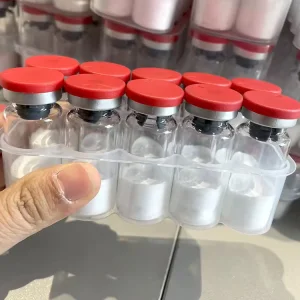
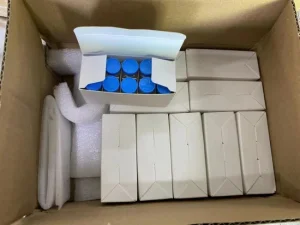
Partner directly with China's leading scale chemical synthesis plant. Connect with our dedicated export regulatory compliance team to request authentic batch Certificates of Analysis (COA), HPLC chromatograms, NMR spectra, and multi-tiered commercial contract pricing.

