Batch-verified reference standards and high-demand biochemical precursors synthesized for professional laboratory research and custom formulation requirements.
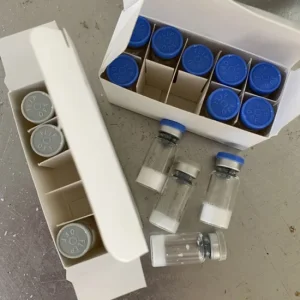
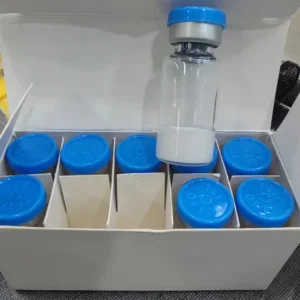
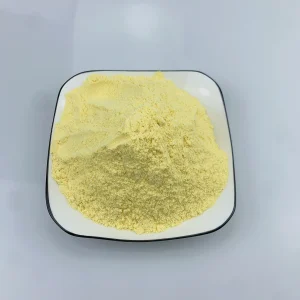
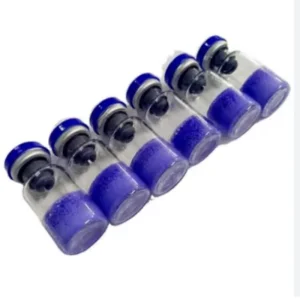
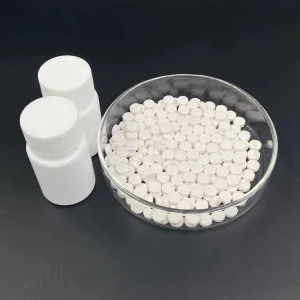
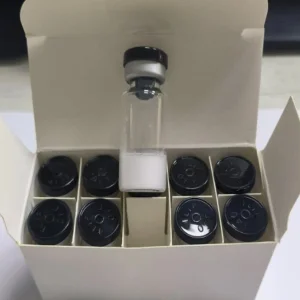
A rigorous scientific breakdown of nuclear receptor agonism, structural characteristics, and synthetic stability profiles for pharmaceutical and clinical research institutions.
GW-501516 (Cardarine, CAS 317318-70-0) is a high-affinity, non-steroidal nuclear hormone receptor agonist targeting peroxisome proliferator-activated receptor delta (PPARδ). It exhibits an EC50 of approximately 1.2 nM with >1000-fold functional selectivity over PPARα and PPARγ sub-types. Activation triggers recruitment of PGC-1α co-activators, upregulating fatty acid transport and beta-oxidation enzymes (CPT-1, PDK4) within skeletal and cardiac tissues.
The molecular formula of GW-501516 is C21H18F3NO3S2 with a molecular weight of 453.50 g/mol. Synthetically characterized as {4-[({4-methyl-2-[4-(trifluoromethyl)phenyl]-1,3-thiazol-5-yl}methyl)sulfanyl]-2-methylphenoxy}acetic acid, the compound contains a robust phenoxyacetic acid core linked via a thioether bridge to a trifluoromethyl-substituted thiazole ring, providing thermodynamic and oxidative resistance under dry inert storage.
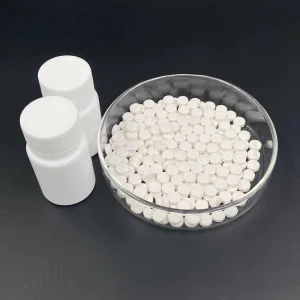
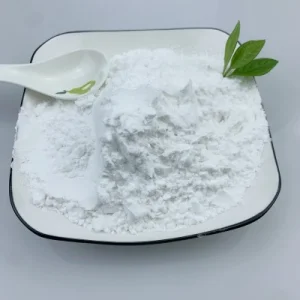
Cardarine presents as a high-density, off-white to pure white crystalline powder with a sharp, well-defined melting point between 134.5°C and 136.0°C. Insoluble in aqueous media (<0.01 mg/mL at 25°C), it displays exceptional solubility in analytical dimethyl sulfoxide (DMSO ≥ 25 mg/mL) and high-proof anhydrous ethanol (≥ 5 mg/mL with gentle warming), parameters critical for in vitro cellular bioassays and analytical reconstitution protocols.
| Analytical Parameter | Documented Factory Specification | Empirical Test Method | Quality Acceptance Level |
|---|---|---|---|
| Chemical Identification | 1H-NMR, 13C-NMR & High-Resolution Mass Spec (ESI) | Bruker 400 MHz / Q-TOF MS | Conforms to Reference Standard |
| Chromatographic Purity (HPLC) | ≥ 99.0% (Typical synthesis batches: 99.4% – 99.8%) | RP-C18 (4.6 x 250mm, 5μm) @ 254nm | Passed Batch Acceptance |
| Melting Range | 134.0°C to 136.5°C (Narrow transition < 1.5°C) | Automated Capillary Melting Apparatus | Conforms (135.2°C) |
| Loss on Drying (Volatile Solvents) | ≤ 0.50% w/w (Vacuum oven dried at 60°C under 0.08 MPa) | Gravimetric Method (USP <731>) | 0.24% Conforming |
| Heavy Metals Residue | Pb ≤ 1.0 ppm, As ≤ 0.5 ppm, Cd ≤ 0.2 ppm, Hg ≤ 0.1 ppm | ICP-MS Inductively Coupled Plasma | < 0.1 ppm Aggregate |
| Residual Solvents (ICH Q3C) | Methanol < 3000 ppm, Dichloromethane < 600 ppm, EtOAc < 5000 ppm | Headspace Gas Chromatography (GC-FID) | Passes Class 2/3 Limits |
Regulatory & Research Compliance Directive: Material supplied under CAS 317318-70-0 is dedicated exclusively to preclinical laboratory research, cell-line profiling, in vitro receptor screening, and analytical standard preparation by qualified institutions. It is not licensed for human consumption, direct cosmetic compounding, or in vivo veterinary application without formal regulatory marketing authorization.
Step-by-step chemical routing demonstrating process optimization, side-chain condensation control, and crystallization kinetics within our Hebei fine-chemical facilities.
Condensation of 4-(trifluoromethyl)thiobenzamide with ethyl 2-chloroacetoacetate under controlled thermal reflux, yielding ethyl 4-methyl-2-[4-(trifluoromethyl)phenyl]-1,3-thiazole-5-carboxylate with >96% regioselective purity.
Controlled reduction of the ester group using Lithium Aluminum Hydride (LAH) or Sodium Bis(2-methoxyethoxy)aluminum Hydride in anhydrous THF at -5°C to 0°C, yielding the primary thiazol-5-yl methanol intermediate without defluorination.
Chlorination via thionyl chloride followed by nucleophilic displacement using 2-methyl-4-sulfanylphenol in the presence of cesium carbonate, forming the thioether covalent linkage under nitrogen atmosphere.
Williamson ether synthesis using ethyl bromoacetate followed by alkaline hydrolysis (NaOH in EtOH/H2O) to furnish the carboxylic acid salt, followed by controlled pH acidification to precipitate raw GW-501516 free acid.
Dissolution in food-grade ethyl acetate, activated carbon microfiltration to trap metallic colloids, and anti-solvent crystallization via controlled heptane dosing to produce uniform, high-density crystalline Cardarine.
Addressing the logistical, contractual, and risk-mitigation demands of international pharmaceutical distributors, contract research organizations (CROs), and analytical standard suppliers.
Preclinical discovery pipelines demand uncompromising reproducibility. Slight solvent drift or unreacted thioester impurities can distort in vitro receptor assays. Our batch synthesis utilizes validated master formulas with locked process parameters, ensuring identical retention profiles, molecular mass distributions, and physical dissolution rates across multiple delivery cycles.
For industrial partners requiring 10kg to 500kg wholesale packaging, we deploy continuous industrial-scale vacuum tray drying and automated inert-gas hermetic packaging. Bulk drums feature secondary double-lined high-density polyethylene (HDPE) barriers purged with 99.999% food-grade nitrogen to eradicate oxidative dimerization during maritime or air cargo transport.
Global regulatory enforcement varies significantly across North America (US FDA / DEA chemical screening), Europe (REACH registration and REACH Annex XVII checks), and Asia-Pacific. We provide comprehensive harmonized tariff code classifications (HS Code: 2934.10.9000), validated material safety data sheets (MSDS/SDS under GHS Rev.9), and complete declarations of non-infringement.
To eliminate cross-border clearance friction, our export division coordinates with dedicated global dangerous goods and chemical freight forwarders. We offer Delivered Duty Paid (DDP) logistics into the United States, United Kingdom, European Union, Australia, and ASEAN territories, handling import VAT declarations, customs broker engagement, and port-to-door delivery tracking seamlessly.
Every milligram delivered is backed by transparent spectroscopic and chromatographic documentation. We eliminate supplier opacity through absolute analytical disclosure.
Our analytical HPLC assays utilize high-resolution Agilent 1260 Infinity II systems equipped with quaternary pumps and diode array detectors (DAD). The stationary phase leverages an Eclipse Plus C18 column (4.6 mm ID × 250 mm, 5 µm particle diameter). A calibrated gradient elution using 0.1% trifluoroacetic acid in water and acetonitrile achieves baseline separation of all synthetic precursors, delivering quantified purity metrics above 99.2% with zero unquantifiable peaks.
Structural fingerprint verification is confirmed via 400 MHz / 500 MHz Bruker Avance Fourier Transform Nuclear Magnetic Resonance spectrometers dissolved in deuterated DMSO-d6. All chemical shifts (δ in ppm) correlate precisely with Cardarine's structural topology: characteristic singlets confirming the trifluoromethylphenyl protons, the thiazole-methyl group at δ 2.45 ppm, the methylene bridge at δ 4.28 ppm, and the phenoxyacetic carboxylic acid proton at δ 12.98 ppm.
Liquid Chromatography-Mass Spectrometry (LC-MS) operating in electrospray ionization positive mode (ESI+) validates the exact pseudo-molecular ion [M+H]+ at m/z 454.12, matching the calculated monoisotopic mass of Cardarine within 0.002 Da. In parallel, elemental impurity profiling is performed via Inductively Coupled Plasma Mass Spectrometry (ICP-MS), validating total heavy metal loads below 5 parts per million (ppm), strictly aligning with USP <232> and EP 5.20 standards.
Pioneering safer, scalable, and environmentally benign manufacturing protocols for halogenated heterocyclic active compounds.
Traditional batch synthesis of thiazole intermediates presents thermal runaway risks during large-scale cyclization and chlorination. Our engineering team is transitioning production pipelines to continuous microfluidic reactors. This micro-channel technology enables ultra-precise temperature dissipation (±0.2°C), eliminates hot-spots, limits side-product generation to under 0.05%, and guarantees exceptional batch-to-batch uniformity across multi-ton campaigns.
Aligning with modern ESG imperatives and European ECHA environmental mandates, our research laboratory has developed solvent recovery workflows that replace hazardous chlorinated media (such as chloroform and dichloromethane) with renewable 2-Methyltetrahydrofuran (2-MeTHF) and bio-derived ethyl lactate. This transition cuts volatile organic carbon (VOC) emissions by over 62% while improving overall reaction yields by 4.8%.
By integrating Focused Beam Reflectance Measurement (FBRM) and ParticleTrack probes into our industrial recrystallization tanks, our chemical operators monitor crystal nucleation and growth kinetics in real-time. This eliminates polymorphic variance, ensures narrow crystal particle size distribution (D90 < 85 µm), and maximizes bulk powder flowability for downstream research tableting or automated capsule filling.
Empowering procurement managers with the transparency, verification rights, and audit trails required by multinational corporate standards.
Every commercial consignment includes comprehensive batch documentation: Certificate of Analysis (COA), high-resolution raw HPLC chromatograms with peak integration tables, 1H-NMR spectrum recordings, LC-MS mass spectra, and standardized GHS Safety Data Sheets (SDS) in English, German, or French.
We actively endorse blind third-party sample testing by independent Western testing laboratories (e.g., Janoshik Analytical, SGS, Eurofins). If verified independent testing indicates any purity discrepancy against the issued batch COA, we uphold an immediate 100% replacement guarantee or immediate commercial escrow refund.
Direct communication is maintained through dedicated bilingual organic chemistry account executives. Whether solving solubility challenges in complex cell media, requesting custom particle micronization, or requiring export documentation amendments, inquiries are formally addressed within 24 operational hours.
Cardarine powders are packed in multi-barrier heat-sealed pharmaceutical aluminum foil bags with pharmaceutical desiccants and oxygen absorbers. Custom bulk aliquoting (from 50g bottles to 25kg fiber drums) is executed within cleanroom environments meeting ISO Class 7 air quality standards to prevent atmospheric hydration.
Detailed authoritative answers covering chemical purity, analytical verification, international shipping safety, storage stability, and legal procurement guidelines.
We employ a closed-loop synthesis protocol governed by ISO 9001:2015 quality standards. Every reaction batch undergoes rigorous intermediates testing at Stage 2 and Stage 4. Following final saponification, crude Cardarine undergoes multi-stage anti-solvent seeded recrystallization using HPLC-grade ethyl acetate and n-heptane. Purity is determined via Reverse-Phase High-Performance Liquid Chromatography (RP-HPLC) with UV-DAD detection at 254 nm and 280 nm. Integration calculations enforce strict baseline separation, ensuring related substances, unreacted esters, and dimer impurities remain below 0.1% individual and 0.5% aggregate limits.
Every delivery is accompanied by an authoritative Certificate of Analysis (COA) detailing the physical appearance, exact batch number, date of synthesis, melting point range (134.5°C–136.0°C), loss on drying, ash content, and heavy metal concentrations via ICP-MS. Furthermore, procurement clients receive raw analytical spectra including high-resolution HPLC chromatograms showing all integration parameters, 1H-NMR spectra verifying chemical shift structures, and Electrospray Ionization Mass Spectrometry (ESI-MS) charts confirming the molecular mass ion at m/z 454.12.
In its crystalline solid form, GW-501516 exhibits high thermodynamic stability. For long-term storage exceeding 6 months, material should be sealed in original air-tight, light-resistant containers purged with inert gas (nitrogen or argon) and stored at -20°C in a dry environment. Under these conditions, verified stability exceeds 36 months without detectable chromatographic degradation. If maintained at controlled ambient room temperature (15°C to 25°C) shielded from direct sunlight and humidity, the compound remains stable for up to 24 months. Solutions reconstituted in organic solvents (DMSO or ethanol) should be aliquoted and stored at -80°C to prevent solvent auto-oxidation.
We maintain dedicated global logistics channels operating under Incoterms 2020 (CIF, CIP, and DDP). Consignments are exported under Harmonized Tariff Schedule (HS) Code 2934.10.9000, accompanied by accurate commercial declarations, GHS-compliant Safety Data Sheets, and verification of non-controlled chemical status. For client destinations in the United States, European Union, United Kingdom, and Australia, we partner with specialized chemical logistics brokers who provide complete customs clearance, pre-paying duty tariffs and eliminating border retention risks.
Our minimum order quantity for research-grade GW-501516 starts at 10 grams for analytical reference and preliminary screening purposes. Commercial bulk tiers are tiered at 100g, 500g, 1kg, 5kg, and 25kg drums. For catalog quantities up to 10kg, orders are dispatched from bonded climate-controlled warehouse reserves within 24 to 48 hours of payment verification. Custom multi-kilogram production runs or specific micronized particle size requirements typically involve a 10-to-15 working day synthesis and quality certification lead time.
While both molecules are potent PPARδ agonists developed from related thiazolyl-thioether scaffolds, GW-0742 incorporates a fluorine substitution on the central phenoxy ring (creating a fluorophenoxyacetic acid derivative) and distinct methyl substitutions on the thiazole core. GW-0742 exhibits approximately double the binding affinity for PPARδ in specific competitive binding models (EC50 ~1.1 nM) but displays a different metabolic clearance profile and lipophilicity index (logP). Both compounds are synthesized and analytically tested as discrete chemical entities in our facilities.
Broadening institutional access to high-purity biochemical reference standards produced under rigorous analytical oversight and quality release systems.