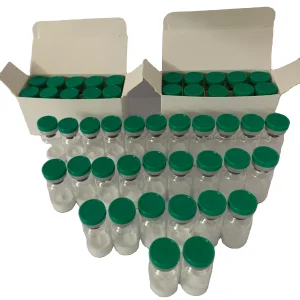
Explore our certified batch-verified research compounds, synthetic peptide reagents, and fine chemical series produced under strict quality management systems.
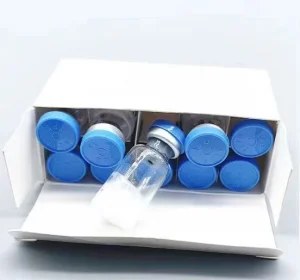
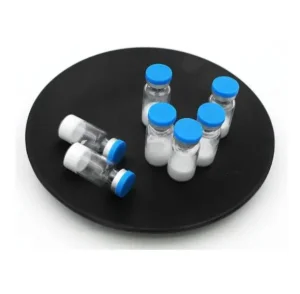
A comprehensive examination of Methaneaminium (methylammonium cations and conjugated salt architectures) across structural chemistry, photovoltaic perovskites, and fine organic synthesis.
Methaneaminium, systematically identified under IUPAC nomenclature as the primary organic cation [CH3NH3]+ (methylammonium), represents one of the most critical structural building blocks in modern materials science, synthetic organic chemistry, and active pharmaceutical ingredient (API) manufacturing. As China cements its position as the premier chemical manufacturing hub of high-performance fine chemicals, Chinese methaneaminium synthesis has evolved from conventional batch reactors to cutting-edge continuous flow synthesis, meeting stringent microelectronic, academic, and biopharmaceutical specifications.
The global demand for methaneaminium derivatives—most notably methaneaminium iodide (MAI, methylammonium iodide), methaneaminium chloride (MACl), methaneaminium bromide (MABr), and conjugate salts like methaneaminium acetate or tetrafluoroborate—has surged dramatically over the past decade. This unprecedented acceleration is fueled by the commercialization race of organic-inorganic metal halide perovskite solar cells (PSCs), third-generation optoelectronics, quantum dot matrices, and key chiral quaternary ammonium coupling reagents used in solid-phase peptide synthesis (SPPS).
Electronic-grade methaneaminium iodide (MAI) exhibiting purity exceeding 99.99% with trace metal contamination under 5 ppm. Engineered for scalable slot-die coating and roll-to-roll tandem cell manufacturing with record-breaking power conversion efficiencies (PCE > 25.5%).
Methaneaminium salts function as essential methylamino donors in alkylation reactions, heterocyclic drug architecture constructions, and active precursor preparation for metabolic regulating agents, neurological molecules, and peptide coupling accelerators.
Monodisperse methaneaminium halides synthesized under moisture-free conditions with strictly controlled halide vacancy defects. Formulated to provide narrow emission bandwidths in light-emitting diodes (PeLEDs), photodetectors, and radiation sensors.
Overcoming production bottlenecks through closed-loop continuous flow microreactors, advanced recrystallization chemistry, and inert gas vacuum sublimation.
In standard laboratory settings, methaneaminium halide salts are typically synthesized by the exothermic neutralization of aqueous methylamine (CH3NH2) with concentrated hydrohalic acids (HI, HBr, or HCl) at ice-bath temperatures. However, industrial-scale deployment creates severe challenges in batch consistency, exothermic hazards, and the accumulation of oxidation by-products (such as triiodide impurities, I3-, and dimethylamine contaminants). In China’s premier manufacturing complexes, these challenges are resolved through four proprietary engineering paradigms:
Micro-channel fluidic mixing ensures instantaneous stoichiometric heat dissipation, eliminating hot-spot decomposition and guaranteeing zero unreacted volatile methylamine residues in the mother liquor.
Multi-stage solvent-antisolvent crystallizations conducted under ultra-pure Argon atmospheres. Diethyl ether and anhydrous absolute ethanol cascades yield uniform needle-like crystals with ultra-low solvent trapping.
Thermal vacuum sublimators operate under <10-3 Pa pressure, subliming solid methaneaminium salts to selectively strip metallic impurities, moisture traces, and non-volatile poly-alkylated amine homologues.
Sealed in quadruple-barrier aluminum-mylar pouches with high-grade desiccant sachets inside ISO-Class 5 cleanroom atmospheric chambers, preventing deliquescence and oxidation during international ocean/air freight.
Demanding chemical applications require verifiable analytical documentation. We bridge Chinese manufacturing excellence with global procurement standards.
Procuring fine chemical reagents and synthetic precursors like methaneaminium from Chinese facilities requires robust compliance with global chemical frameworks, environmental safety charters, and stringent regulatory protocols. Our manufacturing and supply infrastructure complies strictly with the European Chemicals Agency (ECHA) REACH regulations, US TSCA inventories, and global GHS hazard classification criteria.
To eliminate procurement uncertainties, every production batch delivered to domestic and overseas contract research organizations (CROs), universities, semiconductor foundries, and biopharma manufacturers is coupled with full analytical transparency:
High-field Nuclear Magnetic Resonance (400 MHz & 600 MHz) verification confirms the distinct singlet resonance of the methyl protons and triplet splitting of the ammonium group, verifying structural purity and the total absence of dialkylamine or trialkylamine cross-contamination.
Inductively Coupled Plasma Mass Spectrometry profiles trace metallic impurities (Fe, Cu, Zn, Ni, Cr, Pb) down to sub-ppb thresholds. This ensures zero detrimental charge recombination centers when formulating thin-film perovskite absorbers.
Because organic ammonium halides exhibit hygroscopic properties, precision Karl Fischer titration quantifies moisture levels to less than 50 ppm (<0.005%). This guarantees crystal stability, prevents hydration degradation, and preserves precursor solution shelf life.
From clean energy grids to cutting-edge peptide engineering, methaneaminium derivatives provide transformative utility across industrial and scientific sectors.
Acts as the central cation in MAPbI3 and mixed-cation (FAxMA1-xCsyPb(IzBr1-z)3) crystal matrices. Delivers ideal optoelectronic bandgaps (~1.55 eV), high absorption coefficients, and long carrier diffusion lengths exceeding 1 micrometer.
Methaneaminium intermediates serve as structural synthons for uronium and guanidinium-type peptide coupling reagents (such as HATU, HBTU, and TSTU precursors), critical for robust amide bond coupling in automated solid-phase peptide synthesis (SPPS).
Emerging research leverages fluorinated methaneaminium salts and methaneaminium bis(trifluoromethanesulfonyl)imide in next-generation solid-state lithium-ion battery matrices to enhance ionic conductivity and reduce interface resistance.
Single crystals of methaneaminium lead halides grown through inverse temperature crystallization (ITC) show remarkable ionizing radiation detection sensitivity and high photoluminescence quantum yield (PLQY > 90%).
A strategic technological trajectory addressing environmental stability, lead-free composition, and atomic-level crystalline engineering through 2030.
Developing mixed fluorinated-methaneaminium cations (CF3NH3+) and bulkier 2D Ruddlesden-Popper capping layers that preserve cubic crystal symmetries while creating a molecular moisture-repellent hydrophobic shield against environmental degradation.
Synthesizing customized methaneaminium salt matrices coordinated with non-toxic Sn(II), Bi(III), and Sb(III) metal centres. This engineering directly complies with strict RoHS standards while maintaining viable carrier mobility and stability.
Migrating commercial production from batch glass reactors to automated, AI-monitored stainless steel 316L/Hastelloy continuous crystallizers. This transformation drives down carbon footprint and achieves metric-ton supply capabilities with uncompromised batch parity.
Direct technical answers addressing purity thresholds, stability management, synthesis procedures, and export logistics for procurement managers.
Explore additional verified research active ingredients, specialty peptides, and reference building blocks produced under rigorous synthesis controls.