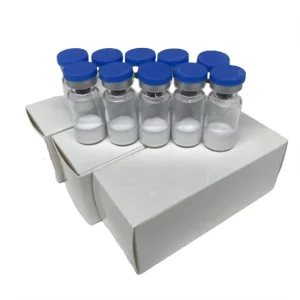
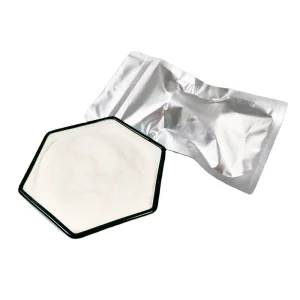
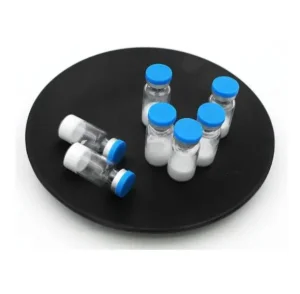
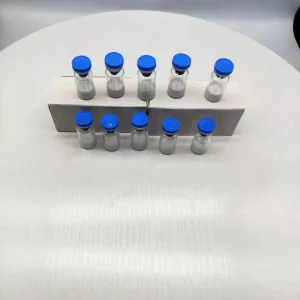
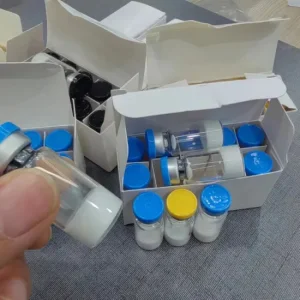
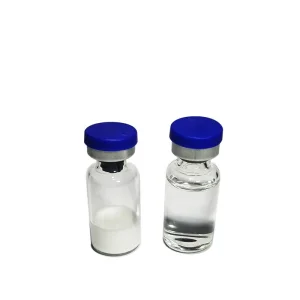
Direct supply from Hebei Miaoou Technology factory infrastructure. Batch analytical release verified via HPLC, GC-MS, and 1H-NMR profiles.
Phenacetine (N-(4-ethoxyphenyl)acetamide, CAS No. 62-44-2) represents one of the foundational acetanilide-derived synthetic molecules in the history of industrial organic chemistry. While historically positioned in the human antipyretic pharmacopeia, decades of metabolic and toxicological evolution have repurposed the chemical’s industrial lifecycle. Today, modern industrial organic synthesis leverages high-purity Phenacetine as a key intermediate in polymer stabilization, high-end organic dye synthesis, reference standard formulation, specialized veterinary therapeutic synthesis, and agrochemical fine matrix design.
As an established China Phenacetine Factory & Product manufacturer, Hebei Miaoou Technology Co., Ltd. (operating advanced synthesis clusters since 2010) has systematically restructured traditional batch manufacturing into modern, continuous micro-channel reactors. This structural shift resolves historical drawbacks associated with classical Williamson ether synthesis routes, eliminating genotoxic side-impurities (such as unreacted 4-aminophenol or chlorinated derivatives), minimizing solvent losses, and establishing an ultra-pure chemical baseline (>99.5% crystalline powder) designed to meet exact commercial and research requirements across tier-one chemical engineering centers globally.
Analyzing shifting international demand patterns, regulatory reclassification, and emerging high-value applications across fine chemicals.
Global production clusters have centralized within advanced chemical development parks in Hebei, Shandong, and Jiangsu. Stringent environmental monitoring and hazardous gas containment have elevated factory barriers to entry, phasing out low-efficiency operations in favor of centralized, automated multi-ton synthesis factories.
International cross-border transactions require exhaustive regulatory documentation. As phenacetine is designated for industrial, research, and non-human pharmaceutical consumption in Western markets, our export process provides standardized dual-use certifications, REACH dossier alignment, and clean end-user validation dossiers.
An emerging high-growth industrial vector is the utilization of para-ethoxy aromatic amides as thermostable antioxidants and photostabilizers in engineering thermoplastics. The electron-donating ethoxy group coupled with the secondary amine stabilizes radical cascade degradation under high thermal stress.
Examining precise chemical pathways where enterprise procurement mandates rigorous specifications for crystalline form, assay, and trace residues.
Metabolic research facilities and forensic laboratories require ultra-pure Phenacetine reference materials to establish baseline calibration curves for CYP1A2 enzyme phenotyping assays. The O-deethylation of phenacetine into acetaminophen remains the gold standard in in-vitro human liver microsome drug-interaction screening.
In targeted non-food animal pharmaceutical veterinary manufacturing outside restricted consumer jurisdictions, specialized derivatized forms are produced under strict veterinary drug master files (vDMF), requiring micro-milled uniform crystal sizes to guarantee uniform dispersion in suspension vehicles.
In azo-dye coupling chemistry, phenacetine derivatives act as chromophore couplers. The ethoxy functional group shifts light absorption spectra into deeper, lightfast wavelengths, making it a critical structural component in specialty synthetic dyes utilized for hydrophobic synthetic fibers.
Modern industrial metallurgy employs phenacetine derivatives within aqueous acidic cleaning baths. The conjugated pi-electron structure binds directly to metallic iron and copper interfaces, generating an adsorbed monomolecular protective layer that inhibits metal dissolution during pickling cycles.
Detailed analytical comparison between legacy batch synthesis techniques and Miaoou continuous flow catalytic processes.
| Analytical Parameter | Legacy Batch Acylation Method | Miaoou Continuous Catalytic Process | Compliance Standard |
|---|---|---|---|
| HPLC Assay (Dry Basis) | 97.5% - 98.8% | ≥ 99.8% (Typical 99.92%) | ISO 9001 / In-House QC |
| Melting Range | 133.0 °C – 135.5 °C | 134.5 °C – 136.0 °C (Narrow Band) | Digital Melt Station |
| Free 4-Aminophenol | < 0.15% (Often detected) | < 0.01% (ND at 10ppm limit) | HPLC UV-VIS (254nm) |
| Loss on Drying (LOD) | ≤ 0.5% | ≤ 0.15% (Fluidized Bed) | Halogen Moisture Analyzer |
| Residue on Ignition | ≤ 0.1% | ≤ 0.03% (Ashing at 600°C) | Thermogravimetric |
| Heavy Metals (Pb, As, Cd, Hg) | ≤ 20 ppm total | ≤ 2 ppm total (ICP-MS) | ICP-MS Full Scan |
| Crystal Morphology | Irregular crystalline agglomerates | Consistent micro-prismatic flakes | SEM Particle Verification |
How Hebei Miaoou Technology mitigates geopolitical, regulatory, and logistics vulnerabilities for multinational chemical importers.
We provide full-spectrum export declarations, specialized HS-code classification accuracy, comprehensive Certificate of Analysis (COA) match verification, and verified non-hazardous chemical declarations to ensure frictionless transit across European, North American, and Asia-Pacific ports of entry.
Every industrial production batch retains a 500-gram archive sample stored under controlled temperature and humidity for 36 months. In the rare event of downstream testing variances, our analytical team can pull the exact primary batch to run comparative validation assays.
To insulate procurement managers from raw material spot-market price volatility and sea freight scheduling delays, we maintain dedicated bonded warehouse reserves in Shijiazhuang and Hong Kong, supporting scheduled release deliveries on annual supply agreements.
Technical, regulatory, and logistics clarifications addressing the core concerns of B2B chemical purchasers.
Continuous batch production lines maintaining international cold-chain and dry powder storage standards.