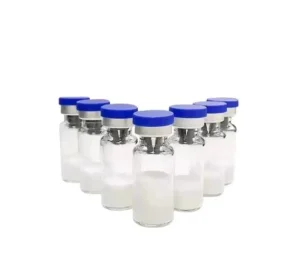
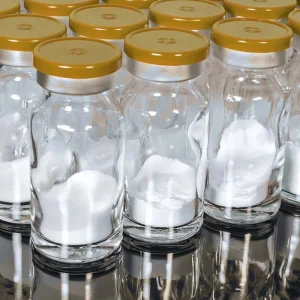
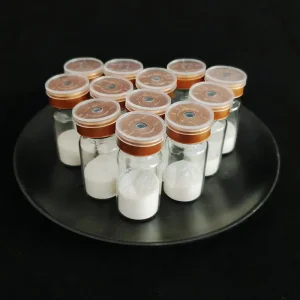
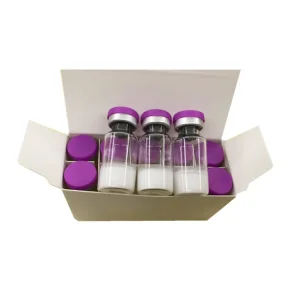
Direct access to research-grade ester precursors, lyophilized peptides, and specialty chemical synthesis compounds backed by verified analytical testing.
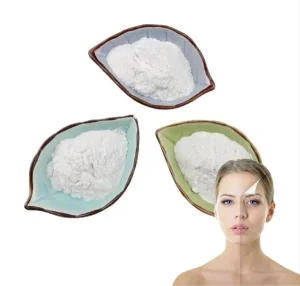
An authoritative assessment of active pharmaceutical intermediate production, esterification mechanisms, and the modern international procurement framework.
Pontocaine (2-(dimethylamino)ethyl 4-(butylamino)benzoate, typically stabilized as Tetracaine Hydrochloride, CAS 136-47-0 / 94-24-6) stands out among ester-type local anesthetics due to its exceptional lipid solubility and extended duration of action. Characterized by a high partition coefficient, it reversibly blocks voltage-gated sodium channels along neuronal membranes, inhibiting depolarization and signal conduction with a potency up to ten times greater than procaine.
The international commercial landscape for Pontocaine has undergone massive structural shifts. Once dominated by local European and North American fine chemical plants, primary API synthesis has centralized in high-capacity Asian chemical clusters, particularly China. Robust upstream supply of 4-aminobenzoic acid (PABA) and 2-(dimethylamino)ethanol (DMAE) enables continuous-flow production, reducing overhead and maintaining strict cost predictability across contract formulation chains.
Global importers and formulation laboratories operate under escalating regulatory governance. China-based facilities have aligned their quality systems with USP, EP, BP, and ChP compendial standards. From total related substance profiling (preventing unwanted 4-butylaminobenzoic acid hydrolysates) to stringent residual solvent monitoring under ICH Q3C guidelines, export-grade Pontocaine undergoes rigorous analytical qualification before global transit.
Evaluating classical batch transesterification versus continuous microreactor manufacturing, alongside specialized application vectors in modern healthcare formulations.
Traditional industrial production utilizes transesterification of ethyl 4-(butylamino)benzoate with 2-(dimethylamino)ethanol under sodium alkoxide catalysis. While scalable, classical batch reflux can yield thermal degradation impurities and trace color bodies. Tier-1 Chinese manufacturers now employ continuous flow microchannel reactors. This achieves millisecond-level stoichiometric temperature dissipation, near-complete conversion kinetics, and significantly drops the generation of 4-aminobenzoic acid contaminants, yielding white crystalline powders of superior physical stability.
Pontocaine formulations demand exceptional stability due to the ester linkage's susceptibility to aqueous hydrolysis. In specialized ophthalmology, pH-stabilized micro-dosages (0.5%) allow corneal and conjunctival desensitization without surface epithelial disruption. In topical dermatological compounding, eutectic oil formulations and microemulsions facilitate transdermal permeation for laser and minor surgical operations. In spinal and spinal block applications, hyperbaric glucose preparations remain indispensable in regional anesthesia centers globally.
| Analytical Parameter | USP / Ph.Eur Compendial Standard | Miaoou Enterprise Batch Spec | Methodology |
|---|---|---|---|
| Chemical Identification | Conforms to Reference Standard | Positive (IR & MS Correlation) | FTIR / High-Res MS |
| Assay Purity (Dry Basis) | 98.5% – 101.0% | ≥ 99.6% | HPLC with DAD Detection |
| Individual Impurity | ≤ 0.5% | ≤ 0.10% | Chromatographic Purity (EP) |
| Melting Range | 147°C to 150°C | 148.2°C – 149.6°C | Capillary Melting Apparatus |
| Loss on Drying | ≤ 0.5% | ≤ 0.22% | Vacuum Desiccation (105°C) |
| Heavy Metal Impurities | ≤ 20 ppm | < 5 ppm | ICP-OES / ICP-MS |
Bridging geopolitical shifts, green chemical engineering standards, and end-to-end B2B supply chain integrity.
Global regulatory policies emphasize stringent Environmental, Social, and Governance (ESG) criteria. The production of Pontocaine historically generated significant organic solvent waste during crystallization. Emerging engineering frameworks prioritize closed-loop solvent recovery systems, heterogeneous solid-acid catalysts, and bio-derived alkylating agents, mitigating environmental impact while enhancing product yield and batch reproducibility.
Supply chain vulnerabilities documented over recent market cycles have driven procurement executives away from single-source dependencies. Leading Chinese manufacturers are investing in overseas distribution hubs and strategic regional warehousing (such as US and EU domestic forward-stocking facilities). This architecture enables rapid 3-day regional fulfillment, shielding institutional buyers from maritime freight anomalies.
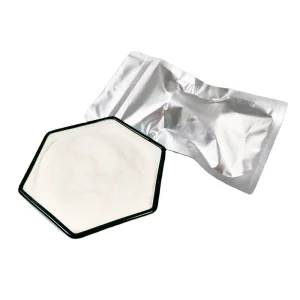
Because ester anesthetics can undergo slow hydrolytic degradation under prolonged humidity and heat exposure, advanced moisture-barrier drum liners, vacuum-sealed aluminum composite pouches, and temperature-logged freight solutions are becoming the commercial baseline. This preserves crystalline lattice stability and assay integrity from synthesis workshop to end-use compounding lines.
Authoritative answers concerning batch qualification, compendial adherence, stability protocols, and cross-border commercial execution.
Pontocaine Free Base (CAS 94-24-6) is a crystalline compound with limited water solubility, predominantly utilized in lipid-based compounding, creams, and non-aqueous cosmetic/dermatological vehicles. Pontocaine Hydrochloride (CAS 136-47-0) is the water-soluble quaternary salt ideal for parenteral preparations, isotonic ocular drops, and spinal anesthetic solutions.
Under contemporary ICH guidelines, secondary amine precursors undergo screening for potential nitrosamine formation. Our production processes enforce strict control parameters: pure primary and secondary amine reagents, validated acid washes, and ultra-sensitive LC-MS/MS testing capable of detecting trace impurities well below permissible toxicological thresholds.
Every delivery includes a batch-specific Certificate of Analysis (COA) documenting HPLC assay, raw HPLC chromatograms, FT-IR spectra, mass spectrometry data, heavy metal determinations (ICP-MS), residual solvent profiles (GC), and comprehensive Material Safety Data Sheets (MSDS/SDS).
Pontocaine raw materials should be stored in tightly sealed, amber or light-impervious multi-layer containers away from moisture and direct sunlight, maintained between 15°C to 25°C. When protected from ambient humidity, the crystalline powder demonstrates robust stability over a standard retest duration of 36 months.
Explore our full line of synthesized peptides, specialized proteins, and premium active ingredients available for immediate global export.