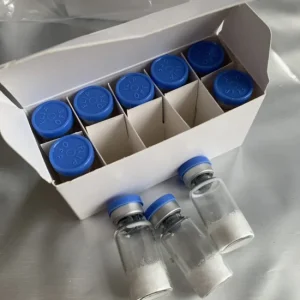
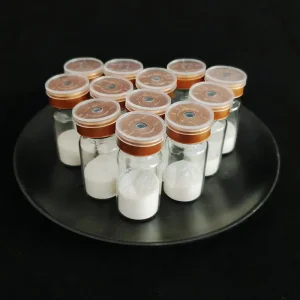
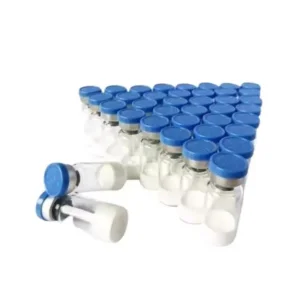
Verified laboratory reagents, reference standards, and commercial-scale bioactive compounds synthesized to international pharmacopoeia standards.
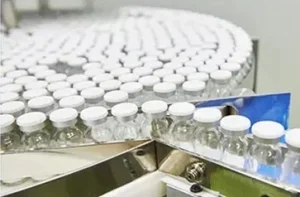
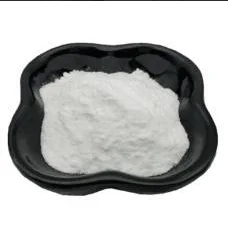
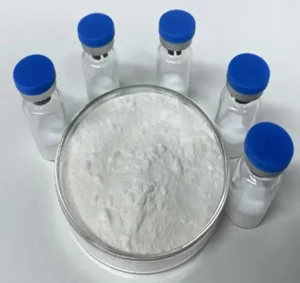
A comprehensive analytical overview for industrial formulators, generic pharmaceutical entities, and CDMO procurement specialists.
Testosterone Decanoate is the 17β-hydroxy decanoate ester of the endogenous androgenic steroid testosterone. Characterized by the molecular formula C29H46O3 and a molecular weight of 442.67 g/mol, the 10-carbon decanoate aliphatic side-chain confers extreme lipophilicity (calculated LogP ~ 7.8).
This prolonged aliphatic ester drastically restricts aqueous solubility while providing superior solubility in biocompatible botanical and synthetic lipidic carriers (such as refined castor oil, sesame oil, and ethyl oleate).
Following deep intramuscular injection, the hydrophobic decanoate ester forms a localized intramuscular depot. The rate-limiting step of systemic bioavailability is the slow partition of the unhydrolyzed prodrug across the oil-water interface into surrounding vascularized tissue.
Once partitioned into serum and extracellular fluid, ubiquitous non-specific tissue esterases rapidly cleave the ester bond, liberating free active testosterone and natural decanoic acid. This kinetic mechanism yields an elimination half-life of 15.0 to 21.0 days.
Primarily indicated in multi-ester replacement therapies (such as the legacy Sustanon-250 composition, where it contributes 100mg per mL), Testosterone Decanoate provides physiological hormone stabilization across multi-week administration cycles.
Its clinical adoption extends to primary and secondary hypogonadism, severe microphallus rehabilitation, and specialized veterinary medicine where long-acting tissue anabolism and nitrogen retention are required without frequent re-injection.
| Analytical Parameter | USP / Ph. Eur. Requirement | China Factory Release Benchmark | Testing Methodology |
|---|---|---|---|
| Chemical Identification | Conforms to Reference Standard | Conforms (100% Correlation) | Infrared Spectrophotometry (FTIR / KBr) & HPLC Retention |
| Assay Purity (Dried Basis) | 97.0% – 103.0% | 99.0% – 100.8% | Reversed-Phase HPLC (UV @ 240nm) |
| Related Substances (Single Impurity) | ≤ 1.0% | ≤ 0.30% | Gradient RP-HPLC (Impurity Profiling) |
| Total Related Substances | ≤ 2.0% | ≤ 0.80% | Liquid Chromatography-Mass Spectrometry (LC-MS) |
| Melting Point Range | 49.0°C – 55.0°C | 52.0°C – 54.5°C | Capillary Melting Apparatus (Automated Video) |
| Specific Optical Rotation [α]D20 | +77° to +83° | +79.5° to +82.0° | Automatic Polarimeter (c=1, 1,4-Dioxane) |
| Residual Solvents | Complies with ICH Q3C | Ethanol < 500 ppm, Methanol < 100 ppm | Headspace Gas Chromatography (HS-GC-FID) |
| Bacterial Endotoxins | ≤ 0.25 EU/mg (if for injection) | < 0.10 EU/mg | Kinetic Turbidimetric LAL Assay |
Strategic integration from agricultural phytosterol fermentation to downstream precision crystallization provides unbeatable security of supply.
Unlike Western toll-manufacturers who depend entirely on imported steroid intermediates, Chinese manufacturing clusters possess deep integration beginning with non-GMO soybean-derived phytosterols. Through massive industrial microbial fermentation (using specialized Mycobacterium strains), phytosterols are biotransformed directly into 4-Androstene-3,17-dione (4-AD) and 17β-hydroxy intermediate precursors.
This unbroken captive supply protects overseas buyers from global raw material shocks, currency volatilities, and speculative commodity price escalations.
Our manufacturing base operates high-throughput multi-purpose reaction suites featuring 3,000L to 10,000L Pfaudler glass-lined reactors. Esterification is conducted using high-purity decanoyl chloride under inert nitrogen atmospheres, mediated by automated continuous dosing systems that prevent thermal runaway and eliminate oxidative side products.
Real-time process analytical technology (PAT) monitors pH, temperature profiles, and conversion kinetics, achieving unassisted synthesis yields exceeding 94.5% with near-zero batch variability.
Whether servicing specialty compounding pharmacy networks requiring 5kg to 25kg lots or multinational pharmaceutical companies contracting annual multi-metric-ton supply contracts, our plant configuration is engineered for modular output.
Dedicated downstream processing lines—incorporating stainless-steel nutsche filter-dryers and closed-system fluid bed micronizers—ensure rapid lot turnaround, minimal hold times, and absolute containment against environmental contamination.
Meeting the scrutiny of the US FDA, EMA, Health Canada, and institutional audit committees with uncompromised analytical integrity.
We provide enterprise clients with complete regulatory dossiers, including Type II Drug Master Files (DMF) prepared in electronic Common Technical Document (eCTD) format. Our documentation packages comprise extensive synthetic route validation, impurity purge studies, critical process parameter (CPP) matrices, and multi-batch validation data.
Our regulatory affairs division actively coordinates Letters of Authorization (LoA) for client drug application filings across North America, Latin America, Europe, and the APAC region.
Every commercial campaign is entered into long-term (25°C ± 2°C / 60% RH ± 5% RH) and accelerated (40°C ± 2°C / 75% RH ± 5% RH) stability programs in cGMP-qualified walk-in environmental chambers. Periodic chromatographic assays ensure the compound exhibits zero crystalline transformation, moisture absorption, or ester degradation over a validated 36-month shelf life.
Photostability studies in accordance with ICH Q1B further validate our specialized double-barrier, light-resistant primary packaging configurations.
Navigating global hormone and chemical trade requires specialized logistical intelligence. We handle end-to-end export declaration documentation, including dangerous goods classification (if applicable), chemical non-scheduled certification, and bonded customs transit.
For qualifying commercial partners, we offer Delivered Duty Paid (DDP) arrangements via strategic airfreight lines, supported by bonded transit hubs in Frankfurt, Dubai, and Singapore that prevent border seizures and unnecessary customs hold-ups.
Addressing the technical realities faced by sterile fill-finish operations and injectable hormone manufacturers.
Due to the decanoate ester's bulk aliphatic tail, dissolution in carrier vehicles requires precise thermodynamic balancing. Industrial formulators commonly utilize refined super-refined pharmaceutical-grade castor oil, sesame oil (Ph. Eur.), or synthetic ethyl oleate (NF).
Dissolution profiles are heavily influenced by the API's crystalline habit. Our factory-controlled crystallization parameters yield micro-crystalline powders that dissolve rapidly at 45°C–50°C without requiring prolonged high-shear agitation, preventing oxidative damage to the steroid core.
In high-concentration multi-ester injectable blends (e.g., 250mg/mL to 300mg/mL formulations), co-solvents are imperative to prevent low-temperature precipitation (crystallization "crashing"). Formulators typically incorporate 5% to 10% Benzyl Benzoate as a secondary solubilizer alongside 1% to 2% Benzyl Alcohol as an antimicrobial preservative.
Our ultra-low moisture content API (< 0.20% w/w) eliminates haze development and cloud-point elevation, ensuring clear, amber-stable solutions across extreme temperature shifts during international transit.
Testosterone Decanoate exhibits moderate thermal sensitivity. While finished oil preparations can tolerate terminal autoclaving under strictly regulated heating curves (121°C for 15 minutes), thermal degradation to free testosterone and decanoic acid can occur if heating is prolonged.
Our ultra-pure API is certified ultra-low bioburden and compatible with sterile filtration using fluoropolymer membrane filters (0.22 μm PTFE or PVDF). This allows pharmaceutical facilities to execute cold-filtration aseptic processing regimens with absolute confidence.
How cutting-edge Chinese chemical enterprises are navigating changing environmental expectations and strict API governance.
Traditional batch reaction reactors inherently run the risk of localized concentration spikes and hot spots. Our pilot installations are transitioning to micro-channel continuous flow reactors. By ensuring instantaneous mixing and exact stoichiometric ratios of testosterone base and decanoic acid chloride within sub-millimeter reaction channels, continuous flow yields a quantitative reaction with zero unreacted raw materials.
This innovation completely eliminates corrosive quenching steps, decreases solvent consumption by 40%, and sets a new global benchmark for EHS (Environmental Health and Safety) compliance.
The global pharmaceutical supply chain has completely phased out vintage animal-origin precursors (such as ox-bile derived cholic acid) due to BSE/TSE pathogen cross-contamination risks. Modern Chinese synthesis is 100% founded on sustainably harvested pinewood and soy phytosterols.
Our bio-catalytic enzymatic routes utilize genetically optimized yeast and bacterial biocatalysts to perform stereo-specific reductions at C-17, safeguarding complete structural chirality, absolute optical purity, and zero endocrine-disrupting contamination.
China's stringent environmental regulations under the "Dual Carbon" initiative have permanently closed non-compliant, unregulated backyard workshops. Legitimate production is now consolidated inside government-approved Provincial Chemical Parks equipped with integrated biological wastewater facilities, catalytic incinerators, and continuous VOC emission monitoring.
Procuring from our modern, fully audited chemical plant guarantees your corporate supply chain remains immune to administrative shutdowns, surprise environmental raids, and unannounced operational pauses.
Direct answers addressing the operational, analytical, financial, and logistical concerns of international B2B buyers.
Our commercial lots of Testosterone Decanoate (CAS 5721-91-5) are guaranteed at a minimum HPLC purity of 99.0%, with standard factory release batches regularly testing between 99.2% and 99.8% on a dried basis. Total related substances (individual steroid impurities including unreacted free testosterone, 17α-epimer, and androstenedione precursors) consistently test below 0.80%, with no single unidentified impurity exceeding 0.15%. Every lot is accompanied by a batch-specific COA, HPLC chromatogram, and LC-MS identity confirmation.
Yes. We provide complete technical packages compliant with CTD Module 3 formatting. This includes the Open Part of the Drug Master File (DMF), detailed synthesis schematics, validation of analytical procedures (ICH Q2(R1)), structural elucidation data (1H-NMR, 13C-NMR, FT-IR, HR-MS), residual solvent profiling (compliant with USP <467> / ICH Q3C), elemental impurity evaluations (ICH Q3D), and real-time stability reports.
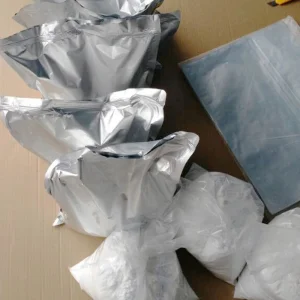
Standard packaging comprises primary food/pharma-grade double low-density polyethylene (LDPE) inner bags, hermetically sealed inside heat-welded heavy aluminum foil barrier pouches that block light, humidity, and atmospheric oxygen. The secondary layer is cushioned within high-density polyethylene (HDPE) tamper-evident drums or impact-resistant UN-approved fiber drums (5kg, 10kg, 25kg net weight). For pre-formulation stability, desiccants are included between bag layers.
We maintain specialized logistics protocols tailored to international regulations. We provide professional commercial invoices, export declaration forms, packing lists, and chemical classification certificates issued by accredited third-party testing institutes (e.g., Shanghai Institute of Chemical Industry). For sensitive destinations, we utilize bonded forwarders with dedicated customs corridors, offering tracked air courier services and CIF/DDP terms that minimize clearance bottlenecks.
For pilot formulation and qualification batches, our MOQ starts at 500 grams to 1 kilogram. For standard commercial supply, we offer standard pack sizes of 5kg, 10kg, 25kg, and 50kg. Standard inventory lots ship within 24 to 48 hours following payment confirmation. Custom synthesis, special particle-size milling (micronization to D90 < 10 μm), or large multi-ton orders typically execute on a 2 to 3-week manufacturing cycle.
We operate under strict cGMP change control and deviation protocols. We maintain retained reference samples of every single released lot in our QC repository for 5 years. In the rare event of an analytical dispute, samples are submitted to an agreed-upon independent ISO/IEC 17025 accredited analytical facility (e.g., SGS, Eurofins). If the failure is verified, we immediately execute an expedited batch replacement at zero cost or issue a complete financial refund.
Discover our expanded inventory of research peptides, coenzymes, anti-aging metabolic agents, and custom fine chemicals.