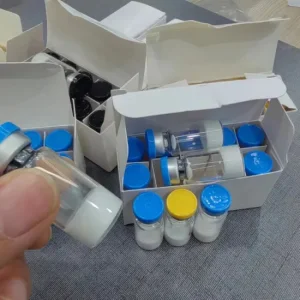
Pre-qualified laboratory reference standards and pharmaceutical intermediates ready for global commercial distribution and synthesis workflows.
Known systematically as 2-(diethylamino)-N-(2,6-dimethylphenyl)acetamide, CAS 137-58-6 represents the quintessential amino-amide benchmark utilized across contemporary medicine, formulation development, and active pharmaceutical ingredient (API) research.
CAS 137-58-6 requires rigid structural verification via Proton NMR (1H-NMR), Carbon-13 NMR, and FT-IR spectra. Meeting USP, EP, and BP pharmacopeia thresholds demands total residual solvent limits below ICH guidelines and rigorous crystalline structure analysis.
The compound acts predominantly via reversible blockade of voltage-gated sodium channels (Nav1.5, Nav1.7), impeding neuronal transmission of ionic flux. Its lipid-solubility profile ensures exceptional tissue penetration in transdermal, injectable, and topical formulations.
Premium factory manufacturing ensures continuous monitoring for synthesis-related byproducts, such as 2,6-dimethylaniline and chloroacetyl derivatives, keeping organic and elemental heavy metal contaminants at trace ppb levels via ICP-MS analysis.
Across regional healthcare ecosystems and chemical manufacturing hubs, CAS 137-58-6 serves diverse industrial vectors requiring tailored physical forms, particle sizing, and salt conversions.
Local therapeutic applications rely on sterile-filtered aqueous solutions and injectable preparations. CAS 137-58-6 serves as an essential Class Ib antiarrhythmic agent and perioperative local anesthetic across modern trauma and surgical centers.
Regional compounding pharmacies utilize micro-milled crystalline CAS 137-58-6 in high-viscosity gels, transdermal eutectic mixtures (EMLA type), and dental cartridges paired with vasoconstrictors for localized procedural comfort.
Widely integrated across livestock care, equine sports veterinary protocols, and canine surgical procedures, bulk suppliers deliver customized drum quantities to support industrial veterinary pharmaceutical plants.
Serves as a pivotal precursor molecule in organic laboratories targeting advanced sodium-channel blockers, novel analgesics, and customized polymer coatings engineered for controlled biomedical release devices.
The global API landscape demands uninterrupted, cost-stabilized sourcing. Our integrated Chinese factory clusters combine raw material autonomy, precision process automation, and world-class logistical throughput.
Direct pipeline access to basic feedstocks (2,6-dimethylaniline and chloroacetyl chloride) ensures our production lines remain completely insulated from global commodity volatility, securing rock-solid pricing and unhindered capacity.
Moving away from legacy batch kettles, our automated continuous flow reactors offer superior stoichiometric precision, tight thermal dissipation control, lower environmental footprints, and batch-to-batch homogeneity yielding ≥99.5% assays.
Located near major commercial hubs, we orchestrate seamless temperature-controlled freight, bonded warehouse distribution, rapid customs declarations, and localized clearance networks delivering direct DDP/CIF fulfillment.
Continuous evolution in regulatory requirements and sustainability directives dictates our four-phase manufacturing trajectory for CAS 137-58-6 through 2026-2030.
Phasing out conventional chlorinated organic reaction solvents in favor of recyclable aqueous or catalytic ionic liquids to cut process E-factors by 45%.
Incorporating ultrasonic micro-crystallizers to provide custom narrow-span particle size distribution (PSD) tailored directly for transdermal patches without micronization stress.
Deploying real-time Process Analytical Technology (PAT) using NIR and Raman spectroscopy for continuous purity and residual moisture tracking during drying phases.
Implementing closed-loop amine solvent recovery systems to eliminate hazardous solvent effluent, complying with top-tier international environmental standards.
Procuring critical pharmaceutical components across borders mandates unassailable documentation, complete traceability, and reliable regulatory dossier support.
Our dedicated regulatory affairs team provides complete Drug Master Files (DMF in CTD format), Certificates of Suitability (CEP), full elemental impurity risk assessments (ICH Q3D), and Nitrosamine Risk Evaluations.
Every single shipment arrives with verified batch COAs detailing HPLC chromatograms, optical density, melting point ranges (68°C to 69°C), heavy metals assay, and Karl Fischer water titration results.
From pre-purchase technical questionnaires to QA audit clearances and customs document preparation, our global team supports laboratory managers and corporate procurement in their time zones.
Essential answers regarding quality verification, storage, commercial export protocols, and technical specifications for qualified B2B purchasers.
Our factory-synthesized CAS 137-58-6 consistently achieves an assay of ≥99.5% purity via reverse-phase HPLC analysis, exceeding basic USP and EP monograph standards, with individual unknown impurities strictly confined below 0.10%.
CAS 137-58-6 is the Free Base form (2-(diethylamino)-N-(2,6-dimethylphenyl)acetamide), which is lipophilic and ideal for transdermal patches, creams, and organic synthesis. CAS 73-78-9 is the Hydrochloride (HCl) salt, which is hydrophilic and water-soluble, specifically optimized for liquid injectable preparations and aqueous sprays.
We supply research and industrial quantities ranging from 1 kg vacuum-sealed double polyethylene-lined aluminum bags up to 25 kg fiber drums with tamper-evident seals. Customized barrier packaging tailored for humidity prevention is available on request.
Sample requests and pilot batches are typically dispatched via insured express air courier within 24–48 hours, arriving within 4–7 business days worldwide. Commercial metric-ton scale orders are routed via temperature-controlled air or ocean freight accompanied by complete customs clearance paperwork.
Explore our extended research catalog, verified with HPLC/MS analysis and batch-tracked documentation for laboratory trials and synthesis operations.