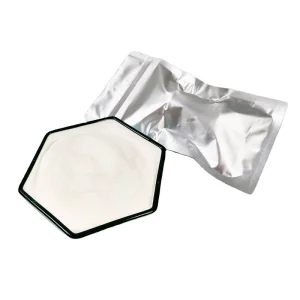
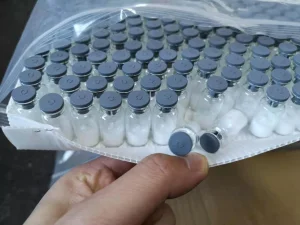
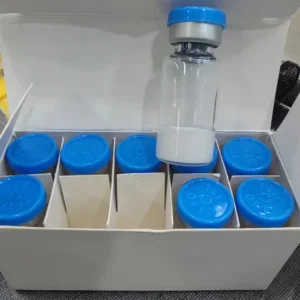
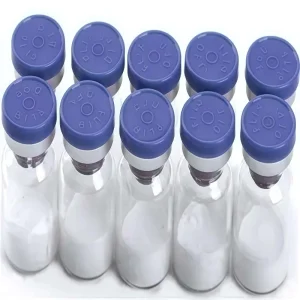
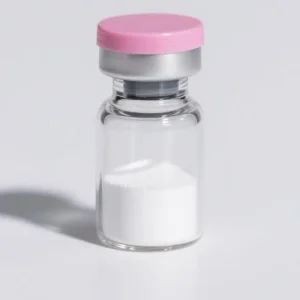
In-stock analytical standards, lyophilized active compounds, and research peptides manufactured under strict chromatographic controls with batch-specific documentation.
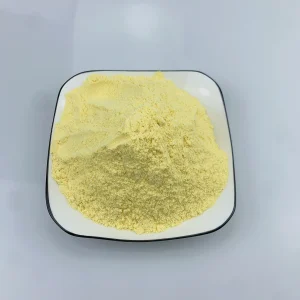
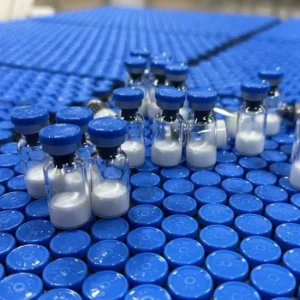
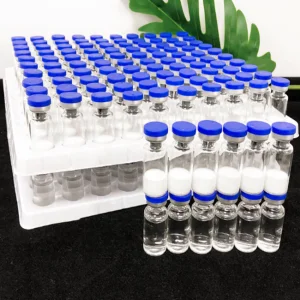
A rigorous examination of molecular geometry, synthetic pathways, chromatographic behavior, and analytical validation required by institutional buyers.
In modern biopharmaceutical synthesis and custom peptide manufacturing, procuring high-purity chemical intermediates and active reference materials demands deep metallurgical and chromatographic verification. CAS 14176-50-2 represents a vital decapeptide scaffold structurally linked to gonadotropin-releasing hormone (GnRH) agonist research. As global contract development and manufacturing organizations (CDMOs) expand therapeutic peptide development pipelines, qualifying an authentic, reliable factory source for CAS 14176-50-2 is essential for maintaining analytical consistency from early proof-of-concept synthesis through pilot batch scale-up.
Chemically categorized as a synthetic decapeptide analogue, CAS 14176-50-2 features the primary sequence Pyr-His-Trp-Ser-Tyr-D-Trp-Leu-Arg-Pro-Gly-NH2 (often referenced as [D-Trp6]GnRH / Triptorelin base or related intermediate). The inclusion of a D-tryptophan residue at position 6 confers heightened resistance against enzymatic degradation caused by neutral endopeptidases, drastically prolonging the biological half-life compared to native mammalian GnRH. Producing this complex macromolecule with uniform secondary structure stability requires strict control over Solid Phase Peptide Synthesis (SPPS) parameters, stereochemical integrity of protected amino acids, and high-efficiency cleavage conditions.
| Analytical Attribute | Methodology / Standard | Release Acceptance Criteria | Typical Factory Batch Result |
|---|---|---|---|
| Chemical Identity | LC-MS / ESI-MS + 1H-NMR | Monoisotopic Mass [M+H]+: 1311.6 ± 0.5 Da | 1311.58 Da (Conforms) |
| Chromatographic Purity | RP-HPLC (C18, 220nm detection) | ≥ 98.5% (Area Normalization) | 99.35% |
| Physical State | Visual Inspection | White to off-white lyophilized amorphous powder | Passes inspection |
| Acetate Content | Ion Chromatography / HPLC | 4.0% – 12.0% (w/w) | 7.2% |
| Specific Optical Rotation | Polarimetry (c=0.5 in 1% HOAc) | -55.0° to -65.0° | -60.8° |
| Residual Solvents | GC-Headspace (ICH Q3C) | DMF < 880 ppm, ACN < 410 ppm, DCM < 600 ppm | Conforms to ICH Limits |
| Bacterial Endotoxin | Limulus Amebocyte Lysate (LAL) | ≤ 10 EU / mg | < 2.5 EU / mg |
Deconstructing the cost, scaling, and engineering efficiencies achieved through Chinese upstream precursor integration and automated reactor clusters.
By producing protected amino acid precursors (Fmoc-D-Trp(Boc)-OH, Fmoc-Arg(Pbf)-OH) within localized regional industrial clusters in Hebei and Jiangsu, production is fully insulated from international raw material market fluctuations.
Utilizing high-capacity automated solid-phase synthesis columns (up to 500L capacity) alongside continuous preparative dynamic axial compression (DAC) HPLC systems, enabling metric-ton annual intermediate output without yield collapse.
Digitalized programmable control architectures govern reaction dwell times, wash solvent ratios, and automated resin cleavage temperatures, suppressing batch-to-batch variation and delivering standard deviation indices below 0.4% across multiple lots.
The manufacturing architecture for CAS 14176-50-2 is engineered to resolve notorious synthesis bottlenecks, particularly steric hindrance during sterically congested coupling steps and undesired oxidation of the tryptophan side chains. Below is the multi-stage quality gate protocol enforced across every production batch.
Precursor enantiomeric purity testing of resins, coupling reagents (HBTU, HATU), and Fmoc-amino acids via chiral GC/HPLC.
Sequential SPPS execution on low-loading Rink Amide resin with spectrophotometric ninhydrin/UV real-time deprotection tracking.
Cleavage utilizing TFA/TIS/EDT/H2O cocktails at low thermal profiles to prevent tryptophan alkylation and oxidation artifacts.
C18/C8 preparative chromatographic purification separating close-running diastereomers and truncated peptide chains.
Class 100/ISO 5 laminar flow cleanroom lyophilization preserving crystalline integrity and establishing stable residual moisture.
Addressing the critical risk factors procurement teams face when vetting long-term bulk manufacturers of high-value peptide intermediates.
Global pharmaceutical auditors demand raw instrument outputs—not merely summary tables. We provide unedited UV spectra, HPLC raw chromatograms with baseline integration, and HRMS records with every commercial shipment.
Supply disruption resilience is guaranteed through multi-site synthesis facilities and decentralized warehousing hubs in Shijiazhuang, Hong Kong, and localized partner bonded zones across Europe and North America.
Sensitive peptide powders require constant thermal monitoring. All shipments utilize insulated VIP packaging with certified real-time USB/Bluetooth temperature loggers to preserve lyophilized cake viability.
Unique batch serialization, cryptographic QR seals on primary borosilicate vials, and direct-to-database batch verification protect enterprise buyers from substandard and mislabeled market materials.
Facilitating seamless customs clearance, import permitting, and regulatory conformance across North America, the European Union, and Asia-Pacific territories.
Comprehensive dossiers supporting REACH Only Representative (OR) declarations, standard safety data sheets (SDS) conforming to Regulation (EC) No 1907/2006, and validated Harmonized Tariff Schedule (HTS) classifications for smooth entry via Rotterdam and Frankfurt hubs.
Full support for Toxic Substances Control Act (TSCA) R&D exemptions, FDA Drug Master File (DMF) technical package assistance, clean non-controlled substance attestations, and validated Section 321 commercial documentation.
Every commercial invoice, packing slip, certificate of origin (Form A/COO), and BSE/TSE-free declaration is cross-referenced by bilingual trade compliance attorneys to eliminate port holds and customs demurrage penalties.
How global R&D centers, diagnostic manufacturers, and formulation labs leverage high-grade CAS 14176-50-2 across diverse disciplines.
Applied extensively as a model peptide for microencapsulation into biodegradable PLGA/PLA microspheres and in situ forming hydrogels. High purity is critical to prevent polymer matrix destabilization and uncontrolled burst-release effects during sustained delivery profiles.
Employed by academic and pharmaceutical research laboratories investigating GnRH receptor downregulation, gonadotropin suppression mechanisms, and targeted drug conjugate (PDC) therapeutic vectors in prostate and ovarian cellular oncology assays.
Utilized as primary reference standards for method transfer and chromatographic assay validation (USP/EP system suitability checks) in contract analytical laboratories certifying third-party release testing across commercial peptide lines.
How next-generation chemical engineering transforms the synthesis kinetics and carbon footprint of CAS 14176-50-2 manufacturing.
The global peptide active pharmaceutical ingredient and research intermediate industry is undergoing an unprecedented technological pivot. Historically, solid-phase peptide synthesis has suffered from high Process Mass Intensity (PMI), driven by large solvent consumption—most notably hazardous polar aprotic solvents such as N,N-dimethylformamide (DMF) and N-methyl-2-pyrrolidone (NMP). As global environmental regulations tighten under the EU Green Deal and China's Ecological Protection initiatives, forward-looking suppliers are modernizing synthesis lines to retain international market leadership.
At our automated synthesis workshops, advanced green peptide synthesis protocols are systematically integrated into commercial runs of CAS 14176-50-2. By transitioning to bio-derived alternative solvent systems, such as 2-methyltetrahydrofuran (2-MeTHF) and cyclopentyl methyl ether (CPME), combined with continuous-flow microfluidic coupling architectures, solvent consumption is curtailed by more than 48% while simultaneously accelerating amino acid coupling kinetics.
Furthermore, digitalized Process Analytical Technology (PAT) employing inline near-infrared (NIR) and ultra-high performance liquid chromatography (UHPLC) monitoring guarantees instant detection of incomplete deprotection cycles, empowering our engineering teams to stop side-product generation prior to resin cleavage.
Authoritative answers addressing chemical identity, minimum order thresholds, cold-chain transport, and documentation standards.
Explore our broader line of research APIs, hormone standards, and peptide formulations manufactured under rigorous quality systems.