Direct supply line access with standardized HPLC/MS chromatographic verification and third-party validation.
An authoritative technical evaluation for procurement directors, QA specialists, and formulation chemists.
CAS 94-09-7 (Ethyl 4-aminobenzoate, molecular formula C9H11NO2, MW: 165.19 g/mol) is an ester local anesthetic. It features an aromatic amine conjugated with a carboxyl ester, yielding a pKa of 2.51. This unique chemical profile renders the molecule primarily non-ionized at physiological pH, allowing immediate, non-systemic lipid-membrane partition.
Benzocaine acts through direct, reversible voltage-gated sodium channel (VGSC) blockade on afferent neuronal axons. By mitigating intracellular sodium influx across neuronal membranes, it depresses action potential propagation, effectively eliminating localized sensory conduction without disrupting vasomotor balance or causing involuntary smooth-muscle relaxation.
Manufacturing excellence hinges on impurity mitigation. Residual precursors such as 4-nitrobenzoic acid and intermediate volatile halogenated solvents must remain below strict ICH Q3A/B limits. Advanced crystallization protocols guarantee low heavy metal residues (<10 ppm) and an assay result exceeding 99.5% by validated HPLC-UV.
| Analytical Parameter | USP/EP Regulatory Standard | Factory In-House Release Specification | Testing Methodology |
|---|---|---|---|
| Chemical Identification | Positive for Aminobenzoate & Infrared absorption | Conforms to Reference Standard Spectrum | FTIR / ATR-IR (USP <197K>) |
| HPLC Chromatographic Assay | 98.0% - 102.0% (dried basis) | ≥ 99.50% Area Normalization | Reversed-Phase HPLC-DAD (λ=227nm) |
| Melting Range | 88.0°C - 92.0°C | 89.0°C - 90.5°C (Narrow band) | Capillary Thermal Gradient Method |
| Loss on Drying | ≤ 1.0% | ≤ 0.25% | Vacuum Desiccation over P2O5 |
| Related Substances (Individual) | ≤ 0.10% individual impurities | ≤ 0.05% 4-Nitrobenzoic acid | Gradient RP-HPLC (USP Impurity Profile) |
| Residual Solvents (ICH Q3C) | Ethanol < 5000 ppm, Toluene < 890 ppm | Class 2 < 100 ppm, Class 3 < 500 ppm | Headspace Gas Chromatography (HS-GC-FID) |
Strategic analysis of CAS 94-09-7 commercial applications, supply elasticity, and global volume forecasts.
The global OTC healthcare sector demands consistent CAS 94-09-7 for transdermal pain relief, oral ulcer treatments, dental sprays, and burn formulations. Sourcing teams prioritize ultra-fine micronization (d90 < 20μm) for smooth suspension delivery.
CAS 94-09-7 plays a pivotal role globally in aquatic anesthesia, minimizing handling-induced cortisol elevation during transport and medical intervention. Enterprise buyers require high solubility profiles and non-toxic aquatic degradation pathways.
Post-pandemic disruptions highlight the vulnerability of single-region raw chemical supply. Enterprise buyers demand manufacturers with integrated back-integration into basic feedstocks (PABA) to insulate pricing against market shocks.
Sustained volatile container shipping rates and raw fuel charges require flexible contract manufacturing arrangements. We offer transparent multi-quarter indexing on bulk drum allocations (FOB, CIF, and DDP terms).
Bridging Chinese manufacturing with global destination compliance: FDA, EU REACH, and PIC/S readiness.
Each batch release is accompanied by comprehensive audit-ready documentation, including complete DMF access, ISO 9001/14001 certificates, BSE/TSE declaration, elemental impurity assessments, and confirmed absence of nitrosamine risks.
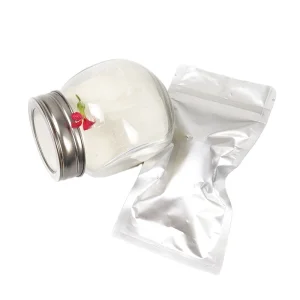
Transporting pure fine chemicals requires active barrier defense against humidity and oxidation. We employ food/pharma-grade double-layer polyethylene liners placed inside nitrogen-purged hermetically sealed fiber drums (25kg Net Weight).
Export teams handle localized documentation clearing with HS Code classification 2922499990. We guarantee seamless customs clearance across the EU (REACH Registration verified), North America (TSCA-compliant), and the Asia-Pacific territory.
Pioneering the transformation from conventional batch esterification to advanced microchannel flow synthesis.
Transitioning from 5,000L glass-lined batch reactors to micro-reaction flow arrays improves mass transfer and maintains tight residence-time distributions. This cuts unwanted poly-substitution side reactions and guarantees 99.8% raw product consistency.
Modern sustainability requirements prioritize atom economy. Our closed-loop fractional recovery systems achieve a >96% operational recycle rate for solvent-phase alcohols and crystallizing liquors, minimizing VOC emissions across all factory operations.
Online Near-Infrared (NIR) and Raman spectroscopy sensors continuously monitor batch conversion rates during catalytic hydrogenation. Automated AI loops dynamically calibrate thermal inputs, reducing energy expenditures per ton by 22%.
Clear, direct answers for QA heads and chemical procurement teams.
Every commercial batch released from our factory guarantees a minimum assay of 99.0% by HPLC. For demanding applications, batches consistently test at ≥99.5% with no single unspecified impurity exceeding 0.05%.
Yes. In addition to standard needle-crystal and granular formulations, our cleanroom operations feature dynamic air-jet micronization systems. We supply D90 < 50μm, D90 < 20μm, or custom particle profiles for direct compressible tableting and sprays.
Each delivery includes an authenticated, batch-specific Certificate of Analysis (COA) containing raw HPLC traces, a Safety Data Sheet (SDS) compliant with GHS Rev 8, an origin declaration, an animal-free declaration, and packing inspection sheets.
Materials are securely protected inside hermetically sealed moisture-barrier bags within impact-resistant corrugated drums. We provide real-time temperature tracking tags for sensitive, long-haul ocean routes, ensuring materials arrive free of agglomeration.
Reliable bulk-scale delivery channels for research laboratories, university research centers, and manufacturing partners.